

How To Make Your Own Dehydrated Meal Packs
Make sure to like Living Green and Frugally on Facebook, Shop at Amazon to help support my site and explore our PINTEREST BOARDS for innovative ways you can become self-sufficient.
If you go camping, hiking or spend any amount of time outdoors, you soon realise how expensive those little dehydrated meal pouches can be. They are handy, but paying several dollars for one meal soon adds up, especially if you are feeding more than one person.
The good news is that making your own dehydrated meal packs at home is actually pretty simple. You don’t need loads of specialist ingredients either. Rice, pasta, potatoes, vegetables, beans and a few seasonings can be turned into lightweight meals that are easy to pack and only need hot water when you’re ready to eat.
They’re also useful to keep at home as part of an emergency food supply.
Why I Like Dehydrated Meals For Camping
One of the biggest advantages is the weight. Carrying tins, jars and fresh ingredients isn’t much fun if you’re walking any distance. Once most of the water has been removed from your food, it becomes much lighter and takes up far less space.
You can also make the meals exactly how you like them. If you don’t like loads of salt, leave some out. If you love spicy food, add more seasoning. You’re not stuck with whatever flavour happens to be available in the camping shop.
It’s also a really good way to use vegetables from the garden before they go to waste.
If you already have a dehydrator sitting in a cupboard, have a look at my 36 Fool-Proof Dehydrator Recipes for even more things you can make with it.
The Easiest Way To Make A Meal Pack
I don’t try to make this overly complicated. Most of my meal packs follow roughly the same idea.
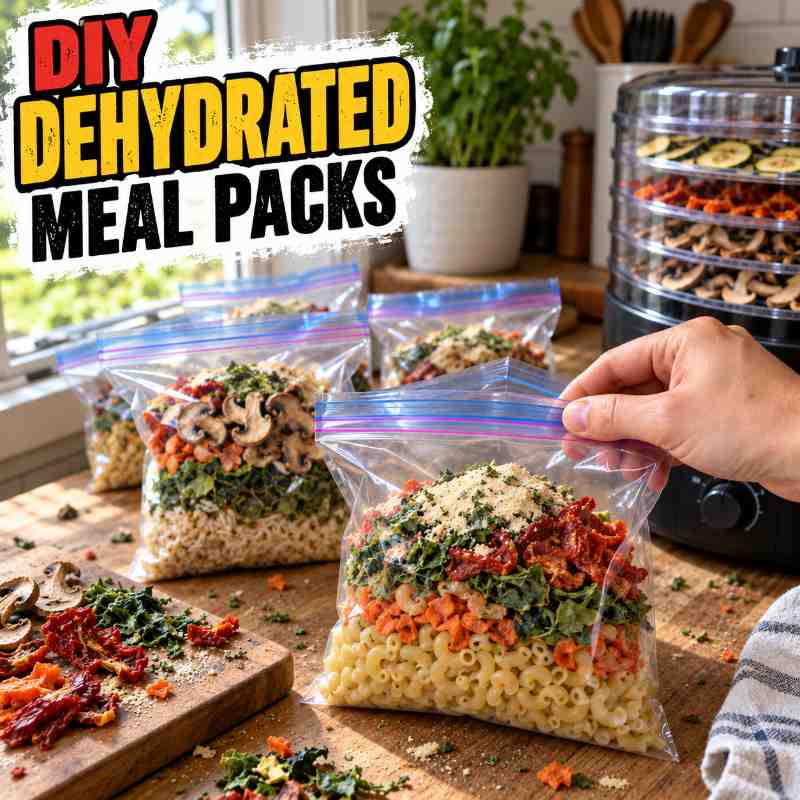
Start with something filling such as rice, pasta, couscous or potatoes. Add some dehydrated vegetables, then a protein such as beans or properly dehydrated lean meat if you are confident dehydrating meat safely. Finally, add your seasonings.
Cook ingredients such as rice, pasta and beans before dehydrating them. Spread everything in a thin layer on your dehydrator trays and dry until there are no soft or damp pieces left.
Vegetables are especially handy because you can dehydrate a big batch and then use a handful in several different meals. My Dehydrating Veggies Guide And Tips goes into this in more detail.
One thing I would avoid for meal packs you plan on storing is adding lots of butter or oil. Fat doesn’t dehydrate well and can turn rancid much faster than low-fat ingredients. I would rather add oil, butter or cheese when I make the meal at camp.
Easy Cheesy Potato Soup Pack
This is probably the easiest one to try first, and it’s lovely when you’ve been outside all day and want something warm.
For one meal pack, mix around one cup of instant potato flakes with two tablespoons of powdered milk, a quarter cup each of dehydrated peas and carrots, a teaspoon of chicken or vegetable bouillon powder and a little garlic powder, onion powder and black pepper.
When you’re ready to eat it, pour the mixture into your camping bowl and add around 1½ cups of boiling water. Give it a good stir and leave it for five minutes. Add a little more water if you prefer a thinner soup.
You can even make your own potato flakes at home. I have a separate guide on How To Make Dehydrated Potato Flakes From Scratch if you want to take the homemade version a step further.
Mexican Rice And Bean Pack
This is one of my favourites because rice and beans are cheap, filling and easy to flavour.
Cook your rice and beans normally at home, then spread them separately over your dehydrator trays. You can also dry some peppers, onion and sweetcorn at the same time.
Once everything is completely dry and cool, combine roughly three-quarters of a cup of dehydrated rice with half a cup of beans and a small handful of your dried vegetables. Add a teaspoon or two of taco seasoning depending on how spicy you like it.
At camp, put everything into a pot or heatproof bowl and just cover it with boiling water. Cover it and leave it for around 10 to 15 minutes, giving it a stir halfway through. If it still looks a little dry, add another splash of hot water.
A little grated cheese added at the end makes this one even better.
Simple Chicken-Style Noodle Soup Pack
Another easy option is homemade noodle soup.
I use around one cup of cooked and dehydrated small pasta or noodles and add half a cup of dehydrated mixed vegetables. Then I add chicken bouillon powder, garlic powder, onion powder, dried parsley and a little black pepper.
You can add dehydrated chicken if you know how to prepare and dry meat safely, but you really don’t have to. Even without the chicken, it makes a quick, warming camping meal.
Pour around 1½ to 2 cups of boiling water over the mixture and cover it. After about 10 minutes, give it a stir and check the noodles. Depending on how dry they are and which pasta you’ve used, they may need a few minutes longer.
Don’t Forget Breakfast
You don’t have to make everything savoury either.
One of the simplest camping meal packs is oats. Put rolled or quick oats into a bag with powdered milk, cinnamon and dehydrated fruit such as strawberries, apples or blueberries.
In the morning, empty it into your bowl and add boiling water. Leave it for a few minutes and you’ve got a hot breakfast without carrying loads of ingredients.
A little brown sugar or powdered honey can also be added before you leave home.
Packing Your Homemade Camping Meals
Once your food has finished dehydrating, let it cool completely before you put it into bags. This is one step I wouldn’t rush.
If you seal food while it’s still warm, condensation can form inside the packet. Moisture is exactly what you’re trying to avoid when storing dehydrated food.
For camping trips, ordinary resealable food bags work well if you’re going to use the meals fairly soon. Vacuum-sealed bags are another good option if you want something compact.
Make sure you write the meal name on the bag. I also write something like “Add 1½ cups boiling water and wait 10 minutes” on the front. It sounds obvious now, but after making ten different meal packs it’s surprisingly easy to forget which one needs what.
Make One Before Making Ten
This is probably my biggest tip.
Don’t spend an afternoon making twenty bags of a recipe you’ve never actually tried after dehydrating it.
Make one meal first. Leave it overnight, then prepare it using only boiling water exactly as you would while camping.
You might discover that it needs more seasoning, less pasta or another half cup of water. Once you’ve got it right, then make a big batch.
A Few More Meal Ideas
Once you understand the basic idea, you can make all sorts of combinations. Tomato pasta, vegetable couscous, lentil curry and rice, mushroom rice, bean chilli and creamy potato soup all work well as starting points.
You don’t even need every ingredient to be homemade. Mixing homemade dehydrated vegetables with things like instant potatoes, couscous or powdered soup ingredients can make the whole process much easier.
If you’re building up a supply for emergencies as well as camping, you might also like The Survival Pantry: 25 Foods That Last Longer Than You Think.
How Long Will They Keep?
There isn’t really one shelf-life that applies to every homemade dehydrated meal.
It depends on what you’ve put in it, how thoroughly everything was dehydrated, how much fat is in the food and how it has been packaged and stored.
For meals I plan to take camping, I prefer making smaller batches and rotating them rather than making hundreds of packets and assuming they’ll last for years.
Keep them somewhere cool, dark and dry, and always check the food before eating it. If you notice moisture, mould, a strange smell or anything else that doesn’t look right, don’t use it.
Final Thoughts
Making your own dehydrated meal packs sounds complicated until you’ve made your first few. After that, it becomes surprisingly easy.
You can cook a big batch of rice, pasta and vegetables, run the dehydrator overnight, then spend a few minutes the next morning making several different meals.
For camping especially, I think they’re brilliant. They’re light, inexpensive and take up hardly any room in your pack. Best of all, when you’ve been walking all day and you’re sitting outside your tent, there’s something pretty satisfying about pouring hot water into a meal you made yourself at home.