

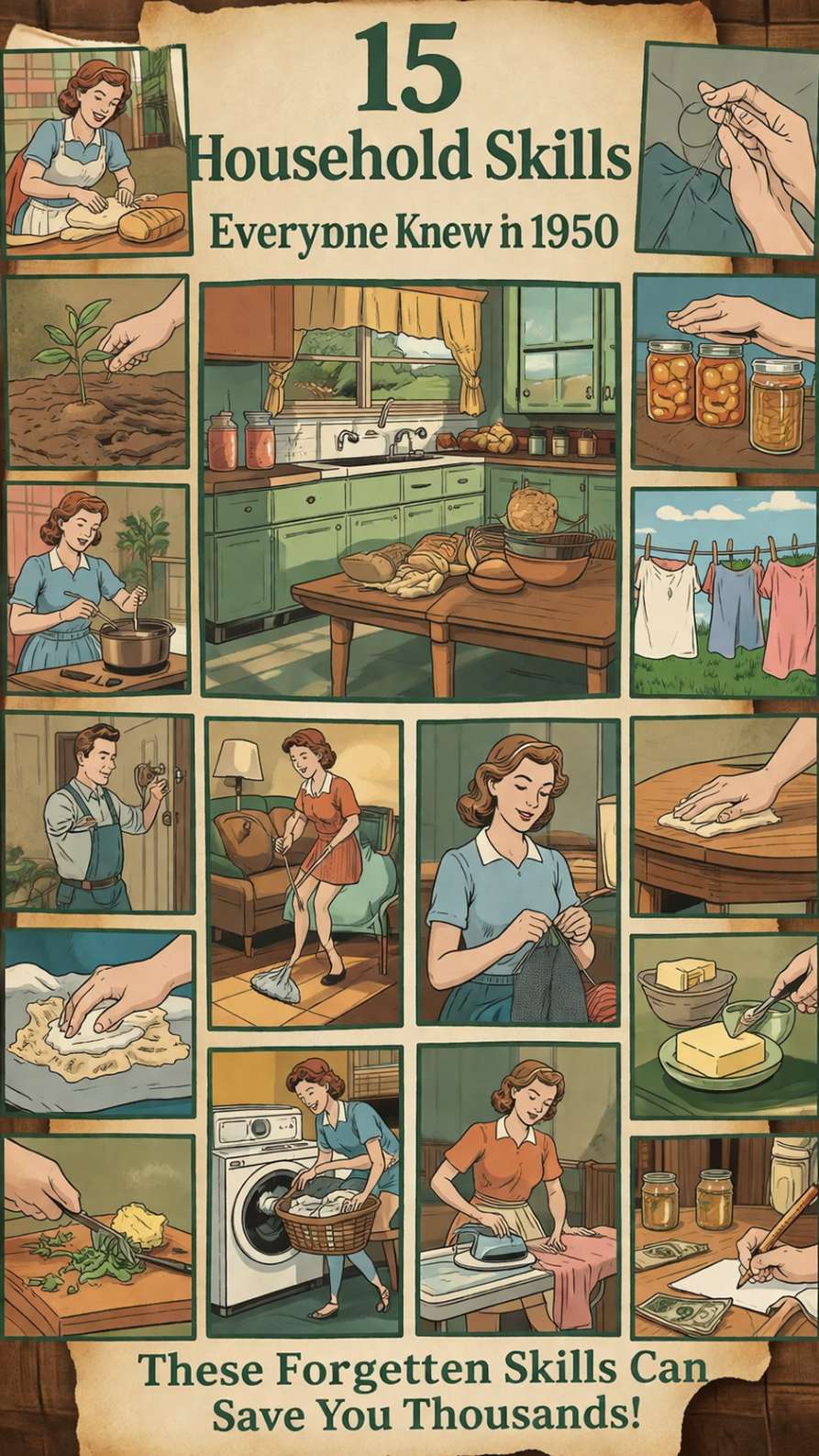
🏡 15 Household Skills Everyone Knew in 1950 (That Could Save You Thousands Today)
🕰️: When “Basic Skills” Meant Real Independence
There was a time—not that long ago—when the average household didn’t rely on convenience apps, next-day delivery, or takeaway meals. Back in the 1950s, people simply knew how to do things. From baking bread to fixing clothes, these everyday skills weren’t hobbies… they were just part of life.
Fast forward to today, and many of these abilities have quietly disappeared. But here’s the thing—bringing them back could save you money, reduce stress, and make you more self-sufficient than ever.
Whether you’re looking to cut costs, live more sustainably, or just learn something practical, these forgotten skills are making a serious comeback.
🧰 15 Household Skills Worth Bringing Back
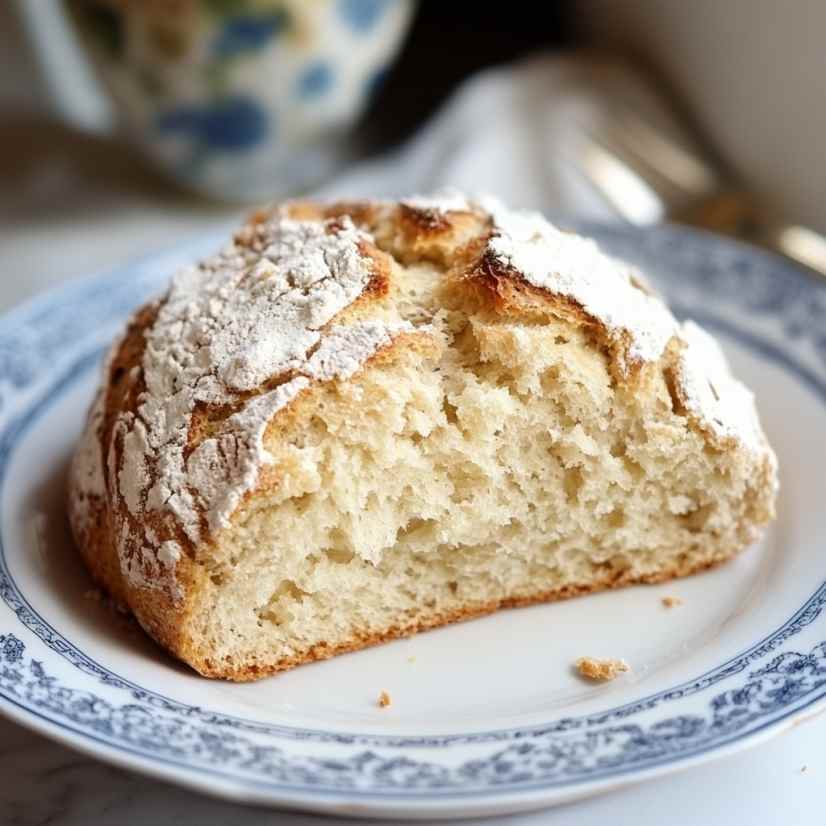
1. 🍞 Baking Bread from Scratch
Then: A weekly routine in most homes
Now: A money-saving superpower
Making your own bread is cheaper, healthier, and surprisingly simple. No additives, no mystery ingredients—just flour, water, yeast, and salt.
2. 🪡 Sewing and Mending Clothes
Then: Fix it, don’t throw it
Now: Save hundreds a year
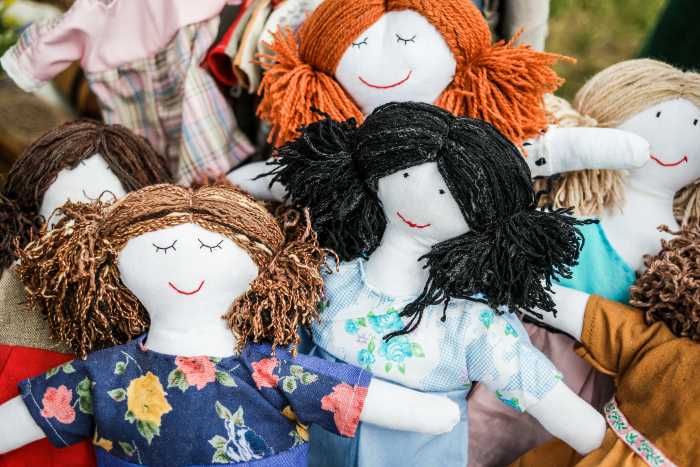
A simple stitch can extend the life of your clothes by years. Learning to repair tears, replace buttons, or adjust sizes is a game changer.
3. 🥕 Growing Your Own Food
Then: A normal backyard activity
Now: A rising trend
Even a small garden or a few pots can produce herbs, vegetables, and salads—cutting your food bill and improving quality.
4. 🥫 Preserving Food (Canning & Pickling)
Then: Essential for winter survival
Now: A frugal lifestyle hack
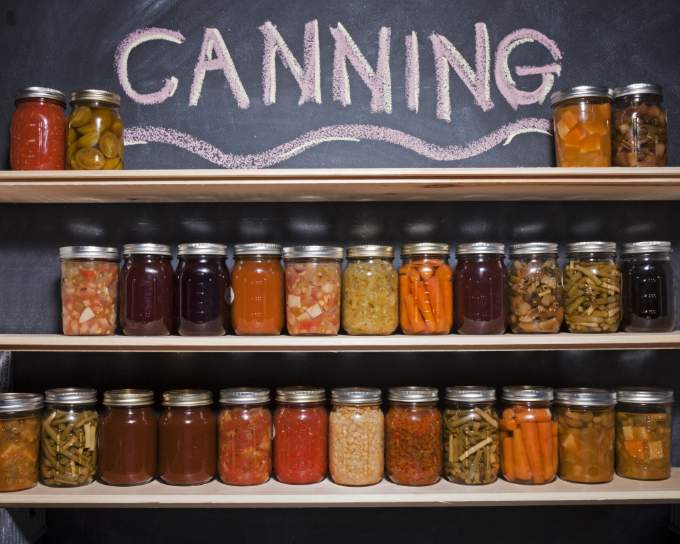
Preserving food stops waste and lets you enjoy seasonal produce all year round.
5. 🧼 Making Homemade Cleaning Products
Then: Common practice
Now: Healthier and cheaper
Simple ingredients like vinegar and baking soda can replace expensive, chemical-heavy cleaners.
6. 🍲 Cooking Meals from Scratch
Then: Every meal was homemade
Now: A lost art for many
Cooking from scratch is one of the fastest ways to save money and eat better.
7. 🧺 Line Drying Clothes
Then: The norm
Now: A cost-cutting secret
Skip the tumble dryer and let nature do the work. It saves energy and extends clothing life.
8. 🔨 Basic Home Repairs
Then: DIY was expected
Now: Expensive to outsource
Fixing a leaky tap or tightening a hinge doesn’t require a professional—just a bit of knowledge.
9. 🧵 Knitting and Crocheting
Then: Everyday skills
Now: Relaxing and practical
Create scarves, blankets, and even clothing while saving money and reducing waste.

10. 🧈 Making Butter and Simple Dairy
Then: Done at home
Now: Surprisingly easy
With just cream and a jar, you can make fresh butter in minutes.
11. 🥧 Baking Desserts from Scratch
Then: No boxed mixes
Now: Better taste, lower cost
Homemade pies, cakes, and biscuits beat store-bought every time.
12. 🪓 Chopping and Storing Firewood
Then: Heating necessity
Now: Useful for off-grid living
Knowing how to store fuel properly can save money during colder months.
13. 🧽 Deep Cleaning Without Chemicals
Then: Natural methods only
Now: Safer for families
Old-school cleaning methods often work better—and cost less.
14. 🧴 Making Simple Toiletries
Then: Homemade soaps and remedies
Now: Cleaner and customizable
From soap to balms, making your own reduces exposure to harsh chemicals.
15. 🧭 Budgeting and Living Within Your Means
Then: Non-negotiable
Now: More important than ever
People tracked spending carefully and avoided unnecessary debt—a skill that still pays off today.

💡 Why These Skills Matter More Than Ever
Bringing back these skills isn’t about going backwards—it’s about taking control of your life again.
💰 Save serious money
Cut costs on food, clothing, and home maintenance.
🌱 Live more sustainably
Reduce waste and reliance on mass-produced goods.
🧠 Build confidence
There’s something powerful about knowing you can do things yourself.
🏡 Increase independence
Rely less on systems that are becoming more expensive and unpredictable.
🔥 How To Start (Without Getting Overwhelmed)
You don’t need to learn everything at once. Start small and build from there.
✔️ Pick one skill
Choose something simple like cooking from scratch or sewing a button.
✔️ Practice weekly
Consistency beats perfection.
✔️ Use what you have
You don’t need fancy tools to get started.
✔️ Learn as you go
Mistakes are part of the process—and often the best teacher.
⚠️ Common Mistakes To Avoid
- Trying to learn too many skills at once
- Expecting perfection immediately
- Buying expensive equipment upfront
- Giving up after one failed attempt
💡 Remember: People in the 1950s weren’t perfect—they just practiced regularly.
❓ Frequently Asked Questions
Are these skills hard to learn?
Not at all. Most are simple and can be picked up with a bit of practice.
Do I need special tools?
No. Many skills can be started with basic household items.
Will this really save money?
Yes—especially over time. Small savings add up quickly.
What skill should I learn first?
Start with cooking or basic repairs. They offer the fastest return.
Is this realistic in modern life?
Absolutely. Even learning a few of these skills can make a noticeable difference.
🌿 Final Thoughts: Old Skills, Modern Power
The world may have changed, but the value of these skills hasn’t. In fact, they’re more relevant now than ever.
You don’t need to live like it’s 1950—but borrowing a few of these habits could make your life simpler, cheaper, and far more rewarding.
Start with one skill. Master it. Then move to the next.
Before long, you’ll realise something powerful…
you don’t need to rely on everything and everyone else anymore.