

28 Dawn Dish Soap Uses That Will Make Your Life Easier
Make sure to like Living Green and Frugally on Facebook, Shop at Amazon to help support my site and explore our PINTEREST BOARDS for innovative ways you can become self-sufficient.
A bottle of Dawn dish soap can do far more than clean plates after dinner. Because dishwashing liquid is designed to loosen grease and food residue, a small amount can be useful for plenty of everyday cleaning jobs around the kitchen, bathroom, laundry room and garden. Dawn itself lists uses ranging from oven racks and refrigerator shelves to patio furniture, hairbrushes and window screens.
That versatility can also save cupboard space. Instead of reaching for a different specialist cleaner every time something gets greasy, you may already have what you need beside the kitchen sink.
There are limits, though. More soap is not necessarily better, and some surfaces need special care. Test an inconspicuous area first when you are uncertain, rinse food-contact surfaces thoroughly, and follow the manufacturer’s instructions for delicate materials. Dawn advises against using its Powerwash product on surfaces including marble, many finished or painted woods, leather, precious metals and some specially coated glass.
Here are 28 practical ways to put ordinary Dawn dish soap to work.
In the kitchen
1. Cut through grease on pots and pans
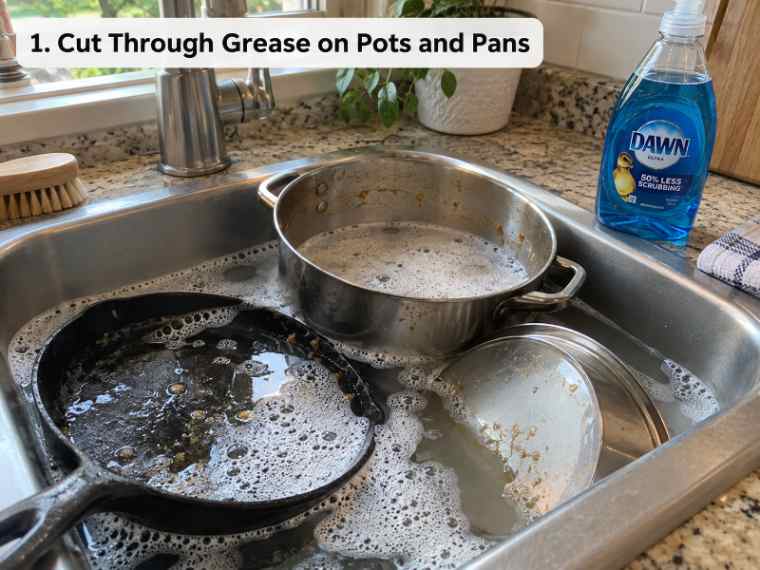
This is the job Dawn was made for. Add a small squirt to warm water and let greasy cookware soak before washing. Giving the soap a few minutes to loosen cooked-on fats can mean much less scrubbing.
For particularly stubborn glass baking dishes, soaking is also a useful first step. If burnt-on food is the real problem, this method for cleaning stubborn baked-on residue from Pyrex uses dish soap as part of a longer cleaning process.
2. Loosen baked-on food from casserole dishes
Fill the cooled dish with warm water, add a small amount of Dawn and leave it to soak. Once the food has softened, use a non-abrasive sponge so you do not create scratches while trying to remove the residue.
It is a simple approach, but often the soaking time does more work than aggressive scrubbing.
3. Clean greasy stovetops
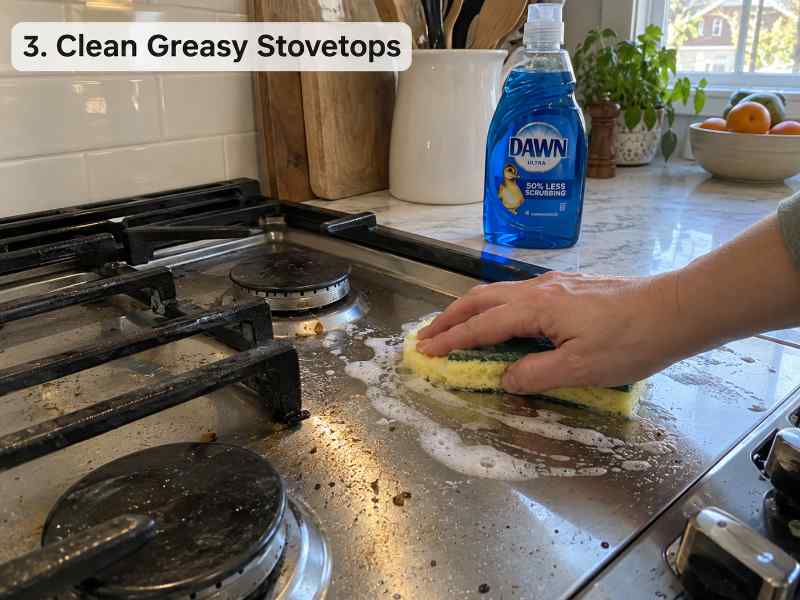
Cooking splatters can leave a thin film of grease around burners and across the stovetop. Put a few drops of Dawn into warm water, dampen a cloth or sponge and wipe the surface once it has cooled.
Follow the appliance manufacturer’s cleaning instructions, particularly for specialty glass or coated surfaces.
4. Wipe down the microwave
Food splashes inside a microwave often contain grease, which makes diluted dish soap useful for routine cleaning. Wipe the interior with a cloth dipped in warm soapy water, then go over it again with a clean damp cloth to remove residue.
Avoid soaking vents, controls or electrical areas.
5. Wash refrigerator shelves and drawers
Removable refrigerator shelves and drawers collect spills, sticky marks and oily food residue. Once the parts have reached a safe temperature for washing, warm water and a little Dawn can clean them without needing a heavily scented household spray.
Rinse them well and dry them before putting food back.
6. Degrease cabinet handles and knobs
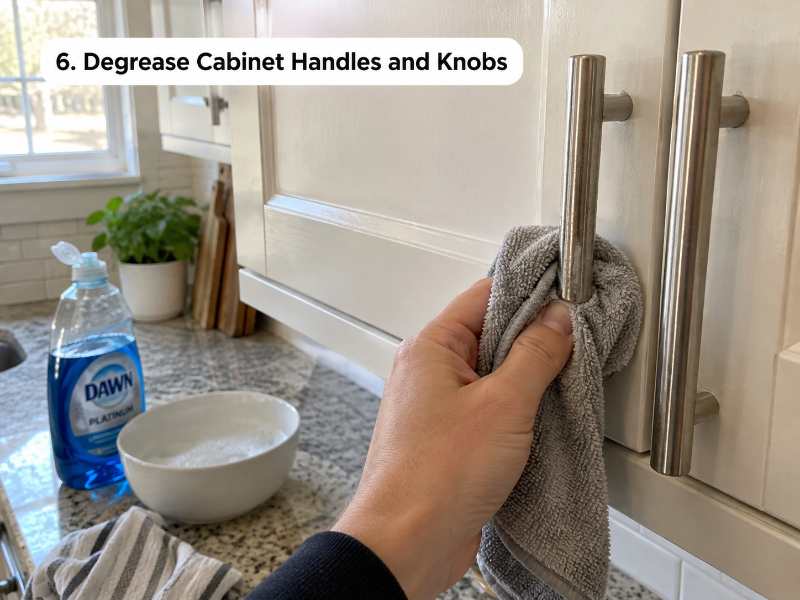
Cabinet hardware near a cooker can develop a surprisingly stubborn coating of cooking oil mixed with dust. A cloth dipped in diluted Dawn solution can help loosen that film.
Wring the cloth out well rather than flooding the hardware, particularly when it is attached to wooden cabinets.
7. Clean blender jars and removable mixer parts
A greasy blender jar can be easier to clean when you add warm water and a drop or two of dish soap immediately after use. Wash removable parts according to the appliance instructions and keep motors, plugs and electrical connections away from water.
8. Tackle dirty oven racks
Once oven racks are completely cool and removed from the oven, soak them in warm soapy water if their care instructions allow it. Dawn includes oven racks among the household items suitable for cleaning with its products.
A soak helps soften greasy residue before you start scrubbing.
9. Clean reusable lunch boxes
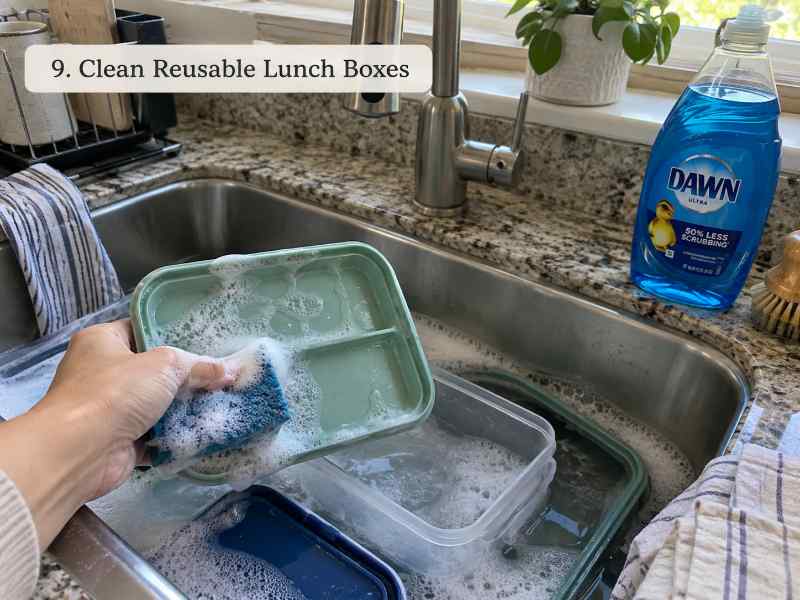
Lunch boxes regularly collect crumbs, oily fingerprints and food spills. Plastic or other washable lunch boxes can usually be cleaned with warm water and dish soap, followed by a thorough rinse and complete drying.
Pay particular attention to seams and corners where food residue tends to collect.
10. Wash coolers after picnics and camping trips
A cooler that has held food, drinks and melting ice can quickly become grubby. Remove loose debris first, then wash suitable interior and exterior surfaces with diluted dish soap.
Leave the cooler open until completely dry before storing it to prevent stale odours from developing.
Laundry and stain removal
11. Pretreat grease stains on washable clothes
A small amount of Dawn can be useful when cooking oil or greasy food lands on clothing. Dawn recommends applying a limited amount directly to suitable cotton or polycotton fabric as a stain pretreatment before washing with normal laundry detergent. It also recommends spot testing and avoiding delicate fabrics such as silk.
Dish soap should not simply be poured into the washing machine as a replacement for laundry detergent. Its high level of suds can create problems in a machine. For more approaches to everyday stains, see these homemade stain-removal ideas for clothing and household fabrics.
12. Deal with greasy kitchen towels by hand
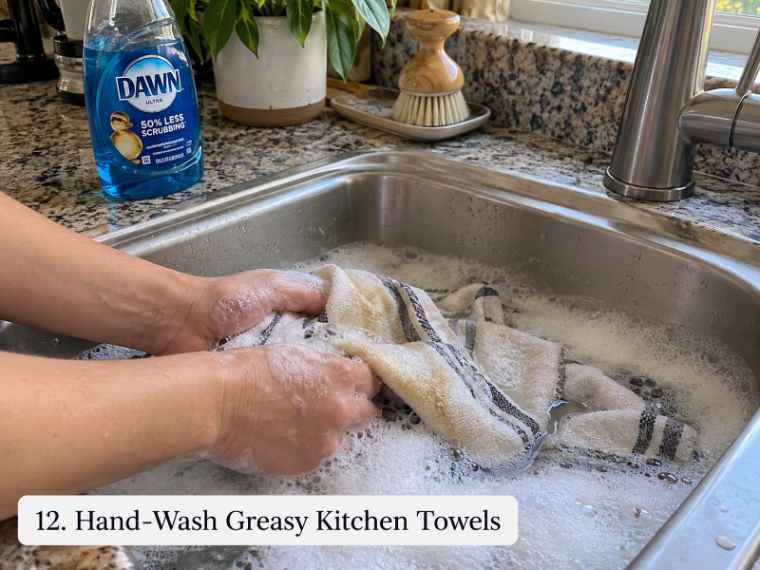
When a washable kitchen cloth has picked up cooking oil, a few drops of dish soap in a basin of water can help loosen it before normal laundering.
Rinse thoroughly and then wash according to the fabric’s care label. This is particularly useful for a small item that you do not want sitting oily in the laundry basket.
13. Spot-treat washable fabric before a stain sets
Sauces, salad dressings and other oily foods are often easier to deal with before they have been through a dryer. Blot away excess material without spreading it, then use a very small amount of dish soap on a washable, colourfast fabric.
Always check the care label first. Dawn specifically advises against using its laundry pretreatment method on dry-clean-only items and delicate materials such as silk and velvet.
14. Clean washable baseball caps
For washable caps that can safely get wet, mild dish soap can help remove oily marks left by skin and hair. Use a small amount in water and work gently on the dirty areas rather than automatically soaking the entire hat.
Check the care label first, since some caps contain materials in the brim that should not be saturated.
In the bathroom
15. Cut through soap scum on shower glass
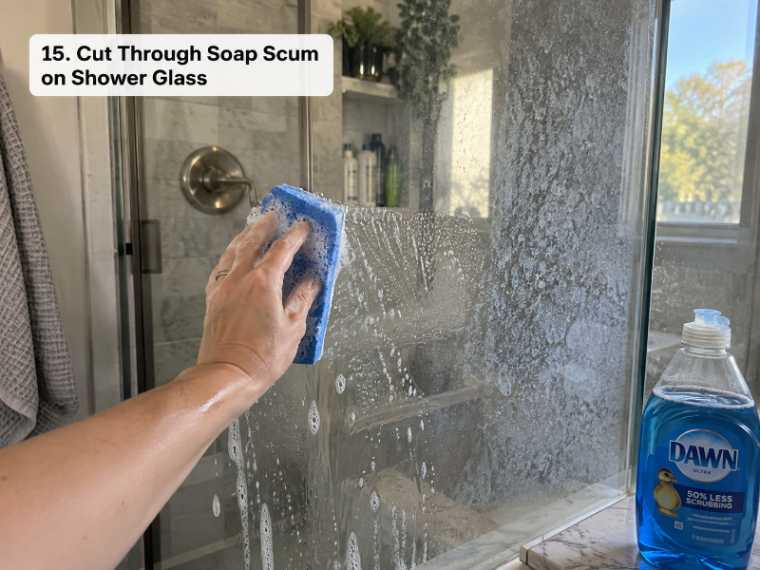
Soap scum contains body oils, soap residue and minerals, so a grease-cutting detergent can help loosen the oily part of the buildup. Dawn lists shower glass doors among its cleaning uses.
For a more detailed cleaning routine, see this guide to preventing and removing soap scum from glass shower doors. Be cautious with specially treated or coated glass, which may require a manufacturer-approved cleaner.
16. Wash the bathtub
A little Dawn in warm water can handle ordinary body oils and grime around many washable tubs. Apply it with a soft sponge, then rinse carefully so no slippery soap residue remains.
For heavier bathroom buildup, the site’s DIY tub, tile and grout cleaner offers a more targeted cleaning method.
17. Clean bathroom tiles
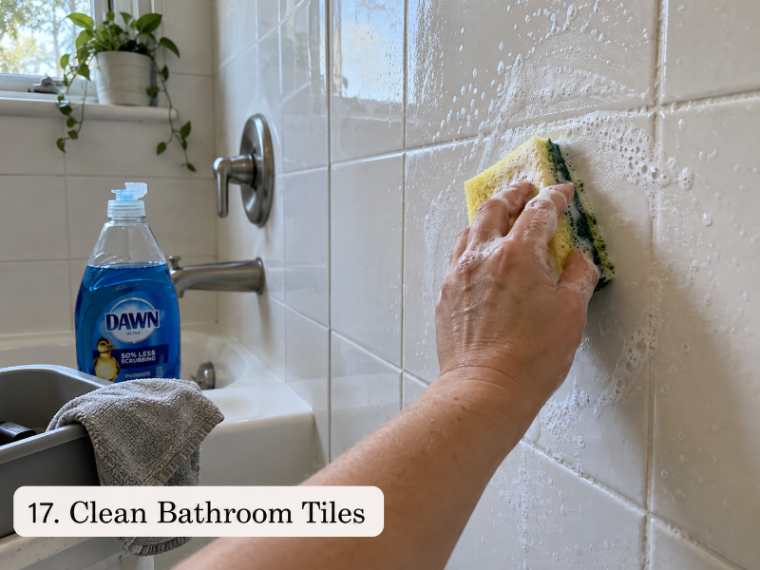
For routine dirt on suitable ceramic or similar washable tile, diluted dish soap is often enough. Wipe with a sponge or cloth and rinse afterward.
Natural stone needs different treatment, so do not assume a cleaner suitable for ceramic tile is suitable for marble, travertine or another porous stone.
18. Wash toothbrush holders and soap dishes
These small bathroom items tend to gather toothpaste, soap residue and grime around their bases. If the material is washable, a quick soak or scrub in warm soapy water makes them much easier to clean.
Rinse thoroughly before returning toothbrushes or other personal-care items.
19. Clean hairbrushes and combs
Hairbrushes and combs collect natural oils, styling products and dust. Remove trapped hair first, then wash suitable plastic or washable parts in warm water with a little Dawn.
Avoid soaking wooden brushes, padded brush bases or anything the manufacturer says should stay dry.
20. Wash reusable makeup sponges
Dawn lists makeup sponges and blenders among its suggested uses. A small amount of dish soap can help break down oily makeup in a washable sponge.
Work the soap through gently, rinse repeatedly until the water runs clear, and allow the sponge to dry completely. If the sponge is deteriorating, stained beyond cleaning or has an unusual smell, replacing it is a better option.
Around the house
21. Wash window screens
Window screens trap dust, pollen and grime that can be awkward to remove with a dry cloth. If the screen can safely be removed, use a soft brush or sponge with diluted dish soap, rinse it gently and let it dry before reinstalling.
Dawn includes window screens among its suggested cleaning uses.
22. Clean ordinary window glass
A very small amount of dish soap in water can help lift greasy fingerprints from ordinary untreated glass. The important part is restraint: too much soap can leave a film and create more streaks than it removes.
Use a clean squeegee or lint-free cloth to finish. Avoid specialty coated glass unless its manufacturer says dish soap is acceptable.
23. Scrub plastic storage bins
Storage tubs can become dusty in a garage, attic or cupboard, while kitchen bins may also collect oily marks. Wash suitable plastic containers with warm water and Dawn, rinse them and let them dry completely before refilling them.
24. Freshen trash cans
After emptying the bin, remove loose debris and wash the inside with warm soapy water if the material permits it. Pay attention to the lid and rim, where spills often collect unnoticed.
Dish soap cleans dirt and grease, but ordinary Dawn should not be treated as a disinfectant unless the particular product label specifically makes that claim.
25. Clean plastic doormats and car floor mats
Hard plastic and rubber-style mats can accumulate mud, food residue and road grime. Shake or brush away loose dirt first, then scrub washable mats with soapy water before rinsing.
Do this somewhere the runoff can be handled appropriately rather than washing oily grime directly into a storm drain.
Outdoors and in the garage
26. Wash patio furniture
Plastic and other washable outdoor furniture often needs little more than soapy water to remove ordinary dirt, bird mess and greasy fingerprints. Dawn lists patio furniture among its suggested uses.
Test first if the furniture has a painted, stained or specialty finish, and avoid using Powerwash on finished wood or painted surfaces that the manufacturer says are unsuitable.
27. Clean garden tools
After removing clumps of soil, washable garden tools can be scrubbed with warm water and a little dish soap to remove dirt and greasy residue. Dry metal tools promptly afterward to reduce the chance of rust.
Dish soap cleans the surface, but it is not a substitute for appropriate disinfection when you specifically need to prevent plant diseases spreading between plants.
28. Make a simple fly trap
Dish soap can also play a small but useful role in a homemade fly trap. A few drops added to an appropriate liquid bait reduce the liquid’s surface tension, making it harder for small flies that land on it to remain on the surface.
If flies are becoming a regular problem, removing the food, rubbish or organic material attracting them matters more than repeatedly setting traps. The site’s guide to old-school methods for controlling flies around the home includes a simple jar trap using dish soap.
A bottle of Dawn is not a replacement for every cleaner in the cupboard, but it can cover considerably more jobs than washing dishes. Used in small quantities and on appropriate surfaces, it is particularly handy anywhere grease and oily residue are the main problem.
The most useful habit is also the simplest: start with the mildest cleaning method that is likely to work. A few drops of dish soap and warm water may be all you need. If that fails, you can move on to something more specialised without having used an unnecessarily aggressive cleaner first.
Frequently Asked Questions
Can I use Dawn dish soap in a washing machine?
Not as a substitute for laundry detergent. Dawn warns that dish soap produces lots of suds and can cause problems in washing machines, although small amounts can be used as a stain pretreatment when its directions are followed.
Can Dawn be used on every household surface?
No. Suitability depends on both the product and the surface. Dawn specifically lists several materials to avoid with Powerwash, including marble, leather, precious metals and many painted, varnished or finished surfaces.
Does Dawn disinfect surfaces?
Do not assume ordinary dish soap is a disinfectant. It can remove grease and dirt during cleaning, but use an appropriately labelled disinfecting product when disinfection is required.
Can I mix Dawn with other household cleaners?
It is safer not to improvise chemical mixtures. In particular, never mix household cleaners containing bleach with ammonia or acids. When combining any cleaning products, follow the product labels rather than assuming common household ingredients are automatically compatible.
How much Dawn should I use for household cleaning?
Usually very little. For general washing, start with a few drops in water and add more only if necessary. Excess soap takes longer to rinse and can leave a sticky or streaky film.
Is Dawn safe for delicate fabrics?
Not automatically. Dawn advises spot testing its laundry pretreatment method and says not to use it on delicate fabrics such as silk. Always check the garment’s care label before treating a stain.