

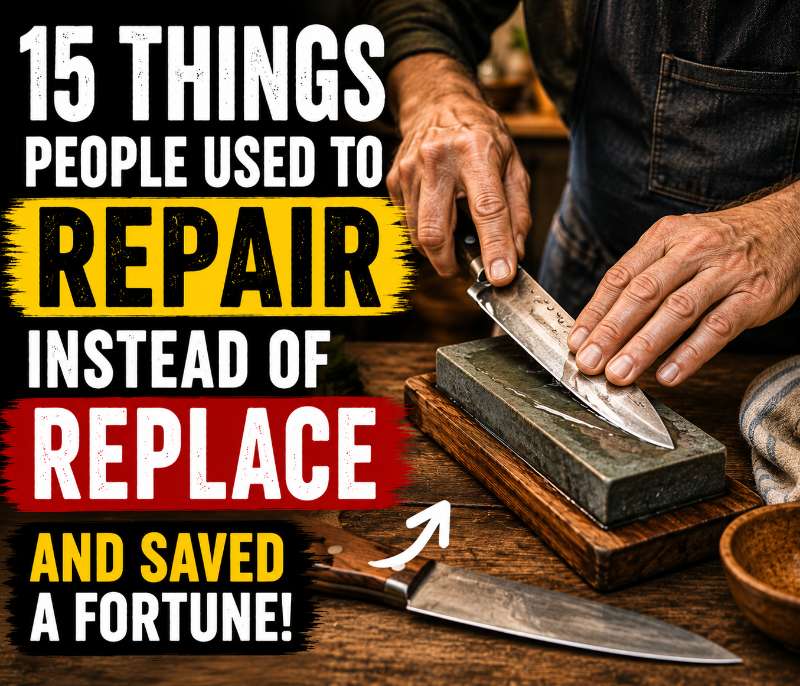
15 Things People Used To Repair Instead Of Replace (And Saved A Fortune)
Have you ever noticed how quickly people throw things away today?
A toaster stops working. Into the bin.
A chair gets wobbly. Off to the curb.
A shirt gets a small tear. Time for a new one.
But our grandparents lived very differently. They grew up in a time when money was tight, resources mattered, and replacing something wasn’t always an option. Instead, they learned how to repair, patch, sharpen, rebuild, and reuse.
The result? They saved thousands of dollars over a lifetime and produced far less waste.
Many of these old-fashioned repair habits are making a comeback today as people look for ways to cut costs and become more self-sufficient.
Here are 15 things previous generations repaired instead of replacing.
🪑 1. Wooden Furniture
A scratched table wasn’t considered ruined.
People sanded, stained, painted, or refinished furniture to make it look new again.
Many pieces that are over 100 years old are still being used today because someone took the time to repair them.
👖 2. Clothing
Torn knees, missing buttons, loose seams, and worn elbows were repaired instead of discarded.
Simple sewing skills could extend the life of clothing by years.
Today, a basic sewing kit can save hundreds of pounds each year.
🔪 3. Kitchen Knives
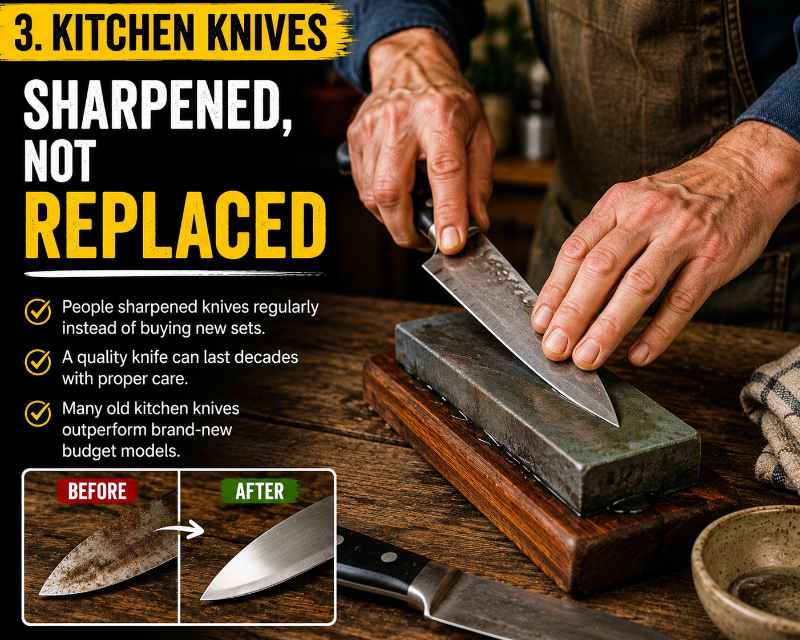
People sharpened knives regularly rather than buying new sets.
A quality knife can last decades with proper care.
Many old kitchen knives outperform brand-new budget models.
🚲 4. Bicycles
Flat tyre?
Broken chain?
Loose brakes?
People repaired them themselves.
Basic bicycle maintenance can keep a bike running for decades.
🛏️ 5. Mattresses
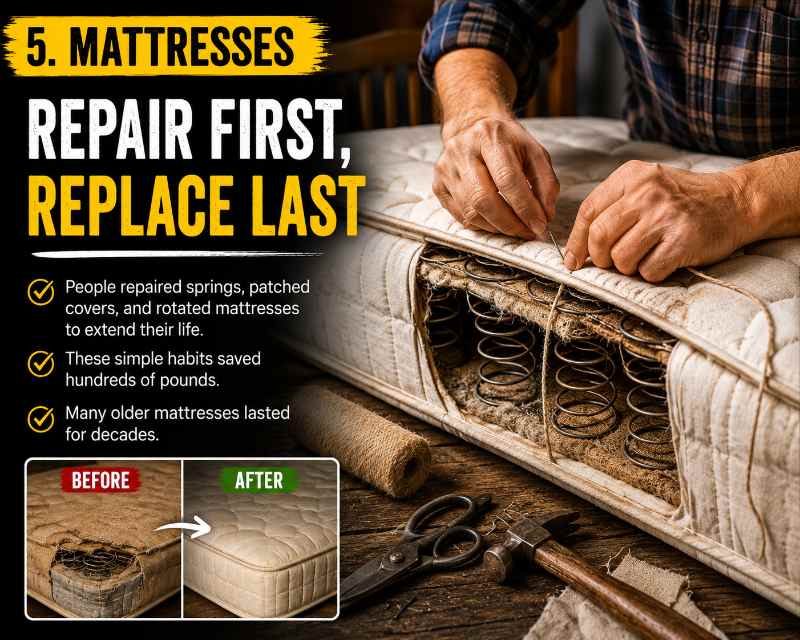
Instead of replacing an entire mattress, people often repaired springs, patched covers, and rotated them frequently to extend their lifespan.
⚒️ 6. Hand Tools
A broken wooden handle didn’t mean replacing the whole tool.
New handles were fitted to hammers, axes, shovels, and garden tools.
Many antique tools remain perfectly usable today.
🚜 7. Lawn Mowers
People repaired engines, sharpened blades, and replaced worn parts.
Modern lawn mowers are often thrown away for problems that cost only a few pounds to fix.
🕰️ 8. Clocks
Grandfather clocks and wall clocks were passed down through generations because people repaired and maintained them.
Some are still running after more than a century.
🍳 9. Cast Iron Cookware
A rusty pan wasn’t rubbish.
It was scrubbed, seasoned, and restored.
Many cast iron pans become better with age.
🥾 10. Boots And Shoes
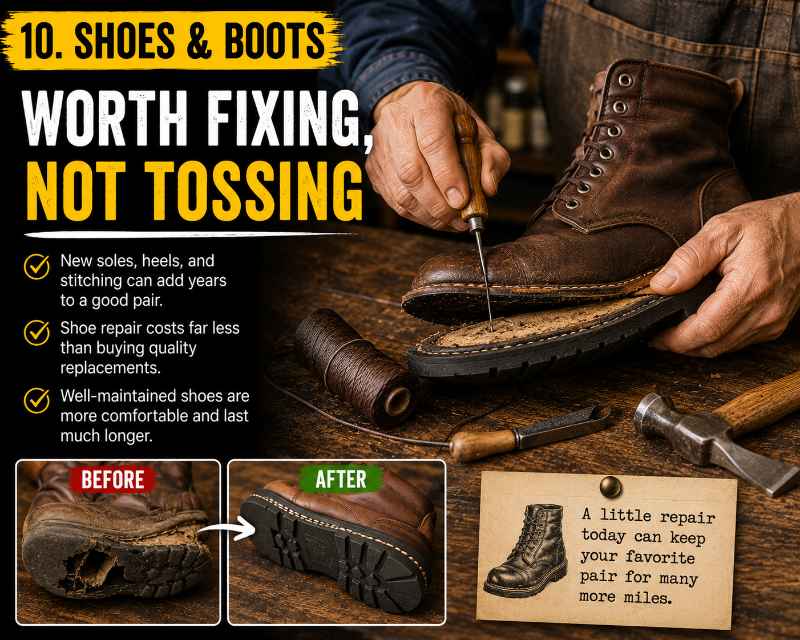
Cobblers were once found in nearly every town.
Soles were replaced, leather was repaired, and worn heels were fixed.
One good pair of boots could last many years.
📻 11. Radios
Old radios were frequently repaired rather than replaced.
Many vintage units from the 1940s and 1950s still work today.
🌂 12. Umbrellas
Broken ribs, torn fabric, and loose handles were repaired.
A quality umbrella was considered worth fixing.
🪟 13. Window Screens
Small tears were patched.
Frames were repaired.
Entire screens weren’t automatically replaced.
🧺 14. Laundry Appliances
People often repaired washing machines and dryers themselves using simple replacement parts.
Today many appliances are discarded because of minor faults.
🚪 15. Doors And Cabinets
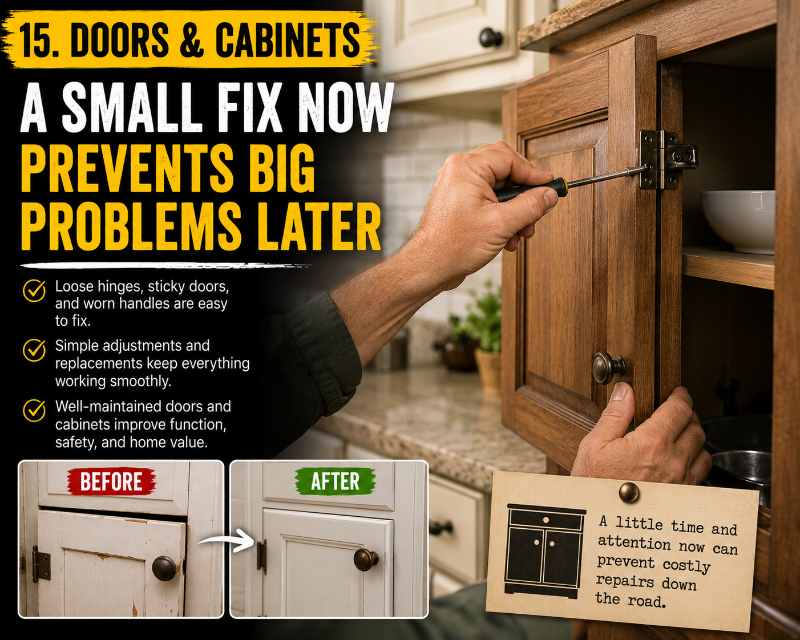
Loose hinges, sticking doors, broken handles, and damaged catches were all repaired.
A few minutes of maintenance often prevented expensive replacements.
💰 Why Repairing Saves So Much Money
Every repaired item means:
✅ Less money spent
✅ Less waste sent to landfill
✅ More self-sufficiency
✅ Better quality possessions
✅ Useful skills for future generations
The average family throws away hundreds of pounds worth of repairable items every year.
Learning even a handful of basic repair skills can have a huge impact on your budget.
🛠️ Simple Repair Skills Worth Learning
- Sewing on a button
- Sharpening knives
- Fixing loose screws
- Replacing tool handles
- Patching small holes
- Sanding and refinishing wood
- Basic bicycle maintenance
- Simple appliance troubleshooting
These skills often pay for themselves after just one repair.
🌟 Final Thoughts
Our grandparents understood something many people have forgotten:
The cheapest item is often the one you already own.
Before throwing something away, ask yourself if it can be repaired, sharpened, patched, tightened, cleaned, or restored.
You might save money, reduce waste, and discover a useful skill in the process.
Sometimes the old ways really were the smartest ways.