

3 Signs of a Growing Prostate You Should Never Ignore

Waking up several times a night to use the bathroom? Noticing a weaker urine stream? These everyday changes could be telling you something important about your prostate health.
It’s 3 a.m., and you’re awake again for another trip to the bathroom. You tell yourself it’s probably just your age or that extra glass of water before bed. But when it starts happening night after night, you begin to wonder if something else is going on.
For millions of men, changes in bathroom habits are among the first noticeable symptoms of an enlarged prostate. Unfortunately, many brush them off as a normal part of aging, even when those small inconveniences start affecting their sleep, confidence, and everyday routines.
The good news is that an enlarged prostate is usually not cancer, and effective treatments are available. However, similar symptoms can sometimes be caused by other medical conditions, which is why getting checked is so important.
Here are three common signs of an enlarged prostate, what they could mean, and where men in the United States can go for professional advice.
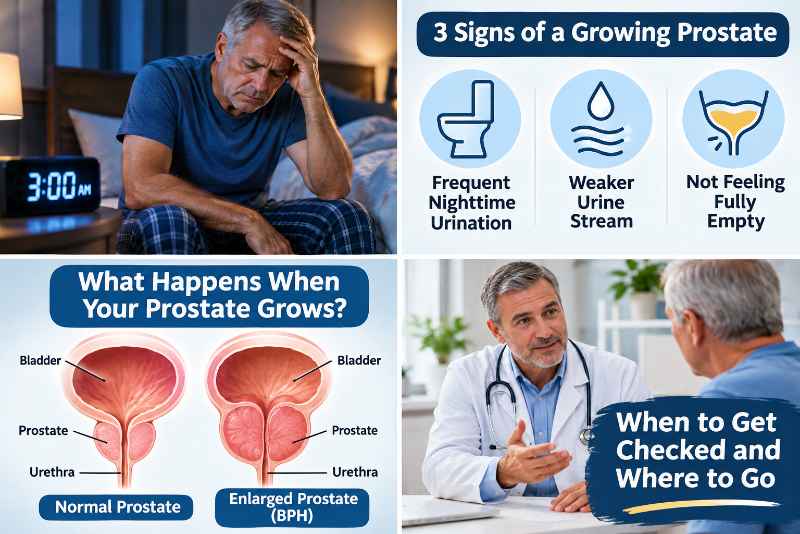
What Is an Enlarged Prostate?
The prostate is a small, walnut-sized gland located just below the bladder. It surrounds the urethra, the tube responsible for carrying urine out of the body. As men get older, the prostate often grows larger, a condition doctors call benign prostatic hyperplasia (BPH).
BPH is especially common in men over 50. As the prostate enlarges, it can put pressure on the urethra, making it more difficult for urine to pass through normally. This can lead to changes in how often you use the bathroom, how easily you urinate, and whether your bladder empties completely.
While prostate enlargement is common, that doesn’t mean you should ignore uncomfortable symptoms. Recognizing changes early gives you the opportunity to discuss treatment options before they become a bigger problem.
1. You’re Waking Up More Often at Night to Urinate
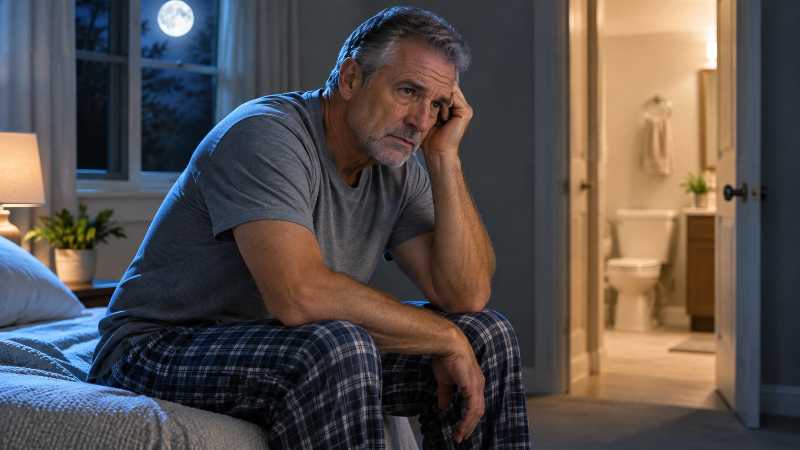
Remember when you could sleep through the night without needing the bathroom? If those uninterrupted nights are becoming a distant memory, your prostate could be one possible reason.
Frequent nighttime urination, medically known as nocturia, is a common symptom of an enlarged prostate. When the prostate interferes with normal bladder emptying, you may feel the urge to urinate more frequently, even when your bladder isn’t particularly full.
Common signs to watch for include:
- Waking up more frequently than usual to urinate.
- Feeling an urgent need to go, even when little urine comes out.
- Needing another bathroom trip shortly after you’ve just been.
- Losing sleep because of repeated nighttime bathroom visits.
Of course, waking up occasionally doesn’t automatically mean you have a prostate problem. Drinking too much before bedtime, consuming caffeine or alcohol, certain medications, diabetes, and sleep disorders can also contribute to nighttime urination.
The important thing is recognizing when your normal routine changes. If you’re regularly waking up several times a night and feeling exhausted the next morning, it’s worth mentioning to your healthcare provider.
2. Your Urine Stream Is Weaker Than It Used to Be
This is one of those symptoms many men notice but rarely talk about. You go to the bathroom, but instead of a strong, steady stream, the flow seems weaker than it used to be. Sometimes you stand there waiting for urination to begin, or the stream stops and starts unexpectedly.
As the prostate grows, it can press against the urethra and restrict urine flow. The bladder then has to work harder to push urine through the narrowed opening.
Other warning signs may include:
- Difficulty getting urination started.
- A noticeably weaker or slower urine stream.
- Having to strain or push to urinate.
- Urine flow that repeatedly stops and starts.
- Dribbling after you’ve finished using the bathroom.
These changes often develop gradually, making them surprisingly easy to overlook. You might not realize how much your bathroom habits have changed until something that once took a few seconds starts taking considerably longer.
Although an enlarged prostate is a common explanation, a weak urine stream can also be caused by other conditions, including bladder problems or narrowing of the urethra. A medical evaluation can help determine the actual cause.
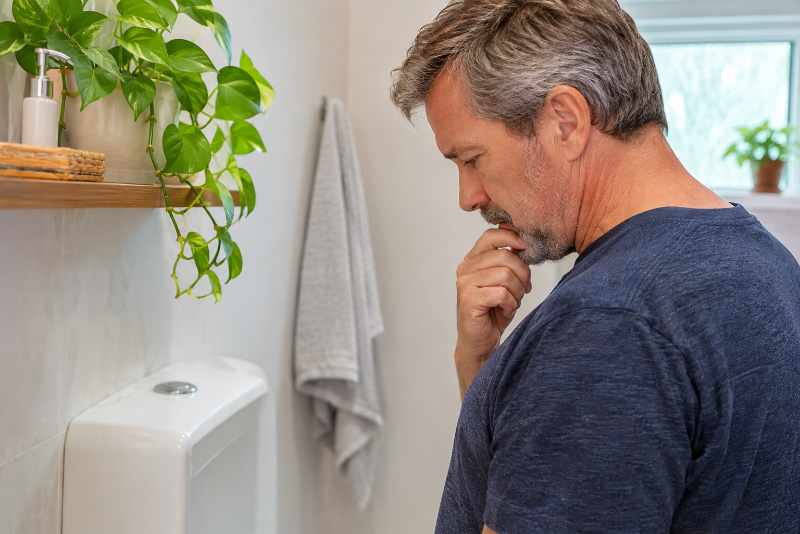
3. You Never Feel Like Your Bladder Is Completely Empty
Have you ever finished using the bathroom, only to feel like you need to go again five minutes later? That frustrating sensation can be another possible sign of an enlarged prostate.
When an enlarged prostate restricts urine flow, the bladder may struggle to empty properly. Some urine can remain behind, leaving you feeling uncomfortable or needing another bathroom visit sooner than expected.
Symptoms to look out for include:
- Feeling as though urine is still left in your bladder.
- Needing to urinate again shortly after going.
- Frequent urges to urinate throughout the day.
- Passing small amounts of urine despite feeling the need to go.
- Occasional dribbling or urine leakage.
For some men, these problems become more than a minor inconvenience. Long car journeys, shopping trips, family outings, and even watching a movie can become stressful when you’re constantly looking for the nearest restroom.
Persistent difficulty emptying your bladder should be assessed by a healthcare professional. In some cases, untreated urinary retention can contribute to bladder infections, bladder damage, or kidney problems.
Does an Enlarged Prostate Mean You Have Cancer?
This is often the first question men worry about when they start experiencing urinary symptoms. Fortunately, having an enlarged prostate does not automatically mean you have prostate cancer.
Benign prostatic hyperplasia is a noncancerous condition, and BPH itself does not increase your risk of developing prostate cancer. However, prostate cancer and other urinary conditions can sometimes cause similar symptoms.
It’s also important to understand that early prostate cancer often causes no noticeable symptoms at all. This is why discussing prostate cancer screening with your doctor is important, even when you feel healthy.
According to the American Cancer Society, men should have the opportunity to discuss prostate cancer screening with their healthcare provider at the following ages:
- Age 50: Men at average risk who are expected to live at least another 10 years.
- Age 45: Men at higher risk, including African American men and those with a father or brother diagnosed with prostate cancer before age 65.
- Age 40: Men at even higher risk, including those with more than one first-degree relative diagnosed at an early age.
These recommendations concern when to discuss screening, rather than requiring everyone to be tested. If you’re already experiencing urinary symptoms, you should speak with a healthcare professional regardless of your age.
Where Can You Get Your Prostate Checked?

Many men delay getting checked because they’re embarrassed or unsure where to start. The reality is that prostate and urinary problems are common medical concerns, and healthcare professionals deal with them regularly.
You don’t necessarily need a specialist appointment to begin investigating your symptoms.
Your Primary Care Doctor
Your family doctor or primary care provider is usually the best place to start. They can discuss your symptoms, review your medical history, carry out an initial examination, and recommend appropriate tests.
A Urologist
A urologist specializes in conditions affecting the urinary tract and male reproductive system. If your symptoms are persistent, severe, or require further investigation, your doctor may refer you to one.
Community Health Centers
If you don’t have health insurance or are concerned about costs, federally supported community health centers may be able to help. These centers provide primary healthcare services to insured and uninsured patients, with fees that may be adjusted according to income.
You can find a participating health center near you using the official U.S. Health Resources and Services Administration website:
Simply enter your ZIP code to explore available healthcare locations.
What Happens During a Prostate Examination?
One of the biggest reasons men put off getting checked is worrying about what the appointment might involve. In reality, the first step is often a straightforward conversation about your symptoms.
Your healthcare provider may ask how frequently you urinate, whether your stream has changed, and if you’re experiencing pain or difficulty emptying your bladder. Depending on your symptoms, they may recommend one or more of the following tests:
- Urine test: Checks for infections, blood, and other abnormalities.
- Physical examination: May include a digital rectal examination to assess the prostate.
- PSA blood test: Measures prostate-specific antigen, which can be elevated for several reasons, including prostate enlargement, inflammation, and prostate cancer.
- Bladder ultrasound: Helps determine whether urine remains in your bladder after urination.
- Urine flow test: Measures how quickly and easily urine passes.
Not every man will need every test. Your doctor will recommend the most appropriate examinations based on your medical history, symptoms, and individual risk factors.
Can You Do Anything to Help an Enlarged Prostate?
If your symptoms are mild, your healthcare provider may suggest monitoring the condition alongside simple lifestyle adjustments. Although these changes won’t necessarily shrink your prostate, they may help reduce certain urinary symptoms.
Helpful habits may include:
- Limiting caffeine and alcohol if they worsen your symptoms.
- Avoiding large amounts of fluid shortly before bedtime while staying properly hydrated.
- Staying physically active and maintaining a healthy lifestyle.
- Taking your time when urinating and avoiding holding urine for unnecessarily long periods.
- Discussing medications with your doctor, since certain cold remedies and other medicines can worsen urinary symptoms.
For more troublesome cases, prescription medications may help improve urine flow or reduce prostate size. Other treatments, including minimally invasive procedures and surgery, may be recommended when symptoms are severe or complications develop.
Always discuss treatment options with a qualified healthcare professional rather than relying on supplements or unproven home remedies.
When Should You Seek Medical Attention Immediately?
Although most enlarged prostate symptoms develop slowly, certain changes require urgent medical attention.
Seek immediate medical care if you experience:
- A sudden inability to urinate.
- Blood in your urine.
- Fever and chills accompanied by painful or frequent urination.
- Severe discomfort or pain in your lower abdomen or urinary tract.
Suddenly being unable to urinate at all is a medical emergency, particularly if you have significant lower abdominal pain or swelling. Go to an emergency department rather than waiting for a routine appointment.
Frequently Asked Questions About an Enlarged Prostate
Is it normal for your prostate to grow as you age?
Yes. Prostate enlargement becomes increasingly common as men get older, particularly after age 50. However, troublesome urinary symptoms should not automatically be dismissed as normal aging.
Can you have an enlarged prostate without symptoms?
Absolutely. Some men have an enlarged prostate without experiencing noticeable urinary problems. Others may develop uncomfortable symptoms even when their prostate is only slightly enlarged.
Does drinking less water shrink your prostate?
No. Drinking less water will not shrink an enlarged prostate. Adjusting your fluid intake before bedtime may help reduce nighttime bathroom visits, but staying properly hydrated remains important.
Can an enlarged prostate go away on its own?
Symptoms may remain stable or fluctuate, but an enlarged prostate does not usually return to its previous size without treatment. Depending on the severity of your symptoms, your doctor may recommend monitoring, medication, or other treatments.
Final Thoughts: Don’t Ignore the Small Changes
Getting older comes with plenty of changes, but constantly losing sleep, struggling to urinate, or worrying about where the nearest bathroom is shouldn’t be something you simply accept.
An enlarged prostate is common, and many men can successfully manage their symptoms with appropriate medical care. The most important thing is identifying what’s causing the problem rather than guessing or hoping it will disappear.
**If you’ve noticed a weaker urine stream, frequent nighttime urination