

20 Ways To Reuse A 2-Liter Soda Bottle for Survival
Make sure to like Living Green and Frugally on Facebook, Shop at Amazon to help support my site and explore our PINTEREST BOARDS for innovative ways you can become self-sufficient.
20 Clever Ways To Reuse A 2-Liter Soda Bottle For Survival
That empty 2-liter soda bottle sitting in your recycling bin might look like rubbish, but in a survival situation it can become one of the most useful items you own. Seriously, this simple plastic bottle can store water, protect seedlings, help with food storage, catch fish, make a funnel, become a lantern, and even help you stay cleaner outdoors.
It is lightweight, free, easy to cut, easy to carry, and surprisingly strong. That is exactly why old soda bottles deserve a place in your emergency kit, camping box, garden shed, and pantry.
The best part? You do not need fancy tools or expensive survival gear to use these ideas. Most of them can be made with a clean bottle, a knife or scissors, a nail, string, and a little common sense.
Before you throw your next bottle away, here are 20 clever ways to reuse a 2-liter soda bottle for survival.
Before You Start: Clean It Properly First
Before using a soda bottle for water, food, plants, or anything that touches your skin, wash it well with hot soapy water and rinse it thoroughly.
For drinking water storage, only reuse bottles that held drinks, not bottles that held chemicals, cleaners, oil, fuel, or anything toxic. If you are storing emergency water, label the bottle with the date and keep it in a cool, dark place.
A soda bottle is useful, but it is still plastic. Do not place it directly in flames, do not use it for boiling water, and do not leave drinking water sitting in extreme heat for long periods if you can avoid it.
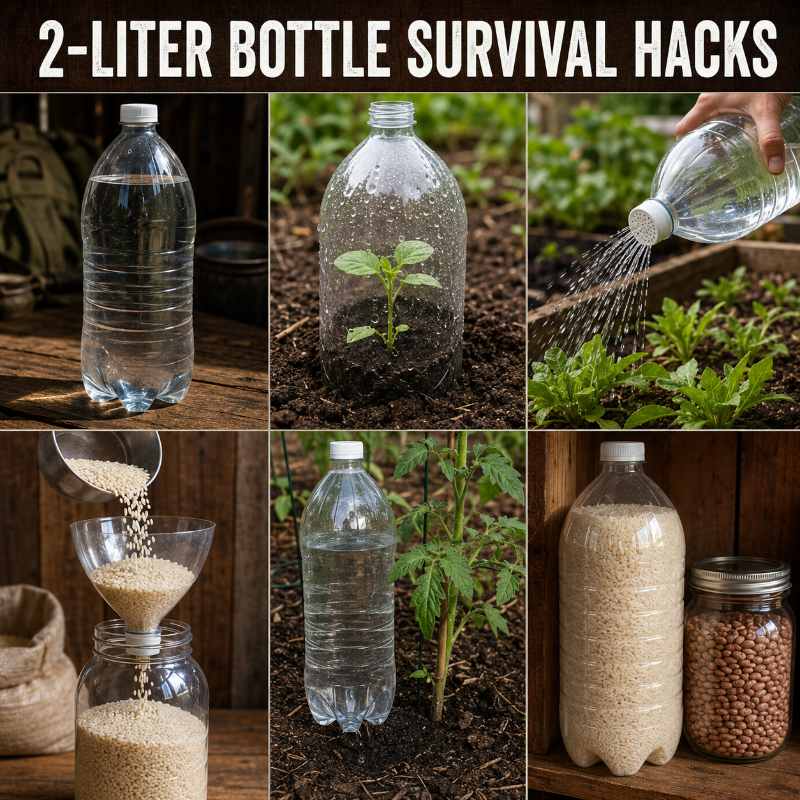
1. Emergency Drinking Water Storage
One of the simplest survival uses for a 2-liter bottle is storing water. Clean bottles can be filled with tap water and kept for emergencies, power cuts, camping, or car breakdowns.
A few bottles under the sink, in the garage, or in a cupboard can give you a small backup water supply when the taps are off or a storm rolls in.
Tip: Rotate stored water every few months and write the date on the bottle with a marker.
2. Frozen Ice Blocks For Coolers
Fill clean bottles about three-quarters full with water and freeze them. These make brilliant ice blocks for coolers, camping trips, picnic boxes, or power outages.
Unlike loose ice, they do not turn your food into a soggy mess when they melt. Once melted, the water can also be used for washing hands, rinsing items, or drinking if the bottle was properly cleaned first.
This is one of those simple tricks that feels too easy, but it works.
3. DIY Watering Can
Poke small holes in the bottle cap, fill the bottle with water, screw the cap back on, and you have a quick homemade watering can.
This is handy for seedlings, container gardens, emergency food gardens, and small raised beds. It gives a softer sprinkle than pouring straight from a jug, which helps avoid washing seeds away.
It is also a great idea for kids learning to help in the garden.
4. Mini Greenhouse For Seedlings
Cut the bottom off a clear 2-liter bottle and place the top half over a young plant. It acts like a tiny cloche or mini greenhouse.
This helps protect seedlings from wind, cold nights, heavy rain, birds, and some insects. You can unscrew the cap during the day to let heat escape, then put it back on when temperatures drop.
This is a brilliant frugal gardening trick, especially in early spring.
5. Seed Starter Pot
Cut a bottle in half, poke a few drainage holes in the bottom, add soil, and use it as a seed starter pot.
You can start herbs, tomatoes, peppers, lettuce, flowers, and other small plants this way. If you cut the bottle carefully, the top can be used as a humidity dome while the seed germinates.
Free plant pots are always a win.
6. DIY Funnel
Cut off the bottom of the bottle and use the top half as a funnel. The neck of the bottle is perfect for pouring liquids, grains, rice, beans, bird seed, compost tea, fuel, or cleaning mixes.
A funnel is one of those things you never think about until you need one. A plastic bottle solves the problem in seconds.
Keep one in the shed, one near your pantry storage, and one with your camping gear.
7. Dry Food Storage
Clean, dry bottles can be used to store dry goods like rice, lentils, beans, oats, pasta, sugar, salt, or powdered milk.
The screw cap helps keep food contained, and the bottle shape makes it easy to pour. It also keeps loose food tidier than half-open bags in a cupboard.
Important: Make sure the bottle is completely dry before adding food. Any trapped moisture can ruin dry goods.
8. Emergency Scoop Or Small Shovel
Cut the bottle at an angle, leaving the handle section near the neck. This creates a simple scoop for soil, compost, animal feed, sand, ash, or snow.
It is not going to replace a proper shovel, but in a pinch it can be surprisingly useful.
This is ideal for camping, gardening, cleaning out buckets, or moving loose material when you do not have a tool nearby.
9. Simple Fish Trap
Cut the top third off the bottle, turn it around, and push it back inside the bottom section like a funnel. Add bait inside and place it in shallow water where small fish or minnows are present.
The idea is that fish can swim in through the funnel but struggle to find their way back out.
Check local rules before using any fish trap, as fishing laws vary depending on where you live.
10. String Or Twine Dispenser
Put a ball of string, twine, or garden tie inside the bottle. Cut a small hole in the side or feed the end through the bottle opening.
This keeps your string from rolling away, tangling, or getting dirty. It is useful for gardening, tying plants, camping, bundling kindling, or quick repairs.
It is a tiny thing, but it saves frustration.
11. Solar Water Disinfection Backup
In a true emergency, clear plastic bottles can be used as part of solar water disinfection, but only with clear water and the right conditions.
This should not be your first choice if you can boil water or use a proper filter. However, knowing the method can be useful in a survival situation.
The basic idea is to fill a clean, clear bottle with clear water and lay it in strong sunlight. If the water is cloudy, it should be filtered first through cloth, paper towel, or a coffee filter. This method depends on sun exposure, bottle clarity, and water quality, so treat it as a backup emergency method rather than a perfect solution.
12. Portable Hand-Washing Station
Fill a clean bottle with water, poke one or two tiny holes in the cap, and hang or tip it to create a small stream of water for washing hands.
This is handy when camping, gardening, handling chickens, cleaning fish, or dealing with messy outdoor jobs.
Add a bar of soap in a mesh bag nearby and you have a simple off-grid washing station.
13. DIY Outdoor Shower
Poke several small holes in the cap, fill the bottle with water, and hang it upside down from a tree branch, hook, or camping line.
It will not feel like a luxury shower, but it can help rinse off sweat, dirt, sand, or muddy hands and feet.
For a warmer rinse, leave the filled bottle in the sun for a while first. Just test the temperature before using it.
14. Floating Waterproof Container
A tightly sealed 2-liter bottle can float, which makes it useful for keeping small items dry around water.
You can store matches in a sealed bag, a lighter, emergency cash, keys, fishing line, or small first aid items inside. For extra protection, put items in a zip bag before placing them in the bottle.
This is useful for boating, fishing, camping, canoeing, or flood-prone areas.
15. Emergency Signal Device
A clear bottle can reflect sunlight and movement, especially if filled with water or paired with shiny foil inside.
It is not as good as a proper signal mirror, but it may help catch attention in an emergency. You can also tie bright fabric around the bottle and hang it from a branch, fence, or backpack to mark a location.
In survival situations, visibility matters.
16. Plastic Bag Dispenser
Cut the bottom off a bottle, mount it upside down, and stuff plastic bags inside. Pull one bag at a time from the bottle neck.
This is useful in a camper, shed, pantry, garage, or emergency storage area. Bags can be used for rubbish, waterproofing, collecting kindling, carrying wet clothes, or separating dirty items.
Keeping supplies organised makes life easier when things get stressful.
17. Homemade Garden Sprinkler
Poke small holes along the side of a bottle, attach it securely to a hose, and use it as a homemade garden sprinkler.
This is a clever way to water a small garden bed, cool down an area, or gently irrigate plants during dry spells.
You may need tape or a connector to get a good fit, but it is a fun and useful DIY project.
18. Fire Kit Storage
A dry 2-liter bottle can hold fire-starting supplies such as dryer lint, cotton balls, matches in a waterproof bag, small kindling, birch bark, or shredded paper.
The bottle keeps everything together and helps protect the contents from damp conditions.
Important: Do not burn the plastic bottle itself. Plastic fumes are not something you want to breathe.
19. Tool And Hardware Holder
Cut a bottle lengthwise or cut the top off and use it to store small tools, nails, screws, tent pegs, seed packets, cable ties, or repair bits.
You can screw the bottle to a board, hang it on a wall, or keep several in a crate.
This is especially useful in sheds and garages where small items always seem to disappear.
20. Emergency Drip Irrigation
Fill a bottle with water, poke one or two tiny holes near the cap, and bury it upside down near thirsty plants. The water slowly seeps into the soil.
This can help keep plants alive during hot weather, short trips away, or dry spells. It works best with container plants, raised beds, tomatoes, peppers, and thirsty garden crops.
Start with very small holes. You can always make them bigger if the water drains too slowly.
Extra Survival Uses Worth Trying
If you want to stretch this idea even further, 2-liter bottles can also be used as:
- A simple berry or foraging container
- A slug trap in the garden
- A chicken waterer in a pinch
- A scoop for pet food
- A protective cover for sharp tools
- A small rubbish container for camping
- A rainwater collector
- A plant label holder when cut into strips
Once you start looking at empty bottles as raw materials, you will stop seeing them as waste.
Safety Tips When Reusing Plastic Bottles
A 2-liter bottle is useful, but there are a few things to remember:
- Do not use bottles that held chemicals or toxic liquids
- Wash and dry bottles properly before reuse
- Do not use plastic bottles for boiling water over fire
- Do not store drinking water in direct sunlight long term
- Do not use damaged, cloudy, cracked, or smelly bottles for food or water
- Keep sharp cut edges away from children
- Check local laws before using traps for fish or wildlife
- Replace bottles when they become brittle or worn
Simple does not mean careless. A little safety goes a long way.
Why This Works So Well
The beauty of a 2-liter soda bottle is that it is cheap, light, strong, waterproof, transparent, easy to cut, and easy to replace.
In normal life, it is just packaging. In an emergency, it can become a tool.
That is the heart of frugal survival thinking. You do not need to buy every gadget on the market. Sometimes the best preparedness items are already in your home, waiting to be reused.
Common Questions About Reusing 2-Liter Bottles For Survival
Can I store drinking water in old soda bottles?
Yes, clean 2-liter soda bottles can be used for short-term emergency water storage if they are washed, sanitized, filled with clean water, sealed tightly, labelled, and stored properly.
Can I use milk jugs instead?
Milk jugs are not ideal for long-term water storage because they can be harder to clean properly and may break down faster. Soda bottles are usually stronger and better suited for reuse.
How long can I keep emergency water in soda bottles?
For homemade stored water, a good habit is to rotate it regularly. Many people replace stored water every 6 months so it stays fresh and the bottles can be checked for leaks or damage.
Can I boil water inside a plastic soda bottle?
No. Do not place plastic bottles directly over flames or use them as boiling containers. Use a proper metal pot, kettle, or heat-safe container instead.
Are 2-liter bottle survival hacks actually useful?
Yes, especially for camping, gardening, power outages, and short-term emergencies. They are not a replacement for proper gear, but they are excellent backup tools.
Can I use these ideas for homesteading?
Absolutely. The best uses for homesteading are seedling covers, drip irrigation, dry food storage, funnels, scoops, twine dispensers, and mini greenhouses.
Should I keep empty bottles in my emergency kit?
It is worth keeping a few clean empty bottles flattened or stored with your emergency supplies. They take up little space and can be used in many ways.
Final Thoughts
A 2-liter soda bottle is one of those everyday items most people throw away without a second thought. But when you look at it through a survival, camping, gardening, or homesteading mindset, it becomes far more useful than it first appears.
It can store water, grow food, protect plants, organise supplies, help with hygiene, and solve small problems when you do not have the right tool.
So before you toss your next empty bottle into the bin, ask yourself this:
Could this become something useful?
Because in a real emergency, the people who do best are not always the ones with the most expensive gear. They are often the ones who know how to make ordinary things work when it matters most. ♻️