

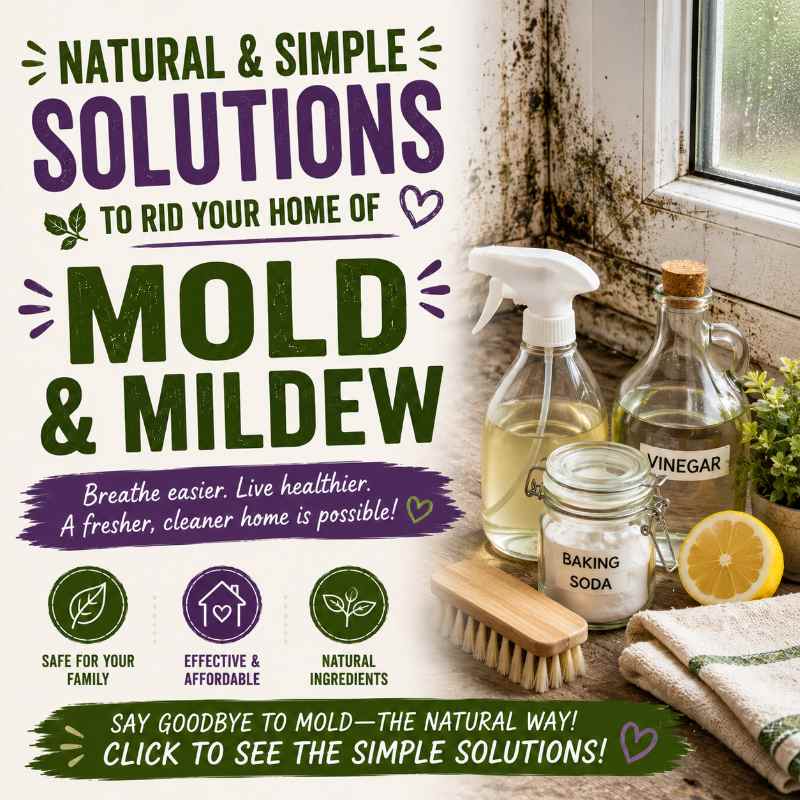
Natural and Simple Solutions to Rid Your Home of Mold and Mildew
Make sure to like Living Green and Frugally on Facebook, Shop at Amazon to help support my site and explore our PINTEREST BOARDS for innovative ways you can become self-sufficient.
Natural and Simple Solutions to Rid Your Home of Mold and Mildew 🏡✨
That black patch in the corner of the bathroom. The musty smell near the window. The fuzzy spots around the shower seal. Mold and mildew can sneak into your home quietly, then suddenly make the whole room feel damp, dirty, and unhealthy.
The good news? You do not always need harsh chemical sprays, expensive treatments, or a cupboard full of fancy cleaners to deal with small areas of mold and mildew. Many simple household items can help clean it, freshen the air, and reduce the damp conditions that allow it to come back.
This guide is all about natural, simple, budget-friendly ways to tackle mold and mildew using things many people already have at home. It is practical, easy to follow, and perfect if you want a cleaner, fresher home without overcomplicating things.
Important note: If you have a large mold problem, recurring black mold, water damage, or anyone in the home has breathing problems, allergies, asthma, or a weakened immune system, it is best to speak to a professional. Small patches can often be cleaned safely, but serious mold should not be ignored.
Mold vs Mildew: What Is The Difference? 🧐
Mold and mildew are both types of fungi, and both love damp, humid spaces. They often appear in bathrooms, kitchens, basements, around windows, behind furniture, and anywhere moisture sits for too long.
Mildew is usually lighter, flatter, and often appears white, grey, or powdery. You might notice it on shower curtains, bathroom tiles, or damp fabrics.
Mold is often darker and can look black, green, brown, or fuzzy. It may grow deeper into surfaces, especially porous materials like wood, plaster, carpet, wallpaper, or grout.
Both can cause unpleasant smells and make a home feel stale, but the real trick is not just cleaning the visible patch. You also need to deal with the dampness that caused it in the first place.
Why Mold And Mildew Keep Coming Back 💧
Here is the truth many people miss: mold is usually a moisture problem before it is a cleaning problem.
You can scrub it away today, but if the area stays damp, it will likely return.
Common causes include:
- Poor ventilation
- Condensation on windows
- Leaking pipes
- Damp walls
- Wet towels left in piles
- Steam from showers and cooking
- Furniture pushed tightly against cold walls
- Drying clothes indoors without airflow
That is why the best natural solution is a two-part approach:
- Clean the mold or mildew safely
- Remove the moisture source so it cannot easily return
1. White Vinegar: The Simple Mold Fighter 🍶
White vinegar is one of the easiest natural cleaners to use around the home. It is cheap, easy to find, and works well on many small mold and mildew patches.
How To Use It
Pour white vinegar into a spray bottle and spray it directly onto the affected area. Let it sit for at least 30 to 60 minutes. Then wipe clean with a cloth or scrub gently with a brush if needed.
For stubborn areas, repeat the process.
Best places to use vinegar:
- Bathroom tiles
- Shower screens
- Window frames
- Plastic surfaces
- Around sinks
- Mild mildew on hard surfaces
Avoid using vinegar on natural stone surfaces like marble or granite, as it may damage them.
Frugal tip: Keep a labelled spray bottle of plain white vinegar in your cleaning cupboard so it is ready whenever you notice a musty patch.
2. Baking Soda For Gentle Scrubbing 🧽
Baking soda is brilliant when you need a little scrubbing power without using anything too harsh. It also helps absorb smells, which makes it useful in musty rooms.
How To Use It
Mix baking soda with a small amount of water to make a paste. Spread it over the moldy or mildewed area, leave it for 10 to 15 minutes, then scrub gently and wipe clean.
You can also mix 1 teaspoon of baking soda with water in a spray bottle, spray the area, scrub, rinse, then spray lightly again and leave to dry.
Best places to use baking soda:
- Tile grout
- Bathroom corners
- Sink areas
- Plastic shower curtains
- Mildly musty bins or cupboards
Baking soda is especially useful where mildew has left a stale smell behind.
3. Lemon Juice For Freshness 🍋
Lemon juice is naturally acidic and smells much fresher than many cleaning products. It works best on light mildew, stains, and smelly surfaces.
How To Use It
Squeeze lemon juice directly onto the affected area, leave it for 10 to 20 minutes, then scrub and wipe clean. For extra cleaning power, sprinkle baking soda over the lemon juice and let it fizz before scrubbing.
Best places to use lemon:
- Kitchen sinks
- Chopping boards
- Light mildew stains
- Fridge seals
- Small bathroom spots
Lemon is not always strong enough for heavy mold, but it is lovely for freshening areas after cleaning.
4. Tea Tree Oil Spray 🌿
Tea tree oil has a strong scent, but many natural cleaning fans love it for tackling musty areas. A little goes a long way, so use it sparingly.
How To Use It
Mix 1 teaspoon of tea tree oil with 1 cup of water in a spray bottle. Shake well, spray onto the affected area, and leave it to sit. Wipe if needed, or leave it to dry on non-delicate surfaces.
Best places to use tea tree spray:
- Bathroom corners
- Window areas
- Musty cupboards
- Around shower seals
- Small patches on hard surfaces
Always keep essential oils away from children and pets, and test a small area first.
5. Hydrogen Peroxide For Stubborn Spots ⚠️
Hydrogen peroxide is a useful option for stubborn mold on hard, non-porous surfaces. It is often considered a gentler alternative to bleach, but it still needs careful handling.
How To Use It
Use 3% hydrogen peroxide. Spray or apply it to the moldy area, leave for 10 minutes, scrub, then wipe clean.
Best places to use it:
- Tile
- Grout
- Shower walls
- Bathroom sinks
- Hard plastic surfaces
Test first, because it can lighten some materials. Never mix hydrogen peroxide with vinegar, bleach, or other cleaners.
6. Salt And Lemon For Small Mildew Stains 🧂
For small areas of mildew on hard surfaces, salt and lemon can make a simple scrubbing paste.
How To Use It
Mix lemon juice with salt until it forms a gritty paste. Rub it onto the stain, leave for a short while, then scrub and rinse.
This is best for small jobs rather than serious mold problems. Think window tracks, sink edges, or little mildew marks where water gathers.
7. Improve Airflow To Stop Mold Returning 🌬️
Cleaning is only half the battle. Mold loves stale, damp air, so improving airflow can make a big difference.
Try these simple habits:
- Open windows daily, even for 10 minutes
- Use extractor fans while showering or cooking
- Leave bathroom doors open after showers
- Pull furniture slightly away from outside walls
- Open wardrobe doors now and again
- Avoid drying clothes in closed rooms
- Wipe condensation from windows each morning
These tiny habits can reduce moisture and help keep mold away naturally.
8. Use A Dehumidifier Or Moisture Traps 💦
If your home often feels damp, a dehumidifier can be one of the best investments you make. It pulls moisture from the air, which makes it harder for mold and mildew to grow.
For smaller spaces, moisture traps can help in:
- Wardrobes
- Cupboards
- Utility rooms
- Caravans
- Under sinks
- Small bathrooms
They will not fix a major damp problem, but they can help reduce everyday moisture.
9. Wash Fabrics That Smell Musty 🧺
Mold and mildew smells often hide in fabrics. Towels, bath mats, curtains, cushions, and bedding can hold moisture and make a room smell stale even after you clean the walls.
Try washing musty fabrics with white vinegar in the wash cycle. Dry them fully before putting them away.
To prevent the smell returning:
- Do not leave wet towels in piles
- Hang bath mats after use
- Dry laundry properly
- Keep wardrobes ventilated
- Avoid storing clothes against cold damp walls
Fresh fabrics can make the whole room feel cleaner.
10. Check For Hidden Leaks 🔎
If mold keeps returning in the same place, do not just keep cleaning it. Look for the cause.
Check:
- Under sinks
- Behind toilets
- Around bath panels
- Near washing machines
- Around window seals
- Inside cupboards on outside walls
- Behind large furniture
- Around roof or ceiling stains
A small leak can cause a big mold problem if it is ignored. Cleaning the surface will not solve it if water is still getting in.
Simple Homemade Mold Cleaning Spray Recipe 🧴
Here is an easy natural spray for small mildew patches on hard surfaces.
You Will Need
- 1 cup white vinegar
- 1 cup water
- 10 drops tea tree oil, optional
- Spray bottle
- Cleaning cloth
- Old toothbrush or scrub brush
Method
Add the vinegar and water to a spray bottle. Add tea tree oil if using. Shake gently. Spray onto the mold or mildew patch and leave for 30 minutes. Scrub gently, wipe clean, then let the area dry fully.
For tougher patches, use undiluted vinegar instead of mixing it with water.
Common Mistakes To Avoid ❌
Do not paint over mold. It may hide the problem for a while, but it does not fix it.
Do not ignore condensation. Wet windows every morning are a sign that moisture needs dealing with.
Do not mix cleaning products. Mixing products can create dangerous fumes.
Do not scrub dry mold. Dampen the area first so spores are less likely to spread into the air.
Do not forget protection. Wear gloves and open windows when cleaning.
FAQs About Removing Mold And Mildew Naturally

Can vinegar really remove mold?
Vinegar can help clean many small mold and mildew patches on hard surfaces. For deep mold, porous materials, or large areas, you may need professional help.
What kills mildew smell naturally?
White vinegar, baking soda, fresh air, sunlight, and proper drying can all help reduce mildew smells. The key is removing trapped moisture.
Can I use bleach instead?
Bleach may remove surface stains, but it is not always the best option for porous materials. Natural methods like vinegar and baking soda are often easier and gentler for everyday small patches.
How do I stop mold around windows?
Wipe condensation daily, improve ventilation, use a dehumidifier if needed, and check that seals are not damaged. Mold around windows often means too much moisture is sitting on cold glass and frames.
Is mold dangerous?
Some people are more sensitive to mold than others. If anyone in your home has asthma, allergies, breathing issues, or symptoms that seem worse indoors, take mold seriously and get advice if needed.
When should I call a professional?
Call a professional if the mold covers a large area, keeps returning, is caused by leaks or damp walls, appears after flooding, or is growing on ceilings, carpets, plasterboard, or insulation.
Final Thoughts: A Fresher Home Starts With Less Moisture 🌿
Mold and mildew can make any home feel unpleasant, but small patches do not have to turn into a big expensive problem. With simple ingredients like white vinegar, baking soda, lemon juice, tea tree oil, and better airflow, you can tackle many everyday mildew problems naturally and cheaply.
The real secret is prevention. Keep rooms dry, let air move, wipe away condensation, dry fabrics properly, and fix leaks quickly. Once you reduce the moisture, mold has a much harder time coming back.
A cleaner, fresher, healthier-feeling home does not always need harsh chemicals or costly products. Sometimes the simplest old-fashioned solutions still work best. 🏡✨