

8 Ways to Get Rid of Wasps and Keep Them Away
Make sure to like Living Green and Frugally on Facebook, Shop at Amazon to help support this site and explore our PINTEREST BOARDS for innovative ways you can become self-sufficient.
🐝 8 Ways to Get Rid of Wasps and Keep Them Away (Naturally & Effectively)
Wasps can turn a peaceful garden afternoon into a stressful swatting session in seconds. 😬 Whether they’re hovering around your BBQ, building nests under your roofline, or sneaking into your shed, one thing’s for sure — nobody wants an angry swarm nearby.
The good news? You don’t need to panic — and you don’t always need harsh chemicals either.
In this guide, you’ll learn 8 effective ways to get rid of wasps and keep them away for good, including natural remedies, prevention tips, and what to do if you find a nest.
Let’s reclaim your garden. 🌿🔥
🧠 Why Wasps Keep Coming Back
Before you fight them, understand them.
Wasps are attracted to:
- 🍖 Sweet foods and protein (BBQs, pet food, bins)
- 💧 Water sources
- 🪵 Sheltered nesting spots (eaves, sheds, lofts)
- 🌼 Certain floral scents
Late summer is peak wasp season because worker wasps become more aggressive as food becomes scarce.
If you remove what attracts them, you win half the battle.
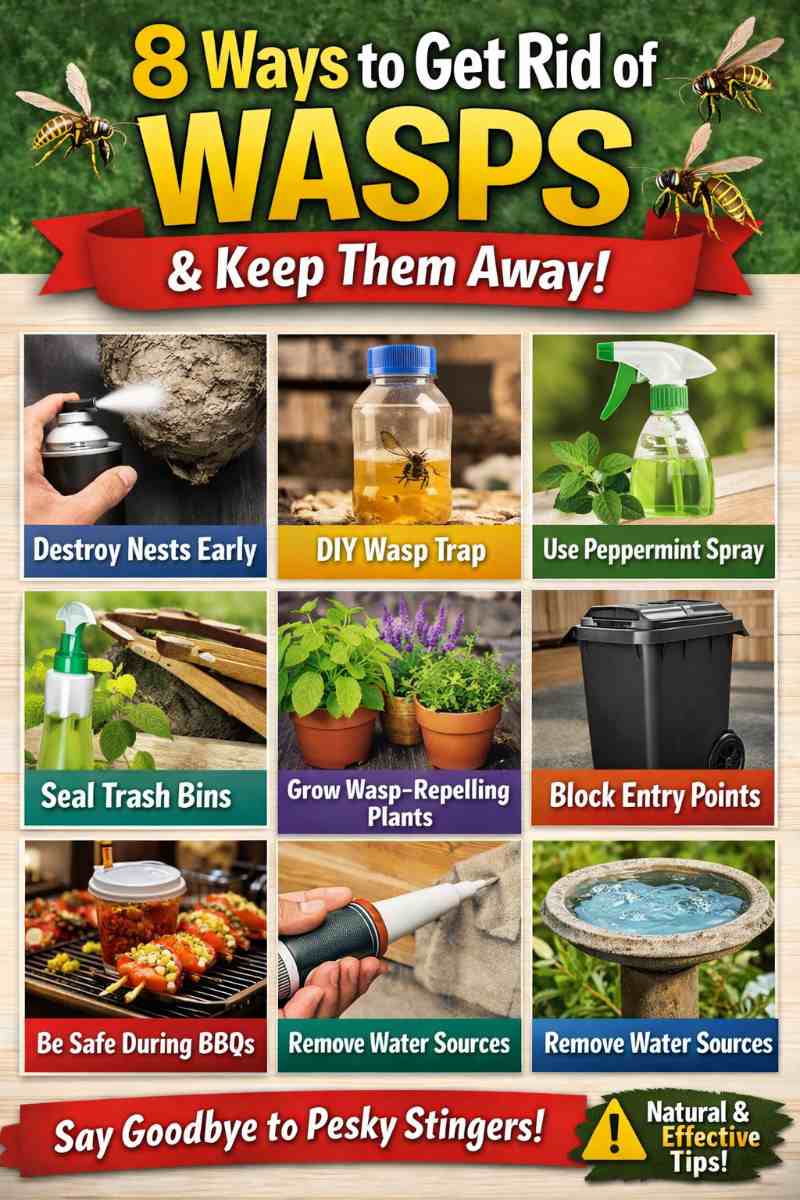
🐝 1. Destroy Nests Early (The Smart Way)
If you spot a small nest in early spring, that’s your best chance to stop a future infestation.
How:
- Only tackle small nests (golf ball size or smaller)
- Do it at night when wasps are less active
- Wear protective clothing
- Use a commercial wasp spray designed for distance spraying
⚠️ Never attempt to remove a large nest yourself. Call a professional pest controller — especially if the nest is inside walls or roofing.
Why It Works:
Stop the queen early = stop the colony from growing.
🍯 2. DIY Wasp Trap (Cheap & Effective)
This is one of the most popular natural solutions.
How:
- Cut the top off a plastic bottle
- Flip it upside down into the base
- Add:
- Sugar water
- Fruit juice
- Or a small piece of meat
Place traps away from seating areas to lure wasps elsewhere.
Why It Works:
Wasps enter but struggle to escape due to the funnel design.
💡 Tip: Don’t place traps near doors — you’ll attract more wasps toward your home.
🌿 3. Use Peppermint Oil Spray (Natural Repellent)
Wasps hate strong scents — especially peppermint.
How:
- Mix 10–15 drops peppermint oil
- Add to 1 cup water + a splash of washing up liquid
- Spray around:
- Windows
- Door frames
- Eaves
- Outdoor furniture
Repeat weekly.
Why It Works:
The strong scent disrupts wasps’ sensory signals and discourages nesting.
Bonus: Your home smells amazing. 🌱
🗑️ 4. Seal & Secure Your Bins
Open bins are basically a wasp buffet.
How:
- Use bins with tight-fitting lids
- Rinse food containers before disposal
- Clean bin lids weekly
- Keep bins away from doors
Why It Works:
Remove the food source → reduce the attraction.
This alone can dramatically reduce wasp activity around your property.
🌼 5. Grow Wasp-Repelling Plants
Yes — your garden can defend itself.
Plants wasps dislike:
- Mint
- Eucalyptus
- Wormwood
- Citronella
- Basil
Plant near patios and seating areas.
Why It Works:
Strong natural oils act as deterrents.
🌿 This method works best as part of a combined strategy.
🚪 6. Seal Entry Points
Wasps love tiny gaps.
Check:
- Roofline cracks
- Air bricks
- Gaps around windows
- Shed panels
- Loft vents
Use:
- Caulk
- Expanding foam
- Fine mesh screens
Why It Works:
If they can’t enter, they can’t nest.
Prevention is easier than removal.
🍖 7. Be Smart During BBQs & Outdoor Eating
Wasps LOVE BBQ season.
How:
- Keep drinks covered
- Clear plates immediately
- Avoid strong perfumes
- Use citronella candles
- Serve sweet drinks in cups with lids
💡 Pro Tip: Set up a “decoy plate” away from guests with something sweet. Wasps will focus there instead.
💧 8. Remove Water Sources
Standing water attracts thirsty wasps.
Check for:
- Bird baths
- Leaky taps
- Pet bowls left outside
- Paddling pools
- Clogged gutters
Empty or refresh regularly.
Why It Works:
Wasps need water just like any insect. Remove it — reduce visits.
🚨 What NOT To Do
Avoid these common mistakes:
❌ Swatting aggressively (releases alarm pheromones)
❌ Blocking nest entrances during the day
❌ Pouring petrol or chemicals into nests
❌ Ignoring early warning signs
Wasps defend their colony fiercely — and multiple stings can be dangerous.
🤔 Frequently Asked Questions
Are wasps useful for anything?
Yes. Wasps control garden pests and pollinate plants. They’re beneficial — just not welcome too close to home.
How do I know if there’s a nest nearby?
Signs include:
- Multiple wasps entering the same spot repeatedly
- Buzzing in walls or roof spaces
- Increased activity around eaves
Do fake wasp nests work?
Sometimes. Wasps are territorial and may avoid areas where they believe another colony exists — but effectiveness varies.
When is wasp season in the UK?
Typically May to September, peaking in late summer.
When should I call a professional?
- Nest larger than a tennis ball
- Nest indoors or in walls
- You’re allergic to stings
- High wasp activity around children or pets
🏡 The Ultimate Prevention Strategy
The most effective approach combines:
✔️ Removing food
✔️ Blocking entry points
✔️ Natural repellents
✔️ Monitoring early nests
Layered defence = long-term results.
🐝 Final Thoughts
Wasps can be intimidating — but you don’t have to surrender your garden.
By combining prevention with smart removal tactics, you can reduce wasp activity dramatically and keep them from coming back year after year.
Start early in spring, stay consistent, and you’ll enjoy a sting-free summer. 🌞