

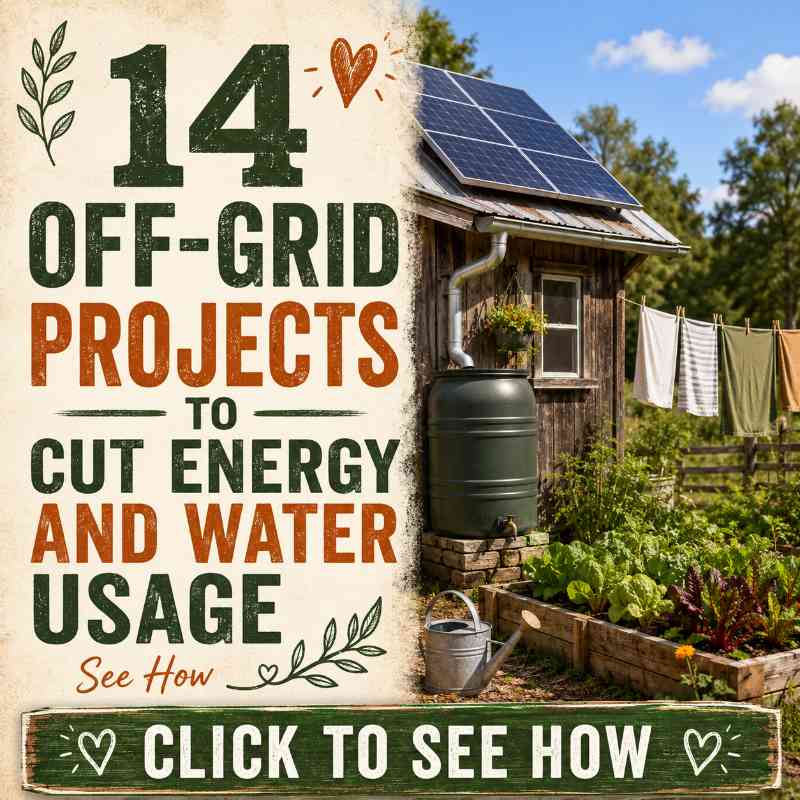
14 Off-Grid Projects To Cut Your Energy And Water Usage
Make sure to like Living Green and Frugally on Facebook, Shop at Amazon to help support my site and explore our PINTEREST BOARDS for innovative ways you can become self-sufficient.
14 Off-Grid Projects To Cut Your Energy And Water Usage
Going completely off-grid can cost thousands of dollars, but you do not need a huge solar array, a deep well, or an expensive battery bank to become more self-sufficient.
Small, practical projects can reduce the amount of electricity and treated water your household uses every day. Some cost less than $50, many can be completed over a weekend, and several remain useful during power cuts, drought restrictions, and other emergencies.
The biggest savings usually come from preventing heat loss, heating less water, air-drying clothes, reusing suitable household water, and collecting free rainwater.
How Much Could These Off-Grid Projects Save?
The figures below are rough estimates rather than guaranteed savings. Your results will depend on local utility prices, climate, rainfall, household size, available sunlight, and how regularly each project is used.
| Project | Estimated DIY Cost | Possible Annual Reduction | Possible Annual Saving |
|---|---|---|---|
| Rain barrel | $40 to $120 | 1,000 to 2,500 gallons | $10 to $40 |
| Gravity-fed drip irrigation | $30 to $100 | 2,000 to 10,000 gallons | $15 to $100 |
| Laundry greywater system | $50 to $250 | 3,000 to 8,000 gallons | $25 to $150 |
| Low-flow showerhead and aerators | $15 to $80 | Water and hot-water energy | $75 to $120 |
| Composting toilet | $100 to $600 | 4,000 to 13,000 gallons | $50 to $250 |
| Outdoor solar shower | $25 to $150 | Hot-water use | $15 to $60 |
| Outdoor clothesline | $30 to $150 | 300 to 650 kWh | $50 to $110 |
| Solar oven | $20 to $100 | Cooking electricity or fuel | $10 to $50 |
| Solar food dehydrator | $40 to $150 | 60 to 180 kWh | $10 to $35 |
| Small solar generator | $250 to $700 | Electricity or generator fuel | $25 to $150 |
| Solar shed and path lighting | $25 to $120 | 60 to 200 kWh | $10 to $35 |
| Solar air heater | $75 to $250 | Part of daytime heating | $50 to $250 |
| Weatherstripping and window inserts | $40 to $250 | Heating and cooling energy | $100 to $400 |
| Solar water preheater | $100 to $600 | Water-heating energy | $100 to $350 |
Important: These savings overlap, so you should not simply add every figure together. A household completing six to eight suitable projects might save approximately $300 to $1,200 per year, but results will vary.
1. Build a Rain Barrel
A rain barrel captures water from a gutter before it disappears into a storm drain. The stored water can then be used for flowers, shrubs, lawns, outdoor cleaning, and other non-drinking purposes.
How to Make It
- Find a clean, food-grade 50 or 55-gallon barrel.
- Place it on a strong, level platform made from blocks or treated lumber.
- Install a screened inlet to keep out leaves, insects, and debris.
- Add a spigot several inches above the bottom of the barrel.
- Connect a downspout diverter to the inlet.
- Add an overflow pipe that directs excess water away from the house foundation.
A single barrel may collect hundreds of gallons over several storms. Connecting two or three barrels can provide a much larger supply for summer watering.
Possible annual saving: Approximately $10 to $40 for one barrel, with higher savings possible from several connected barrels.
Safety note: Do not assume roof runoff is safe to drink. Roofing materials, bird droppings, dirt, bacteria, and other contaminants can enter the water.
2. Install Gravity-Fed Drip Irrigation
Connecting drip irrigation to an elevated rain barrel allows you to water plants without using a powered pump. Water is delivered slowly and directly around plant roots instead of being sprayed across the entire garden.
How to Set It Up
- Raise the rain barrel two or three feet above ground level.
- Attach a filter to prevent dirt from blocking the tubing.
- Connect a half-inch supply line to the barrel outlet.
- Run smaller feeder tubes from the main line to individual plants.
- Fit adjustable low-pressure emitters at the end of each feeder tube.
- Cover exposed tubing with mulch to reduce evaporation and protect it from sunlight.
A battery-operated low-pressure timer can automate the system without connecting it to household electricity.
Possible annual saving: Approximately $15 to $100, depending on garden size, rainfall, climate, and local water prices.
3. Create a Laundry-to-Landscape Greywater System
A laundry greywater system sends suitable washing-machine water to trees, shrubs, and mulched planting areas instead of sending it straight into the sewer.
Basic Materials
- A three-way diverter valve
- Flexible irrigation tubing
- Pipe fittings and clamps
- Mulch for creating shallow distribution basins
- Plant-friendly laundry detergent
How It Works
The diverter valve is fitted to the washing-machine discharge hose. Flexible tubing carries the water outside and distributes it among several planting areas.
Use detergent with low levels of sodium and boron. Release the water underneath mulch rather than spraying it onto leaves, pathways, or edible parts of plants.
Possible annual saving: Approximately 3,000 to 8,000 gallons of treated water, worth around $25 to $150 per year.
Check local rules first: Greywater regulations differ between states, counties, and local authorities. Never reuse water containing bleach, harsh chemicals, nappies, or heavily contaminated laundry. Do not store untreated greywater.
4. Fit a Low-Flow Showerhead and Faucet Aerators
This may be the simplest project on the list, but it can deliver surprisingly good savings. Reducing the flow of hot water saves both water and the energy required to heat it.
How to Install Them
- Unscrew the existing showerhead.
- Clean the threaded shower pipe.
- Wrap plumber’s tape around the threads.
- Screw on the new low-flow showerhead.
- Remove old faucet aerators and replace them with efficient versions.
- Check all fittings for leaks.
Money-saving tip: Look for a showerhead that maintains good pressure while reducing the flow rate. A weak shower often causes people to remain underneath it longer, reducing the expected savings.
Possible annual saving: Approximately $75 to $120 when combining an efficient showerhead with several faucet aerators.
5. Build or Install a Composting Toilet
A composting toilet uses little or no flushing water. It can be useful in cabins, workshops, tiny homes, garden buildings, and properties without a conventional sewer connection.
What a Safe System Needs
- A strong, sealed waste chamber
- Reliable ventilation to the outside
- A suitable dry cover material
- Moisture control
- Safe emptying and cleaning procedures
- Compliance with local sanitation regulations
A basic separating design directs liquids into a dedicated approved container or drainage system. Solids enter a ventilated chamber where sawdust, coconut coir, or another suitable cover material helps manage moisture and odours.
Possible annual saving: Approximately $50 to $250, depending on water and sewer prices.
Related article:
Learn more about off-grid composting toilets
Important: Human waste must be managed correctly. Always follow local sanitation, building, and environmental regulations.
6. Make an Outdoor Solar Shower
A solar shower uses sunlight to warm water without an electric or gas water heater. It can be useful beside a pool, at an off-grid cabin, on a campsite, or for rinsing off after gardening.
Simple Solar Shower Options
- A black solar shower bag suspended from a strong support
- A dark-coloured water tank fitted with a low-flow showerhead
- Black water-safe tubing mounted inside a glazed wooden box
- A gravity-fed shower supplied from an elevated tank
Position the container or tubing where it receives several hours of direct sunlight. A simple privacy screen can be made from reclaimed timber, outdoor fabric, fencing panels, or bamboo.
Possible annual saving: Approximately $15 to $60, depending on how often it replaces indoor hot-water use.
Burn warning: Water sitting in black tubing or a dark tank can become extremely hot. Always test the temperature before use.
7. Build a Strong Outdoor Clothesline
Electric tumble dryers are convenient, but they also consume a considerable amount of electricity. An outdoor clothesline can reduce both energy use and wear on clothing.
How to Build a Basic Clothesline
- Install two pressure-treated posts at least two feet into the ground.
- Brace the posts or secure them with concrete where necessary.
- Fit strong eye bolts or clothesline pulleys.
- Run weather-resistant clothesline between the supports.
- Add a tensioner to prevent the line from sagging.
- Position the line where it receives airflow and sunlight.
A retractable clothesline, folding wall-mounted airer, or ceiling-mounted indoor rack may work better where garden space is limited.
Possible annual saving: Approximately $50 to $110, depending on how frequently the tumble dryer is replaced.
8. Build a Solar Oven
A solar oven directs sunlight into an insulated cooking chamber. It can cook without electricity, propane, charcoal, or firewood when conditions are sunny enough.
How to Make One
- Use an insulated wooden box or two cardboard boxes fitted inside one another.
- Paint the inside base matt black.
- Add a clear glass or heat-resistant transparent lid.
- Attach reflective panels covered with aluminium foil.
- Place food inside a dark, lidded cooking pot.
- Adjust the reflective panels as the sun changes position.
Foods That Work Well
- Rice and grains
- Baked potatoes
- Soups and stews
- Bread and simple cakes
- Beans
- Slow-cooked vegetables
- Reheated prepared meals
Possible annual saving: Approximately $10 to $50 in electricity, gas, propane, charcoal, or other cooking fuel.
Food safety: Use a food thermometer and follow normal safe cooking temperatures. Do not assume food is completely cooked simply because the container feels warm.
9. Make a Solar Food Dehydrator
An electric dehydrator may run for many hours at a time. A solar version can dry herbs, fruit, vegetables, and other suitable foods without connecting to the grid.
How the System Works
A solar collector warms incoming air. That warm air rises into a drying cabinet, passes through the food trays, and leaves through a screened vent near the top.
Basic Parts
- A shallow solar collector with a dark interior
- A clear glass or polycarbonate cover
- An upright drying cabinet
- Food-safe mesh trays
- Screened air inlets and outlets
- A thermometer for monitoring temperature
Possible annual saving: Approximately $10 to $35, with larger savings possible for households that preserve several harvests.
Protect the food: The cabinet must keep out insects, dust, rain, rodents, and other animals. Food should be fully dried before storage.
10. Build a Small Solar Generator
A small solar generator can run LED lights, charge phones, power a laptop, operate a fan, or keep communication equipment running during a power cut.
What You Will Need
- A 100 to 300-watt solar panel
- A compatible solar charge controller
- A deep-cycle or lithium iron phosphate battery
- Correctly rated fuses
- Suitable battery cables
- USB and 12-volt outlets
- A small inverter for AC appliances
- A ventilated protective enclosure
Basic Connection Order
- Connect the battery to the charge controller.
- Fit the required fuse close to the positive battery terminal.
- Connect the solar panel to the controller.
- Install the outlets and inverter using correctly sized cables.
- Secure all components inside a suitable protective enclosure.
- Test the system with a small load before connecting additional devices.
Possible annual saving: Approximately $25 to $150 in grid electricity or portable-generator fuel.
Full project guide:
How to build a solar generator
Electrical warning: Incorrect wiring can cause electric shock, battery damage, or fire. Use properly rated components and seek professional help when necessary.
11. Add Solar Lighting Around Sheds and Paths
Running electrical cable to a distant shed, greenhouse, chicken coop, gate, or driveway can be expensive. Solar lighting avoids trenching, mains wiring, and everyday electricity use.
Where Solar Lights Work Well
- Garden paths and steps
- Sheds and workshops
- Greenhouses
- Chicken coops
- Driveways and gates
- Wood stores
- Outdoor seating areas
- Emergency entrances
Choose lights with a separate solar panel when the light itself will be mounted in shade. Motion-activated models normally remain charged for longer because they only switch on when needed.
Possible annual saving: Approximately $10 to $35, plus the avoided expense of installing mains wiring.
12. Build a Solar Air Heater
A solar air heater warms fresh air before sending it into a sunny workshop, cabin, garage, greenhouse, or garden building.
How to Build a Basic Heater
- Build a shallow insulated wooden box.
- Paint the interior matt black.
- Install a dark metal absorber made from flashing, metal mesh, or cleaned aluminium cans.
- Cover the front with clear polycarbonate or glass.
- Add a cool-air inlet near the bottom.
- Add a warm-air outlet near the top.
- Install a backdraft damper to stop cold air flowing backwards at night.
Sunlight heats the metal absorber. Air warms as it passes through the collector and naturally rises into the building. A small solar-powered fan can improve airflow.
Possible annual saving: Approximately $50 to $250 in a suitable sunny location.
Installation warning: Do not connect a homemade solar air heater to combustion appliances, sealed bedrooms, or complicated household ductwork without professional advice.
13. Weatherstrip Doors and Make Removable Window Inserts
Producing off-grid power is expensive. Preventing energy from escaping is usually much cheaper.
Areas to Check for Air Leaks
- Exterior doors
- Window frames
- Attic hatches
- Pipe penetrations
- Unused vents
- Electrical outlets on exterior walls
- Gaps around skirting boards
- Openings around cables and plumbing
Low-Cost Improvements
- Adhesive weatherstripping around doors
- Door sweeps at exterior thresholds
- Removable rope caulk around seasonal gaps
- Suitable expanding foam around pipe openings
- Clear acrylic window inserts
- Thermal curtains
- Removable clear window film
Possible annual saving: Approximately $100 to $400, although particularly draughty homes may save more.
Simple test: On a cool or windy day, slowly move your hand around door and window frames. Noticeable cold airflow usually indicates a gap that may benefit from sealing.
14. Make a Solar Water Preheater
Water heating is one of the largest household energy costs, so even partially warming water with sunlight can make a noticeable difference.
How a Simple Preheater Works
Black, drinking-water-safe tubing is arranged inside an insulated glazed box. Cold water passes through the sun-warmed tubing before entering a conventional water heater or outdoor shower.
Important Components
- Pressure-rated plumbing components
- A pressure-relief valve
- An anti-scald mixing valve
- Freeze protection in cold climates
- A maintenance bypass
- Strong roof or ground supports
- Insulated hot-water pipes
A small DIY preheater will normally provide seasonal assistance rather than replacing a conventional water heater completely.
Possible annual saving: Approximately $100 to $350 in a suitable sunny climate.
Professional inspection recommended: Pressurised hot-water systems can cause burns, leaks, and serious property damage if installed incorrectly. Have any system connected to household plumbing checked by a qualified professional.
Which Projects Should You Build First?
For the quickest and simplest return, begin with projects that are inexpensive and require little specialist knowledge.
- Weatherstrip doors and windows to reduce heating and cooling losses.
- Install a low-flow showerhead to reduce water and energy use.
- Build an outdoor clothesline to use the tumble dryer less often.
- Add a rain barrel to collect free garden water.
- Install gravity-fed drip irrigation to water plants more efficiently.
Once those projects are working, consider larger upgrades such as a solar generator, composting toilet, greywater system, solar air heater, or solar water preheater.
Common Off-Grid Project Mistakes
Trying to Do Everything at Once
Start with one problem, such as excessive garden watering or high clothes-drying costs. Finish and test that system before beginning another project.
Buying Equipment Before Measuring Usage
Check your utility bills and identify your largest energy and water uses first. A solar generator designed for phone charging is very different from one intended to operate refrigeration.
Ignoring Local Regulations
Greywater systems, composting toilets, rainwater collection, electrical work, and plumbing modifications may require permits, inspections, or specific safety measures.
Using the Wrong Materials
Do not use containers that previously held chemicals. Use food-safe or drinking-water-safe materials where water could contact people, animals, or edible crops.
Forgetting Maintenance
- Clean rain-barrel screens and gutters.
- Flush blocked drip emitters.
- Check battery terminals and cable connections.
- Clean dirt from solar panels.
- Replace damaged weatherstripping.
- Inspect greywater pipes for leaks.
- Check outdoor structures after severe weather.
Off-Grid Project Safety Checklist
Before beginning a water, electrical, sanitation, or heating project:
- Check local building, plumbing, and environmental regulations.
- Never drink untreated rainwater or greywater.
- Use fuses and correctly sized cables in battery systems.
- Keep electrical equipment protected from moisture.
- Install pressure and temperature protection on hot-water systems.
- Keep outdoor tanks covered and protected from insects.
- Use professional help when connecting a project to household wiring or pressurised plumbing.
Frequently Asked Questions
Can these projects take a house completely off-grid?
Not usually. They are designed to reduce demand and improve self-sufficiency. A fully off-grid home normally needs a properly sized power system, water source, storage, filtration, waste system, and backup plan.
Which project could save the most money?
Weatherstripping may provide the best return in a draughty home. A clothesline, efficient showerhead, and improved irrigation system can also repay their costs quickly.
Is rain-barrel water safe for vegetables?
Roof water may contain bacteria, metals, chemicals, and animal waste. Use it cautiously around edible plants, water the soil rather than the edible portion, and follow local health guidance.
Can greywater be stored in a tank?
Untreated greywater should normally be used promptly rather than stored because bacteria and odours can develop. Local regulations may specify how it must be distributed.
Do solar projects work during winter?
Solar equipment can still work when sunlight is available, but shorter days, shading, snow, and lower sun angles reduce output. Systems needed throughout the year should be designed around winter conditions.
How do I calculate my own electricity saving?
Multiply the electricity avoided by your price per kilowatt-hour. For example, saving 400 kWh at $0.16 per kWh would reduce usage costs by approximately $64.
Final Thoughts
Going off-grid does not have to begin with a huge investment. A rain barrel, clothesline, insulated window insert, solar cooker, or low-flow showerhead can be a practical first step.
The real secret is to reduce demand before trying to generate or collect everything yourself. The less electricity and water your home needs, the smaller and more affordable your future off-grid systems can be.
Choose one project that solves a genuine problem, track the results on your next few utility bills, and then use those savings to fund the next improvement.