

Home Canned Meatballs Recipe

Make sure to like Living Green and Frugally on Facebook, Shop at amazon to help support my site and explore our PINTEREST BOARDS for innovative ways you can become self-sufficient.
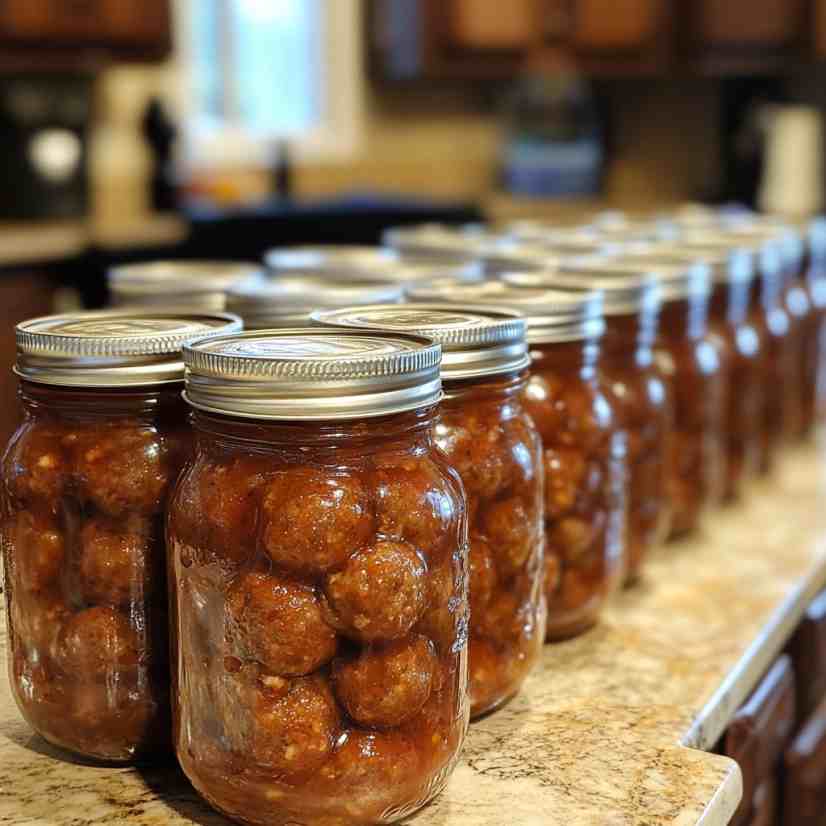
There is something incredibly useful about having jars of home-canned meat tucked away in the pantry. On busy evenings, during bad weather or simply when you do not feel like cooking from scratch, having ready-to-heat meatballs can make putting together a meal much easier.
Meatballs are especially handy because they can be used in so many different ways. Add them to spaghetti sauce, serve them with mashed potatoes and gravy, turn them into meatball subs or add them to soups and stews.
However, when it comes to home canning meat, it is important not to treat it like an ordinary cooking recipe.
Traditional meatballs often contain breadcrumbs, eggs, Parmesan cheese, milk, onions and other ingredients. While those ingredients make delicious fresh meatballs, they are not part of the tested home-canning method for ground meat.
For shelf-stable home-canned meatballs, it is best to keep things simple and follow a tested pressure-canning method.
Why Home Canned Meatballs Are Different
When making meatballs for dinner, you can experiment with ingredients as much as you like.
Home canning is different.
The thickness, density and ingredients inside a jar can affect how heat travels through the food during processing. Because meat is a low-acid food, the contents of the jar must reach sufficiently high temperatures for the correct amount of time.
That is why home-canned meat should always be processed using a pressure canner and a tested recipe.
The National Center for Home Food Preservation has a tested method for canning ground or chopped meat, including beef, pork, lamb, veal, venison and sausage.
The good news is that their method specifically allows ground meat to be shaped into balls before canning.
So you really can have jars of home-canned meatballs. They just need to be made differently from traditional Italian meatballs.
Important Home Canning Safety Note
This recipe is based on the National Center for Home Food Preservation method for pressure canning ground or chopped meat.
For the canned meatballs themselves, do not add breadcrumbs, eggs, Parmesan cheese, flour, milk, cream or other ingredients that are not included in the tested method.
The meatballs can be transformed into your favourite Italian-style dish after opening the jar.
Always use a proper pressure canner rather than a boiling-water canner for meat, and make the correct pressure adjustment for your altitude.
Home Canned Meatballs
Ingredients
- Fresh, chilled ground beef, pork, lamb, veal or other meat covered by the tested ground-meat canning method
- Boiling meat broth, tomato juice or water
- Canning salt, optional
You will also need:
- Pressure canner
- Pint or quart canning jars
- New canning lids
- Jar bands
- Jar lifter
- Canning funnel
For a simple everyday meatball, ground beef is probably the easiest choice.
Step 1: Prepare the Meat
Start with fresh, chilled ground meat.
Shape the meat into small meatballs. Try to keep them reasonably uniform so they cook evenly.
Unlike traditional meatballs, there is no need to mix in breadcrumbs, eggs or cheese.
Keeping the mixture simple is important because this recipe is intended for pressure canning rather than immediate eating.
Step 2: Lightly Brown the Meatballs
Place the meatballs into a skillet and cook them until they are lightly browned.
You do not need to make them dark or crispy. The goal is simply to brown the meat as directed by the tested hot-pack method.
Once browned, remove the meatballs and drain away as much excess fat as possible.
Removing excess fat is important because grease can interfere with jar sealing.
Step 3: Prepare Your Canning Liquid
While the meatballs are browning, heat your chosen canning liquid until boiling.
You can use:
- Meat broth
- Tomato juice
- Water
Tomato juice is a useful option if you know you will eventually be serving the meatballs with tomato-based dishes.
However, do not substitute thick tomato sauce, pasta sauce or your homemade spaghetti sauce for the specified liquid.
Save those additions for when you open the jar.
Step 4: Fill the Jars
Place the hot browned meatballs into your prepared canning jars.
Pour the boiling broth, tomato juice or water over the meatballs.
Leave 1 inch of headspace at the top of each jar.
If you would like to add canning salt for flavour, it can be added according to the tested recipe. Salt is optional and is not required for preservation.
Remove trapped air bubbles and check the headspace again.
Wipe the jar rims carefully before applying the lids and bands according to the manufacturer’s directions.
Step 5: Pressure Can the Meatballs
Meat must be processed in a pressure canner.
Do not use a boiling-water bath, steam canner, oven or ordinary pressure cooker as a substitute for a pressure canner.
Processing Time
Process:
- Pint jars for 75 minutes
- Quart jars for 90 minutes
The processing time stays the same, but the pressure required depends on your altitude and the type of pressure canner you are using.
Dial-Gauge Pressure Canner
| Altitude | Pressure |
|---|---|
| 0 to 2,000 feet | 11 lb |
| 2,001 to 4,000 feet | 12 lb |
| 4,001 to 6,000 feet | 13 lb |
| 6,001 to 8,000 feet | 14 lb |
Process pints for 75 minutes and quarts for 90 minutes at the appropriate pressure.
Weighted-Gauge Pressure Canner
| Altitude | Pressure |
|---|---|
| 0 to 1,000 feet | 10 lb |
| Above 1,000 feet | 15 lb |
Again, process pints for 75 minutes and quarts for 90 minutes.
Always determine your altitude before pressure canning.
After Processing
Once the full processing time has finished, turn off the heat and allow the pressure canner to depressurize naturally.
Do not try to speed this process up by removing the weight, opening the vent or cooling the canner with water.
Follow the manufacturer’s instructions for opening your particular pressure canner.
Carefully remove the jars and place them somewhere they can remain undisturbed while they cool.
Once completely cool, check that each jar has sealed properly.
Remove the screw bands before storing if that is part of your normal recommended canning practice, label the jars with the contents and date, and store them in a cool, dry, dark location.
For best quality, aim to use your home-canned food within one year.
How to Turn Canned Meatballs Into Italian Meatballs
This is where you can add all those ingredients that we deliberately left out during canning.
Open a jar of meatballs and place the contents into a saucepan.
Add your favourite tomato or pasta sauce along with ingredients such as:
- Minced garlic
- Chopped onion
- Basil
- Oregano
- Black pepper
- Chilli flakes
- Parmesan cheese
Simmer everything together until thoroughly heated.
You now have the flavours of traditional Italian meatballs without altering the tested canning method.
Serve them over spaghetti and sprinkle with Parmesan just before serving.
Other Ways to Use Home Canned Meatballs
One of the biggest advantages of keeping the meatballs fairly plain is that they can be turned into completely different meals.
Meatball Subs
Heat the meatballs with tomato sauce, spoon them into crusty bread and top with cheese.
Meatballs and Gravy
Drain the meatballs and warm them in homemade beef gravy. Serve with mashed potatoes and vegetables.
Quick Pasta Dinner
Heat a jar with tomato sauce while your pasta cooks. Dinner can be on the table surprisingly quickly.
Meatball Soup
Add the meatballs to broth with vegetables, herbs and potatoes or noodles.
Sweet and Sour Meatballs
Heat the meatballs separately and combine them with your favourite sweet and sour sauce just before serving.
BBQ Meatballs
Warm the meatballs in barbecue sauce for an easy lunch or supper.
Why Can’t I Add Breadcrumbs and Eggs Before Canning?
This is one of the biggest differences between conventional meatballs and meatballs intended for home canning.
Breadcrumbs, eggs, cheese and similar additions can change the density and consistency of the food.
Home-canning processing recommendations are developed around a particular food preparation method. Changing the recipe means the tested processing time may no longer apply to the food inside the jar.
For that reason, it is much safer to can simple browned meatballs and add your favourite extras after opening the jar.
Can I Add Tomato Sauce?
For this particular tested ground-meat method, use boiling meat broth, tomato juice or water as the canning liquid.
Do not replace tomato juice with thick tomato sauce, pasta sauce or another untested sauce.
You can add as much pasta sauce as you like after opening the jar.
Can I Water-Bath Can Meatballs?
No.
Meat is a low-acid food and requires pressure canning.
A boiling-water canner cannot reach the temperatures required for safely processing low-acid foods such as meat.
Can I Use an Electric Pressure Cooker?
Do not assume that an ordinary electric pressure cooker or multicooker can replace a pressure canner.
Use equipment specifically designed and recommended for pressure canning and follow the manufacturer’s instructions together with the tested processing recommendations.
Can I Make the Meatballs More Flavourful?
The easiest way is to add additional flavour after opening the jar.
Think of the canned meatballs as your pantry base.
One day they can become Italian meatballs with garlic, herbs, tomato sauce and Parmesan.
The next day they could be covered in gravy or barbecue sauce.
Keeping them simple actually makes them much more versatile.
Can I Use Ground Pork?
The National Center for Home Food Preservation ground and chopped meat guidance includes beef, pork, lamb, sausage, veal, venison and bear.
Whatever meat you choose, follow the complete tested preparation and pressure-canning instructions rather than adapting an ordinary meatball recipe.
How Long Will Home Canned Meatballs Keep?
Proper storage is just as important as processing.
Label each jar with the date and keep the jars in a cool, clean, dry and dark location.
For best quality, home-canned foods should generally be used within one year.
Before opening a jar, always check it carefully.
Never taste food from a jar that is leaking, bulging, unsealed, spurts liquid when opened or otherwise appears spoiled.
When in doubt, throw it out.
A Useful Pantry Staple
Home-canned meatballs can be an incredibly convenient addition to a well-stocked pantry.
The trick is remembering that canning recipes and ordinary cooking recipes are not interchangeable.
Instead of canning a traditional meatball mixture containing eggs, breadcrumbs and cheese, start with the simple tested ground-meat method. Once you open the jar, you can turn those meatballs into almost any meal you fancy.
From spaghetti and meatballs to subs, soups, gravy dinners and quick weeknight meals, one simple jar can become dozens of different dishes.
It is a great example of old-fashioned food preservation still having a very useful place in the modern kitchen.
Final Safety Reminder
Home canning is one area where improvising is not worth the risk.
Always follow current research-tested pressure-canning instructions from trusted sources such as the National Center for Home Food Preservation or USDA, including the specified preparation method, jar size, headspace, processing time, pressure and altitude adjustment.
If you want to make traditional meatballs containing breadcrumbs, eggs, cheese or other additions, prepare them as a normal cooking recipe and refrigerate or freeze them instead of making them shelf stable through home canning.