

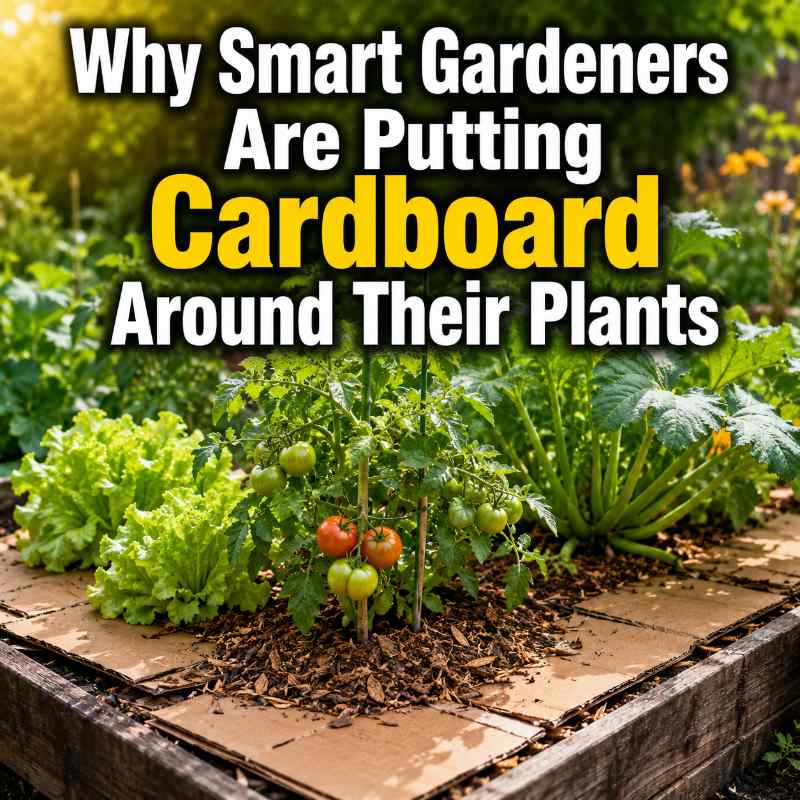
Why Smart Gardeners Are Putting Cardboard Around Their Plants
Make sure to like Living Green and Frugally on Facebook, Shop at Amazon to help support my site and explore our PINTEREST BOARDS for innovative ways you can become self-sufficient.
Have you noticed more gardeners laying cardboard around their tomatoes, peppers, fruit bushes, raised beds, and flower borders?
At first glance, it can look a bit odd. Cardboard in the garden? Really?
But here is the surprising part: plain cardboard can be one of the cheapest, easiest, and most effective garden hacks you will ever try. It helps smother weeds, hold moisture in the soil, feed worms, protect roots, and slowly break down into organic matter.
And the best bit? Most people already have it sitting in the recycling bin. 📦🌱
This simple trick is becoming popular with frugal gardeners, no-dig growers, homesteaders, and anyone who wants a healthier garden without spending a fortune on weed fabric, chemical sprays, or bags of mulch.
So, why are smart gardeners putting cardboard around their plants? Let’s dig in.
The Simple Garden Trick Hiding In Your Recycling Bin 📦
Cardboard might not look like a garden hero, but it works because it creates a natural barrier over the soil.
When laid around plants and covered with mulch, compost, grass clippings, straw, bark, or leaves, cardboard blocks sunlight from reaching weed seeds. Without light, most weeds struggle to grow.
At the same time, cardboard allows moisture to stay in the soil for longer. This is especially helpful during hot weather when plants dry out quickly.
As it breaks down, the cardboard becomes part of the soil. Worms and soil microbes move in, helping turn it into rich organic matter.
It is simple, cheap, and surprisingly powerful.
Why Cardboard Works So Well Around Plants 🌿
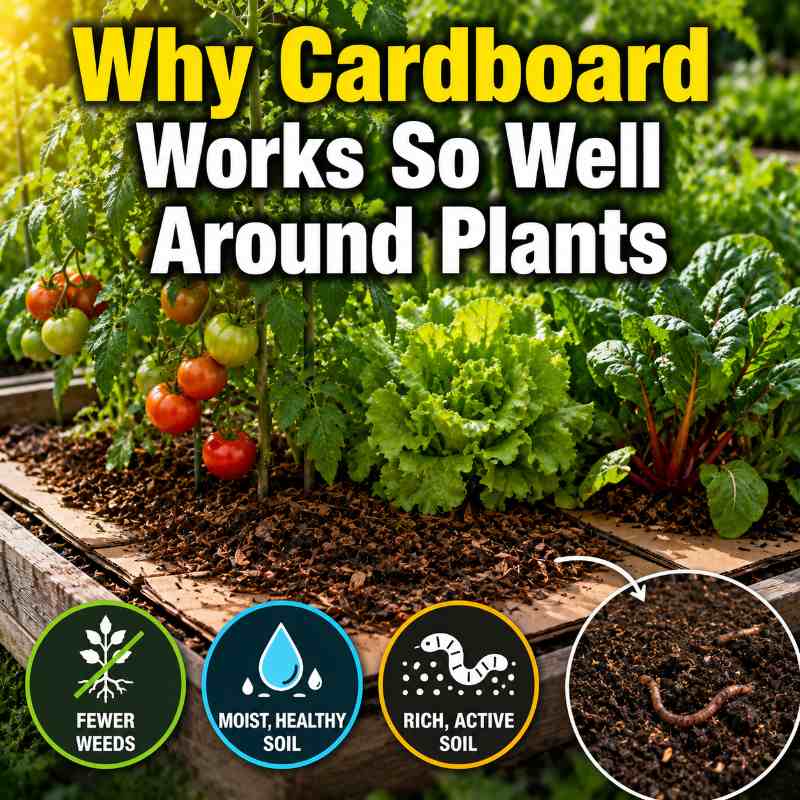
Cardboard helps your garden in several ways at once. That is what makes it such a clever trick.
1. It Smothers Weeds Naturally
Weeds need sunlight to grow. When you place cardboard around your plants, it creates a light-blocking layer that weakens weeds underneath.
This means less pulling, less hoeing, and fewer weeds stealing nutrients from your vegetables and flowers.
For busy gardeners, this is a huge win.
Instead of spending hours clearing the same weeds again and again, cardboard helps stop them before they take over.
2. It Helps Soil Stay Moist 💧
Bare soil dries out quickly, especially in summer.
Cardboard acts like a protective blanket. It slows evaporation, keeps the soil cooler, and helps roots stay damp for longer.
That means your plants are less stressed during hot spells, and you may not need to water as often.
This is especially useful around:
- Tomatoes
- Courgettes
- Pumpkins
- Peppers
- Fruit bushes
- Young trees
- Raised bed crops
- Newly planted perennials
3. It Encourages Worms 🪱
Worms love dark, damp, protected soil.
When cardboard is placed on the ground and covered with mulch, it creates the perfect worm-friendly environment. Worms help break the cardboard down and drag organic matter into the soil.
The result is better soil structure, improved drainage, and richer growing conditions for your plants.
More worms usually means healthier soil.
4. It Slowly Improves The Soil
As cardboard decomposes, it adds carbon-rich organic matter to the soil.
Garden soil needs a mix of “greens” and “browns.” Cardboard is a brown material, just like dry leaves, straw, and wood chips.
When paired with compost, grass clippings, manure, or plant waste, it helps feed soil life and build better soil over time.
5. It Can Reduce The Need For Weed Fabric
Many gardeners use plastic weed membrane, then regret it later.
Plastic fabric can fray, trap roots, block natural soil improvement, and become a pain to remove. Cardboard, on the other hand, breaks down naturally.
It does the job for a season and then becomes part of the garden.
That makes it a brilliant choice for gardeners who want something more natural and low-cost.
How To Put Cardboard Around Plants The Right Way
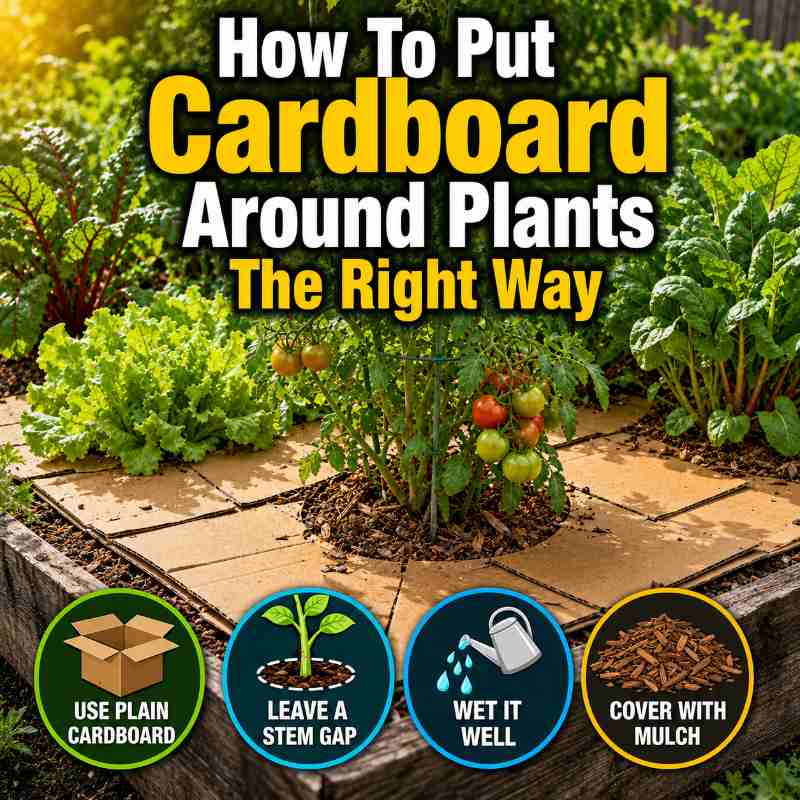
This method is easy, but there are a few things you should do to get the best results.
Step 1: Choose The Right Cardboard
Use plain brown cardboard whenever possible.
Good choices include:
- Delivery boxes
- Packing boxes
- Plain brown sheets
- Uncoated cardboard
- Cardboard without shiny printing
Avoid:
- Glossy cardboard
- Wax-coated boxes
- Heavily dyed packaging
- Plastic-coated cardboard
- Cardboard with lots of tape or labels
- Greasy food boxes
Remove tape, staples, plastic labels, and stickers before using it in the garden.
Step 2: Water The Soil First
Before laying cardboard down, water the soil well.
This helps trap moisture underneath and creates a better environment for worms and microbes.
If the soil is dry before you cover it, the cardboard may slow down water reaching the roots at first.
Step 3: Lay Cardboard Around The Plants
Place the cardboard around your plants, leaving a small gap around the stem.
Do not press cardboard tightly against the plant stem because this can hold too much moisture and may encourage rot.
A gap of around 2 to 4 inches is usually enough.
Overlap the cardboard edges by several inches so weeds cannot sneak through the gaps.
Step 4: Soak The Cardboard
Once the cardboard is in place, soak it with water.
Wet cardboard settles better, stays in place, and starts breaking down more easily.
Step 5: Cover It With Mulch
This is the step that makes the whole thing look tidy.
Cover the cardboard with:
- Wood chips
- Straw
- Compost
- Grass clippings
- Shredded leaves
- Bark mulch
- Old hay
- Homemade compost
A mulch layer of 2 to 4 inches works well.
This keeps the cardboard from blowing away, improves the look of the garden, and adds another layer of weed protection.
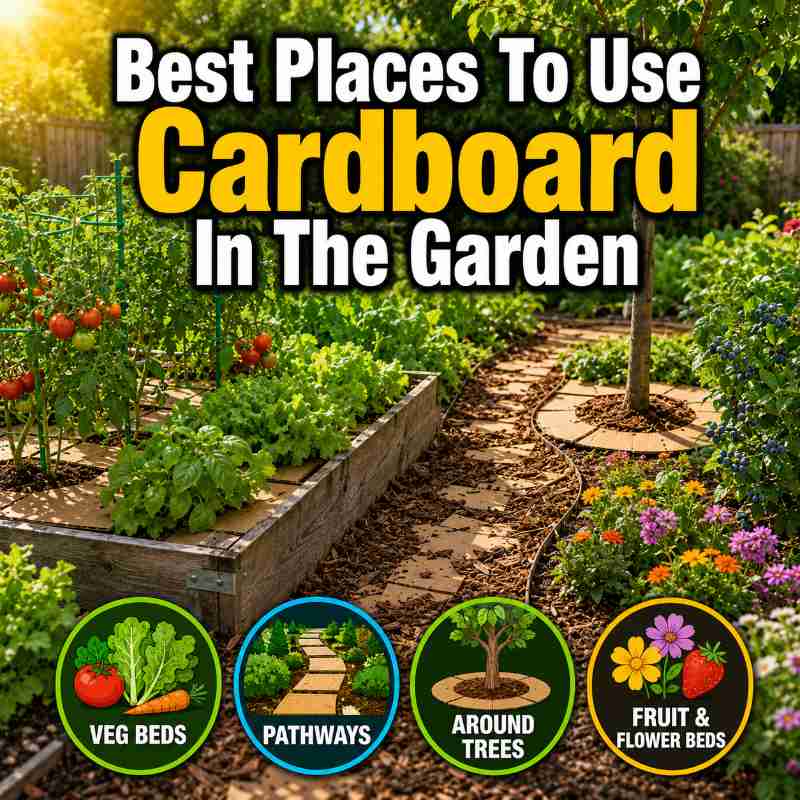
Best Places To Use Cardboard In The Garden 🌱
Cardboard can be used in lots of garden areas, but it works especially well in:
- Vegetable beds
- Around tomato plants
- Between rows of crops
- Under fruit bushes
- Around young trees
- Flower borders
- Pathways
- No-dig garden beds
- New garden areas with lots of weeds
It is also great for starting new beds on grass. Simply lay cardboard over the grass, wet it well, cover it with compost and mulch, then plant through it or let it break down.
Why This Matters For Frugal Gardeners 💰
Gardening can get expensive fast.
Compost, mulch, weed fabric, tools, sprays, raised beds, and soil amendments all add up. But cardboard is usually free.
This makes it perfect for anyone trying to grow food, improve soil, and keep weeds down without spending much money.
The benefits are huge:
- Saves money on mulch and weed barriers
- Reduces watering needs
- Cuts down on weeding time
- Improves soil naturally
- Encourages worms
- Reuses waste that might otherwise be thrown away
- Helps create healthier plants
- Works well for no-dig gardening
It is one of those old-fashioned, practical tricks that actually makes sense.
Common Mistakes To Avoid
Cardboard is useful, but only when used properly.
Do Not Use Glossy Or Plastic-Coated Cardboard
If it feels shiny, waxy, or plastic-like, skip it.
Plain brown cardboard is best.
Do Not Pile It Against Plant Stems
Always leave space around stems and trunks. Too much moisture against a stem can cause problems.
Do Not Forget To Wet It
Dry cardboard can blow away and may take longer to settle.
Do Not Leave It Uncovered
Cardboard works best when covered with mulch. It looks better, stays damp, and breaks down more naturally.
Do Not Use It Too Thick Around Tiny Seedlings
Very small seedlings need water and airflow. Use cardboard carefully around young plants and avoid smothering them.
Extra Tips To Make This Hack Work Even Better 🌿
Want better results? Try these simple tips:
- Add compost under the cardboard before laying it down
- Use cardboard in autumn to prepare beds for spring
- Cover with leaves for a free seasonal mulch
- Use wood chips on paths for a neat finish
- Tear cardboard into smaller pieces for awkward spaces
- Add grass clippings on top for extra nutrients
- Reapply each season if weeds are still strong
For stubborn weeds, use two layers of cardboard and overlap every seam well.
Common Questions About Using Cardboard Around Plants
Is cardboard safe to use in the garden?
Yes, plain brown cardboard is commonly used by gardeners as a natural weed-smothering layer. Remove tape, stickers, staples, and plastic labels first.
Will cardboard stop water from reaching plant roots?
If you soak the soil first and wet the cardboard well, water can still move through as the cardboard softens. Mulch on top also helps keep everything damp.
Can I plant directly through cardboard?
Yes. You can cut holes in the cardboard and plant through it. This works well for larger plants like tomatoes, courgettes, pumpkins, and peppers.
How long does cardboard take to break down?
It depends on moisture, weather, soil life, and thickness. Thin cardboard may break down in a few months, while thicker cardboard can last longer.
Will cardboard attract slugs?
It can create damp hiding places, so keep an eye out, especially around tender young plants. Lift a corner now and then to check. If slugs are a problem, avoid using thick cardboard too close to delicate seedlings.
Can I use cardboard in raised beds?
Yes. It works well in raised beds, especially between plants or as a base layer when filling a new bed.
Is cardboard better than weed fabric?
For many home gardeners, yes. Cardboard breaks down naturally, feeds the soil, and does not leave plastic fragments behind like some weed fabrics can.
Final Thoughts: A Free Garden Hack That Actually Works 🌱
Putting cardboard around plants might look strange at first, but once you try it, it is easy to see why so many smart gardeners swear by it.
It saves money, blocks weeds, holds moisture, feeds worms, improves soil, and makes gardening easier. All from something most people throw away.
So next time you get a delivery box, do not rush to bin it. Your garden might need it more than your recycling bin does.
Would you try cardboard around your plants, or have you already done it? This is one of those garden tricks that always gets people talking.