

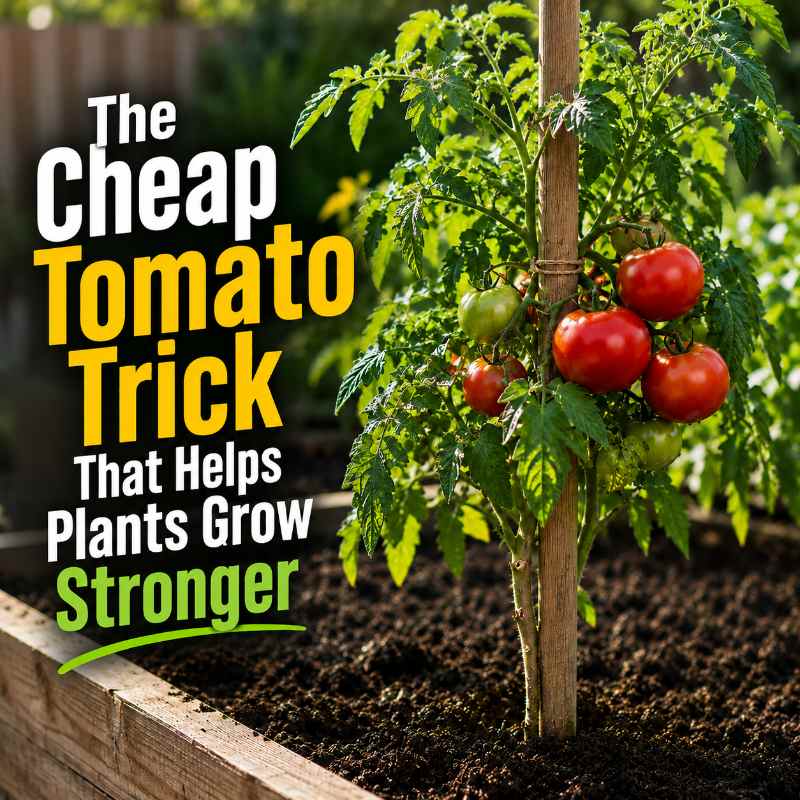
The Cheap Tomato Trick That Helps Plants Grow Stronger 🍅
Make sure to like Living Green and Frugally on Facebook, Shop at Amazon to help support my site and explore our PINTEREST BOARDS for innovative ways you can become self-sufficient.
Deep planting, simple supports, bottle watering, pruning, and eggshell truth
Tomatoes are one of those plants that look easy until they suddenly flop over, dry out, grow wild in every direction, or give you fruit with black bottoms. If you have ever planted a tomato seedling and wondered why someone else’s plants look thicker, greener, and stronger, this cheap little trick might be the missing piece.
The trick is simple: plant your tomato deeper than it came in the pot, then support and water it properly from the start.
It sounds almost too easy, but tomatoes have a clever ability that makes this work. Tomato stems can produce extra roots from buried parts of the stem, often called adventitious roots, which can help the plant create a stronger root system.
This is not about buying expensive feeds, fancy cages, or complicated gardening gadgets. It is about using what tomatoes naturally want to do and giving them a better start.
Let’s dig into the cheap tomato trick that can make your plants stronger, steadier, and easier to manage all season long. 🌱
Why Deep Planting Works So Well 🍅
Most plants do not like having their stems buried too deeply, but tomatoes are different.
When you bury part of a tomato stem, the tiny bumps along the stem can develop into new roots. More roots can help the plant anchor itself better and access more moisture and nutrients from the soil.
That means your tomato plant is not just sitting on the small root ball it came with from the garden centre. It is building a bigger underground system.
Think of it like this:
A shallow planted tomato is like a tent with short pegs.
A deep planted tomato is like a tent pinned down properly before a windy night.
Stronger roots do not guarantee a perfect crop, but they do give your plant a better chance, especially during hot weather, dry spells, and heavy fruiting.
How To Do The Cheap Tomato Trick Step By Step 🌱
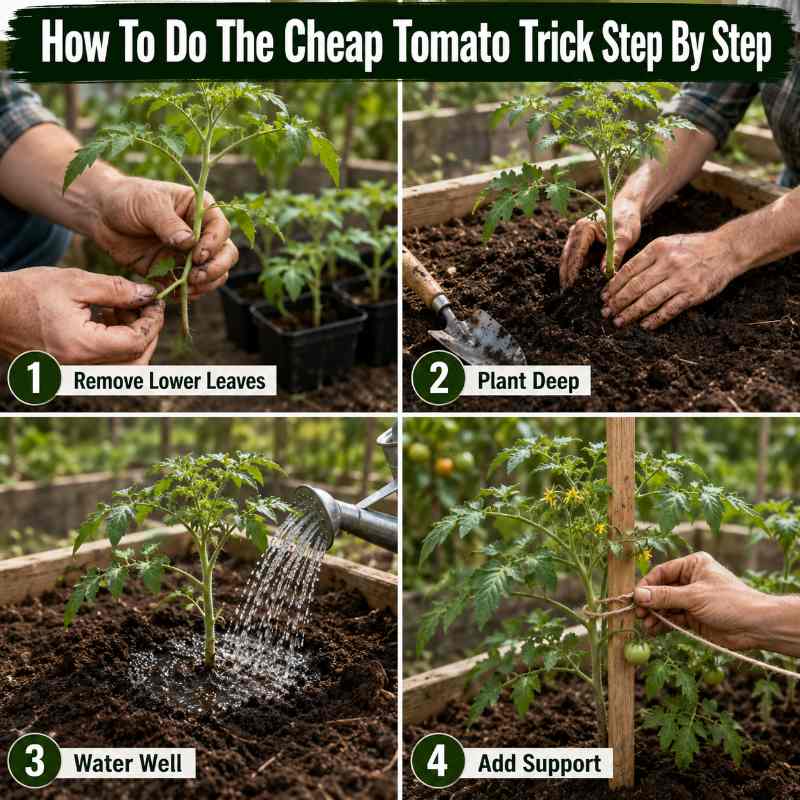
This method works best when transplanting tomato seedlings into beds, raised beds, large pots, grow bags, or greenhouse borders.
1. Remove The Lower Leaves
Before planting, pinch or snip off the bottom leaves from the tomato seedling. Leave the top few healthy leaves intact.
You want to bury part of the stem, but you do not want leaves trapped under the soil where they may rot.
2. Dig A Deeper Hole Or A Sideways Trench
There are two easy options:
Deep hole method:
Dig a deeper hole and plant the tomato so only the top section is above the soil.
Sideways trench method:
Dig a shallow trench, lay the tomato stem sideways, then gently angle the leafy top upward above the soil.
The sideways method is useful if your soil is heavy, cold, or shallow. It keeps the buried stem closer to warmer topsoil while still encouraging extra roots.
3. Bury The Stem
Cover the stripped stem with soil and gently firm it in. Do not squash the soil too hard. Tomatoes like support, but roots still need air spaces.
Water well after planting.
4. Add A Simple Support Straight Away
Do not wait until your tomato is leaning, tangled, or snapping under its own weight.
Use what you already have:
- A bamboo cane
- A sturdy stick
- A homemade wooden stake
- String tied to a greenhouse frame
- A simple cage
- A DIY support made from old timber or mesh
Supporting tomatoes early prevents damage later, especially once the plant starts producing heavy fruit. If suckers are left to grow into extra stems, those stems may also need support.
The Bottle Watering Trick 💧
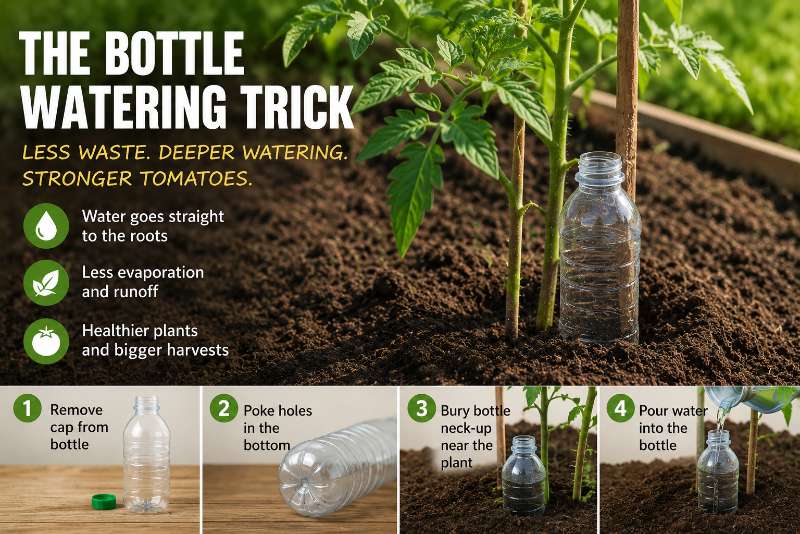
Here is where the cheap trick gets even better.
Take an old plastic bottle, remove the cap, poke a few small holes near the bottom, and bury it neck-up beside the tomato plant. When you water, pour water into the bottle.
This helps send water closer to the root zone instead of splashing the leaves or running across the surface.
Why does that matter?
Tomatoes prefer steady moisture. Blossom end rot, the nasty black patch that appears on the bottom of tomatoes, is often linked to uneven water availability and poor calcium movement within the plant, rather than simply a lack of calcium in the soil.
So while people often blame “not enough calcium,” the bigger issue is usually that the plant cannot move calcium properly when watering is inconsistent.
That is why steady watering is more powerful than many expensive fixes.
Should You Add Crushed Eggshells? 🥚
This is where gardeners love to argue.
Crushed eggshells can be added to compost or soil over time, but they are not a quick fix for tomato problems. University extension sources explain that eggshells do not usually solve blossom end rot because the problem is commonly linked to uneven watering and calcium uptake, not simply a lack of calcium sitting in the soil.
That does not mean eggshells are useless. It just means they are not magic.
If you want to use them:
- Rinse them first
- Dry them out
- Crush them finely
- Add them to compost or soil well before planting
- Do not expect instant results
The real winning combo is healthy soil, deep planting, mulch, and consistent watering.
The Pruning Part That Helps Plants Stay Strong ✂️
Pruning tomatoes can feel scary, but it does not have to be complicated.
With indeterminate tomatoes, which keep growing taller through the season, removing some lower leaves and excess growth can improve airflow and make the plant easier to manage. Pruning can also help reduce dense, damp growth where disease problems may thrive.
A simple rule:
Remove leaves that touch the soil.
Soil splash can spread problems onto lower leaves, especially after rain or watering.
You can also pinch out some suckers if the plant is becoming too crowded. A sucker is the little shoot that grows in the joint between the main stem and a branch. Some gardeners remove many of them, while others leave a few for more fruiting stems.
The goal is not to strip the plant bare. The goal is to keep it open, supported, and healthy.
Why This Cheap Trick Saves Money 💰
Tomatoes can get expensive quickly if you start buying every product people recommend online.
Deep planting costs nothing.
Bottle watering uses rubbish you already have.
Homemade supports can be made from scrap wood, canes, sticks, or old mesh.
Mulch can be grass clippings, straw, shredded leaves, or compost.
This is exactly the kind of gardening trick that makes sense for frugal growers.
You are not forcing the plant to grow. You are helping it grow smarter.
Extra Tips For Stronger Tomato Plants 🍅
- Mulch after planting to help keep soil moisture steady
- Water deeply rather than little and often
- Avoid soaking the leaves if you can water at the base
- Feed once flowers start forming with a tomato feed or compost tea
- Do not overcrowd plants because airflow matters
- Tie stems loosely so they are supported but not strangled
- Check plants every few days because tomatoes grow fast in warm weather
One of the biggest mistakes is waiting too long. By the time a tomato is huge, floppy, and tangled, it is much harder to fix without breaking stems.
Common Mistakes To Avoid 🚫
Planting Too Shallow
A shallow tomato plant can still grow, but you miss the chance to encourage extra roots from the buried stem.
Using Tiny Pots
Tomatoes in pots need plenty of root space. A small container dries out quickly and can stress the plant.
Watering Randomly
Dry one day, soaked the next, then forgotten for three days is not ideal. Tomatoes like steady moisture.
Believing Eggshells Fix Everything
Eggshells are slow to break down and are not an instant cure for blossom end rot. Consistent watering matters more.
Letting Plants Flop
Once stems bend or snap, the plant wastes energy recovering. Support early.
Common Questions And Answers
Can I plant all tomatoes deep?
Most tomato seedlings can be planted deeper than they were in the pot because tomatoes can form roots along buried stems. Avoid burying unhealthy, rotting, or diseased stems.
Is the sideways planting method better?
It can be useful in colder or shallow soil because the buried stem stays closer to the warmer top layer. Both deep holes and trenches can work.
Do tomatoes need cages or stakes?
Yes, most tomatoes benefit from support. Bush varieties may need less, but tall indeterminate tomatoes usually need strong staking, stringing, or cages.
Do eggshells really help tomatoes?
They can add calcium slowly over time, especially in compost, but they are not a quick fix for blossom end rot. Uneven watering is often the bigger issue.
Should I prune tomato suckers?
It depends on the variety and how you grow. Indeterminate tomatoes often benefit from some pruning and airflow. Determinate bush tomatoes usually need less pruning because they have a more limited growth habit.
Final Thoughts: The Cheapest Tomato Trick Is Often The Best 🌱
The best tomato tricks are not always the expensive ones.
Planting tomatoes deeper, watering them steadily, supporting them early, and keeping the lower growth tidy can make a huge difference. It is simple, cheap, and beginner-friendly.
So before you spend money on another miracle tomato product, try this first:
Bury the stem. Build the roots. Water steadily. Support early.
Your tomato plants may thank you with stronger growth, healthier stems, and hopefully baskets of juicy homegrown tomatoes. 🍅
Have you ever planted tomatoes deep or used the bottle watering trick? It is one of those garden tips that sounds strange until you try it.