

The Best Companion Plants For Tomatoes 🍅
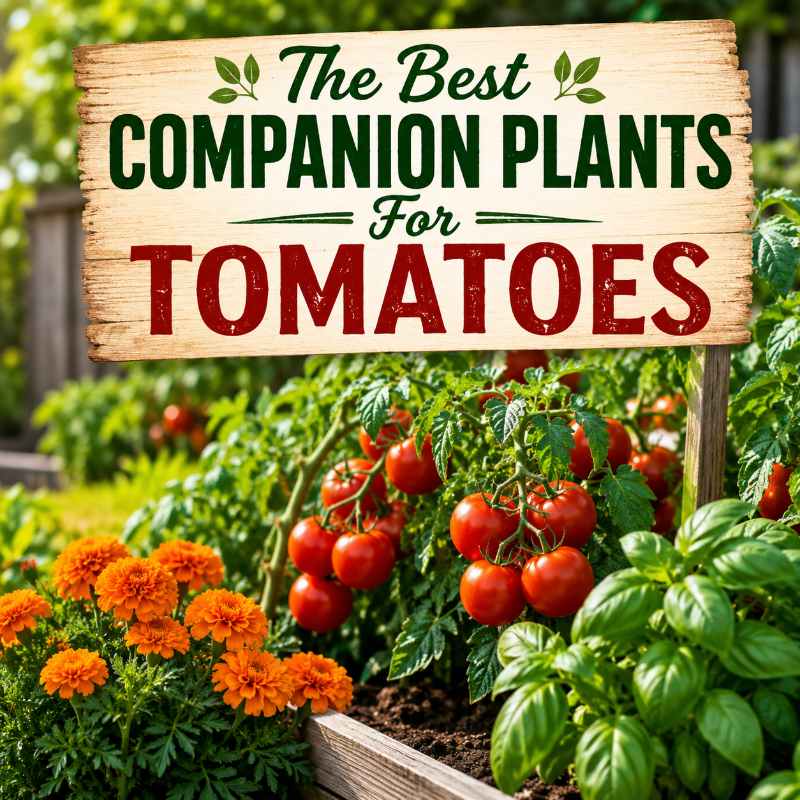
Grow Healthier Plants, Bigger Harvests, And A Happier Garden Naturally
Tomatoes are one of those crops that make a garden feel alive. The smell of the leaves on a warm day, the first tiny yellow flowers, the moment you spot your first red tomato hiding under the foliage. It is pure gardening joy.
But tomatoes can also be a little dramatic.
One week they look perfect, the next week you are battling aphids, whitefly, blight, poor pollination, curled leaves, or plants that seem to be all leaves and no fruit. That is where companion planting comes in.
Companion planting is the simple idea of growing certain plants together because they can help each other. Some attract pollinators, some bring in pest-eating insects, some shade the soil, some confuse pests with strong smells, and some simply make better use of the space around your tomato plants.
It is old-fashioned gardening wisdom, but it still works beautifully today when done properly. 🌿
If you want healthier tomatoes without relying on expensive sprays and complicated garden tricks, these are some of the best companion plants to grow alongside them.
Why Companion Planting Works So Well For Tomatoes 🌱
Tomatoes are hungry, thirsty, sun-loving plants. They need space, airflow, steady moisture, and plenty of nutrients. When planted alone in bare soil, they can become a magnet for pests and diseases.
Good companion plants can help by:
Attracting pollinators such as bees and hoverflies
Bringing in beneficial insects that eat aphids and other pests
Confusing pests with strong scents
Covering bare soil to reduce moisture loss
Making the garden more productive by using empty spaces wisely
Creating a healthier garden ecosystem instead of a single-crop buffet for bugs
The secret is not just throwing random plants together. The best tomato companions are useful, low competition, and easy to manage.
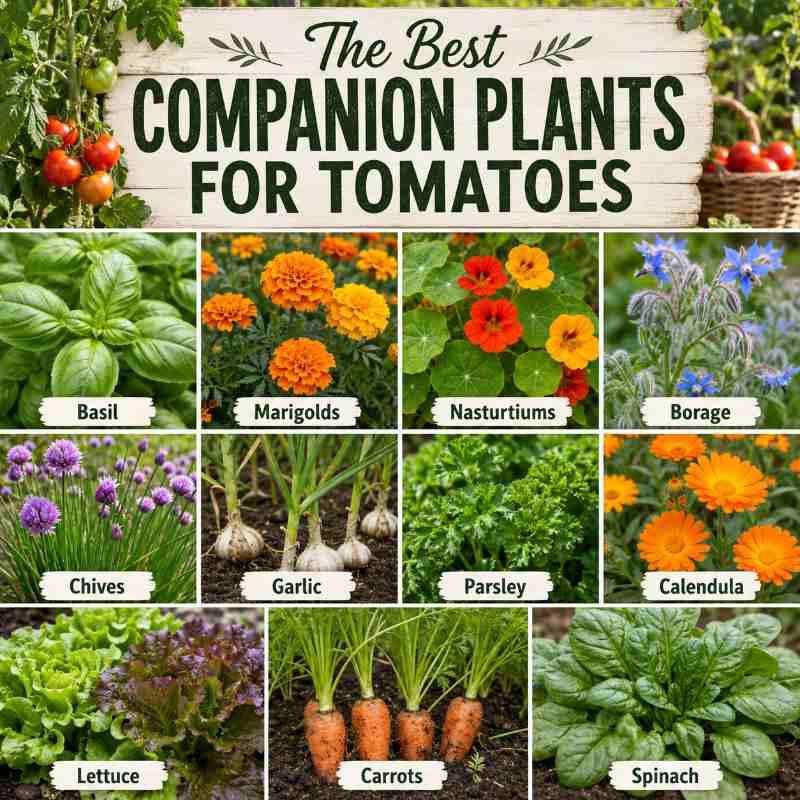
1. Basil 🌿
Basil is probably the most famous tomato companion plant, and for good reason. It loves similar warm growing conditions, looks beautiful next to tomato plants, and is one of the best herbs to have nearby when you are cooking fresh tomato dishes.
Many gardeners believe basil helps confuse pests with its strong scent. It can also attract pollinators once it flowers, although you may want to pinch off flowers if you are growing basil mainly for leaves.
Best way to plant it:
Plant basil around 12 inches away from tomato stems so it has room to grow without crowding the base of the plant.
Why it is useful:
It is easy, edible, fragrant, and perfect for summer cooking.
2. Marigolds 🌼
Marigolds are a classic tomato companion because they are bright, tough, easy to grow, and brilliant for adding colour around vegetable beds.
They are especially useful because their scent may help confuse some pests, and their flowers can attract beneficial insects. Certain marigold varieties are also known for helping with soil pest issues when grown properly over time.
Best way to plant them:
Plant marigolds around the edges of tomato beds or between tomato plants, but do not pack them too tightly. Tomatoes still need airflow.
Why it is useful:
They make the garden look pretty while supporting a healthier growing space.
3. Nasturtiums 🌺
Nasturtiums are one of my favourite companion plants because they are so simple. They grow fast, tumble beautifully, and their flowers are edible too.
They are often used as a “trap crop” because aphids may go for the nasturtiums before attacking your tomatoes. This does not mean nasturtiums magically remove all pests, but they can help draw attention away from your main crop.
Best way to plant them:
Grow nasturtiums near the edge of the tomato bed or in containers close by. They can spread, so give them room.
Why it is useful:
They attract pollinators, add colour, and can help distract aphids.
4. Borage 🐝
Borage is a fantastic plant for bringing bees into the garden. It produces beautiful blue star-shaped flowers that pollinators love, and it has a wild, cottage-garden feel.
Tomatoes do not technically need bees in the same way some crops do because they are self-pollinating, but pollinator movement and vibration can still help improve fruit set. More insect life in the garden also means a more balanced garden overall.
Best way to plant it:
Plant borage nearby rather than directly under tomatoes, as it can grow fairly large.
Why it is useful:
It brings bees, beauty, and biodiversity into the tomato patch.
5. Chives 🧅
Chives are small, tidy, and easy to grow. Their onion-like scent may help confuse some pests, and their purple flowers attract bees and other helpful insects.
They are also perennial, which means they come back year after year. This makes them a brilliant low-effort companion plant for raised beds, borders, and container gardens.
Best way to plant them:
Plant chives near tomato beds or at the corners of raised beds.
Why it is useful:
They are compact, edible, pretty, and low maintenance.
6. Garlic 🧄
Garlic is another strong-scented plant that can be useful near tomatoes. It does not take up much room, and it grows mostly upright, so it will not smother your tomato plants.
Some gardeners use garlic near tomatoes to help confuse pests. Even better, you get a second harvest from the same space.
Best way to plant it:
Grow garlic around the edge of the tomato bed, leaving plenty of room for tomato roots.
Why it is useful:
It is space-saving, edible, and naturally pungent.
7. Parsley 🌿
Parsley is a brilliant herb to grow near tomatoes, especially if you let some of it flower. When parsley flowers, it can attract beneficial insects such as hoverflies and tiny parasitic wasps, which may help control pests like aphids.
It is also useful in the kitchen, so it earns its space twice.
Best way to plant it:
Plant parsley near tomatoes but not too close to the main stem. It likes a little moisture and can benefit from light shade during hot weather.
Why it is useful:
It supports beneficial insects and gives you fresh herbs for meals.
8. Calendula 🌼
Calendula, also known as pot marigold, is a cheerful flower that fits beautifully into a vegetable garden. It attracts pollinators and beneficial insects, and its bright orange and yellow flowers make tomato beds look full and healthy.
Calendula is also easy to grow from seed and can self-seed in some gardens, meaning it may come back again the following year.
Best way to plant it:
Grow calendula near tomato plants, along paths, or at the front of beds.
Why it is useful:
It is beautiful, easy, and helpful for attracting garden wildlife.
9. Lettuce 🥬
Lettuce is a clever companion plant for tomatoes because it uses the lower space around the plants. As tomatoes grow tall, lettuce can enjoy a little light shade, especially in warm weather.
This is a great way to get more food from a small garden.
Best way to plant it:
Plant lettuce around young tomato plants while the tomatoes are still small. Harvest the lettuce before the tomato plants become too bushy.
Why it is useful:
It saves space and helps cover bare soil.
10. Carrots 🥕
Carrots can be grown near tomatoes, but they need loose soil and enough space. They are not pest-fighting heroes, but they are useful because they grow below ground while tomatoes grow above ground.
The key is not to plant them so close that you damage tomato roots when harvesting.
Best way to plant them:
Grow carrots in rows beside tomatoes rather than directly at the base.
Why it is useful:
They make good use of garden space and can grow well alongside taller crops.
11. Spinach 🌱
Spinach is another leafy crop that can work well around tomatoes, especially early in the season. Like lettuce, it can benefit from some shade once the tomato plants grow tall.
It also helps keep soil covered, which can reduce moisture loss.
Best way to plant it:
Sow spinach between young tomato plants, then harvest before the tomato plants get too large.
Why it is useful:
It gives you an extra crop while tomatoes are still developing.
12. Dill, But With A Warning 🌿
Young dill can attract helpful insects, especially when it flowers. However, mature dill can become large and may compete with tomatoes if planted too close.
Some gardeners also prefer to keep dill away from tomatoes once it gets big, so the safest method is to grow it nearby rather than right in the tomato bed.
Best way to plant it:
Grow dill in a pot or at the edge of the garden.
Why it is useful:
It can bring in beneficial insects, but it needs managing.
Plants You Should Avoid Planting Near Tomatoes ⚠️
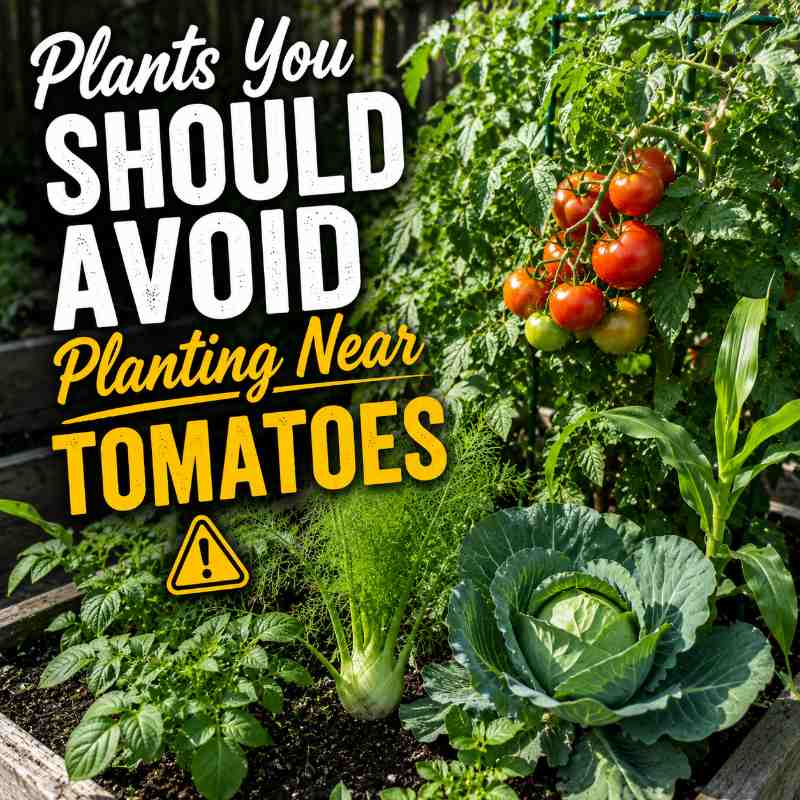
Not every plant is a good neighbour. Some plants compete too much, share similar diseases, or may cause problems in the tomato bed.
Potatoes 🥔
Tomatoes and potatoes are in the same plant family, which means they can suffer from similar diseases, including blight. Keeping them apart helps reduce risk.
Fennel 🌾
Fennel is not a great team player in the garden. It can inhibit the growth of nearby plants, so it is best grown away from tomatoes and most vegetables.
Corn 🌽
Corn and tomatoes can attract some of the same pests, and corn can also shade tomato plants too much if planted poorly.
Cabbage Family Crops 🥦
Cabbage, broccoli, cauliflower, kale, and Brussels sprouts can be heavy feeders. Tomatoes are also heavy feeders, so growing them too close can create competition.
Black Walnut Trees 🌳
Tomatoes are sensitive to juglone, a natural chemical produced by black walnut trees. Avoid planting tomatoes near black walnut roots, leaves, or nut debris.
How To Companion Plant Tomatoes The Right Way 🍅
Companion planting works best when you keep things simple. The goal is not to cram as many plants as possible into one bed. The goal is to create a balanced, useful planting area.
1. Give Tomatoes Space
Tomatoes need airflow. Crowded plants are more likely to suffer from fungal problems, especially in damp weather.
Leave enough space between tomato plants and avoid planting bushy companions too close to the stem.
2. Use The Edges Of The Bed
Plant flowers like marigolds, calendula, and nasturtiums around the edges. This keeps the tomato roots clear while still attracting insects and adding colour.
3. Mix Herbs In Small Groups
Basil, parsley, chives, and garlic are best grown in small clusters rather than packed everywhere.
4. Keep The Base Clear
Avoid letting plants cover the tomato stem too heavily. Tomatoes benefit from good airflow at the base.
5. Water The Soil, Not The Leaves
Companion plants can make beds fuller, but you still want to water carefully. Wet tomato leaves can increase disease problems, so water at soil level whenever possible.
6. Watch For Competition
If a companion plant starts taking over, cut it back or move it. Tomatoes are the main crop, so they should get priority.
Best Companion Planting Layout For Tomatoes 🪴
Here is a simple layout for a raised bed or garden patch:
Centre of the bed: Tomato plants with strong supports
Between tomato plants: Basil or parsley, spaced carefully
Front edge: Lettuce, spinach, or calendula
Corners: Chives or garlic
Outer edge: Marigolds and nasturtiums
Nearby in a pot: Dill or borage
This gives you flowers, herbs, leafy crops, and pest-confusing scents without overcrowding the tomatoes.
Quick Tips For Bigger, Healthier Tomato Harvests 🍅
Mulch well to keep moisture steady
Feed regularly once flowers appear
Prune lower leaves to improve airflow
Stake or cage plants early before they flop
Remove diseased leaves quickly
Do not overcrowd companion plants
Rotate tomato beds each year if possible
Grow flowers nearby to bring life into the garden
The best tomato garden is not perfectly tidy. It is alive, buzzing, colourful, and balanced.
Common Questions About Tomato Companion Plants
What is the best companion plant for tomatoes?
Basil is one of the most popular companions because it grows well with tomatoes, smells strong, and is useful in the kitchen. Marigolds, calendula, chives, and nasturtiums are also excellent choices.
Can I plant marigolds right next to tomatoes?
Yes, but give them space. Marigolds are great around tomatoes, but they should not crowd the main stem or block airflow.
Do companion plants stop tomato pests completely?
No. Companion planting helps create a healthier garden, but it does not guarantee a pest-free tomato crop. Think of it as one useful tool alongside good watering, spacing, feeding, and regular checking.
Can tomatoes and basil grow in the same pot?
Yes, if the pot is large enough. Tomatoes need a deep container with plenty of compost, water, and nutrients. If the pot is small, basil may compete too much.
What flowers should I plant with tomatoes?
Marigolds, calendula, nasturtiums, borage, and alyssum are all good options. They add colour and attract helpful insects.
Should I plant tomatoes near potatoes?
It is best to avoid planting tomatoes near potatoes because they can share some of the same diseases, especially blight.
Can I plant lettuce under tomatoes?
Yes. Lettuce can grow well around young tomato plants and may enjoy some shade later in the season. Harvest it before the tomato plants become too dense.
Final Thoughts: A Tomato Garden That Works With Nature 🌿
Companion planting is one of the easiest ways to make your tomato patch more productive, beautiful, and interesting. You do not need expensive products or complicated gardening systems. You just need the right mix of helpful plants.
Grow basil for flavour, marigolds for colour, nasturtiums for pest distraction, borage for bees, chives for scent, and leafy greens to make the most of your space. Keep everything spaced well, water carefully, and let your garden become a little ecosystem.
The result?
Healthier tomatoes, fewer problems, more pollinators, and a garden that looks like it belongs in a magazine. 🍅🌼