

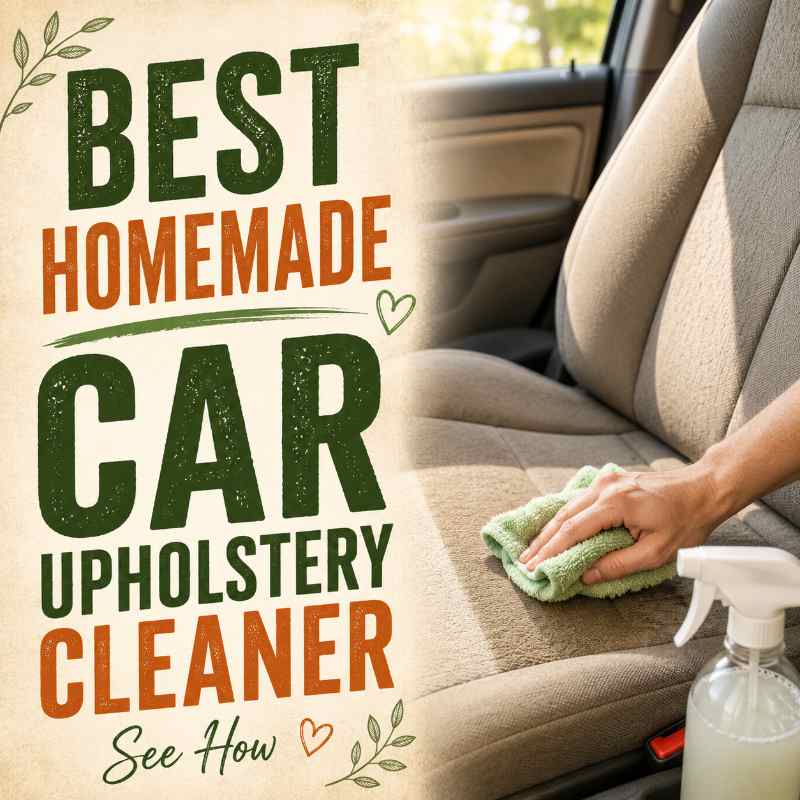
Best Homemade Car Upholstery Cleaner
Make sure to like Living Green and Frugally on Facebook, Shop at amazon to help support my site and explore our PINTEREST BOARDS for innovative ways you can become self-sufficient.
Car seats can get dirty surprisingly quickly. Spilled coffee, muddy clothes, kids, pets, crumbs and everyday use can leave fabric seats looking tired and smelling less than fresh.
Fortunately, you do not necessarily need an expensive specialist product. One of the best homemade car upholstery cleaner recipes uses just warm water, white vinegar and a small amount of dish soap.
It is inexpensive, takes a couple of minutes to mix and works well for everyday dirt and many light stains on standard cloth car upholstery.
Best Homemade Car Upholstery Cleaner Recipe
You will need:
- 2 cups warm distilled water
- 1 tablespoon white vinegar
- 1 teaspoon clear dish soap
- Spray bottle
- Soft upholstery brush or microfiber cloth
- Clean dry towels
- Vacuum cleaner
Important: Always test your cleaner on a small hidden section of upholstery first. Do not use this recipe on leather, suede, Alcantara or other specialist upholstery without checking the manufacturer’s cleaning instructions.
How To Clean Car Upholstery
Step 1: Vacuum the Seats
Before adding any cleaner, give the seats a thorough vacuum.
Pay particular attention to seams, edges and the gaps between the seat cushions. Removing loose dirt first prevents you from turning dust and crumbs into muddy residue when the fabric becomes damp.
A crevice attachment works brilliantly around the edges.
For those awkward vents, cup holders and small gaps around the dashboard, our Homemade Cleaning Slime Recipe is another useful DIY car-cleaning trick.
Step 2: Mix the Cleaner
Pour the warm distilled water into a spray bottle.
Add:
- 1 tablespoon white vinegar
- 1 teaspoon clear dish soap
Replace the lid and gently turn the bottle several times to combine everything.
Do not shake it aggressively, or you may end up with a bottle full of foam.
You only need a tiny amount of dish soap. Adding extra soap does not necessarily make the cleaner stronger. Too much can leave a sticky residue that actually attracts more dirt later.
Step 3: Lightly Spray the Upholstery
Mist a small section of the seat.
The important word here is lightly.
You want the fabric damp, not soaking wet. Car seats contain thick foam underneath the upholstery, and saturating that foam can dramatically increase drying time.
Work on one small section at a time.
Step 4: Gently Agitate the Dirt
Use a clean microfiber cloth or soft upholstery brush to work the solution into the fabric.
Use gentle circular movements rather than aggressive scrubbing.
For particularly dirty sections, let the cleaner sit for a couple of minutes before working it with your cloth.
If you are dealing with a specific stubborn spill rather than general grime, you may also want to try these homemade upholstery and carpet stain-removing ideas.
Step 5: Blot Away the Dirt
Take a clean, slightly damp microfiber cloth and wipe over the area.
You may be surprised how much dirt comes off onto the cloth.
Rinse or replace your cloth regularly so that you are not simply spreading grime from one part of the seat to another.
Finish by pressing a clean dry towel firmly against the upholstery to absorb as much moisture as possible.
Step 6: Let the Seats Dry Completely
Leave the windows or doors open somewhere secure and well ventilated until the upholstery is completely dry.
If possible, clean your seats on a warm, dry day.
Avoid sitting on the seats while they are still damp.
Cleaning Tough Car Seat Stains
For a fresh spill, blot first rather than scrub.
Use paper towels or a clean cloth to absorb as much liquid as possible before applying cleaner.
Then lightly apply the homemade upholstery cleaner and blot repeatedly.
Old stains may need two or three treatments rather than one aggressive cleaning session.
For grease, food and other stubborn marks, our guide to 3 Tried and Tested Homemade Stain Removers has more ideas for treating different types of stains.
What About Bad Smells?
If your seats smell stale but are not particularly dirty, cleaning them may still help because dirt, old spills and food particles can hold odors.
Once the upholstery is completely dry, vacuum the seats again.
You can also find more simple ideas in our guide to Homemade Room & Carpet Deodorizers.
Avoid simply covering unpleasant smells with large amounts of fragrance. Finding and cleaning the source usually works much better.
Car Upholstery Cleaning Mistakes To Avoid
Do not soak the seats. More liquid does not mean more cleaning power.
Do not use too much dish soap. Soap residue can leave upholstery feeling unpleasant and attract dirt.
Do not scrub aggressively. Heavy scrubbing can damage fabric fibres or spread a stain.
Do not skip the patch test. Different vehicles use different fabrics and dyes.
Do not use this recipe on leather. Leather needs products and techniques designed specifically for leather upholstery.
Do not close the car while the seats are very damp. Give moisture somewhere to escape.
While you are giving the car a clean, you can also save a little money with these 5 Easy Homemade Washer Fluid Recipes.
Frequently Asked Questions
Can I use baking soda in homemade car upholstery cleaner?
Baking soda can be useful for some cleaning jobs, but I prefer leaving it out of this basic spray. Powder can become trapped in upholstery fibres and can leave residue behind if too much is used.
Can I use this cleaner on all car seats?
No. This recipe is intended for ordinary cloth upholstery. Do not automatically use it on leather, suede, Alcantara or specialist materials. Check your vehicle manufacturer’s recommendations first.
Will vinegar make my car smell?
The vinegar smell normally disappears as the upholstery dries. Using only a small amount also prevents the smell from becoming overpowering.
Can I clean the entire seat at once?
You can, but working in sections is much easier. It prevents the seat becoming overly wet and allows you to see which areas have already been cleaned.
How often should car upholstery be cleaned?
A thorough cleaning once or twice a year may be enough for many cars. Vacuuming regularly and dealing with spills immediately can prevent the seats from needing frequent deep cleaning.
Final Thoughts
The best homemade car upholstery cleaner does not need a long list of ingredients.
For everyday cloth seats, warm distilled water, a little white vinegar and a tiny amount of dish soap can make a simple, inexpensive cleaner.
The real trick is how you use it. Vacuum first, use very little liquid, work in small sections, blot away the dirt and allow the upholstery to dry thoroughly.
Done properly, it is an easy way to freshen up a grubby car interior without filling your cupboard with yet another expensive cleaning product.