

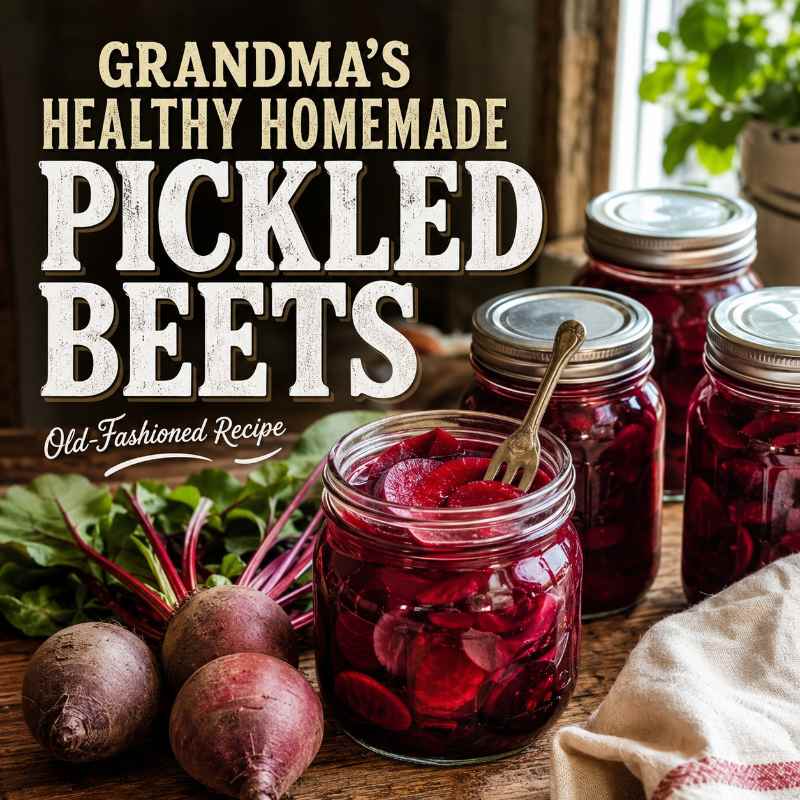
Grandma’s Healthy Homemade Pickled Beets Recipe
Make sure to like Living Green and Frugally on Facebook, Shop at Amazon to help support my site and explore our PINTEREST BOARDS for innovative ways you can become self-sufficient.
There is something special about opening a jar of homemade pickled beets. Their beautiful ruby-red colour, sweet-and-tangy flavour, and gentle warmth from the spices make them taste just like something Grandma would have served.
This old-fashioned pickled beet recipe uses simple ingredients and much less sugar than many shop-bought versions. The beets are cooked until tender, sliced, covered with a vinegar brine, and either stored in the refrigerator or processed in a water-bath canner for longer storage.
Pickled beets are delicious with salads, sandwiches, cold meats, roast dinners, or eaten straight from the jar!
Why You’ll Love These Homemade Pickled Beets
- Simple ingredients: No artificial colours or unnecessary preservatives.
- Adjustable sweetness: Use less sugar for a sharper pickle.
- Budget-friendly: Perfect for preserving a large homegrown beet harvest.
- Long-lasting: Properly canned jars can fill your pantry for months.
- Naturally colourful: Beets create their own wonderful deep-red brine.
- Easy to serve: Open a jar whenever a meal needs a bright, tangy side dish.
If you are new to preserving food, have a look at this beginner-friendly guide to becoming a confident home canner before getting started.
Grandma’s Healthy Homemade Pickled Beets Recipe
Preparation time: 25 minutes
Cooking time: 35 to 50 minutes
Canning time: 30 minutes, adjusted for altitude
Yield: Approximately 4 pint jars
Ingredients
- 4 pounds fresh beets
- 2 cups white vinegar or apple cider vinegar with 5% acidity
- 1 cup water
- ½ to 1 cup granulated sugar, depending on your preferred sweetness
- 1 teaspoon canning or pickling salt
- 1 cinnamon stick
- 1 teaspoon whole cloves
- 1 teaspoon whole allspice berries
- ½ teaspoon black peppercorns
- 1 small onion, thinly sliced, optional
Important: If you plan to can the beets for shelf storage, do not reduce the amount of vinegar or use vinegar with less than 5% acidity. Sugar can be adjusted for flavour, but the acidity must remain strong enough for safe water-bath canning.
Equipment You Will Need
- Large cooking pot
- Saucepan
- Colander
- Jar funnel
- Bubble-removing tool or plastic spatula
- Jar lifter
- Clean pint-sized canning jars
- New canning lids and suitable bands
- Water-bath canner or deep stockpot with a rack
Use jars specifically designed for home canning. Ordinary recycled food jars may crack during processing or fail to seal correctly.
How to Make Pickled Beets
1. Prepare the Beets
Cut off the beet leaves, leaving about one inch of stem attached. Keep the root ends intact for now. This helps prevent too much colour and flavour from escaping while the beets cook.
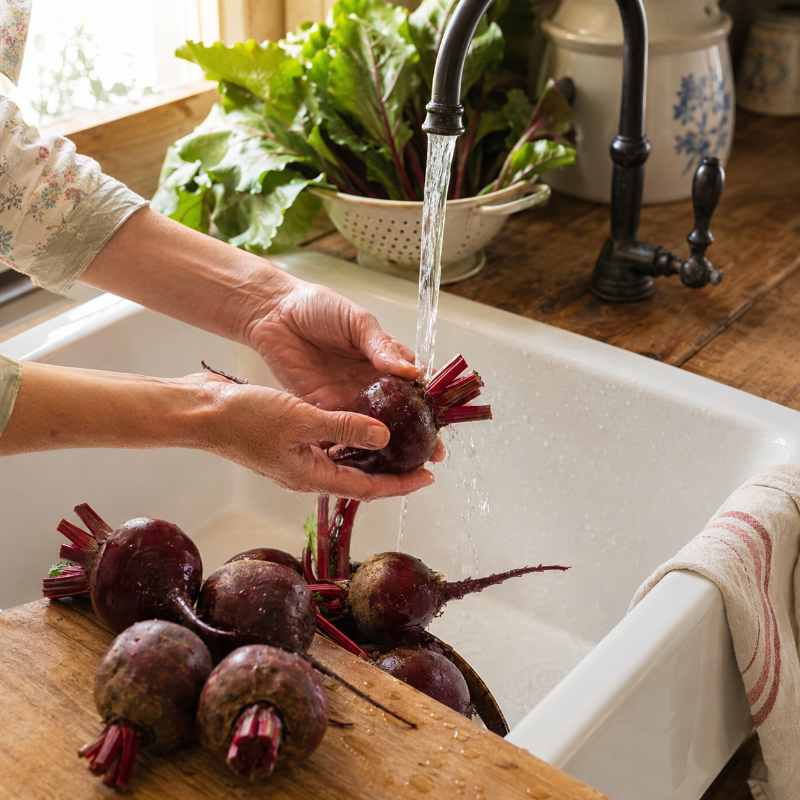
Wash the beets thoroughly under cool running water to remove any soil. Avoid cutting into the skins.
2. Cook Until Tender
Place the whole beets in a large pot and cover them with water. Bring to a boil, then reduce the heat and simmer for 25 to 40 minutes.
The exact cooking time will depend on their size. They are ready when a small knife can be inserted into the centre without too much resistance.
Drain the beets and allow them to cool until they are comfortable to handle.
3. Peel and Slice
Trim away the roots and remaining stems. The cooked skins should slide off easily when rubbed with your fingers or a piece of kitchen paper.
Slice the beets into rounds approximately ¼ inch thick. Small beets can be left whole or cut into halves or quarters.
Beets can stain hands, chopping boards, and clothing, so an apron and a pair of food-safe gloves can be useful.
4. Make the Pickling Brine
Place the vinegar, water, sugar, salt, cinnamon, cloves, allspice, and peppercorns in a saucepan.
Bring the mixture to a gentle boil, stirring until the sugar has dissolved. Reduce the heat and simmer for five minutes.
For a clear brine without loose spices, place the whole spices inside a tied piece of clean muslin or a reusable spice bag. Remove the bag before filling the jars.
5. Add the Beets
Add the cooked beets and optional sliced onion to the hot brine. Return everything to a gentle simmer and cook for five minutes.
This warms the beets thoroughly and helps them absorb the sweet-and-sour flavour.
6. Fill the Jars
Place the hot beets into clean, hot canning jars. Pack them comfortably without crushing them.
Pour the hot brine over the beets, leaving ½ inch of headspace at the top of each jar. Slide a non-metallic utensil around the inside of each jar to release trapped air bubbles.
Check the headspace again, adding more brine if needed. Wipe the jar rims, centre the lids, and tighten the bands until fingertip-tight.
7. Process the Jars
Lower the filled jars into a boiling-water canner. The water should cover the tops of the jars by at least one inch.
Process pint or quart jars for:
- 30 minutes at 0 to 1,000 feet above sea level
- 35 minutes at 1,001 to 3,000 feet
- 40 minutes at 3,001 to 6,000 feet
- 45 minutes above 6,000 feet
Begin timing only when the water returns to a full boil.
Turn off the heat, remove the lid, and wait five minutes before lifting out the jars. Place them upright on a towel and leave them undisturbed for 12 to 24 hours.
Checking and Storing the Jars
Once completely cool, press the centre of each lid. A properly sealed lid should be firm and should not spring up when pressed.
Remove the screw bands, wipe the jars, label them with the date, and keep them in a cool, dark, dry cupboard. For the best colour and flavour, use home-canned pickled beets within one year.
Any jar that has not sealed must be refrigerated and eaten promptly. Never eat food from a jar that is leaking, bulging, spurting liquid, unusually foamy, mouldy, or smells unpleasant.
A dedicated storage space can keep your harvest organised. This DIY pallet canning pantry cupboard is a practical way to store jars away from direct light.
Refrigerator Pickled Beets Option
If you do not want to can your beets, prepare the recipe and spoon the hot beets and brine into clean, heat-safe jars.
Allow the jars to cool slightly before refrigerating them. Keep refrigerator pickled beets chilled and eat them within four weeks. They must not be stored at room temperature without proper water-bath processing.
Tips for the Best Pickled Beets
- Choose small or medium beets because they are usually tender and naturally sweet.
- Cook similarly sized beets together so they soften evenly.
- Allow the jars to rest for at least several days before opening.
- Use apple cider vinegar for a slightly softer, fruitier flavour.
- Never replace 5% vinegar with homemade vinegar of unknown acidity.
- Keep the proportion of vinegar to water unchanged when canning.
- Save tender beet leaves and cook them like spinach instead of throwing them away.
For more traditional, low-cost cooking inspiration, explore these 82 Depression Era recipes. You may also enjoy making this canned apple pie jam when you are ready to add something sweet to the pantry.
Common Mistakes to Avoid
Reducing the Vinegar
The acidity is essential for safe preservation. Never dilute the brine beyond the recipe amounts when storing the jars at room temperature.
Using Table Salt
Ordinary table salt may contain additives that make the brine cloudy. Pickling or canning salt gives a clearer finish.
Packing Cold Beets Into Cold Jars
Canning works best when the beets, brine, and jars are all hot. Sudden temperature changes may also cause glass jars to crack.
Overtightening the Bands
Canning lids need to release air during processing. Tighten bands only until fingertip-tight.
Reprocessing an Unsafe Jar
A failed seal is different from visible spoilage. Refrigerate a sound, freshly processed jar that failed to seal. Discard the contents if there are any signs of spoilage.
Frequently Asked Questions
Are pickled beets healthy?
Beets naturally provide fibre, folate, potassium, and plant pigments. Pickling adds sugar and salt, so portion size still matters. Making your own allows you to control the sweetness more easily.
Can I make pickled beets without sugar?
Sugar contributes flavour rather than canning safety, so it can be reduced or omitted. However, the finished beets will taste considerably sharper. Do not reduce the vinegar.
How long before pickled beets are ready to eat?
They can be eaten once chilled, but the flavour is usually better after resting for at least three to seven days.
Why did my beets lose their bright colour?
Older beets, overcooking, excessive light, or very long storage can fade their colour. Use fresh beets and store sealed jars in a dark cupboard.
Can I reuse old canning lids?
Reusable jars and undamaged screw bands are fine, but standard flat canning lids should be new for each canning session to ensure a reliable seal.
How should I serve pickled beets?
Add them to leafy salads, grain bowls, sandwiches, burgers, cold meat platters, or roast dinners. They are also excellent with goat’s cheese, walnuts, and fresh herbs.
Final Thoughts
Grandma’s healthy homemade pickled beets are colourful, economical, and surprisingly easy to prepare. The reduced-sugar brine delivers plenty of old-fashioned sweet-and-tangy flavour without making the beets unnecessarily sugary.
Whether you make one refrigerator jar or preserve an entire garden harvest, this is a practical recipe worth keeping for beet season.