

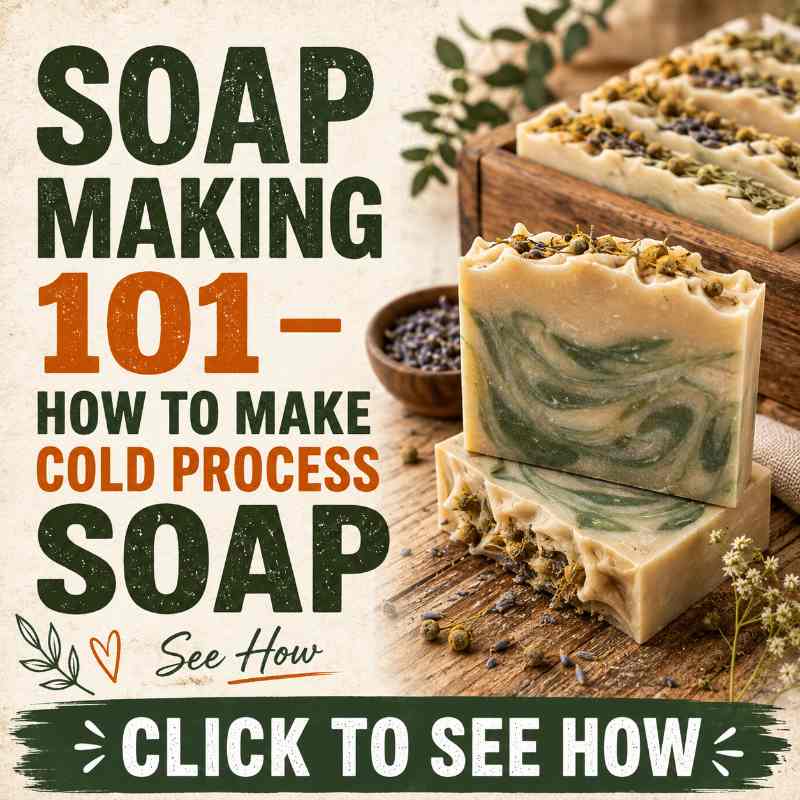
Soap Making 101 – How To Make Cold Process Soap
Make sure to like Living Green and Frugally on Facebook, Shop at Amazon to help support my site and explore our PINTEREST BOARDS for innovative ways you can become self-sufficient.
Soap making is a delightful blend of science and creativity, offering a rewarding experience that allows you to craft your own personalized soaps tailored to your skin’s needs and your preferred scents. Among various methods, cold process soap making stands out for its simplicity and versatility.
In this beginner’s guide, we’ll delve into the basics of cold process soap making, equipping you with the knowledge to create your first batch of handmade soap.
Understanding Cold Process Soap Making:
Cold process soap making is a method where oils and lye are combined to create soap through a natural saponification process. This chemical reaction transforms the ingredients into soap and glycerin, resulting in a luxurious and moisturizing product.
Ingredients Needed:
- Oils and Fats: Common oils used include olive oil, coconut oil, palm oil, and castor oil. Each oil brings unique properties to the soap, such as cleansing, moisturizing, or lathering.
- Lye (Sodium Hydroxide): This is a crucial ingredient for saponification. Handle with care and always follow safety precautions when working with lye.
- Water: Distilled water is typically used in soap making to ensure purity and consistency.
- Essential Oils or Fragrance Oils: These add scent to your soap. Choose from a wide variety of essential oils for natural fragrances or fragrance oils for a wider range of scents.
- Additives (Optional): Ingredients like herbs, clays, or exfoliants can enhance the soap’s properties and aesthetics.
Equipment Needed:
- Safety Gear: Wear gloves, goggles, and long sleeves to protect yourself from lye splashes.
- Stainless Steel or Heat-Resistant Plastic Containers: These are used for mixing lye solution and oils.
- Thermometer: To monitor the temperature of oils and lye solution.
- Stick Blender: For mixing the oils and lye solution thoroughly.
- Soap Molds: Choose molds suitable for cold process soap making, such as silicone or wooden molds.
BEGINNER SOAP MAKING GUIDE
Understanding Cold Process Soap Making
Cold process soap making combines oils or fats with sodium hydroxide (lye) to create soap through a chemical reaction known as saponification. The process produces handmade soap along with naturally occurring glycerin.
⚠ Important Lye Safety
Sodium hydroxide (lye) is highly caustic before saponification. Always wear suitable protective gloves, safety goggles and clothing that covers exposed skin.
Work in a well-ventilated area away from children and pets. Use equipment suitable for working with sodium hydroxide and follow the safety instructions supplied with your lye.
Never guess the amount of lye required. The correct amount depends on the exact type and weight of every oil used in your recipe. Always run your complete formula through a reputable soap-making lye calculator before beginning.
Ingredients Needed
1. Oils and Fats
Common soap-making oils include:
- Olive oil
- Coconut oil
- Palm oil
- Castor oil
Different oils contribute different characteristics to the finished soap, including hardness, conditioning properties, cleansing ability and lather.
2. Lye (Sodium Hydroxide)
Sodium hydroxide is required to turn oils into solid soap through saponification.
3. Distilled Water
Distilled water is commonly used to prepare the lye solution because it provides a consistent water source without many of the minerals that may be present in tap water.
4. Essential Oils or Fragrance Oils
Fragrance can be added to give your finished soap its scent. Always make sure the fragrance or essential oil you choose is suitable for use in cold process soap and follow the supplier’s recommended usage rate.
5. Optional Additives
Once you understand the basic process, optional ingredients can be used to change the appearance or texture of your soap.
- Soap-safe clays
- Dried botanicals
- Oatmeal
- Soap-safe colourants
- Suitable exfoliating ingredients
Equipment Needed
- Protective Gloves For protecting your hands while handling sodium hydroxide and raw soap batter.
- Safety Goggles Protect your eyes from accidental splashes.
- Long Sleeves & Protective Clothing Helps keep exposed skin covered while working.
- Digital Kitchen Scale Soap-making ingredients should be measured accurately by weight rather than estimated by volume.
- Lye-Safe Mixing Container Use containers specifically suitable for sodium hydroxide solutions.
- Stainless Steel Pot or Container Useful for preparing and combining your soap-making oils.
- Thermometer Allows you to monitor the temperature of your oils and lye solution.
- Stick Blender Helps bring the oils and lye solution together until the mixture reaches trace.
- Silicone Spatula Useful for stirring and scraping soap batter from the container.
- Soap Mold Silicone soap molds or suitable lined wooden molds work well for cold process soap.
The Basic Cold Process
- Choose and weigh your oils. Decide on your soap formula and accurately weigh each oil or fat.
- Calculate the lye and water. Enter the exact oils and their weights into a reputable soap-making lye calculator. Follow the calculated quantities rather than estimating.
- Prepare your workspace. Put on gloves, goggles and protective clothing. Keep children and pets away from the work area.
- Prepare the lye solution. Follow your calculated formulation and the sodium hydroxide manufacturer’s safety instructions carefully.
- Prepare the oils. Measure the oils accurately and gently melt any solid fats required by your chosen recipe.
- Combine and blend. Carefully combine the prepared ingredients according to your tested soap formula and blend until the mixture reaches the appropriate trace.
- Add fragrance or additives. Add any soap-safe fragrance, colour or other additives according to their recommended usage rates.
- Pour into the mold. Transfer the soap batter into your prepared soap mold and allow it to complete the initial saponification process.
- Unmold and cut. Once the soap has hardened sufficiently, remove it from the mold and cut it into individual bars if necessary.
- Allow the soap to cure. Place the bars in a suitable ventilated curing area and follow the curing guidance for your particular cold process formulation before use.
There is no universal quantity of sodium hydroxide that can safely be added to a mixture of oils. Every oil has its own saponification value. Changing an oil, its weight or the total batch size changes the amount of lye required.
Always calculate your complete recipe before working with sodium hydroxide.
The Soap Making Process:
- Measure and prepare your ingredients and equipment beforehand.
- Slowly add lye to water, stirring until dissolved. Be cautious as this mixture will release heat and fumes.
- Heat oils to the desired temperature, typically around 100-110°F (38-43°C).
- Once both lye solution and oils reach the desired temperature, slowly pour the lye solution into the oils.
- Use a stick blender to mix the ingredients until they reach trace, a stage where the mixture thickens to a pudding-like consistency.
- Add essential oils or fragrance oils and any desired additives, then mix thoroughly.
- Pour the soap batter into molds and tap gently to release air bubbles.
- Allow the soap to cure in the molds for 24-48 hours.
- After curing, unmold the soap and cut it into bars.
- Let the soap cure for 4-6 weeks, allowing it to harden and the saponification process to complete.
Tips for Success:
- Accurate measurements are crucial. Use a digital scale for precision.
- Follow safety guidelines when working with lye, and always add lye to water, not the other way around.
- Experiment with different oils, additives, and scents to create unique soap recipes.
- Keep a journal to record your recipes and observations for future batches.
- Patience is key. Soap making is an art that rewards patience and practice.
Cold process soap making is a fulfilling craft that allows you to create high-quality, personalized soaps tailored to your preferences. With the right ingredients, equipment, and techniques, you can embark on a journey of creativity and self-expression while indulging in the luxurious world of handmade soap.
So, roll up your sleeves, gather your supplies, and let your imagination run wild as you embark on your soap making adventure!
Happy soap making!