

The Backyard Weed You Keep Killing: Why Plantain Is One of Nature’s Most Useful First-Aid Plants
Make sure to like Living Green and Frugally on Facebook, Shop at Amazon to help support my site and explore our PINTEREST BOARDS for innovative ways you can become self-sufficient.
You may have walked over it hundreds of times.
It grows between paving stones, along footpaths, in lawns, beside vegetable gardens and in places where other plants struggle to survive. Most people pull it out, mow it down or spray it without giving it a second thought.
But plantain weed may be one of the most useful wild plants growing around your home.
And no, we are not talking about the banana-like fruit.
The plant we are talking about belongs to the Plantago genus, particularly broadleaf plantain (Plantago major) and ribwort plantain (Plantago lanceolata).
For generations, plantain leaves have been used in traditional herbal medicine for everything from minor skin complaints and insect bites to irritated throats. Modern research has also found a fascinating collection of naturally occurring plant compounds in plantain, although many of its traditional uses still need stronger clinical evidence.
So before you automatically pull this little plant out of your lawn, it might be worth learning what you are looking at.
🌿 First, What Does Plantain Weed Look Like?
Plantain is extremely common, but correct identification is essential before using any wild plant.
Two varieties are particularly widespread.
Broadleaf Plantain
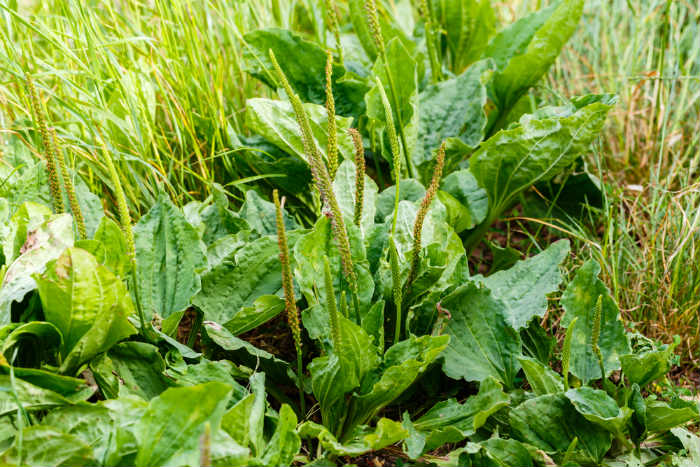
Broadleaf plantain (Plantago major) usually produces:
- Broad oval or egg-shaped leaves
- A low-growing rosette close to the ground
- Several strong parallel veins running through each leaf
- Long leafless flower stalks
- Narrow greenish-brown seed spikes
One easy feature to notice is the strong fibres inside the leaves. If you gently pull a leaf apart, the veins can sometimes stretch like tiny strings.
Ribwort or Narrowleaf Plantain
Plantago lanceolata looks slightly different.
Its leaves are:
- Long and narrow
- Usually pointed at the ends
- Strongly ribbed
- Arranged in a basal rosette
Its flower heads are generally shorter and sit on long slender stems.
Both species have a long history of traditional use. The European Medicines Agency, for example, recognises ribwort plantain leaf as a traditional herbal medicinal product used to soothe irritation of the mouth and throat associated with a dry cough.
Never use a wild plant unless you are completely confident of its identification.
If you enjoy discovering useful plants growing around the home, you may also like our guide to 18 Delicious Edible Backyard Weeds.
Why Has Plantain Been Used for So Long?
Plantain’s reputation comes partly from the mixture of naturally occurring compounds found inside the plant.
Researchers have identified substances including:
- Flavonoids
- Iridoid glycosides
- Polysaccharides
- Phenolic compounds
- Tannins
- Terpenoids
Laboratory and experimental research has investigated plantain for properties including antioxidant, anti-inflammatory, antimicrobial and wound-healing activity. However, laboratory findings do not automatically mean that putting a leaf on your skin will treat a medical condition.
That distinction is important.
Plantain is a fascinating traditional medicinal herb, not a replacement for professional medical treatment.
🦟 1. Traditionally Used on Insect Bites and Stings
This is probably the plantain use that has made it particularly popular among hikers, gardeners and herbalists.
Fresh plantain leaves have traditionally been crushed and applied to minor insect bites and irritated skin.
The easiest traditional preparation is sometimes called a plantain poultice.
The leaves are crushed until moist and placed against the affected skin.
Plantain has been used for wounds, burns, insect bites and stings in many cultures.
However, serious swelling, breathing difficulties, dizziness or a suspected severe allergic reaction following an insect sting requires urgent medical treatment, not a herbal remedy.
🩹 2. A Traditional Plant for Minor Skin Problems
For centuries, plantain has been associated with skin and wound care.
Historical herbal traditions used the leaves on:
- Small scratches
- Minor abrasions
- Irritated skin
- Small burns
- Blisters
There is some interesting research behind this traditional reputation.
A clinical study involving an ointment containing Plantago major reported encouraging results in patients with second-degree burns. However, other reviews have concluded that the evidence for plantain’s wound-healing effectiveness is still insufficient and that better studies are needed.
That means it is better described as a traditional first-aid herb with promising research, rather than a proven replacement for conventional wound care.
Deep cuts, infected wounds, significant burns and puncture wounds should always receive appropriate medical attention.
🍃 3. Plantain Leaves Are Also Edible
Here’s another surprise.
Plantain isn’t only regarded as a medicinal herb. The leaves are edible too.
Young leaves tend to be the most pleasant because older leaves become tougher and more fibrous.
Tender leaves can be:
- Added to salads
- Chopped into soups
- Cooked like leafy greens
- Blended into pesto
- Added to wild-food recipes
Older leaves are usually better cooked.
Plantain is just one of many wild foods people routinely destroy without realising they are edible. Have a look at 18 Delicious Edible Backyard Weeds for more plants that could already be growing around your home.
☕ 4. Plantain Has Traditionally Been Used for the Throat
Ribwort plantain has an especially long history in European herbal medicine.
Preparations made from Plantago lanceolata leaves have traditionally been used to soothe irritation in the mouth and throat associated with dry coughing. The European Medicines Agency lists this as a recognised traditional use, meaning its long history of use is accepted even though the evidence does not necessarily meet the standard required for a conventional licensed medicine.
Plantain leaves are sometimes prepared as herbal tea for this reason.
If wild teas interest you, you might also enjoy:
10 Wild Teas Every Survivalist Should Know
🥾 5. Why Plantain Earned a Place in Traditional Outdoor First Aid
Plantain has one enormous advantage over many specialist herbs.
It grows almost everywhere.
You can find it growing in:
- Lawns
- Paths
- Parks
- Fields
- Gardens
- Grass verges
- Disturbed soil
It also tolerates being walked on surprisingly well.
For someone interested in foraging or traditional plant knowledge, recognising useful plants growing naturally around you can be a valuable skill.
Our 100 Survival Medical Supplies with Natural Remedies Included guide is another useful resource if you’re building a preparedness kit rather than relying solely on whatever happens to be growing nearby.
How People Traditionally Make a Plantain Poultice
A poultice is one of the simplest traditional preparations.
You Need:
- Several correctly identified plantain leaves
- Clean water
- A clean surface or bowl
Step 1: Pick Clean Leaves
Choose healthy leaves away from roads, dog-walking areas, agricultural chemicals and places that may have been sprayed with weed killer.
Step 2: Wash Them Thoroughly
Rinse the leaves carefully with clean water.
This matters particularly if they will be placed on skin.
Step 3: Crush the Leaves
Bruise or crush the leaves until they become moist and pulpy.
Traditionally, this releases the plant juices.
Step 4: Apply to Minor Intact or Superficially Irritated Skin
The crushed leaf material has traditionally been placed over the affected area temporarily.
Do not pack wild plant material into deep or serious wounds.
Fresh wild leaves are not sterile and can carry soil organisms and other contaminants.
Can You Make Plantain Tea?
Plantain leaves have also traditionally been steeped in hot water.
A basic herbal infusion is usually made by washing the leaves carefully, chopping them and steeping them in hot water before straining.
However, drinking medicinal quantities of wild herbs is very different from occasionally eating an edible leaf.
Plantain can cause unwanted reactions in some people, including digestive symptoms and allergic reactions.
Anyone who is pregnant, breastfeeding, taking medication or managing a medical condition should check with an appropriate healthcare professional before regularly using herbal preparations.
🌱 Harvesting Plantain Safely
Finding plantain isn’t usually difficult.
Finding clean plantain can be.
Avoid harvesting from:
Busy roadsides: Plants can be exposed to vehicle pollution and contaminated dust.
Chemically treated lawns: Weed killers, pesticides and other lawn treatments may remain on plants.
Dog-walking areas: There is an obvious contamination risk.
Industrial land: Soil contamination may be present even when the plants appear healthy.
Your own untreated garden is generally a much more sensible location.
And remember this simple foraging rule:
If you’re not certain what the plant is, leave it alone.
One Common Mistake: Thinking Plantain Means Banana
Search for “plantain” online and you’ll often see pictures of large banana-like fruits.
That’s an entirely different plant.
The medicinal weed discussed here is from the genus:
Plantago
The cooking fruit commonly called plantain belongs to:
Musa
They are completely unrelated.
Using the search terms broadleaf plantain, Plantago major, ribwort plantain or Plantago lanceolata makes identifying the correct plant much easier.
Common Plantain Mistakes to Avoid
Picking Plants From Sprayed Lawns
A beautiful-looking leaf doesn’t tell you whether herbicide was applied there several days earlier.
Assuming Every Similar Rosette Is Plantain
Learn the identifying features rather than relying on one photograph.
Putting Dirty Leaves Straight Onto Broken Skin
Wild plants can carry bacteria, dirt and animal contamination.
Treating Serious Injuries Yourself
Plantain’s traditional use does not make it a substitute for medical treatment.
Believing Every Herbal Claim Online
Claims that plantain can cure serious infections, cancer, snake bites or major diseases go far beyond what reliable evidence currently supports.
Its genuine story is interesting enough without exaggerating it.
Frequently Asked Questions About Plantain Weed
Is plantain weed really medicinal?
Plantain has a very long history in traditional herbal medicine. Modern research has identified potentially interesting biological compounds and effects, but evidence varies considerably depending on the particular use.
Can you eat plantain leaves?
Yes. Young leaves are edible and generally more tender than older leaves. Only harvest plants you have identified correctly and know have not been contaminated or sprayed.
Is plantain weed the same as plantain fruit?
No. Plantago plantain is a small herbaceous plant. The plantain cooked like a banana belongs to the genus Musa.
Does plantain help insect bites?
Applying crushed plantain leaves to insect bites is a long-standing traditional herbal practice. It shouldn’t be presented as a clinically proven treatment for allergic reactions or serious stings.
Can plantain heal wounds?
Plantain has historically been used for wound care and some modern research is promising. However, a scientific review found that stronger evidence is still needed to establish its effectiveness.
Can plantain be grown deliberately?
Absolutely. Ironically, the plant gardeners spend years trying to eliminate can also be deliberately kept in an untreated section of a garden for wild food or traditional herbal use.
Can you dry plantain leaves?
Clean leaves can be dried for later traditional herbal preparations. They should be completely dry before storage to reduce the risk of mould.
Maybe Don’t Pull Every One Out
There is something rather satisfying about discovering that the stubborn little weed surviving between your paving slabs has been valued by people for generations.
Plantain is edible, remarkably widespread and deeply connected with traditional herbal medicine. Research into Plantago major and Plantago lanceolata has also given scientists good reasons to continue investigating these plants.
Does that make it a miracle medicine?
No.
But it certainly makes plantain far more interesting than an ordinary lawn weed.
The next time you spot those distinctive ribbed leaves growing beneath your feet, you may decide that at least a few of them deserve to stay.
Important Medical and Foraging Disclaimer
This article is for educational purposes and discusses historical and traditional uses of plantain. It is not medical advice. Do not use wild plants to diagnose or treat serious medical conditions. Correctly identify any wild plant before eating or using it, avoid contaminated locations, and seek professional medical advice for wounds, infections, allergic reactions or ongoing symptoms.