

The Survival Pantry: 25 Foods That Last Longer Than You Think
The old-fashioned pantry secret most people forgot 🥫
Preparedness does not always mean panic buying, expensive survival buckets, or filling your spare room with strange freeze-dried meals nobody actually wants to eat.
Sometimes, the best emergency food supply is made from simple, ordinary pantry staples your grandparents would recognise.
The surprising part? Many everyday foods last far longer than most people think, especially when stored properly. A best-by date is usually about peak quality, not an automatic safety deadline. The USDA explains that many date labels are linked to quality rather than safety, although food should always be checked for spoilage before eating. (Food Safety and Inspection Service)
That makes this kind of pantry perfect for frugal living, emergency preparedness, power cuts, storms, job loss, illness, or those weeks when the grocery budget is stretched thin.
The trick is knowing which foods are worth storing, how to protect them, and when to throw something away.
So, let’s build a proper survival pantry with 25 foods that last longer than you think.
Before You Start: The Golden Pantry Rules
A long-lasting pantry needs three things:
Cool. Dark. Dry.
Heat shortens shelf life. Moisture causes spoilage. Light can damage flavour and quality. Utah State University Extension notes that storage temperature has a major impact on long-term food quality, with cooler storage helping foods last much longer. (Utah State University Extension)
Store foods in:
- Airtight containers
- Glass jars
- Mylar bags
- Food-grade buckets
- Original sealed tins or cans
- A cupboard away from heat and sunlight
Also remember this simple rule:
If it smells bad, looks odd, has mould, is crawling with bugs, or the can is bulging, leaking, badly rusted, or deeply dented, do not risk it.
Commercially canned foods can remain safe for long periods if the can is in good condition, but damaged cans should be discarded. (fcs.uga.edu)
25 Foods That Last Longer Than You Think
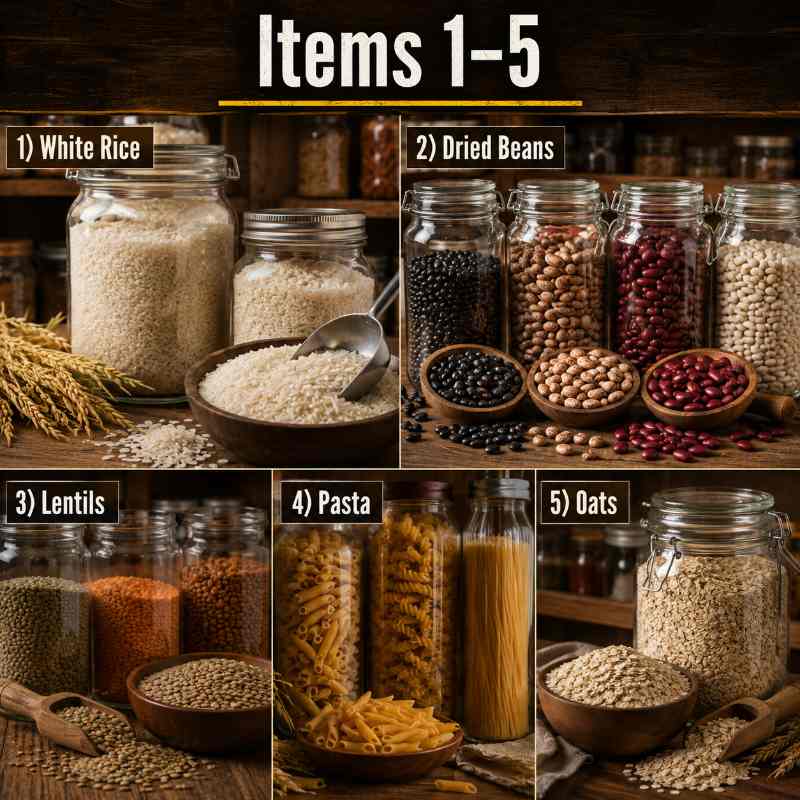
1. White Rice 🍚
White rice is one of the best survival pantry staples because it is cheap, filling, versatile, and stores far better than brown rice.
Brown rice contains more natural oils, which means it can go rancid faster. White rice, when stored dry and sealed, can last for years.
Use it for:
- Rice bowls
- Soups
- Stews
- Fried rice
- Porridge-style meals
- Emergency one-pot dinners
Pantry tip: Store it in airtight buckets or jars with moisture protection.
2. Dried Beans 🫘
Dried beans are a preparedness classic. They are cheap, nutritious, filling, and packed with protein and fibre.
They may take longer to soften as they age, but they can still be useful for long-term storage when kept dry and protected from pests.
Best beans to store:
- Pinto beans
- Black beans
- Kidney beans
- Navy beans
- Chickpeas
- Lentils
Frugal bonus: One bag of dried beans can make several meals.
3. Lentils
Lentils deserve their own spot because they cook faster than many dried beans and do not always need soaking.
They are perfect for emergency meals because they work in soups, curries, stews, and simple rice dishes.
Why they are brilliant: They are cheap, compact, filling, and easy to stretch with spices and vegetables.
4. Pasta 🍝
Pasta is one of the easiest foods to stockpile because most families already eat it.
Dried pasta stores well in its original packaging for a decent time, but it lasts even better when moved into airtight containers.
Keep different shapes for variety:
- Spaghetti
- Penne
- Macaroni
- Fusilli
- Lasagne sheets
Preparedness tip: Pair pasta with tinned tomatoes, dried herbs, canned meat, or powdered cheese.
5. Oats
Oats are not just for breakfast. They can be used in baking, crumble toppings, homemade granola, oat bread, pancakes, and even savoury meals.
Utah State University Extension has noted that properly stored oats can keep quality for many years under long-term storage conditions. (Utah State University Extension)
Use oats for:
- Porridge
- Overnight oats
- Oat biscuits
- Emergency breakfasts
- Homemade oat flour
Storage tip: Keep them sealed because oats can absorb smells and moisture.
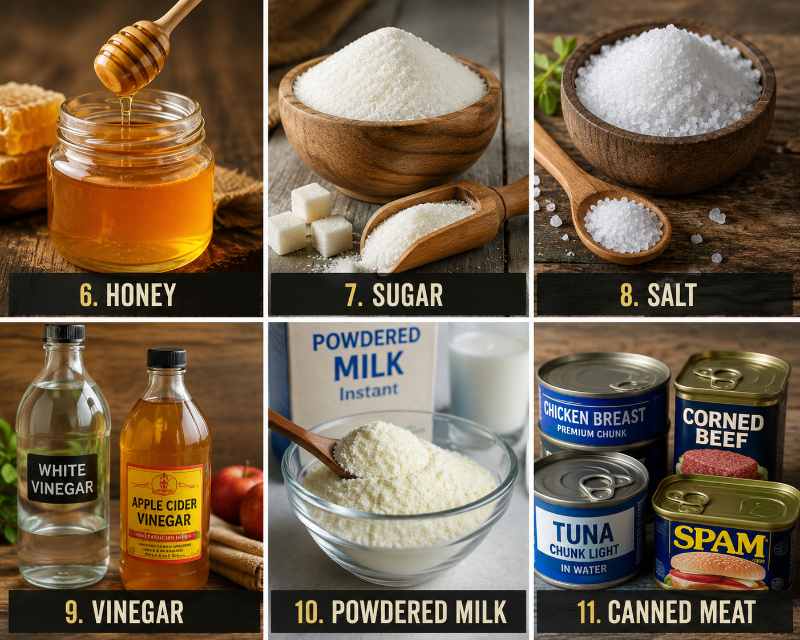
6. Honey 🍯
Honey is famous for lasting an incredibly long time. It may crystallise, but that does not mean it has gone bad.
Just warm the jar gently in warm water and it usually returns to a runnier texture.
Use honey for:
- Sweetening tea
- Baking
- Glazes
- Porridge
- Homemade remedies
- Emergency calories
Important: Always use a clean spoon to avoid adding moisture or crumbs.
7. Sugar
White sugar can last for years when kept dry. It may clump, but it usually remains usable if it has not been contaminated by moisture or pests.
Store:
- White sugar
- Brown sugar
- Icing sugar
- Caster sugar
Pantry tip: Brown sugar can harden over time, but it can often be softened with a slice of bread or a damp paper towel placed in the container for a short time.
8. Salt 🧂
Salt is one of the oldest preservation ingredients in the world.
It does not really spoil when stored properly, although additives in some table salts may affect texture over time.
Keep salt for:
- Cooking
- Preserving
- Pickling
- Flavouring bland emergency meals
Preparedness tip: Store more than you think. It is cheap and useful.
9. Vinegar
Vinegar is another pantry powerhouse. White vinegar and apple cider vinegar are useful for cooking, pickling, cleaning, and preserving.
It is one of those items that earns its space because it has multiple uses.
Use vinegar for:
- Pickles
- Salad dressings
- Marinades
- Cleaning
- Preserving seasonal produce
10. Powdered Milk 🥛
Powdered milk is one of those foods people forget until they really need it.
It is useful for baking, hot drinks, sauces, mashed potatoes, porridge, and emergency breakfasts.
Store it in a cool, dry place and keep it tightly sealed once opened.
Best use: Rotate it regularly so you always have fresh stock.
11. Canned Meat
Canned chicken, tuna, salmon, corned beef, ham, and beef are excellent survival pantry foods because they provide protein without needing a freezer.
Low-acid canned foods, including meats and vegetables, generally keep their best quality for longer than high-acid foods such as tomatoes and fruit. USDA guidance says low-acid canned foods can keep quality for two to five years, while high-acid canned foods are usually best quality for 12 to 18 months. (Food Safety and Inspection Service)
Use canned meat for:
- Sandwiches
- Pasta dishes
- Rice bowls
- Soups
- Hash
- Casseroles
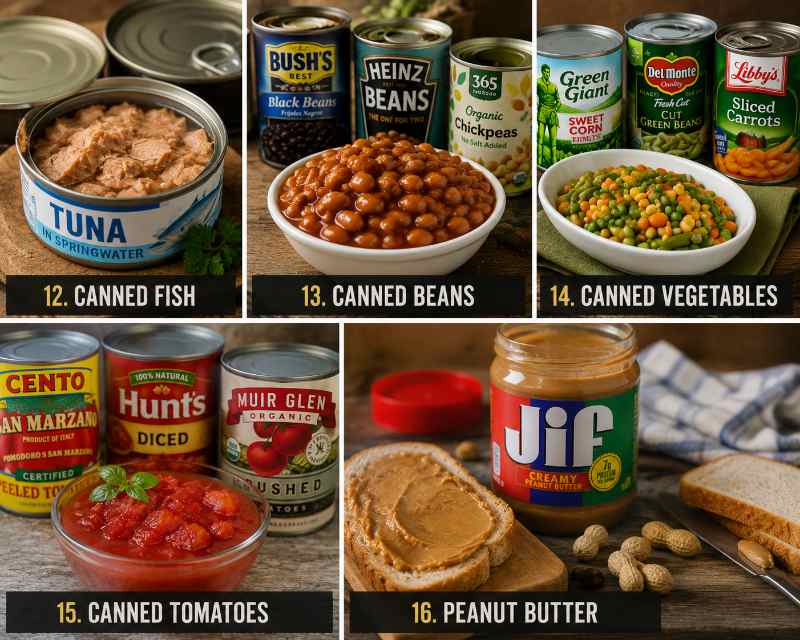
12. Canned Fish 🐟
Tuna, sardines, mackerel, and salmon are compact, protein-rich, and easy to store.
They are great for quick meals when the power is out because many can be eaten straight from the tin.
Meal ideas:
- Tuna pasta
- Sardines on toast
- Salmon patties
- Fish rice bowls
- Emergency fish cakes
13. Canned Beans
Canned beans are not as space-saving as dried beans, but they are much easier in an emergency because they are ready to eat.
Store:
- Baked beans
- Kidney beans
- Black beans
- Chickpeas
- Butter beans
- Mixed beans
Why they matter: If you have no power or limited water, canned beans are much easier than dried.
14. Canned Vegetables 🥕
Canned vegetables are not glamorous, but they are incredibly useful.
Good options include:
- Sweetcorn
- Peas
- Carrots
- Green beans
- Potatoes
- Mixed vegetables
They can bulk out soups, stews, rice dishes, and casseroles.
Frugal tip: Buy when they are on offer and rotate them into normal meals.
15. Canned Tomatoes 🍅
Canned tomatoes are one of the best pantry ingredients for making actual meals instead of just “survival food.”
Use them for:
- Pasta sauce
- Chilli
- Soup
- Curry
- Stews
- Baked beans upgrade
- Rice dishes
Because tomatoes are high-acid, their best-quality shelf life is usually shorter than low-acid canned foods, so rotate these more often. (Food Safety and Inspection Service)
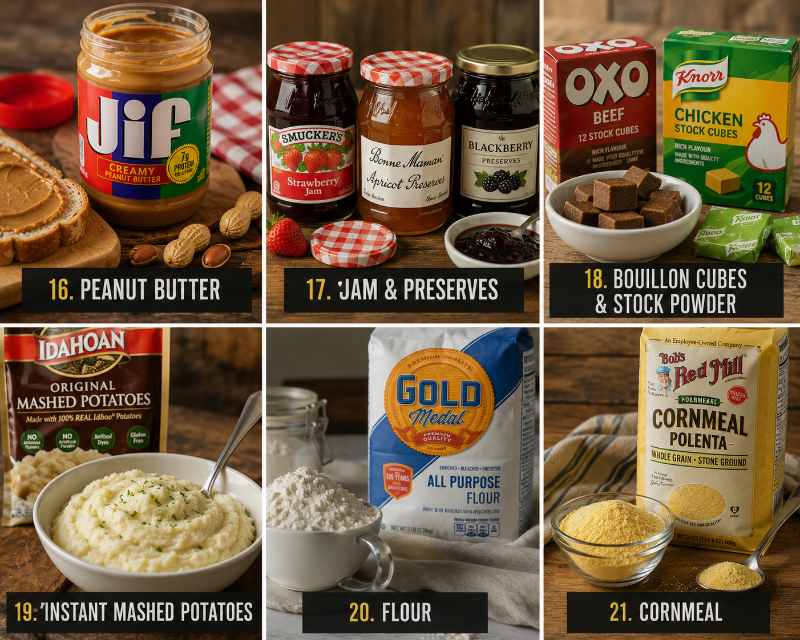
16. Peanut Butter 🥜
Peanut butter is calorie-dense, filling, and does not require cooking.
It is ideal for quick energy, sandwiches, toast, crackers, porridge, sauces, and snacks.
However, it contains oils, so it does not last forever. Store it cool and use older jars first.
Best pantry habit: Keep a few jars, but rotate them often.
17. Jam and Preserves
Jam can last a long time unopened because of its sugar content, but once opened it needs proper storage and careful handling.
Use jam for:
- Toast
- Porridge
- Baking
- Rice pudding
- Emergency sweet treats
Safety tip: If there is mould, bubbling, odd smells, or a broken seal, throw it away.
18. Bouillon Cubes and Stock Powder
This is one of the most underrated survival pantry foods.
Rice, beans, lentils, pasta, and soups taste much better when you have stock cubes or bouillon powder.
Store:
- Chicken stock
- Beef stock
- Vegetable stock
- Ham stock
- Gravy granules
Why it matters: In an emergency, flavour helps morale.
19. Instant Mashed Potatoes 🥔
Instant mash is lightweight, filling, cheap, and quick to prepare.
It can thicken soups, top casseroles, make potato cakes, or create a fast side dish.
Use it with:
- Canned meat
- Gravy
- Canned veg
- Powdered milk
- Butter powder if you store it
Preparedness win: It needs very little cooking.
20. Flour
Flour is useful, but it needs rotating because it does not last as long as sugar, salt, or white rice.
White flour usually stores better than wholemeal flour because whole grains contain more oils.
Use flour for:
- Bread
- Flatbreads
- Pancakes
- Dumplings
- Thickening sauces
- Biscuits
Storage tip: Freeze new bags for a few days if possible to help reduce pest issues, then store airtight.
21. Cornmeal
Cornmeal is excellent for making cornbread, coatings, porridge, and simple skillet breads.
It is filling and useful, but like flour, it should be rotated because of natural oils.
Best use: Keep it in smaller amounts and use it regularly.
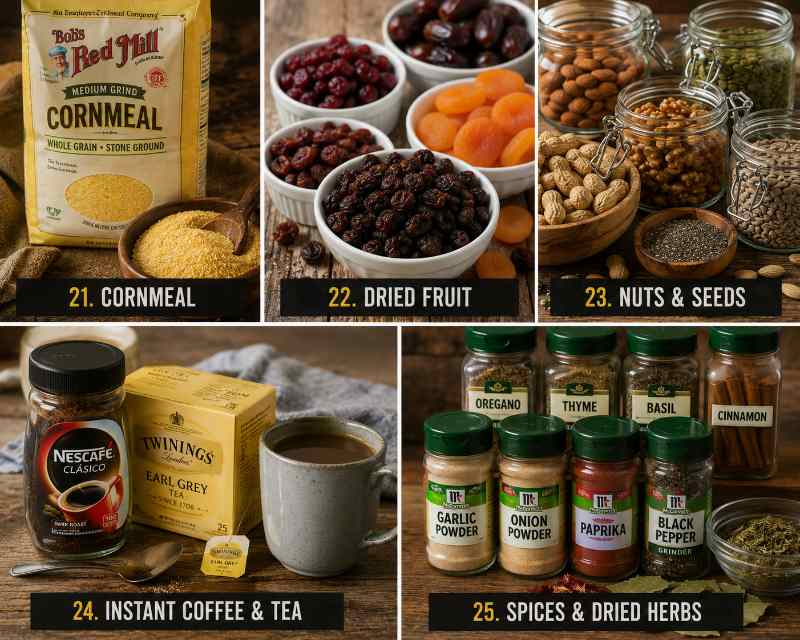
22. Dried Fruit 🍎
Dried fruit gives you sweetness, fibre, and variety when fresh fruit is not available.
Good choices include:
- Raisins
- Dates
- Apricots
- Apple rings
- Cranberries
- Prunes
Storage warning: Dried fruit can attract pests and absorb moisture, so airtight containers are a must.
23. Nuts and Seeds
Nuts and seeds are nutritious and calorie-dense, but they can go rancid because of their oils.
That means they are not the longest-lasting food on this list, but they still deserve a place if you rotate them.
Store:
- Sunflower seeds
- Pumpkin seeds
- Almonds
- Walnuts
- Peanuts
- Chia seeds
Best practice: Buy smaller amounts and rotate often.
24. Instant Coffee and Tea ☕
Comfort matters in an emergency.
Tea and coffee may not be “survival food” in the strictest sense, but they help keep routines normal during stressful times.
Instant coffee, tea bags, hot chocolate powder, and drink mixes are all worth storing.
Morale tip: A warm drink can make a bad day feel manageable.
25. Spices and Dried Herbs 🌿
Spices do not usually become dangerous just because they are old, but they do lose flavour over time.
Still, a few basic seasonings can transform plain rice, beans, lentils, and canned food.
Store:
- Garlic powder
- Onion powder
- Paprika
- Chilli powder
- Cinnamon
- Mixed herbs
- Black pepper
- Curry powder
Survival pantry secret: Bland food gets boring fast. Seasoning keeps people eating.
How To Build This Pantry Without Spending A Fortune 💰
You do not need to buy everything in one huge shop.
Try this instead:
Add 2 extra items each week
When you do your normal grocery shop, add:
- 1 bag of rice
- 1 tin of beans
- 1 jar of peanut butter
- 1 pack of pasta
- 1 tin of meat
- 1 bag of oats
Over a few months, your pantry grows quietly without wrecking your budget.
Store what you actually eat
This is where many people go wrong.
Do not build a pantry full of food your family hates. A survival pantry should be useful on normal weeks too.
If you eat pasta, store pasta.
If you love beans, store beans.
If nobody in your house eats sardines, do not buy 40 tins of sardines.
Use the “first in, first out” method
Put newer food at the back and older food at the front.
That way, you naturally rotate your stock before it gets forgotten.
Label everything
Write the month and year on packets, jars, buckets, and tins.
This makes your pantry easier to manage and stops food waste.
Common Mistakes That Ruin Stored Food
Storing food in a hot garage
Heat can shorten shelf life quickly. A hot garage, attic, shed, or conservatory is usually not ideal.
Leaving food in thin packaging
Paper bags and cardboard boxes are easy for pests to get into.
Forgetting about moisture
Moisture is one of the biggest enemies of long-term food storage.
Buying too much of one thing
A pantry full of rice but no protein, flavour, or vegetables is not a balanced emergency plan.
Never checking the pantry
Set a reminder every few months to inspect tins, jars, packets, and dates.
Quick Safety Checklist Before Eating Stored Food ✅
Before using anything from your survival pantry, check:
- Is the packaging sealed?
- Is there mould?
- Does it smell normal?
- Are there insects or webbing?
- Is the can bulging, leaking, rusted, or badly dented?
- Has the colour or texture changed badly?
- Was it stored somewhere too hot or damp?
When in doubt, throw it out.
Food waste is annoying. Food poisoning is worse.
FAQs About Survival Pantry Foods
What food lasts the longest in a survival pantry?
Some of the longest-lasting pantry foods include white rice, sugar, salt, honey, dried beans, oats, vinegar, and properly stored canned goods. The exact shelf life depends heavily on storage conditions.
Are foods safe after the best-by date?
Sometimes, yes. Best-by dates are often about quality rather than safety, but you still need to inspect the food carefully. Never eat food that smells bad, looks spoiled, has mould, or comes from a damaged can. (Food Safety and Inspection Service)
What canned foods last the longest?
Low-acid canned foods such as canned meat, beans, soups, and vegetables usually keep quality longer than high-acid canned foods like tomatoes and fruit. USDA guidance says low-acid canned foods may keep quality for two to five years, while high-acid canned foods are usually best quality for 12 to 18 months. (Food Safety and Inspection Service)
Should I store food in the garage?
Only if the garage stays cool, dry, and stable all year. Many garages get too hot, too cold, or too damp, which can shorten shelf life.
What is the cheapest food to store for emergencies?
Rice, oats, dried beans, lentils, pasta, flour, canned vegetables, and canned beans are some of the cheapest emergency pantry foods.
Is home-canned food good for long-term survival storage?
Home-canned food is useful, but it should be treated carefully. USDA shelf-stable guidance lists home-canned foods at around 12 months for best storage guidance, and safe processing matters. (Food Safety and Inspection Service)
How much food should I store?
Start with a small goal, such as 3 days of food, then build to 2 weeks, then 1 month. A useful pantry grows slowly and gets rotated regularly.
Final Thoughts: A Survival Pantry Is Just Smart Living 🌾
A good survival pantry is not about fear. It is about freedom.
Freedom from last-minute shops.
Freedom from expensive convenience food.
Freedom from panic when storms, power cuts, illness, or money problems hit.
The best part is that these 25 foods are not strange or complicated. They are ordinary pantry staples that can keep your household fed, save money, and bring peace of mind.
Start small. Buy what you eat. Store it properly. Rotate it often.
Your future self will thank you.