

Things Your Grandparents Reused That Most People Throw Away Today
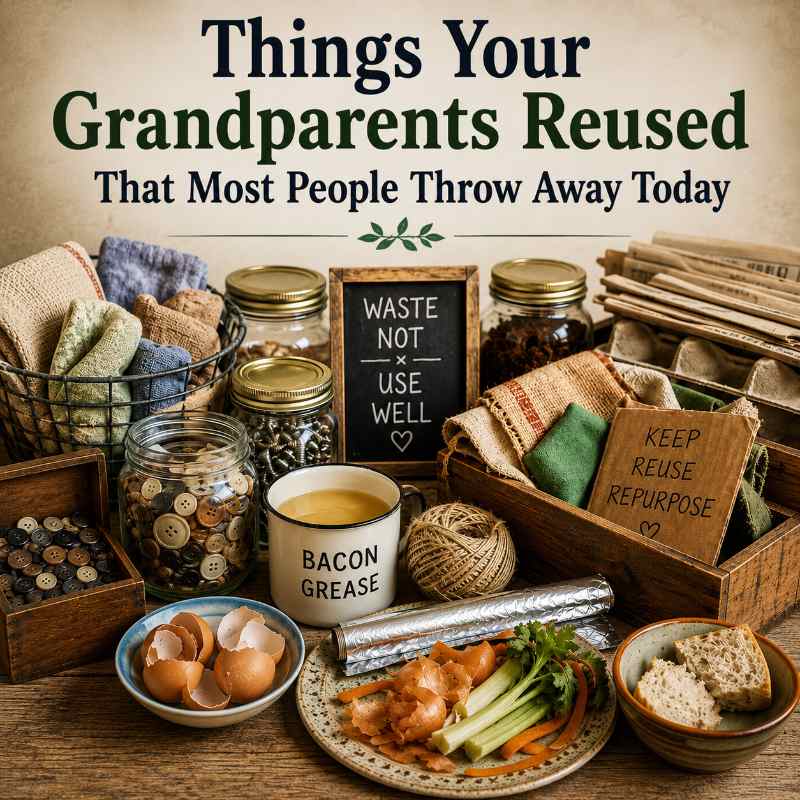
There was a time when “throwing it away” was not the first answer.
Your grandparents did not need a fancy zero-waste label, a viral TikTok hack, or a designer storage system to make things last. They simply reused what they had because money mattered, supplies mattered, and waste felt wrong.
And honestly? They were onto something.
Today, we throw away so many useful things without thinking twice. Glass jars, bacon grease, old towels, bread bags, buttons, foil, boxes, and even bones from dinner often go straight into the bin. But to older generations, these were not rubbish. They were resources.
This is one of those old-fashioned habits that deserves a comeback. Not just because it saves money, but because it makes your home more practical, less wasteful, and a little more self-sufficient.
So let’s take a look at the clever things your grandparents reused that most people throw away today. You may never look at your bin the same way again. ♻️
1. Glass Jars
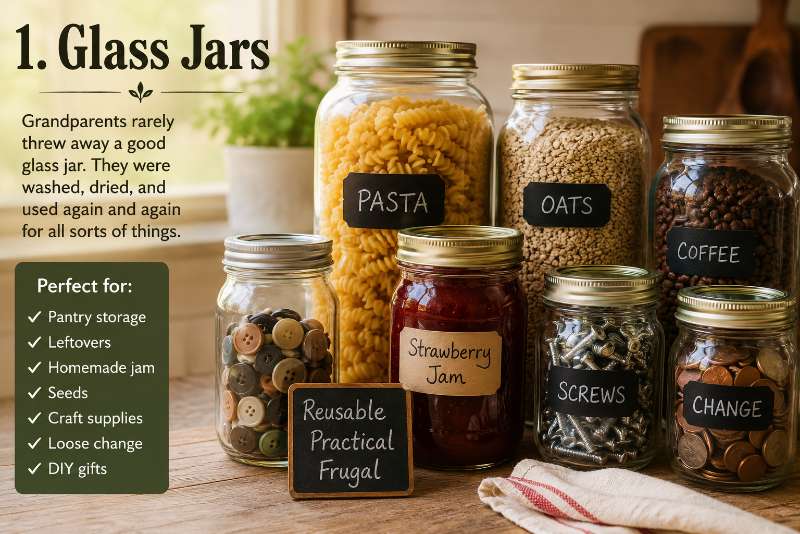
Grandparents rarely threw away a good glass jar.
Jam jars, pickle jars, sauce jars, and coffee jars were washed, dried, and tucked away for later. They were used for storing screws, buttons, homemade jam, leftovers, dried herbs, seeds, gravy, coins, and just about anything else that needed a home.
Why it still works today: glass jars are sturdy, reusable, free storage containers.
Use them for:
- Pantry storage
- Homemade salad dressings
- Leftovers
- Craft supplies
- Seeds
- Loose change
- DIY gifts
A clean jar with a lid is basically free storage hiding in your recycling bin.
2. Bacon Grease And Cooking Fat

This one might surprise people today, but older generations often saved bacon grease.
After cooking bacon, the fat was poured into a small jar or tin and used later for frying eggs, potatoes, greens, or adding flavour to simple meals.
Grandparents knew flavour was money.
Instead of buying extra oils or wasting good fat, they reused what they already had.
Tip: Always strain out food bits, store it safely, and use common sense with freshness.
3. Old Towels
A towel with a hole in it was not “finished.”
It became a cleaning rag, mop cloth, dog towel, car washing cloth, gardening knee pad, or emergency spill cloth.
Today, many people throw old towels away and then buy packs of cleaning cloths. Your grandparents would probably laugh at that.
Cut old towels into squares and keep them in a basket for:
- Kitchen spills
- Dusting
- Cleaning windows
- Pet messes
- Washing the car
- Gardening cleanup
This one habit alone can save you money on paper towels.
4. Buttons
Buttons were never wasted.
If a shirt was too worn to wear, the buttons came off before the fabric was thrown out or reused. Those buttons went into a tin, jar, or sewing box.
Then, when a button popped off a coat, cardigan, or pair of trousers, there was always a replacement nearby.
It is such a small thing, but it shows how people used to think. They did not throw away useful parts just because the main item was worn out.
5. Bread Bags
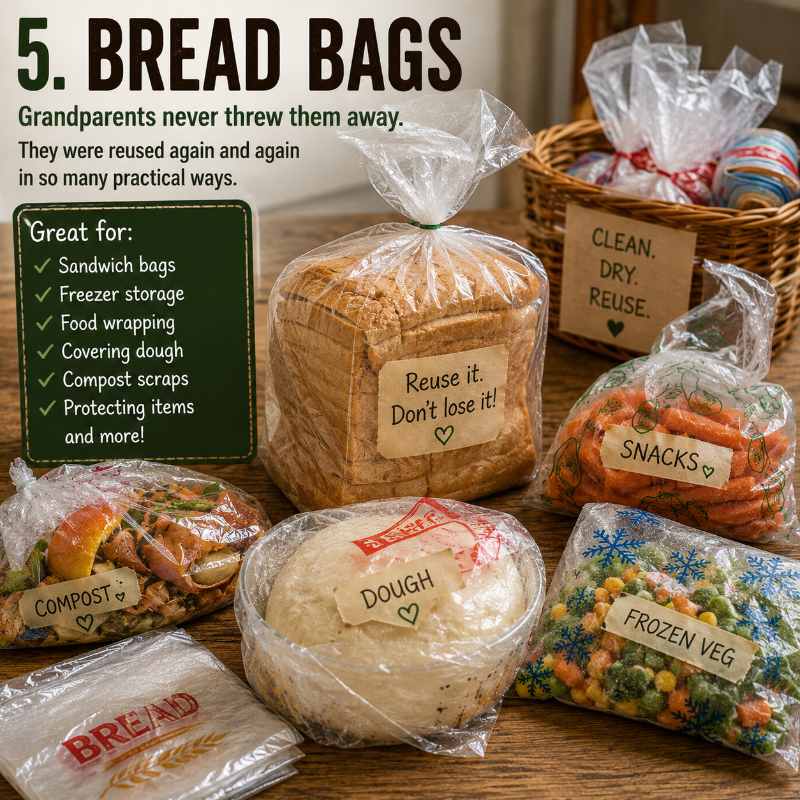
Plastic bread bags were reused constantly.
They became sandwich bags, freezer bags, food wrapping, lunch bags, dog waste bags, or covers for muddy shoes.
Before single-use plastic took over every drawer, people reused the bags they already had.
A clean bread bag can still be used for:
- Freezing homemade bread
- Wrapping sandwiches
- Storing leftovers
- Covering dough while it rises
- Holding scraps for compost
- Protecting small items from moisture
Simple, free, and useful.
6. Tin Foil
Grandparents often reused foil until it could not be used anymore.
If it was clean enough, it was folded, smoothed out, and used again. Foil could cover food, line trays, wrap leftovers, sharpen scissors, scrub pans, or protect pie crust edges from burning.
Most people use foil once and bin it.
But if it is not greasy or torn, you can rinse it, dry it, and reuse it.
7. Old Clothes
Worn-out clothes rarely went straight in the bin.
They were repaired, handed down, cut into rags, turned into patchwork, used for quilts, made into aprons, or saved for messy jobs.
Old cotton shirts make brilliant cleaning cloths. Denim can be used for patches. Wool jumpers can be turned into cosy pet bedding or draught blockers.
Your grandparents saw fabric as useful material, not rubbish.
8. Bones From Dinner
Chicken bones, beef bones, and ham bones were often saved for stock.
Instead of buying cartons of stock, older generations made their own by simmering bones with vegetable scraps, herbs, and water.
That homemade stock then became soup, gravy, stew, rice, casseroles, and sauces.
It stretched one meal into several.
This is one of the best old-fashioned kitchen habits to bring back because it saves money and adds deep flavour to simple meals.
9. Soap Slivers
When a bar of soap got too small, it was not thrown away.
Tiny soap pieces were pressed onto a new bar, melted down, or collected in a soap saver bag.
Some families kept soap scraps in a jar until there were enough to make a new bar or a cleaning mixture.
It may seem tiny, but those small savings added up.
10. Newspaper
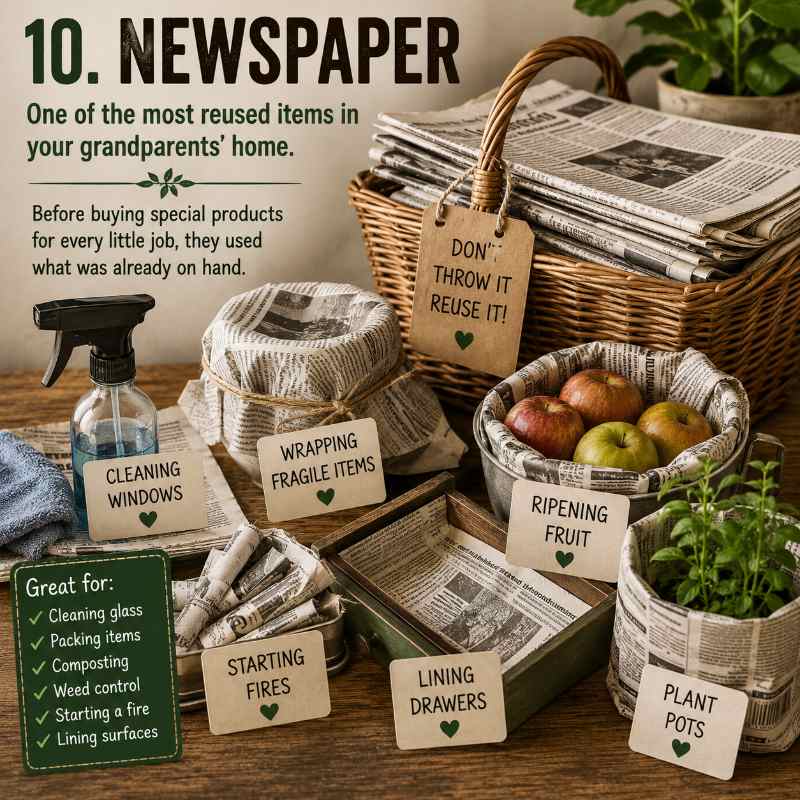
Newspaper was once one of the most reused items in the home.
It cleaned windows, wrapped fragile items, lined drawers, started fires, protected tables, absorbed moisture, and helped ripen fruit.
Even today, newspaper or scrap paper can still be useful for:
- Cleaning glass
- Packing items
- Composting
- Weed control in the garden
- Starting a fire
- Lining bins
Before people bought special products for every little job, they used what was already lying around.
11. Eggshells
Eggshells were often reused in the garden.
Crushed eggshells could be added to compost, sprinkled around plants, or mixed into soil. Some people also used them to start seedlings.
They break down slowly, but they are still a useful natural material instead of something to throw away.
Use them for:
- Compost
- Seed starting
- Garden soil
- Pest deterrent around some plants
- Cleaning stubborn stains in narrow jars
A free garden helper from breakfast. 🥚
12. Vegetable Scraps
Carrot peels, onion ends, celery tops, herb stems, and potato peelings were not always wasted.
Many were saved for stock, compost, animal feed, or garden trenches.
Today, we often throw away the most useful “scraps” because we forget they still have value.
Keep a freezer bag for clean vegetable scraps and use them for homemade stock when the bag is full.
13. Coffee Grounds
Coffee grounds were often reused in practical ways.
They could go in the compost, help deodorise smells, scrub dirty pans, or be sprinkled around parts of the garden.
Instead of buying air fresheners and special cleaners, older generations made use of what they already had.
Coffee grounds are especially handy for:
- Compost
- Fridge deodorising
- Scrubbing greasy pans
- Garden soil improvement
- Cleaning hands after chopping onions or garlic
14. String, Ribbon, And Twine
A piece of string was never just thrown away.
It went into a drawer for later.
Grandparents reused string for tying plants, bundling newspapers, wrapping parcels, hanging decorations, mending things temporarily, or tying food bags closed.
Today, people buy rolls of ties, clips, and organisers, while throwing away perfectly good string from packaging.
15. Food Tins
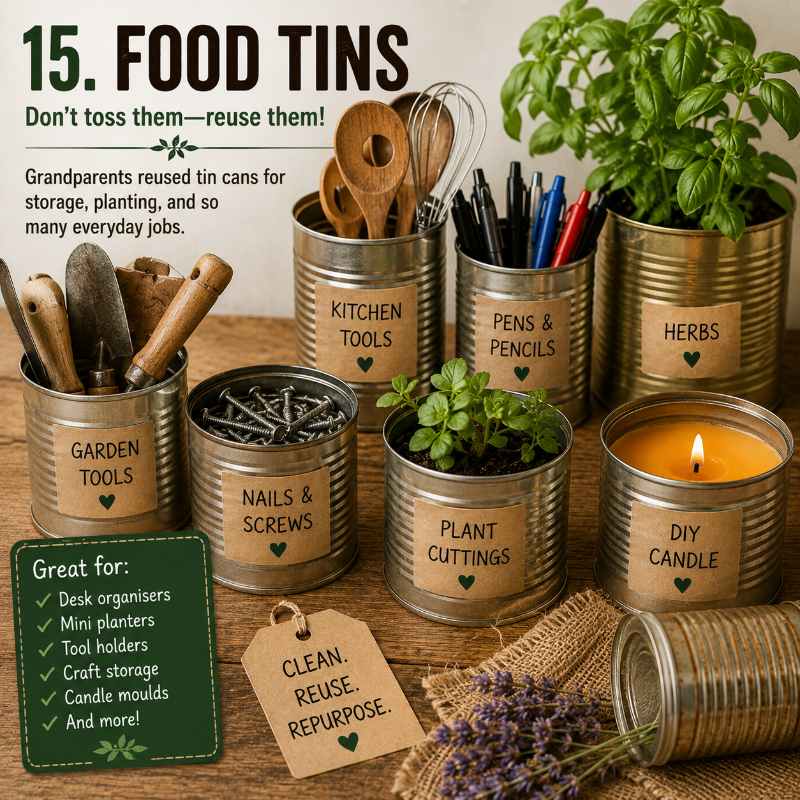
Empty tins were often reused before being discarded.
They held pencils, nails, screws, paintbrushes, plant cuttings, grease, or kitchen scraps.
With a little cleaning, tins can become:
- Mini planters
- Desk organisers
- Tool holders
- Candle moulds
- Craft storage
Just be careful of sharp edges.
16. Candle Ends
Little candle stubs were saved and melted down into new candles.
Nothing was wasted if it could still burn.
You can still do this today by melting leftover wax and pouring it into a jar with a new wick.
It is a cosy, old-fashioned way to get one more use out of something most people throw away.
17. Cardboard Boxes
Cardboard boxes were flattened and kept.
They were used for storage, moving, crafting, drawer dividers, garden weed barriers, kindling, shipping parcels, and protecting floors during messy jobs.
Cardboard is still one of the easiest things to reuse around the home and garden.
Use it under mulch to suppress weeds, as a compost “brown” material, or to organise cupboards.
18. Flour Sacks And Feed Bags
In the past, flour sacks and feed bags were often reused as fabric.
Some were turned into aprons, towels, pillowcases, dresses, curtains, and cleaning cloths.
It sounds old-fashioned now, but the principle is still useful. Packaging can sometimes be reused before it is recycled or thrown away.
Strong paper sacks and woven feed bags can be used for garden waste, storage, shopping, or messy jobs.
19. Leftover Bread
Stale bread was not binned.
It became breadcrumbs, bread pudding, croutons, stuffing, French toast, or thickener for soups.
Throwing away bread was considered wasteful because there were so many ways to use it.
Try turning stale bread into:
- Garlic croutons
- Homemade breadcrumbs
- Bread and butter pudding
- Savoury stuffing
- French toast
- Meatloaf filler
One stale loaf can still become something delicious.
20. Seeds
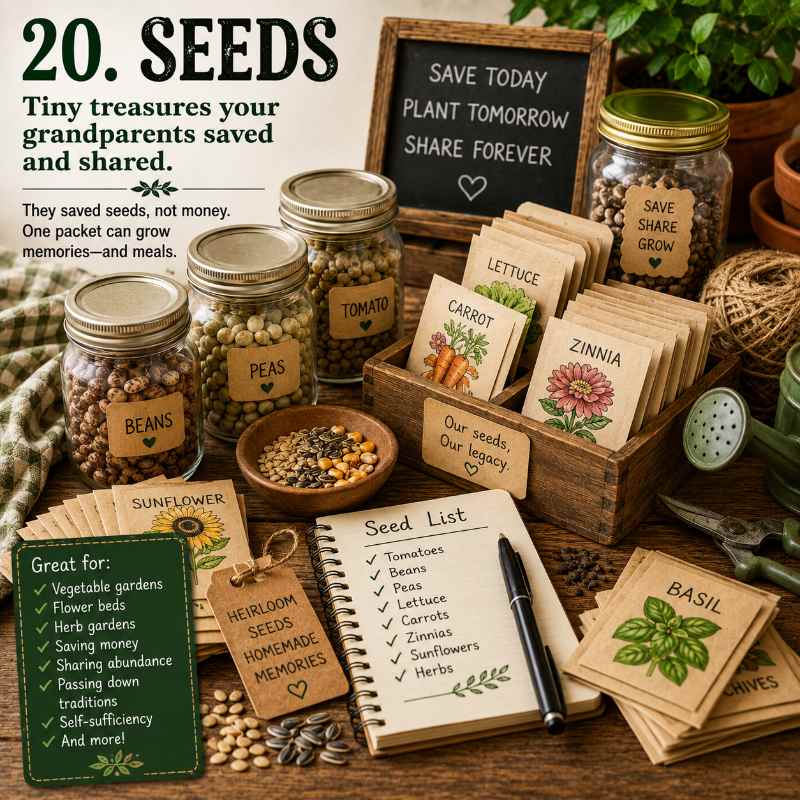
Grandparents often saved seeds from flowers, vegetables, and herbs.
Instead of buying new packets every year, they collected seeds from strong plants and stored them for the next season.
This is one of the most valuable old-fashioned habits because it saves money and keeps your garden going.
Good seeds to save include:
- Tomatoes
- Beans
- Peas
- Marigolds
- Sunflowers
- Peppers
- Herbs
A single plant can give you next year’s garden for free. 🌱
Why These Old Habits Matter Today
Reusing things is not about being cheap. It is about being smart.
These habits help you:
- Save money on everyday items
- Reduce household waste
- Make fewer shopping trips
- Become more resourceful
- Stretch food further
- Build practical skills
- Live a little more simply
Your grandparents lived through times when wasting things was not normal. They learned to look at an item and ask, “What else can this be used for?”
That question is just as useful today.
What Most People Get Wrong
A lot of people think reusing things means clutter.
But it does not have to.
The trick is to keep only what you will actually use. You do not need 200 jars, 50 boxes, and a drawer full of mystery lids.
Keep a small, organised stash:
- A jar box
- A rag basket
- A sewing tin
- A bag for vegetable scraps
- A few clean bags and boxes
- A compost container
Reuse with purpose, not chaos.
Common Questions
Is reusing old items actually worth it?
Yes. The savings may seem small at first, but they add up. Reusing jars, bags, towels, bones, scraps, and foil can reduce waste and save money over time.
What should I not reuse?
Do not reuse anything unsafe, mouldy, rusty, contaminated, or damaged in a way that could cause harm. Food containers should always be cleaned properly.
Can I reuse glass jars for canning?
Only use proper canning jars designed for home preserving. Ordinary glass jars are great for storage, but they may not be safe for pressure canning or water bath canning.
How do I stop reused items becoming clutter?
Set a limit. Keep only what fits in one box, drawer, or basket. If you have more than you use, recycle or donate the extras.
What is the easiest thing to start reusing today?
Start with glass jars, old towels, vegetable scraps, and stale bread. These are easy, practical, and useful in most homes.
Final Thoughts
Your grandparents may not have called it sustainable living, but they practised it every day.
They stretched meals, saved useful scraps, repaired what they could, and reused ordinary things in clever ways. They understood that money saved in the home was money that could be used somewhere else.
Maybe it is time we brought some of those habits back.
Before you throw something away today, ask yourself one simple question:
Would Grandma have reused this?
Chances are, she probably would have. ♻️
SEO Title
Things Your Grandparents Reused That Most People Throw Away Today
SEO Meta Description
Discover old-fashioned things your grandparents reused that most people throw away today. Save money, reduce waste, and bring back clever frugal habits.
Focus Keyphrase
things your grandparents reused
SEO Tags
things your grandparents reused, frugal living tips, old fashioned money saving tips, things to reuse at home, grandparents frugal habits, zero waste home ideas, reuse household items, simple living tips, old fashioned household hacks, money saving household tips