

20 Things To Save From The Bin Before Winter
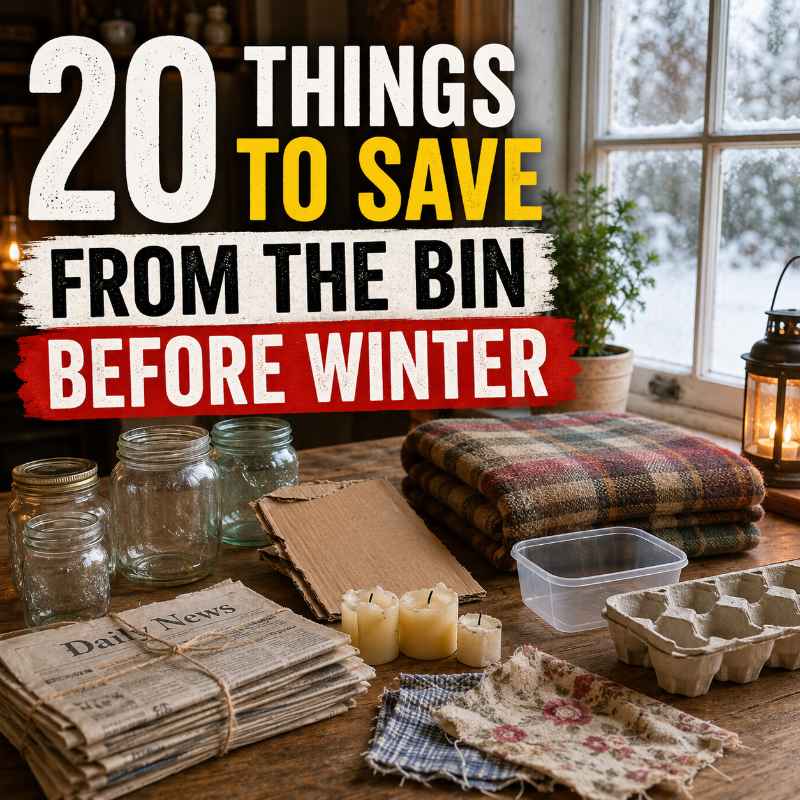
Before winter arrives and the heating goes on, it is worth taking a second look at the things you normally throw away. Some of the best cold weather helpers are hiding in the recycling bin, the fabric pile, the junk drawer, and the back of the cupboard.
Winter has a sneaky way of making everything more expensive. Food storage, heating, draughts, damp clothes, candles, fire starters, pet bedding, garden protection and emergency supplies can all add up. The good news is that many everyday items can be reused before they ever reach the bin.
Here are 20 things to save from the bin before winter and clever ways to use them around the home, garden and homestead. ❄️
Why Saving Useful “Rubbish” Makes Sense Before Winter
Winter is the season when small things suddenly become useful. A glass jar can store dry food. A newspaper can help start a fire. A cardboard box can protect plants from frost. Old blankets can block draughts, cover pets, or add emergency warmth in the car.
This is not about hoarding everything. It is about saving the right things before you need them. If you already enjoy frugal home tips, you may also like these rubber band hacks for everyday life, because winter is the perfect time to make simple items work harder.
20 Things To Save From The Bin Before Winter
1. Glass Jars

Save jam jars, sauce jars and coffee jars. They are brilliant for storing rice, lentils, dried herbs, homemade mixes, screws, seeds, buttons and emergency candles. Wide-mouth jars are especially handy for pantry organisation.
2. Newspapers
Old newspapers are useful for lighting fires, drying wet boots, protecting surfaces during messy jobs and wrapping delicate items. You can also place sheets under muddy shoes near the door.
3. Cardboard Boxes
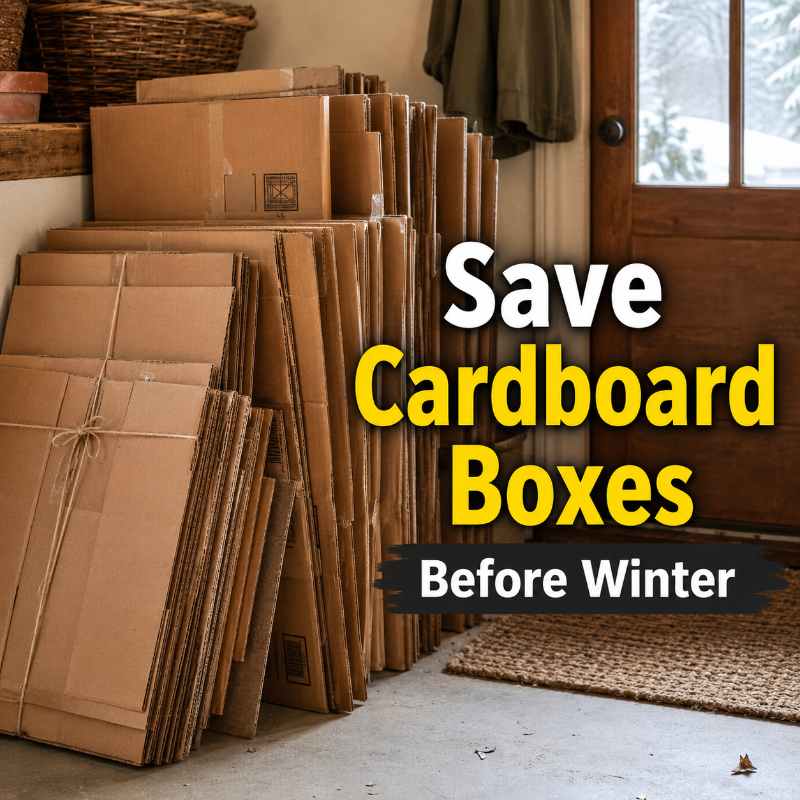
Cardboard is one of the best winter items to save. Use it under pet bedding, as weed control in the garden, as plant frost protection, or cut it up for fire lighting. Flatten boxes so they store neatly.
4. Candle Ends
Do not throw away candle stubs. Melt them down safely to make new candles, fire starters, or emergency light jars. Even small wax scraps can be useful when the power goes out.
5. Old Blankets
Old blankets are winter gold. Keep them for draughty doors, pet bedding, car emergency kits, covering garden pots, or layering over duvets on freezing nights. Even worn blankets still have plenty of life left.
6. Plastic Tubs
Save yoghurt tubs, takeaway containers and sturdy lidded tubs. They are useful for freezing leftovers, storing screws, seed saving, pet food portions and organising small winter supplies.
7. Egg Cartons
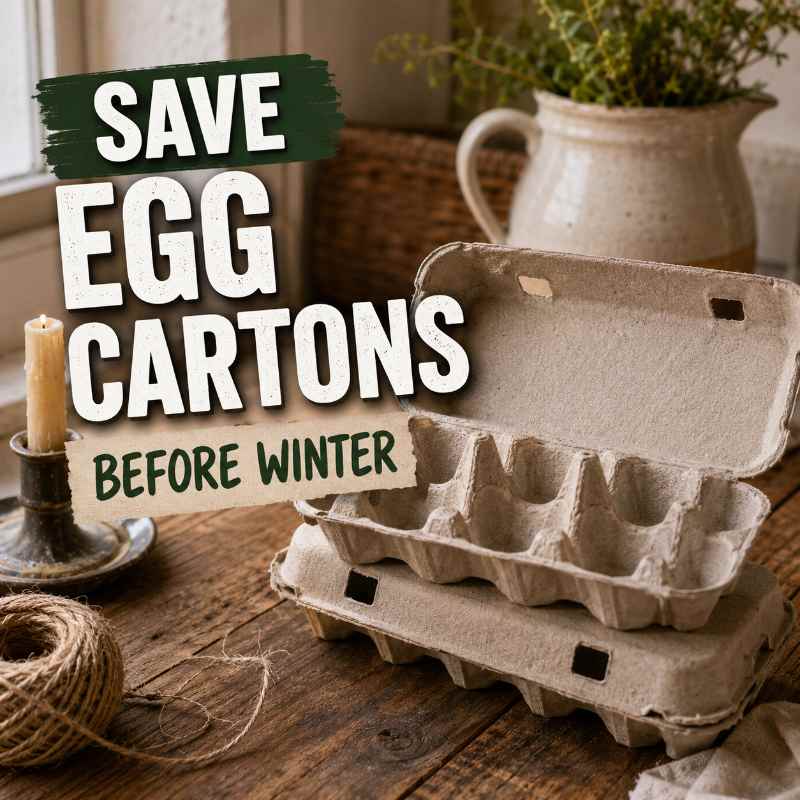
Egg cartons are great for starting seeds, storing small decorations, making fire starters, or separating little bits in a drawer. Fill them with dryer lint and wax for simple winter fire lighters.
8. Fabric Scraps
Fabric scraps can become cleaning rags, jar covers, plant ties, draught blockers, patching material or homemade gift wrap. Cotton scraps are especially handy around the kitchen and fire area.
9. Old Socks
Odd socks are far too useful to bin. Use them as dusters, draught stoppers, boot liners, pet toys, heat pack covers, or hand warmers filled with rice. For more ideas, see these 30 uses for old socks.
10. Bubble Wrap
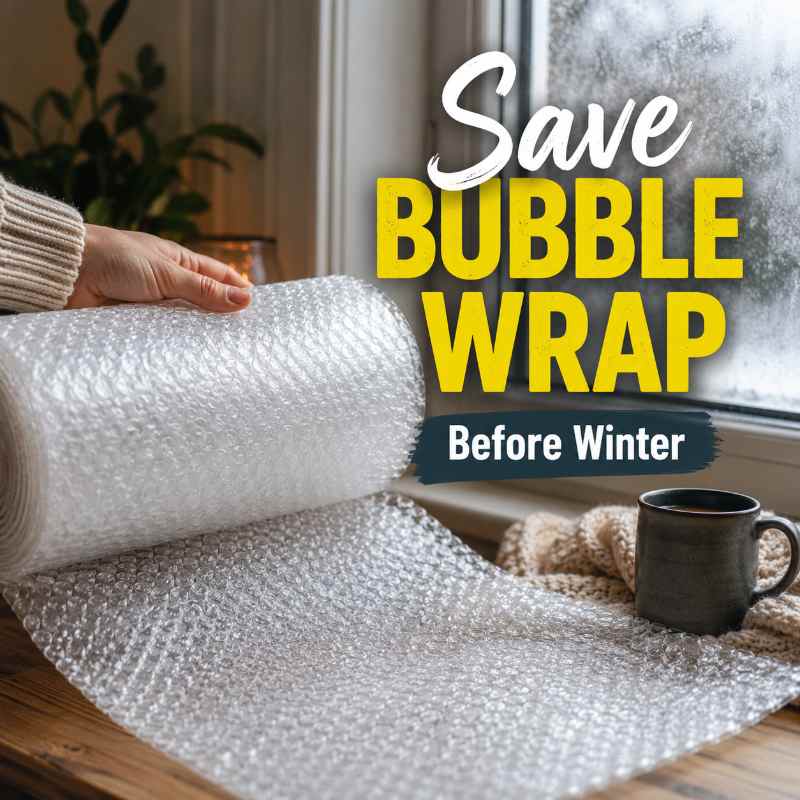
Bubble wrap can help insulate windows, protect stored jars, wrap garden pots and cushion fragile Christmas decorations. A small stash can save money and stop breakages.
11. Tin Cans
Clean tin cans can be used as utensil holders, mini planters, scoops, candle holders, or emergency storage pots. Smooth any sharp edges before using them.
12. Toilet Roll Tubes
These are perfect for seed starters, fire starters, cable tidies and homemade bird feeder crafts. Stuff them with shredded paper and dry lint for a simple winter fire helper.
13. Dryer Lint
Dryer lint is extremely useful for fire lighting when stored dry. Keep it in a jar or tin away from moisture. Mix it with wax in egg cartons for homemade fire starters.
14. Large Plastic Bottles
Cut large bottles into mini cloches for young plants, scoops for grit or compost, or emergency water storage. They can also be used to protect tender herbs from early frost.
15. Old Towels
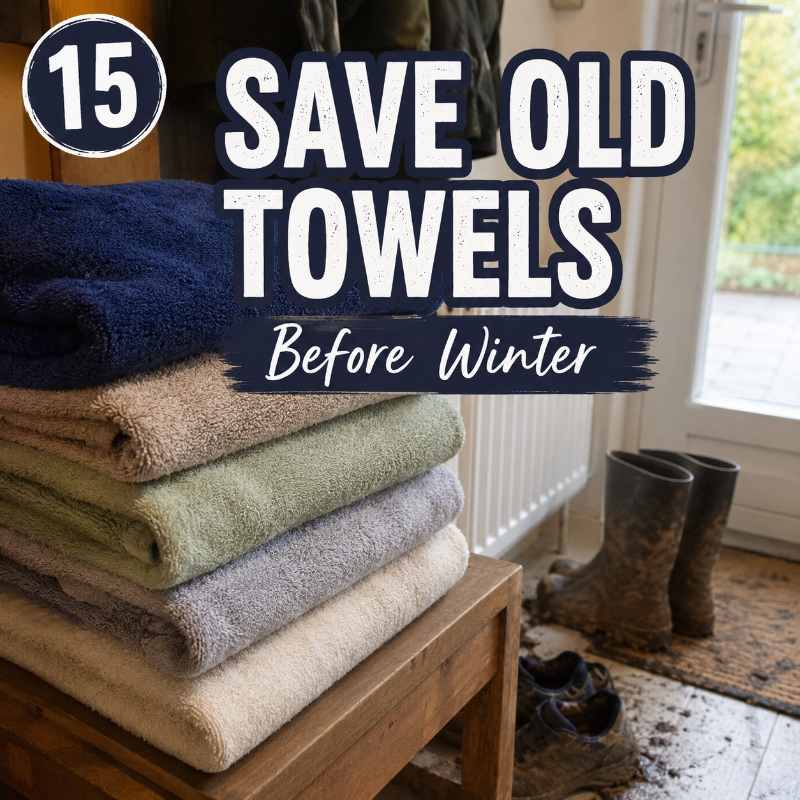
Old towels are essential in winter. Keep some near the door for muddy paws, wet boots, leaks, condensation, car windows and snowy coats. They are also useful for drying laundry indoors, especially if you follow these rainy climate clothes drying tips.
16. Bread Bags
Clean bread bags can be reused for food storage, packing lunches, covering muddy boots, protecting small items from damp, or storing kindling.
17. Old Curtains
Heavy curtains can be reused as draught blockers, pet bedding, cupboard covers, garage insulation or frost protection for plants. Thick fabric makes a big difference around cold doors and windows.
18. Shredded Paper
Shredded paper is useful for compost, packaging, pet bedding, fire starters and protecting stored bulbs. Keep it dry and avoid glossy paper if using it in the garden.
19. Ice Cream Tubs
Large plastic ice cream tubs are ideal for winter leftovers, soup portions, homemade stock, grit, kindling, craft supplies and garage storage. They stack well and usually have lids.
20. Small Bits Of Wood
Save untreated wood scraps for kindling, garden markers, small repairs, plant supports, or DIY projects. Keep them dry in a box or bucket so they are ready when needed.
Winter Storage Tips So It Does Not Turn Into Clutter
- Keep only what you will actually use. Saving useful items is smart, but piles of random rubbish are not.
- Label tubs and jars. It saves time when you need something quickly.
- Store fire starter items away from damp. Cardboard, lint and paper only work well when dry.
- Keep emergency items together. A winter box with candles, matches, blankets, jars, batteries and torches is worth having.
- Check for mould or pests. Do not store dirty fabric, food containers or damp cardboard.
Common Mistakes To Avoid
Saving everything: The goal is useful reuse, not clutter. Be selective.
Keeping dirty containers: Wash jars, tubs and cans before storing them, especially if they held food.
Using unsafe materials near fire: Only use suitable dry materials for fire starters and never burn plastic, glossy packaging or treated wood.
Forgetting where things are: A winter reuse box works better than scattered piles in cupboards.
Ignoring draughts: Fabric scraps, old towels and blankets are simple helpers. You can also use winter projects like DIY window frosting to make windows feel more private and cosy.
FAQs About Saving Things Before Winter
What should I save before winter if I have limited space?
Focus on jars, old towels, candle ends, cardboard, egg cartons, plastic tubs and blankets. These items are small or stackable and have lots of winter uses.
Are homemade fire starters safe?
They can be useful when made carefully with dry paper, lint, cardboard and wax. Always store them safely, keep them away from children, and never use plastic or unknown chemicals.
Can cardboard really help in the garden during winter?
Yes. Cardboard can help suppress weeds, protect soil and insulate around pots. Remove tape and plastic labels first.
What items are best for emergency winter kits?
Old blankets, candles, jars, matches, towels, plastic tubs, newspapers and spare socks are all useful. For car winter prep, you may also find this guide on quickly defrosting car windows helpful.
How do I stop saved items from making my home messy?
Use one labelled box for winter reuse items. If it does not fit in the box, you probably do not need to keep more.
Final Thoughts
Saving useful things from the bin before winter is one of those old-fashioned habits that still makes sense today. It saves money, reduces waste and gives you handy supplies exactly when you need them most.
A few jars, blankets, tubs, cardboard pieces and candle ends might not look like much in summer, but when the cold weather arrives, they can help with storage, warmth, fire lighting, gardening, cleaning and emergency prep.
The trick is simple: save what is useful, store it neatly and put it to work before buying something new