

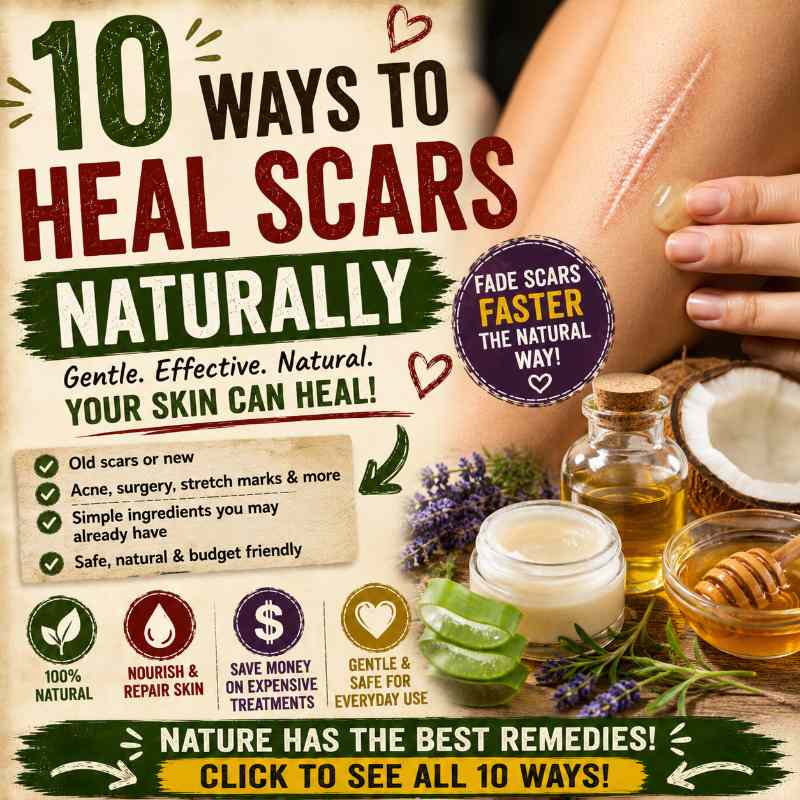
10 Ways To Heal Scars Naturally
Make sure to like Living Green and Frugally on Facebook, Shop at amazon to help support my site and explore our PINTEREST BOARDS for innovative ways you can become self-sufficient.
Scars are a normal part of healing, but that does not mean you have to just leave them alone and hope for the best. Whether it is an old cut, acne mark, surgery scar, burn mark, stretch mark, or a scrape that healed darker than the rest of your skin, there are gentle ways to support your skin naturally.
The important thing to know first is this: scars usually cannot be erased overnight. Skin takes time to repair, soften, flatten, and fade. But with patience, simple home care, and the right habits, many scars may become less noticeable over time.
This guide focuses on natural and gentle ways to help scars look and feel better without harsh treatments, expensive creams, or miracle claims.
Before You Start: A Quick Safety Note
Only use these ideas on healed skin. Do not put oils, scrubs, essential oils, lemon juice, homemade creams, or random kitchen ingredients on open wounds, stitches, burns, infected skin, or anything that is bleeding.
If a scar is painful, growing, raised, itchy, hot, leaking, very red, or you think it may be a keloid scar, speak to a doctor, pharmacist, dermatologist, or qualified health professional.
Natural care can be helpful, but it should not replace medical advice.
1. Protect The Scar From The Sun ☀️
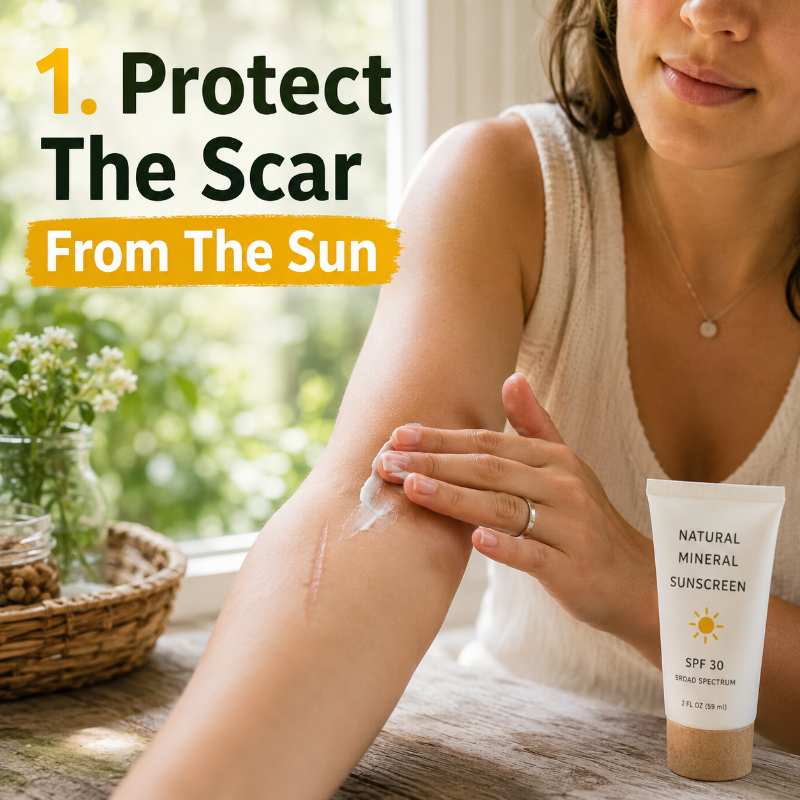
One of the simplest ways to help a scar fade naturally is to keep it protected from strong sunlight.
Fresh scars can darken when exposed to the sun, especially if they are on the face, arms, hands, chest, or legs. Once a scar darkens, it can take much longer to fade.
Try to:
- Keep the scar covered with clothing when possible
- Use a gentle sunscreen once the skin has fully healed
- Avoid tanning the area
- Be extra careful with new scars during summer
This is one of those boring tips that actually matters. If you are doing everything else but letting the scar bake in the sun, you may be slowing your progress without realising it.
2. Massage The Scar Gently
Scar massage is a simple, free habit that may help soften tight scar tissue once the wound has fully closed.
Use clean hands and a small amount of plain moisturiser, aloe vera gel, or a gentle oil. Rub the scar in small circles using light pressure. Do not drag the skin, and do not massage if it hurts.
A good routine is:
- 2 to 5 minutes at a time
- Once or twice a day
- Gentle circular motions
- Stop if the skin becomes sore or irritated
Massage can be especially useful for scars that feel tight, dry, or stiff. It will not magically remove a scar, but it may help the area feel smoother and more flexible over time.
3. Use Aloe Vera Gel For Cooling And Moisture 🌿
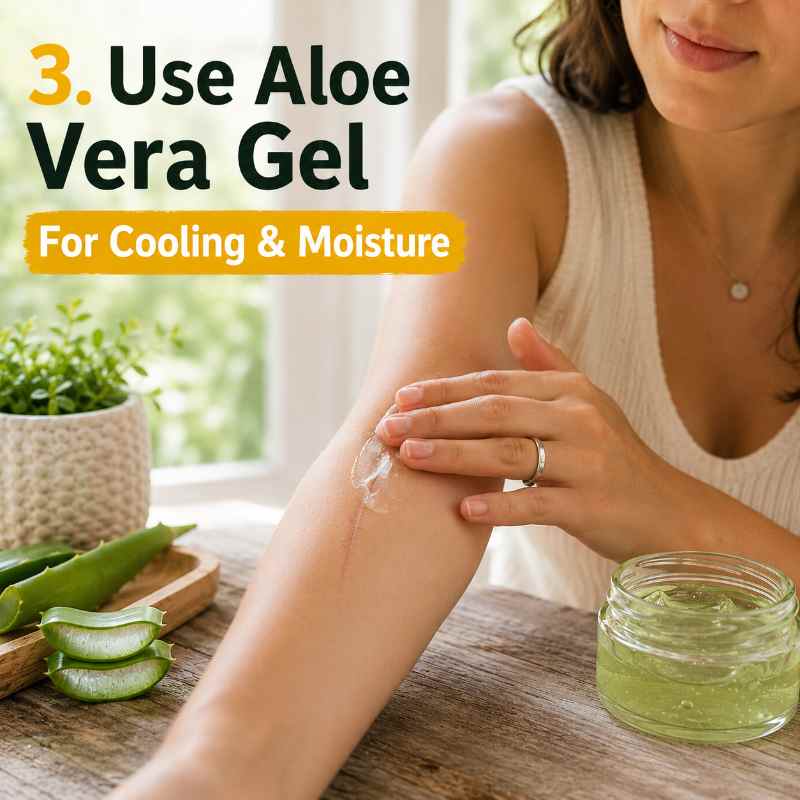
Aloe vera is one of the most popular natural skincare ingredients for a reason. It feels cooling, it is light, and it can help keep the skin moisturised without feeling greasy.
For scars, aloe vera may be useful because dry skin often makes scars look rougher and more obvious. Keeping the area soft and hydrated can make the scar look calmer.
Use a thin layer of pure aloe vera gel on healed skin. Let it dry before covering with clothing.
For a related homemade skincare guide, you can link to:
How To Make Your Own Aloe Vera Gel
https://www.livinggreenandfrugally.com/how-to-make-your-own-aloe-vera-gel/
Tip: Always patch test first, especially if you have sensitive skin.
4. Keep The Skin Moisturised
Dry scar tissue can look flaky, tight, and more noticeable. A simple moisturising routine can make a big difference to how the scar feels.
You do not need a fancy product. A plain, fragrance-free moisturiser is often enough. Some people prefer natural options like shea butter, coconut oil, olive oil, or beeswax-based balm, but these are not perfect for everyone.
Use a small amount and watch how your skin reacts. If the scar is on your face or acne-prone skin, heavy oils may clog pores.
For a useful internal link, you could add:
Soothing Skin Beeswax Lotion Bar Recipe
https://www.livinggreenandfrugally.com/soothing-skin-beeswax-lotion-bar-recipe/
A small homemade lotion bar can be handy for dry elbows, knees, hands, and older scars that need extra moisture.
5. Try Rosehip Seed Oil
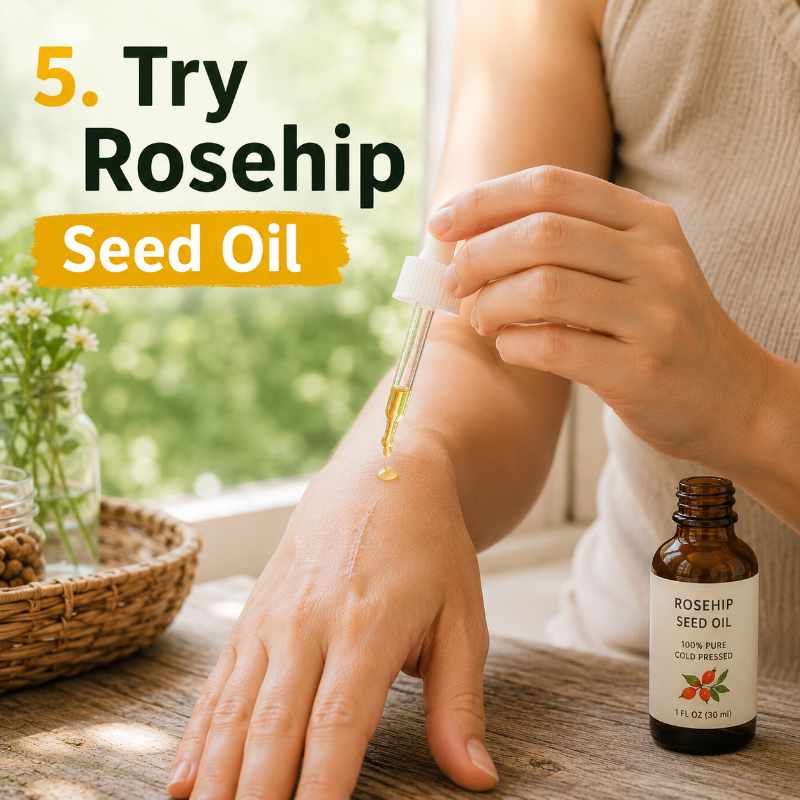
Rosehip seed oil is often used in natural skincare because it is lightweight and contains fatty acids that help nourish the skin barrier.
It may be useful for:
- Dry-looking scars
- Uneven skin tone
- Older marks that need softening
- Facial scars, if your skin tolerates oils well
Use only a few drops. Gently press it into the scar rather than rubbing hard.
Do not expect overnight results. With oils, consistency matters more than quantity. Too much oil can irritate the skin or make it greasy, so keep it light.
6. Support Healing From The Inside
Skin repair is not just about what you put on the outside. Your body also needs the right nutrients to build and maintain healthy skin.
To support natural scar healing, focus on:
- Protein from eggs, beans, fish, chicken, lentils, yoghurt, nuts, or seeds
- Vitamin C from oranges, berries, peppers, broccoli, and potatoes
- Zinc from meat, pumpkin seeds, beans, eggs, and whole grains
- Plenty of water
- Enough sleep
This is not as exciting as a homemade remedy, but it is important. If your body is run down, dehydrated, or lacking nutrients, your skin may take longer to look its best.
7. Use Silicone Gel Or Sheets For Raised Scars
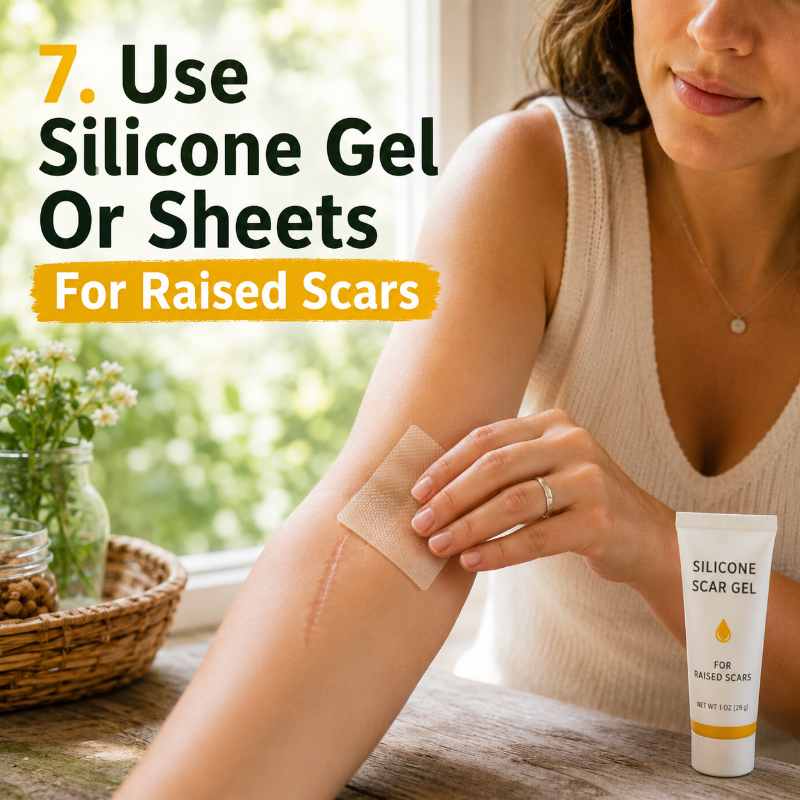
Silicone is not a kitchen cupboard remedy, but it is one of the better-known at-home options for raised scars. It is often used to help soften, flatten, and improve the appearance of hypertrophic scars and some keloid-prone scars.
You can usually buy silicone scar gel or silicone sheets from a pharmacy. They work best when used consistently over time and only on healed skin.
This may be worth considering for:
- Raised scars
- Surgery scars
- C-section scars
- Burn scars after medical approval
- Thick or firm scars
Always follow the product instructions. If your scar is growing, painful, or very raised, get professional advice rather than relying on home treatment alone.
8. Avoid Harsh Scrubs And Lemon Juice
A lot of old-fashioned scar remedies suggest rubbing lemon juice, baking soda, salt, sugar scrubs, or strong exfoliants onto scars. These can sound natural, but natural does not always mean gentle.
Harsh ingredients can irritate the skin, make redness worse, and even cause extra dark marks, especially on sensitive or darker skin tones.
Avoid:
- Lemon juice on scars
- Baking soda scrubs
- Salt scrubs
- Strong essential oils
- Undiluted tea tree oil
- Picking or scratching the scar
Gentle care is usually better than aggressive treatments. When it comes to scars, irritating the skin can undo your progress.
9. Use Honey Carefully
Honey is often talked about in natural healing, but it needs to be used sensibly. Do not put ordinary kitchen honey into open wounds or surgical cuts.
For healed scars, a small amount of honey can be used as a short moisturising mask if your skin tolerates it. Apply a thin layer to clean, healed skin, leave it for 10 to 15 minutes, then rinse well.
Patch test first and avoid this if your skin is acne-prone, irritated, broken, or very sensitive.
A safer everyday option is often a plain moisturiser rather than sticky DIY masks, but honey can be a gentle occasional option for some people.
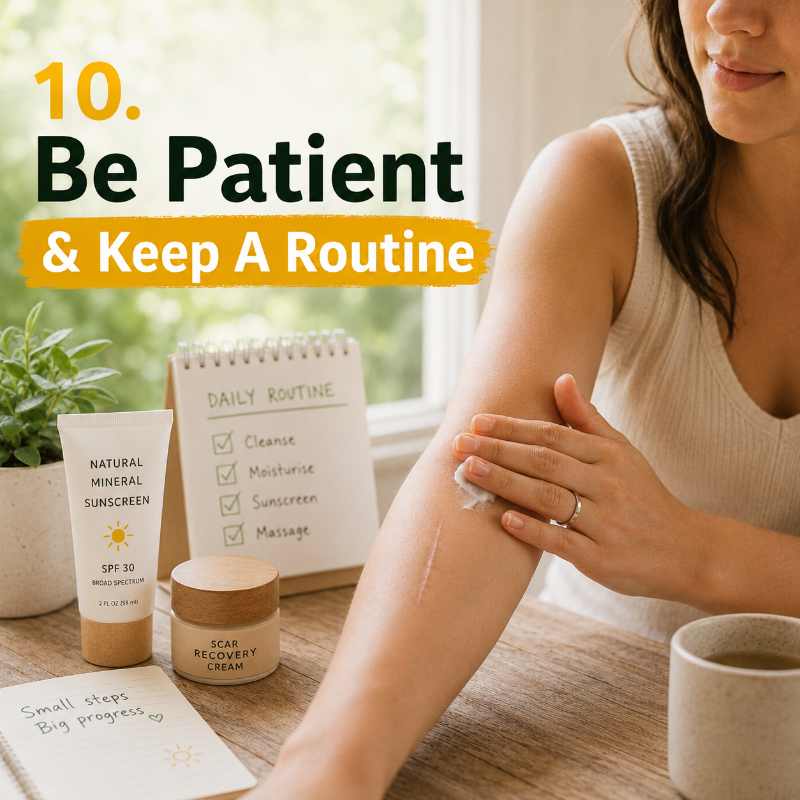
10. Be Patient And Keep A Routine
Scars change slowly. A new scar can look red, dark, raised, shiny, or angry for months before it starts to settle. Some scars continue improving for a year or more.
The best natural scar routine is simple:
- Protect from sun
- Keep moisturised
- Massage gently
- Avoid picking
- Eat well
- Patch test products
- Give it time
You do not need to use ten products at once. In fact, doing too much can make irritation more likely.
Pick two or three gentle habits and stick with them.
Extra Tips For Better Scar Care
Here are a few little habits that can help:
- Keep bedding, towels, and clothing clean if the scar is still sensitive
- Avoid tight clothing that rubs the scar
- Do not pick scabs, as this can make scarring worse
- Stop using anything that stings or burns
- Take photos once a month so you can see slow changes
- Keep routines simple so you actually stick with them
For more natural skincare-style content, you can link to:
How To Make Herbal Soap From Scratch
https://www.livinggreenandfrugally.com/how-to-make-herbal-soap-from-scratch/
and:
Homemade Healing Cream For Eczema & Psoriasis
https://www.livinggreenandfrugally.com/homemade-healing-cream-eczema-psoriasis/
Common Mistakes To Avoid
Using too many remedies at once
If you put aloe, oil, honey, essential oils, scrubs, and creams on the same scar, you will not know what is helping and what is irritating your skin.
Starting too early
Do not treat a scar like a scar until the wound is fully healed. Open wounds need proper wound care, not beauty remedies.
Scrubbing the scar
Scrubbing does not erase scar tissue. It can irritate the area and make the mark look worse.
Expecting instant results
Natural scar care is slow. Think weeks and months, not days.
Ignoring signs of a problem
A scar that keeps growing, hurting, itching badly, or becoming raised may need proper medical advice.
FAQ: Healing Scars Naturally
Can scars disappear completely?
Some scars fade so much they become hard to notice, but many do not disappear completely. The goal is usually to make the scar softer, flatter, smoother, and less obvious.
How long does it take for scars to fade?
It depends on the type of scar, where it is, your skin type, your age, sun exposure, and how well the area heals. Many scars continue changing for months, and some may improve for a year or more.
Is aloe vera good for scars?
Aloe vera may help keep healed skin moisturised and calm, which can support the look and feel of a scar. It should only be used on healed skin unless a health professional says otherwise.
Is vitamin E good for scars?
Vitamin E is popular, but it does not work for everyone and may irritate some skin. If you try it, patch test first and stop if you notice itching, redness, or a rash.
What is the best natural oil for scars?
There is no single best oil for everyone. Rosehip seed oil, coconut oil, olive oil, and shea-based products are commonly used, but your skin type matters. Acne-prone skin may not like heavy oils.
Can old scars be improved naturally?
Old scars may soften and look better with regular moisturising, massage, sun protection, and time. However, older deep scars may not change much without professional treatments.
When should I get medical advice?
Get advice if the scar is painful, raised, spreading, very itchy, hot, infected-looking, restricting movement, or affecting your confidence badly.
Final Thoughts
Healing scars naturally is really about helping your skin do what it already wants to do: repair, soften, protect, and settle.
The best results usually come from simple habits done consistently. Protect the scar from the sun, keep it moisturised, massage gently once it is fully healed, avoid harsh scrubs, eat well, and give your skin time.
There is no miracle overnight fix, but with patience and gentle care, many scars can become calmer, softer, and less noticeable.
Internal Links :
How To Make Your Own Aloe Vera Gel
https://www.livinggreenandfrugally.com/how-to-make-your-own-aloe-vera-gel/
Soothing Skin Beeswax Lotion Bar Recipe
https://www.livinggreenandfrugally.com/soothing-skin-beeswax-lotion-bar-recipe/
How To Make Herbal Soap From Scratch
https://www.livinggreenandfrugally.com/how-to-make-herbal-soap-from-scratch/
Homemade Healing Cream For Eczema & Psoriasis
https://www.livinggreenandfrugally.com/homemade-healing-cream-eczema-psoriasis/
14 Genius Uses of Witch Hazel
https://www.livinggreenandfrugally.com/wonderful-witch-hazel-reasons-this-herbal-remedy-should-be-in-every-home/