

10 Foods You Can Grow in Buckets (Perfect for Small Yards or Renters)
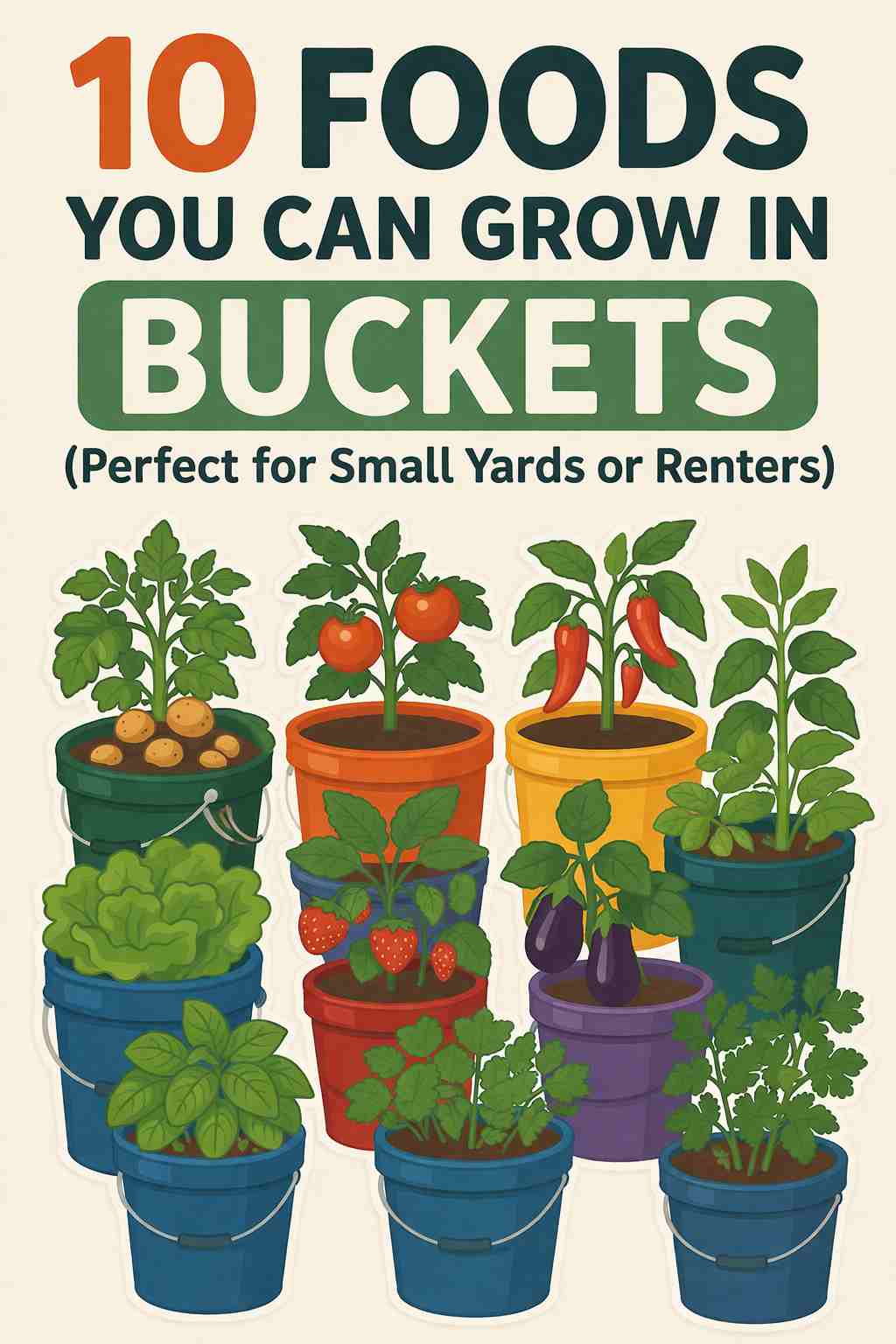
🌱 Grow Your Own Food Anywhere (Even Without a Garden!)
Think you need a big garden to grow your own food? Think again. Whether you’ve got a tiny patio, a balcony, or just a sunny doorstep, bucket gardening is one of the easiest, cheapest, and most effective ways to grow fresh food at home.
This method is perfect if you’re renting, short on space, or just want a simple way to become more self-sufficient. With just a few buckets, some soil, and a bit of sunlight, you can grow a surprising amount of food right where you are.
No digging. No fancy tools. No experience needed.
Let’s dive into the 10 best foods you can grow in buckets, plus tips to make sure you get amazing results.
🪣 Why Bucket Gardening Works So Well
Before we get into the list, here’s why this method is so powerful:
💰 Cheap to start
Old buckets, tubs, or containers work perfectly
🏡 Ideal for renters
Take your garden with you if you move
🌞 Control your growing conditions
Move buckets to chase sunlight
🌿 Fewer weeds and pests
Less maintenance than traditional gardening
🥔 1. Potatoes
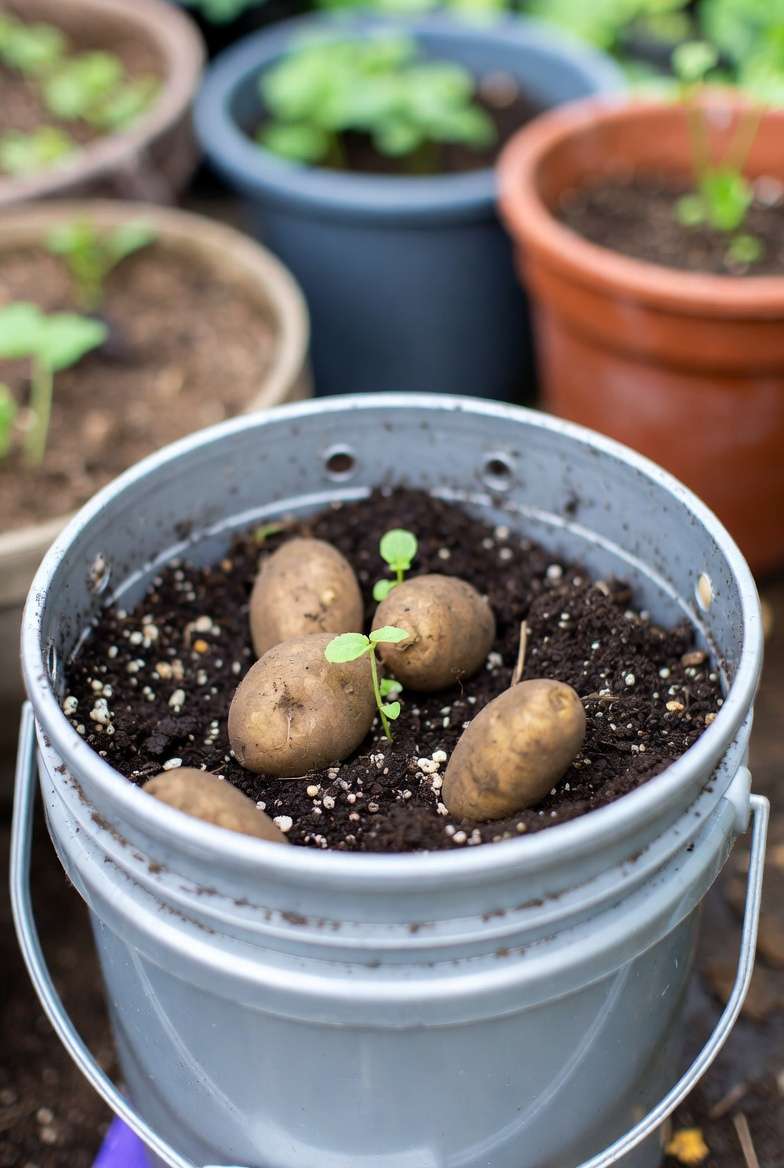
Potatoes are one of the easiest and most rewarding crops to grow in buckets.
How to grow:
- Use a large bucket (at least 20 litres)
- Add drainage holes
- Layer soil and seed potatoes
- Keep adding soil as the plant grows
Top tip:
Use the “hilling” method by covering stems with soil to increase yield.
🍅 2. Tomatoes
Perfect for containers and incredibly productive.
How to grow:
- Use a deep bucket
- Add a stake or cage for support
- Place in full sun
Top tip:
Cherry tomatoes are best for beginners and small spaces.
🥕 3. Carrots
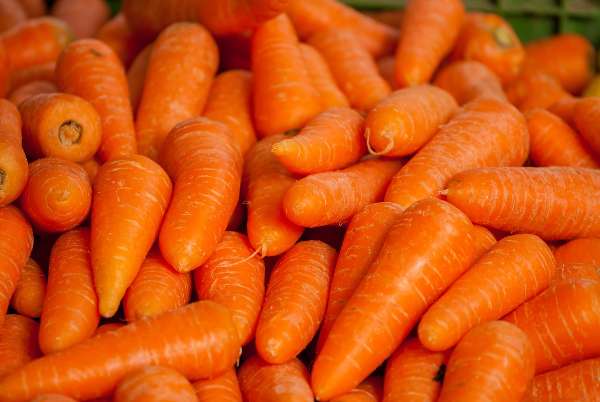
Yes, you can grow carrots in buckets, and they do very well.
How to grow:
- Use a deep container (at least 30 cm)
- Fill with loose, sandy soil
- Sow seeds directly
Top tip:
Choose short or “baby” carrot varieties for best results.
🌶️ 4. Peppers (Chillies or Sweet Peppers)
Great for adding flavour to your meals and very easy to maintain.
How to grow:
- One plant per bucket
- Needs warmth and sunlight
- Keep soil moist but not soggy
Top tip:
Place near a wall to retain heat and boost growth.
🥬 5. Lettuce
Fast-growing and perfect for continuous harvesting.
How to grow:
- Shallow buckets work fine
- Sow seeds every couple of weeks
- Partial sun is okay
Top tip:
Harvest leaves as needed instead of pulling the whole plant.
🧅 6. Onions
Simple, low-maintenance, and very useful in the kitchen.
How to grow:
- Plant sets or seeds in a medium bucket
- Needs full sun
- Keep soil well-drained
Top tip:
Spring onions are even easier and grow faster.
🍓 7. Strawberries
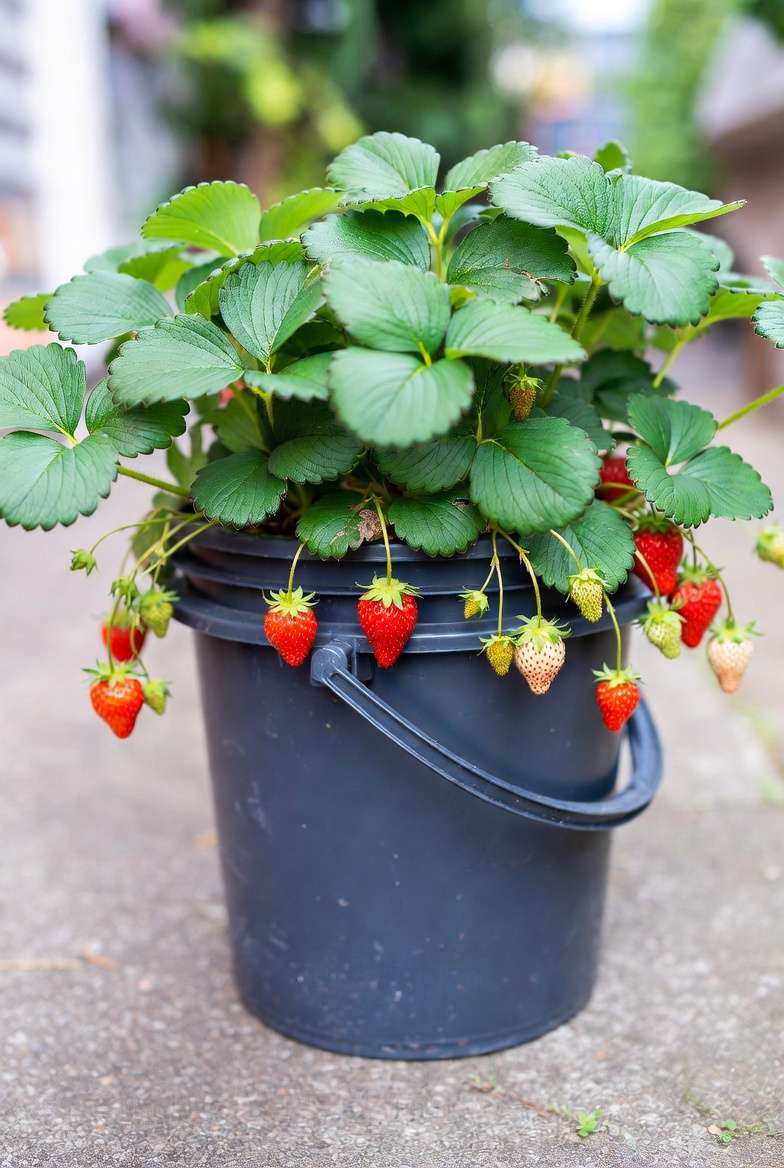
A great choice for small spaces and very rewarding.
How to grow:
- Use a bucket or hanging container
- Ensure good drainage
- Place in full sun
Top tip:
Elevate the bucket to keep fruit away from pests.
🌿 8. Herbs (Basil, Mint, Parsley)
Perfect for beginners and small containers.
How to grow:
- Use smaller buckets or pots
- Keep near your kitchen for easy access
- Needs regular watering
Top tip:
Mint spreads aggressively, so buckets actually help control it.
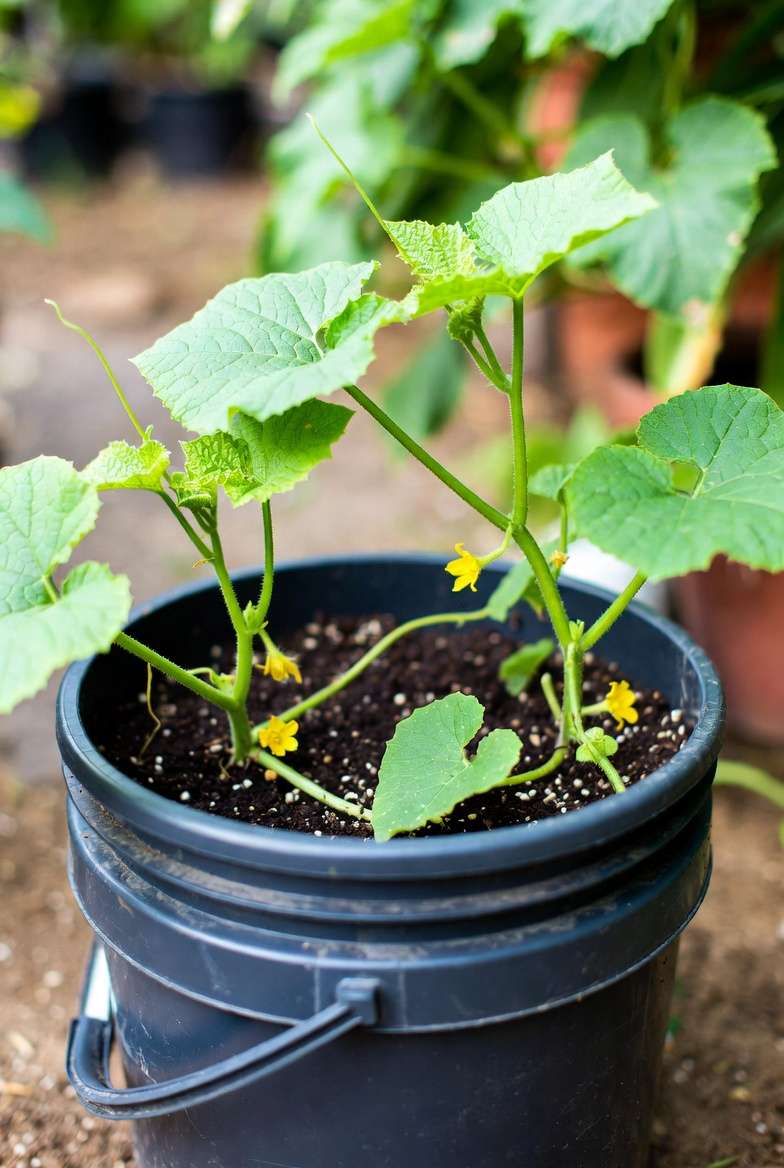
🥒 9. Cucumbers
Climbing plants that thrive in containers with support.
How to grow:
- Use a large bucket
- Add a trellis or support
- Needs plenty of water and sun
Top tip:
Bush varieties are better suited for buckets.
🍆 10. Aubergines (Eggplants)
Surprisingly well-suited for container growing.
How to grow:
- One plant per bucket
- Warm, sunny location
- Support may be needed
Top tip:
Keep soil consistently warm for best growth.
🛠️ How To Start Your Bucket Garden (Step-by-Step)
1. Choose your buckets
Anything from old paint buckets to storage tubs will work
Just make sure they are food-safe if possible
2. Add drainage holes
Drill holes in the bottom to prevent waterlogging
3. Use quality soil
A mix of compost and potting soil works best
4. Pick the right spot
Most crops need 6 to 8 hours of sunlight
5. Water consistently
Buckets dry out faster than garden beds
💡 Pro Tips for Bigger Harvests
🌱 Feed your plants
Use a simple liquid fertiliser every couple of weeks
💧 Don’t overwater
Wet roots can cause rot
☀️ Rotate buckets
Move them around to maximise sunlight
🐛 Watch for pests
Even container plants need checking
♻️ Reuse and recycle
Old containers, tubs, and even broken bins can be used
❓ Frequently Asked Questions
Can I really grow enough food in buckets?
Yes. While it won’t fully replace a large garden, you can grow a surprising amount, especially herbs, greens, and high-yield crops like tomatoes.
What size bucket is best?
Most plants do best in 10 to 20 litre buckets, but larger is always better for root growth.
Do I need special soil?
Not necessarily. A good compost and potting mix will work perfectly.
How often should I water?
Usually once a day in warm weather, but always check the soil first.
Can I grow indoors?
Yes, but you’ll need a sunny window or grow lights for best results.
🌟 Why You Should Start Today
Growing food in buckets is one of the easiest ways to:
- Save money on groceries 💰
- Eat fresher, healthier food 🥗
- Become more self-sufficient 🌍
- Make use of small or unused spaces 🏡
And the best part? You can start today with things you probably already have at home.