

6 Indoor Plants That Will Absorb Humidity in Your Home

Make sure to like Living Green and Frugally on Facebook, Shop at Amazon to help support my site and explore our PINTEREST BOARDS for innovative ways you can become self-sufficient.
🌿 6 Indoor Plants That Will Absorb Humidity in Your Home
Say goodbye to stuffy, damp air and hello to fresh, breathable space—all thanks to Mother Nature. If you’ve ever walked into a room and felt like you were swimming through the air, you’re not alone. High indoor humidity isn’t just uncomfortable—it can encourage mold, mildew, and dust mites. But don’t worry, there’s a natural (and beautiful) way to fix that…
✨ Meet the indoor plants that act like living dehumidifiers!
These green warriors not only purify the air but also pull excess moisture right out of it. That’s right—no noisy machines, just lush, leafy allies doing the job quietly in the background.
🌬️ How Can Plants Absorb Humidity?
Believe it or not, plants naturally regulate moisture through a process called transpiration. 🌱 As they “breathe,” they release water vapor and also absorb moisture from the air through their leaves. This means that certain houseplants can actually lower humidity levels indoors, especially in small or poorly ventilated spaces like bathrooms, kitchens, and laundry rooms.
🌟 Why Use Plants Instead of a Dehumidifier?
✅ Energy-free: No electricity or filters required
✅ Eco-friendly: Good for the planet and your home
✅ Aesthetic: Turns dull spaces into lush retreats
✅ Affordable: One-time cost with long-term benefits
✅ Dual-purpose: Many also purify the air of toxins
🌿 6 Best Indoor Plants That Reduce Humidity
Let’s dig into the green gold. These are the top moisture-absorbing plants perfect for humid homes:
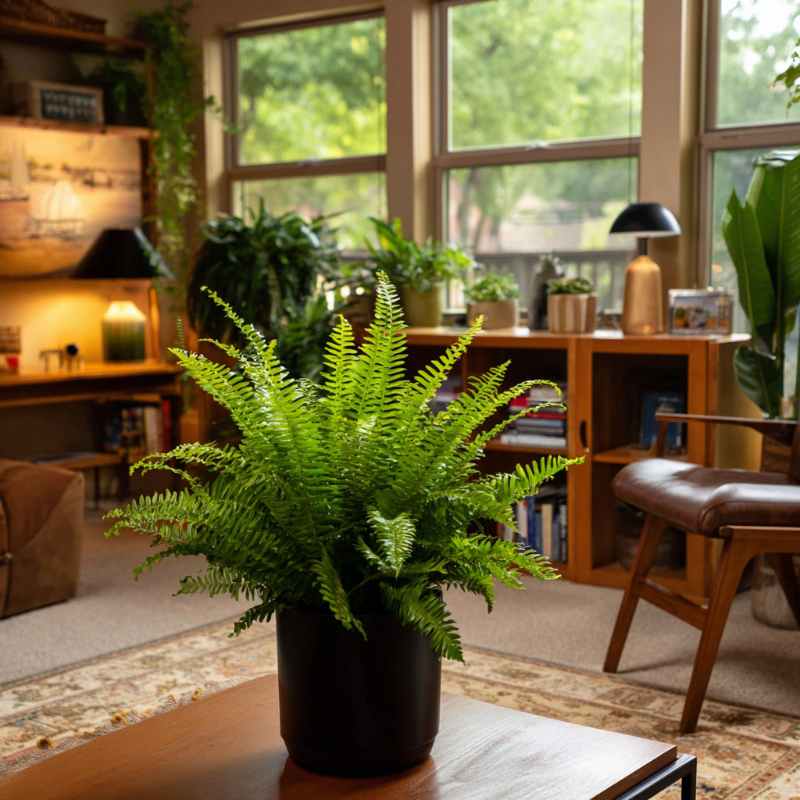
1. Boston Fern (Nephrolepis exaltata)
🌡️ Perfect for: Bathrooms and laundry rooms
This leafy green beauty thrives in humidity but also helps regulate it. Boston ferns absorb moisture and love dappled light. Plus, they’re natural air purifiers!
Care tip: Keep the soil moist and mist the leaves occasionally.
2. Peace Lily (Spathiphyllum)
🌼 Perfect for: Bedrooms and offices
Peace lilies are not only stunning with their white blooms, but they also pull moisture from the air and reduce mold spores. They’re one of NASA’s top air-purifying plants.
Care tip: Water once a week; watch for drooping leaves as a watering cue.

3. English Ivy (Hedera helix)
🌿 Perfect for: Hanging baskets or bathroom corners
English Ivy is a moisture-absorbing machine that also fights airborne mold. It looks great cascading from shelves and is ideal for humid, shaded rooms.
Care tip: Keep soil slightly dry and give it bright, indirect light.

4. Spider Plant (Chlorophytum comosum)
🕷️ Perfect for: Kitchens and sunrooms
Spider plants are hardy, fast-growing, and great for newbies. They absorb humidity and filter pollutants, making them the MVP of low-maintenance houseplants.
Care tip: Let the soil dry between watering. They love indirect sunlight.

5. Tillandsia (Air Plants)
💧 Perfect for: Bathrooms with high humidity
Air plants don’t need soil—just a little mist and humidity! These quirky plants thrive on moisture in the air and are perfect for creative displays like wall hangers or glass terrariums.
Care tip: Soak in water for 30 minutes once a week, mist occasionally.

6. Areca Palm (Dypsis lutescens)
🌴 Perfect for: Living rooms and large indoor spaces
This tropical plant is a natural humidifier and dehumidifier, depending on the environment. It drinks up extra moisture and offers major tropical vibes!
Care tip: Keep soil slightly moist and give it bright, filtered light.

🌧️ Bonus Tip: Group Your Plants
Plants release moisture through transpiration—grouping several together increases the humidity absorption rate! It’s like building your own natural air system with green teammates. 🌿🌿🌿
🛠️ Pro Tips for Reducing Humidity with Plants
- Choose plants based on room conditions (light, airflow, moisture)
- Don’t overwater! This adds to the humidity
- Add pebbles or activated charcoal to the soil to reduce mold
- Rotate plants monthly for even air circulation
❓ FAQ: Common Questions About Plants That Absorb Humidity
💬 Can indoor plants replace a dehumidifier?
Not entirely—but in small rooms, they can make a noticeable difference, especially when used in groups.
💬 Do these plants work in winter?
Yes, though their humidity-absorbing powers may reduce slightly due to less transpiration in dry air.
💬 Are these plants safe for pets?
🚫 Peace Lily, English Ivy, and Boston Fern can be toxic if eaten. Consider Spider Plants or Areca Palms for pet-safe options.
💬 How many plants do I need?
For a small room, 2–4 medium-sized plants can help balance moisture levels. Larger rooms may need more.
🌱 Final Thoughts: Turn Your Home Into a Humidity-Busting Jungle
💡 Instead of battling dampness with expensive gadgets, why not let nature do the work for you? These humidity-absorbing indoor plants are budget-friendly, eco-conscious, and totally gorgeous. Whether you live in a humid climate or just want to freshen the air in your home, adding these leafy dehumidifiers is a simple, natural solution.
So grab a few pots, get planting, and breathe easier. 🌬️🌿