

40 DIY Tricks To Make Your Groceries Last As Long As Possible
Make sure to like Living Green and Frugally on Facebook, Shop at Amazon to help support my site and explore our PINTEREST BOARDS for innovative ways you can become self-sufficient.
Finding limp carrots, mouldy berries or an untouched bag of salad at the back of the fridge is frustrating. It is not just food being thrown away. It is money you have already spent going straight into the bin.
The good news is that you do not need expensive storage gadgets to make your groceries last longer. A few glass jars, clean kitchen towels, simple containers and better organisation can add valuable extra days to many everyday foods.
These 40 practical food storage tricks will help you keep fruit, vegetables, bread, dairy products, herbs and cupboard staples fresh for as long as possible. You will reduce food waste, save money and avoid making unnecessary trips to the supermarket.
Before trying any food storage trick, remember that freshness and food safety are not the same thing. Never ignore a use-by date, and always follow the storage instructions printed on the packaging.
Start With the Right Fridge Temperature
Your refrigerator should normally be kept between 0°C and 5°C. Food can spoil faster if the temperature rises above this range, even when the fridge still feels cold when you open it.
Frozen food should be kept at approximately -18°C.
It is also important to understand the difference between the two main dates printed on food packaging:
- A use-by date is about safety. Do not eat food after this date, even if it looks and smells normal.
- A best-before date is mainly about quality. Some foods may still be safe after this date if they have been stored correctly and show no signs of spoilage.
Now let’s look at the simple DIY tricks that can help your groceries stay fresh for longer.
1. Put a Thermometer Inside Your Fridge
The temperature shown on your fridge dial is not always accurate. In fact, many fridge dials only display a setting rather than the actual temperature inside the appliance.
Place an inexpensive fridge thermometer on the middle shelf and check it regularly. Try moving it to different areas occasionally because the temperature may vary between shelves.
If your fridge is warmer than 5°C, adjust the setting and check it again several hours later.
2. Keep Milk Away From the Fridge Door
The fridge door is one of the warmest and least stable areas because it is exposed to room-temperature air every time the door opens.
Store milk towards the back of a main shelf instead. The temperature is normally colder and more consistent there, which can help milk remain fresh for longer.
The door is better suited to condiments, sauces and other products that are less sensitive to small temperature changes.
3. Store Eggs in Their Original Carton
The original egg carton provides protection and helps prevent eggs from absorbing strong smells from other food.
Keeping the eggs in their carton also means you can see the best-before date instead of having to remember when you bought them.
Follow the storage instructions printed on the box. If you refrigerate eggs, keep them on a main shelf where the temperature is more stable rather than constantly moving them between warm and cold conditions.
4. Create an “Eat Me First” Box
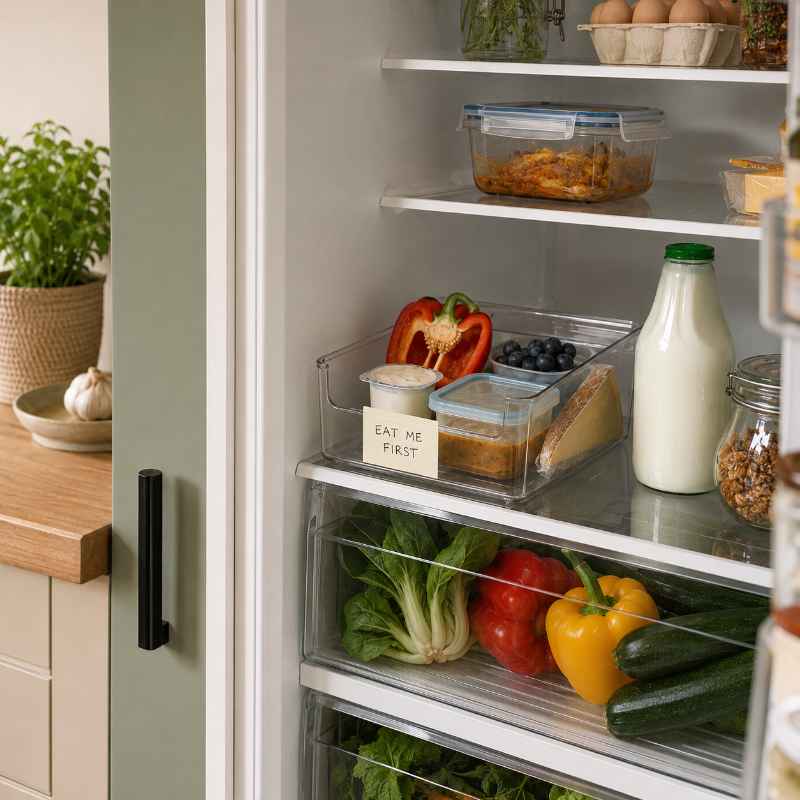
One of the easiest ways to reduce food waste is to create a clearly labelled EAT ME FIRST container.
Place opened packets, ageing vegetables, individual yoghurts and food approaching its use-by date inside. Put the container somewhere visible near the front of the fridge.
Check the box before preparing a meal or choosing a snack. This prevents vulnerable food from disappearing behind newer groceries.
5. Rotate Groceries Using the First-In, First-Out Method
Supermarkets and restaurants use a simple system called “first in, first out.” You can use exactly the same method at home.
When you buy a new carton, packet or jar, place it behind the older one. Move anything that needs using first to the front.
This small habit works particularly well for:
- Yoghurts
- Tinned food
- Milk
- Sauces
- Cereals
- Frozen meals
- Packaged snacks
You are much less likely to discover forgotten food several months later.
6. Avoid Overfilling the Fridge
A completely packed fridge may look well stocked, but food still needs cold air circulating around it.
When shelves are crammed tightly, the appliance may struggle to maintain an even temperature. Some areas may become warmer than others, causing food to spoil sooner.
Leave small gaps between items and avoid covering internal air vents. A reasonably full freezer can operate efficiently, but it should not be packed so tightly that air cannot circulate or the door cannot close securely.
7. Label Opened Food With the Date
Once packaging has been opened, the original use-by or best-before date may no longer tell you how quickly the food needs to be eaten.
Use masking tape, washable labels or a marker pen to record the date you opened:
- Cartons
- Jars
- Cooked meats
- Sauces
- Cheese
- Plant-based milk
- Leftover ingredients
Always check the packet for instructions such as “use within three days of opening.”
8. Keep Raw Meat on the Bottom Shelf
Raw meat and fish should be stored in sealed packaging or a covered container on the bottom shelf of the fridge.
This does not necessarily make the meat last longer, but it prevents liquid from dripping onto cooked food, salad or other ready-to-eat groceries.
Place a washable tray beneath packets that may leak. Clean spills immediately to reduce the risk of cross-contamination.
9. Add a Dry Kitchen Towel to Bags of Salad
Moisture collecting inside bags of salad can quickly turn the leaves slimy.
After opening the bag, add a clean, dry piece of kitchen paper or a clean cloth towel. This absorbs some of the excess condensation.
Check it every day and replace it when it becomes damp. Do not crush the leaves by packing the bag too tightly.
10. Revive Wilted Lettuce in Cold Water
Lettuce often becomes limp because it has lost moisture rather than because it is spoiled.
Separate the leaves and place them in a bowl of very cold water for around 10 to 20 minutes. Adding a few ice cubes can make the water even colder.
Drain the leaves and dry them thoroughly before serving or returning them to the fridge.
This can restore some of their crisp texture, but it cannot make spoiled or mouldy lettuce safe to eat.
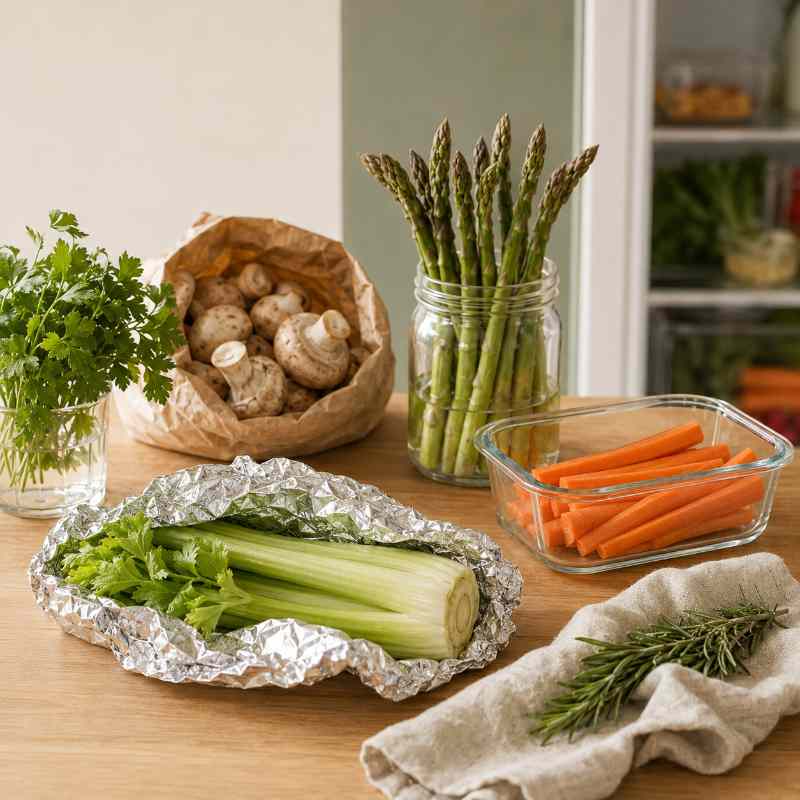
11. Wrap Celery in Foil
Celery often becomes soft and rubbery after sitting in the fridge for a few days.
Remove damaged parts, make sure the celery is dry and wrap it in aluminium foil before placing it in the vegetable drawer. Do not wrap obviously wet celery because trapped moisture can encourage decay.
Check it regularly and replace the foil if it becomes dirty or damaged.
If celery has already gone slightly limp but is otherwise sound, standing the stalks in cold water may help restore some crispness.
12. Remove the Green Tops From Carrots
Carrot tops continue pulling moisture and nutrients from the roots after harvesting. This can make the carrots become limp more quickly.
Remove the leafy tops before storing the carrots, but do not throw them away automatically. Fresh carrot leaves can be used in pesto, sauces or soups when properly washed and prepared.
Keep the carrots dry in a suitable covered container in the refrigerator. If you store carrots submerged in water, use a clean container and replace the water regularly.
13. Remove Leaves From Radishes and Beetroot
Radish, turnip and beetroot leaves can draw moisture from the roots during storage.
Cut the leaves away, leaving a small amount of stem attached. Store the roots separately in the fridge.
If the leaves are fresh and edible, wash them carefully and use them in soups, sautés, pesto or salad rather than wasting them.
14. Treat Asparagus Like Cut Flowers
Asparagus can lose moisture quickly and become wrinkled or woody.
Trim a small amount from the bottom of the stems, then stand the asparagus upright in a jar containing a little clean water. Loosely cover the tops with a reusable bag and place the jar in the fridge.
Change the water if it becomes cloudy. This method helps keep the stems hydrated until you are ready to cook them.
15. Keep Mushrooms in a Paper Bag
Mushrooms release moisture during storage. When they are trapped inside sealed plastic, that moisture can make them slimy.
Transfer loose mushrooms to a clean paper bag and place them in the fridge. Fold the top over loosely rather than sealing it completely.
Do not wash mushrooms before storing them. Brush off obvious dirt and wash or wipe them shortly before cooking.
16. Protect Broccoli With a Slightly Damp Cloth
Broccoli needs moisture, but leaving it soaking wet can encourage mould.
Wrap the unwashed head loosely in a clean, slightly damp kitchen towel and place it in the vegetable drawer. The towel should be barely damp rather than dripping wet.
You can also keep the broccoli inside a loose or perforated bag to maintain humidity while allowing some airflow.
17. Separate Bananas as They Ripen
Bananas release ethylene, a natural gas that encourages ripening. Keeping a ripe bunch tightly clustered can cause all the bananas to soften at approximately the same time.
Separate individual bananas as they approach the ripeness you prefer. Place some in different parts of the kitchen to avoid having the entire bunch become overripe at once.
Keep bananas away from other produce you do not want to ripen quickly.
18. Wrap the Banana Stems
The crown at the top of a banana bunch releases ethylene as the fruit ripens.
Wrap the crown or individual stems with a small piece of reusable food wrap. This may help slow the ripening process slightly, although it will not stop bananas from ripening completely.
Check the bananas daily and freeze them as soon as they become too soft for eating fresh.
19. Keep Apples Away From Sensitive Produce
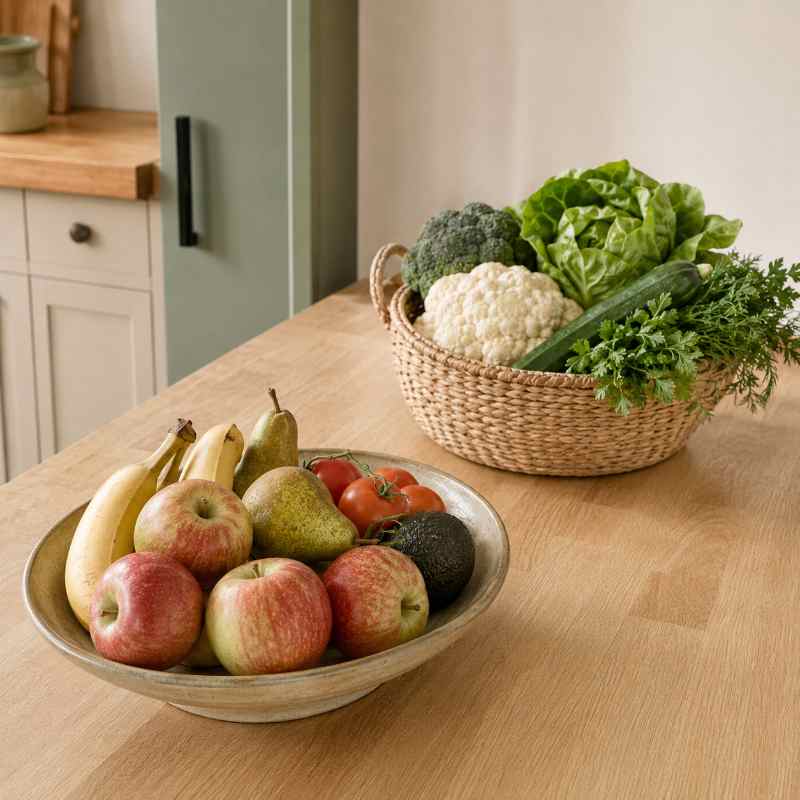
Apples are another major producer of ethylene gas. Placing them beside sensitive vegetables can make those vegetables deteriorate faster.
Store apples separately from:
- Leafy greens
- Broccoli
- Cabbage
- Cauliflower
- Cucumbers
- Fresh herbs
However, ethylene can be helpful when you want to ripen something. Placing an avocado or pear in a paper bag with an apple can speed up the process.
20. Refrigerate Avocados Once They Are Ripe
Hard avocados can be left at room temperature until they begin to soften.
Once an avocado reaches the ripeness you like, move it to the fridge. The cooler temperature will slow further ripening and give you more time to use it.
Check it daily because refrigeration slows the process but does not stop it completely.
21. Brush Cut Avocado With Lemon Juice
Cut avocado turns brown when the flesh reacts with oxygen.
Brush the cut surface with a little lemon or lime juice, press suitable food wrap against the exposed flesh and place it in a covered container in the refrigerator.
Leaving the stone inside may protect the small area beneath it, but it does not prevent the rest of the flesh from browning. Limiting air exposure is more effective.
Browning does not always mean the avocado has spoiled, but discard it if it smells unpleasant, has visible mould or has developed an unusual texture.
22. Inspect Berries Before Storing Them
One mouldy strawberry can quickly affect the fruit sitting around it.
As soon as you bring berries home, inspect them carefully. Remove crushed, leaking or mouldy pieces and use any slightly soft but sound berries first.
Do not eat berries that have been in direct contact with visible mould. Clean the container before returning the remaining fruit.
23. Keep Berries Dry Until You Need Them
Moisture encourages mould, so avoid leaving berries wet in the fridge.
Unless you plan to use them immediately, store unwashed berries in a breathable container lined with a dry piece of kitchen paper. Wash them under clean running water shortly before eating.
If you decide to wash the whole batch in advance, dry every berry thoroughly before refrigeration. Even a small amount of trapped water can shorten its useful life.
24. Freeze Overripe Fruit Before It Is Wasted
Fruit does not need to look perfect to be useful. Once it becomes too soft for eating fresh, freeze it before it spoils.
Suitable options include:
- Bananas
- Berries
- Mango
- Pineapple
- Peaches
- Grapes
- Chopped apples for cooked recipes
Prepare the fruit, spread it across a tray and freeze it in a single layer. Once solid, transfer it to a labelled freezer container.
Freezing pieces separately prevents them from becoming one large frozen block. Use them in smoothies, porridge, sauces, baking and homemade desserts.
25. Store Soft Herbs Like a Bouquet
Soft herbs such as parsley, coriander and mint can last longer when treated like cut flowers.
Trim the ends of the stems and stand the herbs in a clean jar containing a small amount of water. Loosely cover the leaves and place the jar in the fridge.
Replace the water regularly and remove any damaged leaves.
Make sure the jar is stable so it cannot spill inside the refrigerator.
26. Keep Basil at Room Temperature
Basil can suffer cold damage in the refrigerator, causing its leaves to become dark and limp.
Trim the stems and stand the bunch in a glass of water at room temperature. Keep it away from direct sunlight, cooking heat and cold draughts.
Change the water regularly and remove any leaves below the waterline.
Use basil promptly because even careful storage will not preserve it indefinitely.
27. Wrap Hardy Herbs in a Damp Towel
Rosemary, thyme and sage are tougher than basil, but they can still dry out in the fridge.
Place them on a clean, barely damp kitchen towel. Roll it loosely around the herbs and put the bundle inside a container or loosely closed bag.
Do not soak the herbs. Too much water may encourage mould instead of preventing dehydration.
28. Freeze Chopped Herbs in Ice Cube Trays
If you have more herbs than you can use, chop them and place small portions in an ice cube tray.
Add a little water for herbs you plan to use in soups, stews and sauces. You can also freeze suitable herbs in cooking oil for savoury recipes.
Once the cubes are solid, move them into a labelled freezer container. Add them directly to cooked dishes when needed.
Do not use oil-packed herb cubes as a room-temperature preserve. They must remain frozen until you are ready to cook with them.
29. Freeze Half the Loaf Immediately
If your household rarely finishes a loaf before it becomes stale or mouldy, freeze half of it on the day you buy it.
Separate the slices first, then freeze them in suitable packaging. You can remove one or two slices whenever you need them.
Bread can often be toasted directly from frozen, making this a simple trick that requires almost no extra planning.
30. Choose the Right Place to Store Bread
Bread storage involves finding a balance between keeping it soft and preventing mould.
For short-term storage, use a clean bread bin or well-sealed bag kept away from heat and sunlight. Clean the bread bin regularly because old crumbs can encourage mould.
Refrigeration may slow mould in warm conditions, but it can make many types of bread become stale more quickly. Freezing is usually the better choice when bread needs to be kept for longer.
Never eat mouldy bread. Because bread is porous, mould can spread below the surface even when only one patch is visible.
31. Wrap Cheese Properly After Opening
Leaving cheese exposed causes it to dry out, while wrapping it too tightly in moisture-trapping material may affect its condition.
Wrap hard cheese in cheese paper, baking parchment or another suitable breathable food wrapping. You can then place it inside a covered container to prevent strong smells from spreading.
Label the container with the date it was opened and follow any instructions printed on the original packaging.
Soft cheeses require more careful handling and should always be used within the recommended period.
32. Grate and Freeze Cheese Before It Spoils
Hard cheese that will not be eaten in time can be grated and frozen.
Divide it into small portions and store them in labelled freezer bags or containers. The texture may become more crumbly after defrosting, but it should still work well in cooked dishes.
Use frozen grated cheese for:
- Pizza
- Pasta bakes
- Cheese sauces
- Omelettes
- Jacket potatoes
- Savoury muffins
Freezing smaller portions means you only need to remove what the recipe requires.
33. Freeze Milk in Small Portions
Milk can be frozen, although it may separate slightly when thawed.
Pour it into clean, freezer-safe containers, leaving room at the top because liquids expand as they freeze. Smaller portions are easier to defrost and reduce the chance of waste.
Defrost milk in the refrigerator rather than on the worktop. Shake it thoroughly before use.
Check the packaging first, especially with plant-based drinks, because results can vary between products.
34. Portion Butter for the Freezer
Butter freezes well, making it easier to take advantage of larger packs or special offers without wasting any.
Cut the butter into practical portions and wrap each one securely. Label the package with the date and place it in the freezer.
Keep only the amount you expect to use soon in the refrigerator. Move another portion into the fridge when it is needed.
35. Store Potatoes Somewhere Cool, Dark and Ventilated
Light can cause potatoes to turn green, while heat encourages sprouting and trapped moisture encourages rot.
Keep potatoes in a cool, dark and well-ventilated cupboard, basket or paper sack. Do not store them in a sealed plastic bag.
Inspect the potatoes regularly and remove any damaged or rotten ones immediately.
Do not eat green parts of potatoes. Green colouring can indicate increased levels of natural toxins. Heavily green, bitter or badly sprouted potatoes should be discarded.
36. Keep Potatoes and Onions Apart
Potatoes and onions may both belong in a cool, dark cupboard, but they should not be stored together.
Moisture and gases released during storage can cause nearby produce to deteriorate more quickly.
Use separate ventilated baskets or paper bags and leave some space between them. Check both supplies each week and use damaged items first if they are still safe.
37. Store Onions and Garlic in Mesh or Paper
Whole onions and garlic need airflow.
Keep them in a mesh bag, open basket or paper bag with several ventilation holes. Store them somewhere cool, dry and dark.
Avoid sealed plastic containers because trapped humidity can encourage mould and sprouting.
Once an onion has been cut, cover it and refrigerate it. Peeled garlic should also be kept in the fridge and used promptly.
38. Transfer Open Dry Goods Into Airtight Containers
Once opened, paper and cardboard packaging may not protect dried food from moisture, pests or stale air.
Transfer vulnerable ingredients into clean, dry, food-safe containers with tight-fitting lids. This works well for:
- Flour
- Rice
- Pasta
- Cereal
- Oats
- Crackers
- Dried fruit
- Sugar
- Breadcrumbs
- Baking ingredients
Write the product name, best-before date and any cooking instructions on a label.
Do not continually pour new food on top of old food. Empty and clean the container first, then place the older supply on top so it is used before the new batch.
39. Refrigerate or Freeze Nuts and Seeds
Nuts and seeds contain natural oils that can eventually become rancid, particularly when exposed to warmth, light and oxygen.
Keep small amounts in airtight containers inside a cool, dark cupboard. If you buy larger bags or use them slowly, refrigerate or freeze the extra portions.
Smell and taste a small amount before adding older nuts to a recipe. Discard them if they smell like old paint, have a bitter flavour or show signs of mould.
40. Start a Weekly “Freezer Rescue”
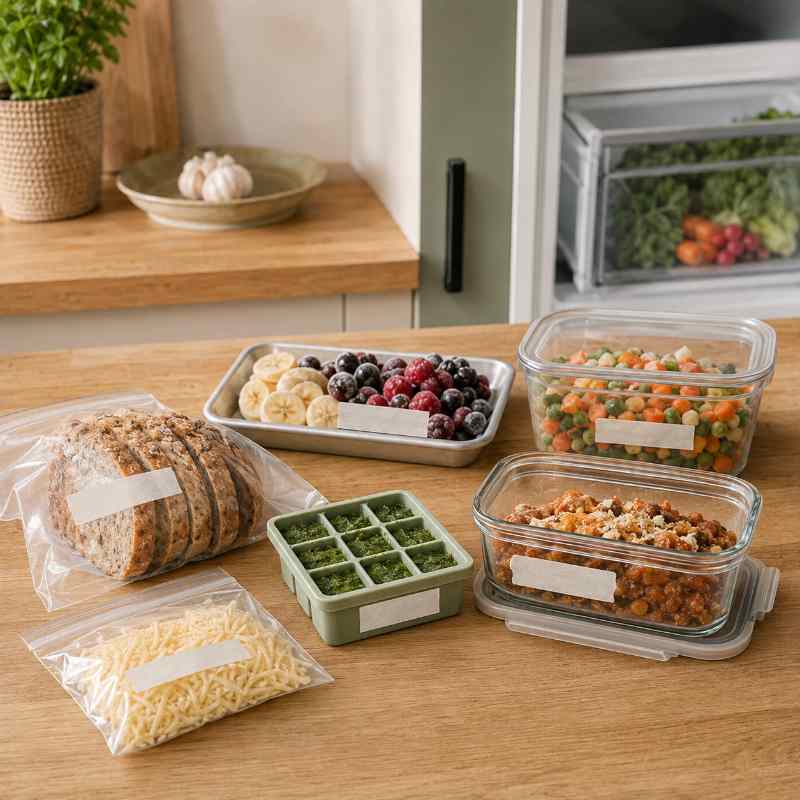
Choose one day each week to inspect the fridge and rescue food that is unlikely to be used in time.
Look for:
- Soft fruit
- Extra bread
- Grated cheese
- Fresh herbs
- Cooked meals
- Raw meat still within its use-by date
- Chopped vegetables suitable for cooking
- Open cartons that can be frozen
Prepare the food, divide it into useful portions and label each package with the name and freezing date.
Do not place food in the freezer after its use-by date. Freeze it on or before that date and follow the packaging instructions.
A Simple Weekly Routine to Prevent Food Waste
You do not need to reorganise the entire kitchen every day. A short routine can make most of these storage tricks much easier to maintain.
On Shopping Day
Before shopping, check your fridge, freezer and cupboards. Plan meals around food you already have and avoid buying duplicates.
When you return home:
- Put frozen and chilled groceries away first.
- Move older products to the front.
- Place newer products behind them.
- Label anything you have opened.
- Freeze excess bread, meat or other suitable food immediately.
- Put vulnerable food in the “Eat Me First” box.
In the Middle of the Week
Spend five minutes checking your fresh groceries.
Look for soft berries, damp salad towels, ageing vegetables and approaching use-by dates. Plan the next meal around anything that needs using urgently.
If you know you will not use something in time, freeze it while it is still in good condition.
Before the Next Shop
Check what remains and write a list based on what you genuinely need.
Small quantities of vegetables can often become:
- Soup
- Curry
- Pasta sauce
- Stir-fry
- Omelette
- Frittata
- Vegetable stock
- Traybake
- Bubble and squeak
Being flexible with meals is one of the best ways to use groceries before they spoil.
Grocery Storage Mistakes That Make Food Spoil Faster
Even clever food storage tricks will not work if you are accidentally making these common mistakes.
Washing Everything Before Storage
Washing fruit and vegetables can leave moisture behind. Unless you dry the produce thoroughly, that moisture may encourage mould and decay.
For many groceries, it is better to wash them shortly before use.
Storing Damp Produce in Sealed Containers
Airtight containers are useful, but they can trap condensation. Add a dry towel where appropriate and check the container regularly.
Putting Every Fruit and Vegetable Together
Different groceries require different levels of humidity and airflow. Ethylene-producing fruit may also cause nearby vegetables to deteriorate faster.
Overcrowding the Refrigerator
Cold air must be able to circulate. Avoid blocking vents or packing food tightly against every surface.
Forgetting What Is in the Freezer
Frozen food saves money only when you remember to use it.
Keep a list on the freezer door, label every package and place older food where it can be seen easily.
Leaving Leftovers Out Too Long
Cool cooked food promptly, divide large amounts into smaller containers and refrigerate or freeze it within one to two hours.
For UK households, refrigerated leftovers should generally be eaten within 48 hours or frozen if they will not be used in time.
Ignoring Use-By Dates
A use-by date relates to safety. Food can contain harmful bacteria without developing an unusual smell, appearance or taste.
The “sniff test” should never be used to decide whether food past its use-by date is safe.
Keeping Damaged Cans
Discard cans that are bulging, leaking, badly rusted or deeply dented, particularly around the seams.
Never taste food from a suspicious container to find out whether it is safe.
Frequently Asked Questions
What temperature should my fridge be?
A household fridge should normally be kept between 0°C and 5°C. Use a fridge thermometer to check the actual temperature rather than relying entirely on the appliance’s control dial.
Should fruit and vegetables be washed before storage?
Many fruits and vegetables last longer when stored dry and washed immediately before use.
If you wash produce in advance, dry it thoroughly and use a clean container. Trapped water can encourage mould, sliminess and decay.
Which fruits produce ethylene gas?
Common ethylene-producing fruits include:
- Apples
- Bananas
- Avocados
- Pears
- Peaches
- Nectarines
- Plums
- Tomatoes
Keep these away from sensitive vegetables when you want to slow ripening.
Can I freeze food on its use-by date?
Food can generally be frozen up to and including its use-by date when the packet instructions allow it.
Do not wait until after the date has passed. Label the food clearly and follow appropriate defrosting and cooking instructions.
How long can leftovers stay in the fridge?
UK Food Standards Agency guidance recommends cooling leftovers and putting them in the fridge or freezer within one to two hours.
Eat refrigerated leftovers within 48 hours or freeze them if you will not use them in time. Reheat food until it is steaming hot throughout and only reheat leftovers once.
Does freezing kill bacteria?
Freezing does not reliably destroy all harmful bacteria. It prevents bacteria from multiplying while the food remains frozen.
Once the food begins to thaw, bacteria may become active again. Defrost food safely in the refrigerator and follow the original cooking instructions.
Can I cut mould off food and eat the rest?
It depends on the food, but mould can spread beneath the surface where it cannot be seen.
Soft and porous foods such as bread, yoghurt, soft fruit, cooked leftovers and soft cheese should usually be discarded when mould appears. Do not simply remove the visible patch.
Guidance can differ for certain firm foods, so check reliable food-safety advice rather than guessing.
Should bread be stored in the refrigerator?
A refrigerator may slow mould growth in warm conditions, but it can also make many breads become stale more quickly.
If you cannot finish a loaf within a few days, freezing individual slices is usually the best option.
How can I remember what needs using first?
Create an “Eat Me First” box and position it at the front of the fridge. You can also keep a small whiteboard or magnetic list on the fridge door.
Write down approaching use-by dates and ingredients that need to be included in the next meal.
Small Changes Can Produce Big Savings
Making groceries last longer is not about finding a magical trick that preserves food forever. It is about controlling moisture, maintaining safe temperatures, separating incompatible produce and noticing food before it becomes unusable.
Start with three simple changes:
- Put a thermometer inside your fridge.
- Create an “Eat Me First” box.
- Carry out a weekly freezer rescue.
These habits take only a few minutes, but they can prevent a surprising amount of waste over the course of a year.
Every loaf you freeze, every leftover you remember and every vegetable you rescue represents money that stays in your pocket instead of ending up in the bin.