

The Benefits of Cold Frame Gardening: 10 Reasons Every Gardener Should Try One
Make sure to like Living Green and Frugally on Facebook, Shop at amazon to help support my site and explore our PINTEREST BOARDS for innovative ways you can become self-sufficient.
If you have ever watched a late frost wipe out young seedlings or wished you could start growing vegetables several weeks earlier in spring, cold frame gardening may be one of the simplest solutions you can add to your garden.
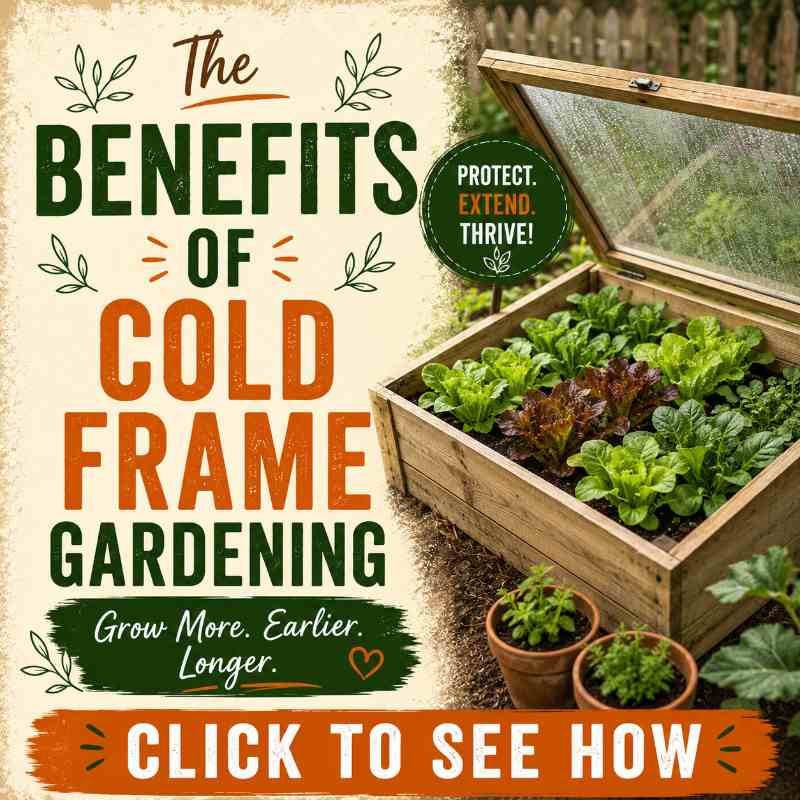
A cold frame is essentially a small, unheated greenhouse that sits close to the ground. It uses a clear lid to capture warmth from sunlight while providing shelter from frost, cold winds and unpredictable weather.
There is no electricity, complicated heating system or expensive greenhouse required.
For gardeners trying to grow more food, extend the growing season and become a little more self-sufficient, a cold frame can be surprisingly useful.
And perhaps best of all, you can build one cheaply using reclaimed materials you may already have.
🌱 What Is a Cold Frame?
A cold frame is a low box or enclosed growing area covered with a transparent lid.
Traditionally, gardeners built them using timber with an old glass window fitted on top. Today you might also see cold frames made from:
- Old windows
- Polycarbonate panels
- Reclaimed timber
- Bricks or blocks
- Clear greenhouse plastic
- Old shower doors
Sunlight passes through the transparent top and warms the soil and air inside.
The surrounding walls reduce heat loss and protect plants from wind, creating a small garden microclimate that can be considerably more sheltered than the surrounding garden.
If you are thinking of building one, our guide to building an Amish cold frame shows another simple cold-frame design.
10 Benefits of Cold Frame Gardening
1. Start Growing Earlier in Spring
This is probably the biggest reason gardeners fall in love with cold frames.
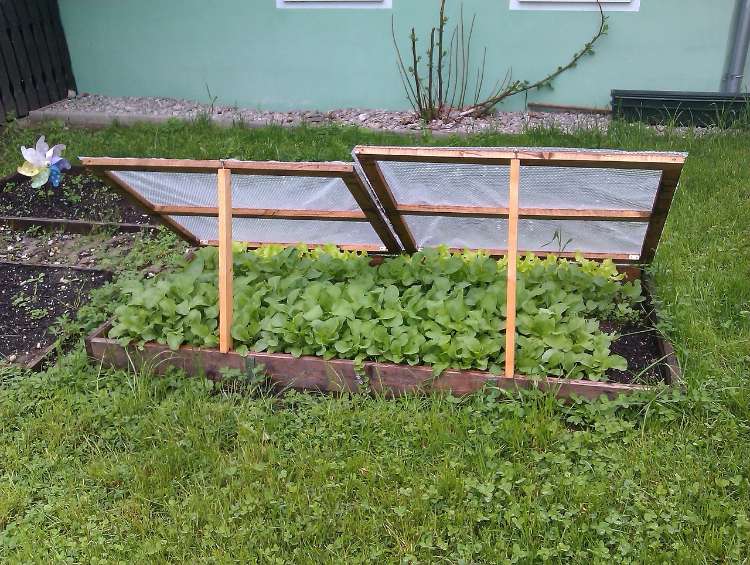
While your outdoor garden may still be dealing with chilly nights and occasional frosts, the protected environment inside a cold frame can allow you to begin growing certain cool-season crops earlier.
Instead of staring at an empty vegetable patch waiting for warmer weather, you may already have seedlings developing.
The exact timing depends on your local climate, the plants you are growing and how much sunlight your cold frame receives, so always keep local frost conditions in mind.
Our best planting dates for seeds by location guide can also help you work out when to start different crops.
2. Keep Harvesting Later Into Fall
Cold frames are not just useful in spring.
When temperatures begin falling at the end of summer, a cold frame can help protect hardy vegetables and extend your harvest further into fall and sometimes winter.
Crops such as:
- Lettuce
- Spinach
- Kale
- Arugula
- Radishes
- Green onions
- Asian greens
- Parsley
can tolerate cool conditions particularly well.
You are not magically turning January into July, but you are creating a more protected environment where cold-tolerant vegetables have a better chance.
3. Protect Plants From Frost
One unexpected frost can undo weeks of work.
Cold frames create an additional layer of protection between your plants and freezing outdoor air.
They are especially handy during those frustrating parts of spring and fall when daytime temperatures are pleasant but overnight temperatures suddenly drop.
You should still watch the forecast during particularly severe cold spells. An old blanket, straw mat or additional insulated cover placed over the cold frame overnight can provide extra protection when needed.
Remove heavy coverings once temperatures improve so plants receive daylight again.
4. Harden Off Seedlings More Easily
Moving seedlings directly from a warm windowsill or grow light into an exposed garden can shock them.
Plants need time to become accustomed to stronger sunlight, cooler temperatures and wind.
This process is known as hardening off.
A cold frame gives you a convenient halfway house.
Place seedlings inside during suitable daytime weather, gradually increase their exposure and open the lid more as they become accustomed to outdoor conditions.
Eventually they can be transplanted into the garden with far less stress.
5. Spend Less Than You Would on a Greenhouse
A greenhouse is wonderful, but not everybody has the money or space for one.
A cold frame provides some of the same season-extending advantages on a much smaller scale.
You can even make one using discarded materials.
An old wooden window, several pieces of timber and some screws could potentially become a perfectly usable cold frame instead of ending up in the rubbish.
For gardeners who eventually want something bigger, our DIY low-cost pallet greenhouse and DIY hinged covered greenhouse garden are useful next steps.
6. Grow More Food From the Same Garden
Most vegetable gardens have limited space.
Extending the growing season means the same patch of soil can potentially produce food for more months of the year.
For example, you could grow an early crop of greens before replacing them with warm-season vegetables later in spring.
When those finish toward the end of summer, another batch of cool-season vegetables could take their place.
Instead of one productive period, you begin thinking of your garden as a space that changes throughout the year.
That is particularly valuable if you only have a small backyard.
7. Protect Young Plants From Harsh Weather
Frost is not the only danger to seedlings.
Strong winds, heavy rain and hail can all damage tender young plants.
The walls and lid of a cold frame create a sheltered growing area where seedlings are less exposed to sudden weather changes.
Just remember that a cold frame is not completely weatherproof. Secure lightweight frames properly so strong winds cannot move or lift them.
8. Use Less Energy
Most traditional cold frames rely primarily on sunlight rather than electric heaters.
That makes them wonderfully simple.
There is:
- No electricity bill
- No heater to maintain
- No complicated thermostat
- No permanent structure required
You are simply capturing and retaining some of the warmth that is already available.
For anyone interested in low-cost, sustainable gardening, that simplicity is difficult to beat.
9. Perfect for Small Gardens
You do not need acres of land to use a cold frame.
Small versions can fit against a sunny wall, beside a raised bed or even in a compact backyard garden.
They can also work particularly well alongside raised beds. If you are planning to create more growing space, have a look at our guide to building a raised garden bed out of cinder blocks.
A narrow cold frame containing salad greens can produce a surprising amount of food without taking over your garden.
10. Cold Frames Are Beginner Friendly
Some gardening projects look simple until you start them.
Cold frames really can be simple.
Once established, most of the work involves:
checking temperature, watering when necessary and opening or closing the lid.
There are no complicated growing systems to learn.
That makes cold frame gardening a great introduction to season extension before investing in a larger greenhouse or hoop house.
☀️ Where Should You Put a Cold Frame?
Location makes a huge difference.
Choose a spot that receives plenty of winter and early spring sunlight.
A south-facing position is often ideal in the Northern Hemisphere because it generally receives the most useful winter sunlight.
Shelter from strong winds is also helpful.
Placing the cold frame near a wall, fence or hedge can provide additional protection, provided it does not shade the frame excessively.
Good drainage is important too. Avoid positioning your cold frame where water regularly collects after rain.
🌡️ The Most Important Cold Frame Rule: Ventilation
One of the biggest surprises for beginners is just how warm a cold frame can become on a sunny day.
Even when the outside air feels chilly, sunshine hitting the clear lid can rapidly increase the temperature inside.
That means you need to ventilate your cold frame.
Prop the lid open during warm or sunny periods and close it again later when temperatures fall.
Automatic greenhouse vent openers can make this easier, but a simple wooden prop works too.
Think of the lid as your temperature control.
Closed means warmer and more protected.
Open means cooler and better ventilated.
🥬 What Can You Grow in a Cold Frame?
Cold frames work particularly well with cool-season vegetables and herbs.
Good choices can include:
Leafy Greens
- Lettuce
- Spinach
- Kale
- Chard
- Arugula
Root Crops
- Radishes
- Baby carrots
- Beets
- Turnips
Herbs
- Parsley
- Chives
- Cilantro
Seedlings
You can also use cold frames for young:
- Broccoli
- Cabbage
- Cauliflower
- Onion
- Leek
- Lettuce seedlings
If outdoor winter growing is difficult where you live, you might also enjoy our guide to 10 vegetables you can grow indoors during winter.
💡 Cold Frame Gardening Tips
A few simple habits can make a big difference.
Keep a thermometer inside. Guessing the temperature from how it feels outdoors can be misleading.
Check moisture regularly. Plants may require less water during cooler months, but the enclosed structure also prevents rainfall from reaching them.
Water earlier in the day. This allows excess moisture to drain before colder nighttime temperatures arrive.
Angle the lid toward the sun. Many traditional cold frames are higher at the back and lower at the front to maximise sunlight.
Keep the glass or plastic clean. Dirt, algae and leaves reduce the amount of light reaching your plants.
Ventilate whenever necessary. Overheating can cause just as many problems as cold weather.
❌ Common Cold Frame Mistakes
Leaving It Closed on Sunny Days
This is probably the easiest mistake to make.
You head outside wearing a coat, assume the plants must be cold and leave the lid shut.
Meanwhile, the sun may be turning your little cold frame into a miniature sauna.
Check it regularly.
Overwatering
Cool soil loses moisture more slowly than hot summer soil.
Constantly soaking plants can encourage root problems and fungal disease.
Water when the soil actually needs it.
Trying to Grow Summer Crops Through Freezing Weather
A cold frame provides protection, but it does not create tropical weather.
Tomatoes, peppers, cucumbers and similar heat-loving crops still need suitable temperatures.
Cold frames are generally most useful for hardy vegetables, seedlings and season extension.
Forgetting About Sunlight
A shady cold frame is considerably less useful.
Before building a permanent structure, watch how sunlight moves across your garden, particularly during the colder months when the sun sits lower in the sky.
Cold Frame vs Greenhouse: Which Is Better?
Neither one is automatically better.
They simply serve different purposes.
A cold frame is inexpensive, compact and excellent for seedlings, hardy vegetables and extending the growing season.
A greenhouse provides considerably more growing room, allows you to stand and work inside, and offers greater control if heating and ventilation systems are installed.
Many serious gardeners eventually use both.
A greenhouse may contain tender plants while cold frames around the garden handle seedlings, greens and hardy crops.
Frequently Asked Questions
Can you use a cold frame all year?
Yes. Although cold frames are most commonly associated with spring and fall, they can be useful throughout the year for propagating plants, hardening seedlings and protecting certain crops.
Does a cold frame need to be heated?
Usually not. Traditional cold frames rely on sunlight and insulation rather than artificial heat.
Can plants freeze inside a cold frame?
Yes. A cold frame reduces exposure to frost but cannot guarantee that plants will never freeze during severe cold. Choose appropriately hardy plants and add insulation during particularly cold weather.
Do cold frames need ventilation in winter?
Yes. Sunny winter days can still cause temperatures inside the frame to rise significantly. Ventilation also helps control excessive humidity.
How often should I water plants in a cold frame?
There is no fixed schedule. Check the soil and water when necessary. Plants generally use less water in cool conditions than they do during summer.
Can I build a cold frame from an old window?
Absolutely. Old windows are one of the classic materials used for DIY cold frames. Just make sure the glass is secure and handle older glass carefully.
Which direction should a cold frame face?
In the Northern Hemisphere, positioning the glazed side toward the south generally gives the frame better access to winter sunlight. Local shading and garden layout should also be considered.
🌱 Final Thoughts
The real beauty of cold frame gardening is its simplicity.
You do not necessarily need a heated greenhouse, expensive equipment or a huge garden to extend your growing season.
A small box with a clear lid can help you start seedlings earlier, harvest vegetables later, protect plants from unpredictable weather and make better use of the growing space you already have.
Build one from reclaimed materials and it can also be one of the cheapest season-extending tools in your garden.
Once you become used to harvesting greens while the rest of the garden is slowing down, that little cold frame may quickly become one of your favourite gardening tools.