

What You Should Freeze Before Prices Go Up Again 🧊💰
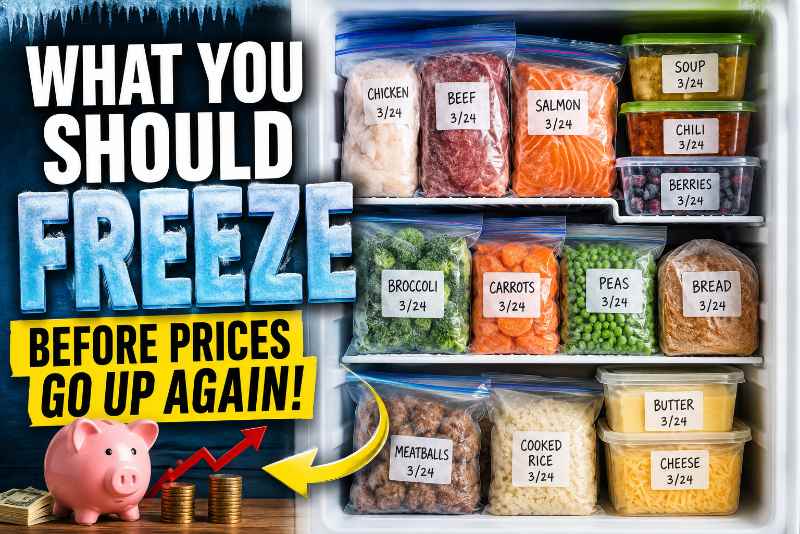
Food prices can change quickly, but a carefully stocked freezer can help protect your weekly grocery budget.
Instead of paying full price whenever you need something, you can buy frequently used foods when they are reduced, divide them into sensible portions and freeze them for later.
Many everyday ingredients freeze far better than people realise. Butter, bread, grated cheese, meat, fruit, vegetables and even eggs can all be stored for future meals.
Money-saving idea: Do not buy food simply because it is reduced. Concentrate on ingredients your household already uses, otherwise your freezer can become an expensive collection of forgotten bargains.
Why Freezing Food Can Save You Money
Freezing food allows you to:
- Buy useful ingredients while they are on offer.
- Make the most of yellow-sticker reductions.
- Prevent bread, fruit and vegetables from being wasted.
- Prepare inexpensive meals for busy evenings.
- Keep seasonal produce for longer.
- Reduce expensive last-minute shopping trips.
A freezer works particularly well alongside a well-stocked cupboard. Before buying large quantities, look through The Survival Pantry: 25 Foods That Last Longer Than You Think. It can help you decide which ingredients belong in the freezer and which are better stored in the pantry.
Understanding the Freezer Storage Times
The times in this guide are suggested periods for maintaining the best flavour, texture and overall quality in a freezer kept at approximately -18°C or colder.
Food that remains completely frozen may last beyond these periods, but it can gradually become dry, discoloured or affected by freezer burn.
Important freezer rules
- Freeze food before its use-by date.
- Follow the storage instructions on the original packaging.
- Cool cooked food promptly before freezing.
- Use freezer-safe bags and containers.
- Label every package with its contents and freezing date.
- Defrost food safely in the refrigerator.
1. Butter 🧈
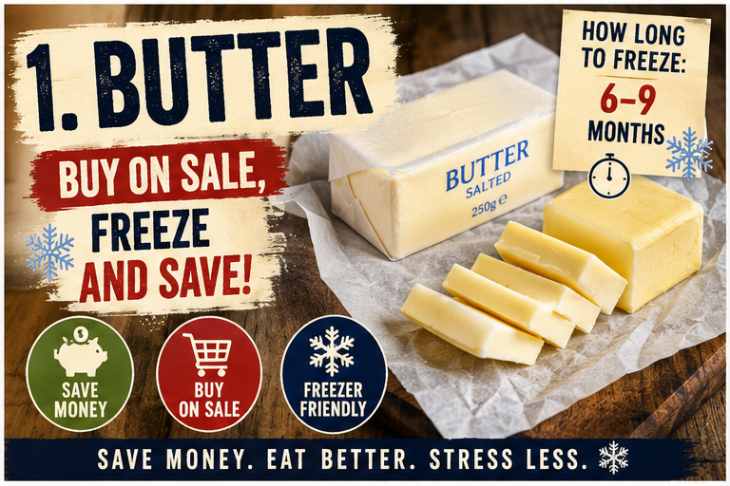
Butter is worth buying when it is reduced, particularly before Christmas and other popular baking periods.
Unopened butter can usually be frozen in its original wrapper. Place it inside an additional freezer bag to stop it absorbing smells from other foods.
Best quality in the freezer: 6 to 9 months
Cut large blocks into smaller portions before freezing so you do not need to defrost the entire packet.
2. Cheese 🧀
Hard and semi-hard cheeses generally freeze better than very soft cheeses.
Good options include:
- Cheddar
- Red Leicester
- Gouda
- Mozzarella
- Parmesan
Hard cheese blocks: up to 6 months
Grated cheese: 3 to 4 months
Mozzarella: 3 to 6 months
Grating cheese before freezing makes it easy to remove a handful for sauces, pizzas, toasties and casseroles.
The texture can become slightly crumbly after thawing, so previously frozen cheese is usually best used in cooked dishes.
3. Bread and Bakery Products 🍞
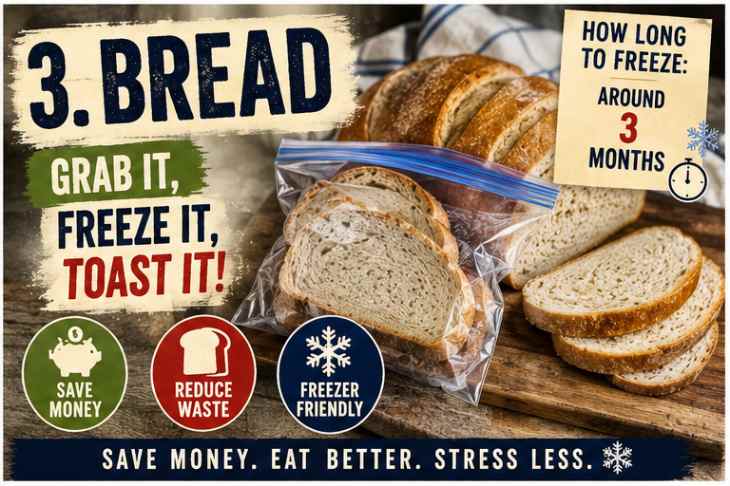
Bread is one of the easiest foods to buy from the reduced section and freeze.
You can freeze:
- Sliced bread
- Bread rolls
- Bagels
- Wraps
- Pitta bread
- Crumpets
- Croissants
Bread and rolls: around 3 months
Wraps and pitta bread: 2 to 3 months
Croissants and pastries: 1 to 2 months
Place small pieces of baking paper between wraps, rolls or pastries if you want to remove them individually.
Individual bread slices can usually go directly from the freezer into the toaster.
You can also save money by baking your own. This No-Knead 4-Ingredient Overnight Bread is a simple option that can be sliced and frozen for later.
4. Milk 🥛
Milk can be frozen, although it may separate slightly as it thaws.
If freezing it in its original plastic container, leave enough room for the liquid to expand. Never freeze a completely full glass bottle.
Best quality in the freezer: around 1 month
Some people keep frozen milk for longer, but the texture is more likely to change after several months.
Defrost it slowly in the refrigerator and shake it thoroughly before using. Previously frozen milk is particularly useful for sauces, porridge, baking and cooking.
5. Eggs, But Not in Their Shells 🥚
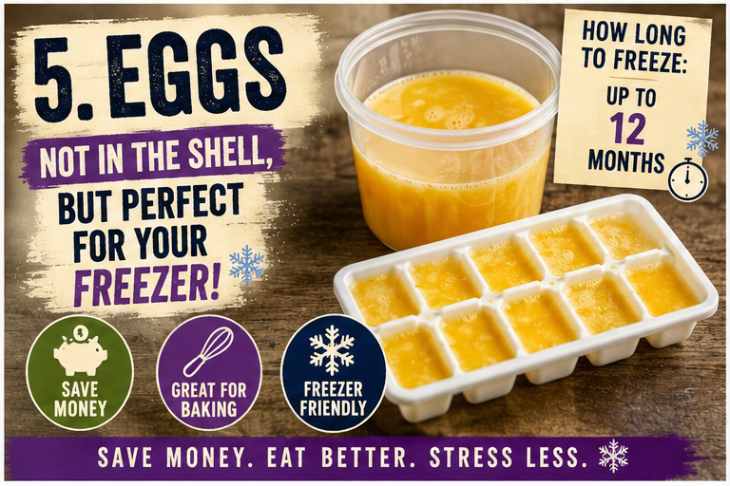
Do not freeze whole eggs inside their shells. The liquid expands as it freezes and can crack the shell.
Instead:
- Crack the eggs into a bowl.
- Lightly beat the yolks and whites together.
- Pour them into a freezer container or ice cube tray.
- Write the number of eggs on the label.
Whole beaten raw eggs: up to 12 months
Raw egg whites: up to 12 months
Freeze them in one-egg or two-egg portions to make future baking easier. Defrost frozen eggs in the refrigerator before cooking.
6. Fresh Herbs 🌿
Fresh herbs often wilt before the whole packet has been used.
Chop parsley, coriander, chives, basil or other cooking herbs and place them in an ice cube tray. Cover them with a little water or cooking oil before freezing.
Best quality in the freezer: 4 to 6 months
Frozen herbs lose their crisp texture, so they are better added to soups, stews, sauces and cooked meals than used as a fresh garnish.
7. Cooked Rice and Pasta 🍚
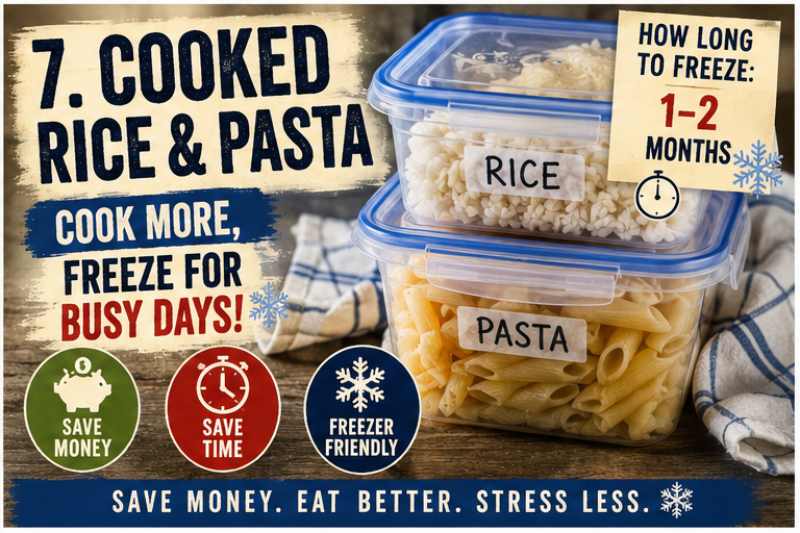
Cooking a larger batch can save time and reduce the amount of energy used preparing future meals.
Cooked rice: 1 to 2 months
Cooked pasta: 1 to 2 months
Pasta with sauce: 2 to 3 months
Cool cooked rice promptly, divide it into shallow meal-sized portions and freeze it quickly. Reheat it until steaming hot throughout and only reheat it once.
Cooked pasta freezes best when it is slightly firm rather than overcooked. Adding a small amount of sauce can help prevent it from drying out.
For more inexpensive ways to use rice, pasta and other basic ingredients, see 15 Meals You Can Make for Under $1 Per Person.
8. Fresh Fruit 🍓
Freezing fruit is a brilliant way to save produce that is becoming too ripe.
Good fruits to freeze include:
- Strawberries
- Raspberries
- Blueberries
- Blackberries
- Bananas
- Mango
- Pineapple
- Sliced apples
- Cherries
Most frozen fruit: 8 to 12 months
Bananas: around 3 months for best quality
Sliced apples: 8 to 12 months
Wash and dry the fruit first. Spread individual pieces across a tray and freeze them until firm before transferring them into a bag. This stops everything freezing together in one large lump.
Overripe bananas can also be preserved by making homemade banana jam.
9. Vegetables 🥦
Vegetables are ideal for stocking up on when they are inexpensive, seasonal or reduced.
Good vegetables to freeze include:
- Broccoli
- Carrots
- Peas
- Sweetcorn
- Green beans
- Cauliflower
- Spinach
- Peppers
Most blanched vegetables: 8 to 12 months
Peppers and onions: around 6 to 8 months
Leafy greens: 8 to 12 months
Many vegetables benefit from being briefly blanched in boiling water and then placed in iced water before freezing. This process can help retain their colour, flavour and texture.
Not every vegetable needs to go into the freezer. Potatoes, onions, carrots and winter squash can sometimes be kept using a suitable root cellar storage system.
10. Cooked Chicken and Turkey 🍗
Leftover roast chicken and turkey are extremely useful freezer ingredients.
Remove the meat from the bones and divide it into small portions for:
- Soups
- Curries
- Sandwich fillings
- Pasta dishes
- Pies
- Casseroles
Cooked chicken or turkey pieces: around 4 months
Cooked poultry in gravy or sauce: around 6 months
Chicken stock or broth: 2 to 3 months
Cool leftovers promptly and place them in airtight freezer-safe containers.
11. Minced Meat, Sausages and Other Meat 🥩
Meat can be one of the most expensive parts of a grocery shop, so supermarket promotions and reduced-price packs are worth watching.
Raw minced beef, pork, lamb or turkey: 3 to 4 months
Raw sausages: 1 to 2 months
Steaks and chops: 4 to 12 months
Raw roasting joints: 4 to 12 months
Cooked meat leftovers: 2 to 3 months
Divide larger packets into meal-sized portions before freezing. Remove as much air as possible from the packaging to reduce freezer burn.
Avoid this mistake: Do not freeze one enormous packet if you will only need a small amount at a time. Defrosting individual portions is easier, quicker and less wasteful.
12. Homemade Meals and Leftovers 🍲
Batch cooking is one of the best ways to fill your freezer without depending on costly ready meals or takeaways.
Good freezer meals include:
- Chilli
- Curry
- Lasagne
- Cottage pie
- Sausage casserole
- Stew
- Soup
- Pasta sauce
Most homemade meals: 2 to 3 months
Cooked leftovers: 3 to 4 months
Soups and stews: 2 to 3 months
Freeze meals in individual or family-sized portions so you only defrost what you need.
If you want to prepare several meals at once, these batch-cooking and freezer-meal ideas provide more ways to cook once and eat several times.
You may also enjoy 20 Things Frugal People Make Instead of Buy, which includes freezer meals and other everyday money-saving ideas.
13. Stock, Broth and Cooking Sauces 🥣
Homemade stock is a useful way to make the most of chicken bones, vegetable trimmings and leftover herbs.
Freeze it in:
- Ice cube trays
- Silicone muffin trays
- Small freezer containers
- Flat freezer bags
Homemade stock or broth: 2 to 3 months
Tomato-based cooking sauces: 3 to 4 months
Gravy: 2 to 3 months
Once stock cubes are frozen solid, transfer them into a labelled freezer bag. You can then remove one or two cubes whenever a recipe needs extra flavour.
14. Baking Ingredients and Homemade Treats 🍰
Freezing homemade baking means you can prepare ahead and avoid buying expensive last-minute treats.
You can freeze:
- Cookie dough
- Cake layers
- Muffins
- Brownies
- Scones
- Pastry dough
- Breadcrumbs
Cookie dough: 2 to 3 months
Baked cakes: 2 to 4 months
Muffins and scones: 2 to 3 months
Brownies: around 3 months
Breadcrumbs: 3 to 6 months
Wrap baked goods carefully to prevent them from drying out or absorbing other freezer smells.
15. Nuts and Seeds 🥜
Nuts and seeds contain natural oils that can eventually become stale or rancid when kept in a warm cupboard.
Good options for freezing include:
- Walnuts
- Almonds
- Pecans
- Hazelnuts
- Pumpkin seeds
- Sunflower seeds
Shelled nuts: 6 to 12 months
Seeds: approximately 6 to 12 months
Ground nuts or nut meal: 3 to 6 months
Store them in airtight freezer bags or containers and remove only the amount needed.
Quick Freezer Storage Guide
| Food | Best Freezer Time | Useful Tip |
|---|---|---|
| Butter | 6 to 9 months | Freeze in smaller blocks. |
| Hard cheese | Up to 6 months | Grate before freezing. |
| Bread | Around 3 months | Freeze individual slices. |
| Milk | Around 1 month | Leave room for expansion. |
| Beaten raw eggs | Up to 12 months | Never freeze eggs in shells. |
| Fresh herbs | 4 to 6 months | Freeze in water or oil. |
| Cooked rice | 1 to 2 months | Cool and freeze promptly. |
| Most fruit | 8 to 12 months | Tray-freeze pieces first. |
| Most vegetables | 8 to 12 months | Blanch suitable vegetables. |
| Cooked chicken | Around 4 months | Remove meat from the bones. |
| Minced meat | 3 to 4 months | Divide into meal portions. |
| Raw sausages | 1 to 2 months | Remove excess packaging air. |
| Homemade meals | 2 to 3 months | Freeze in serving portions. |
| Stock and broth | 2 to 3 months | Freeze small cooking portions. |
| Nuts and seeds | 6 to 12 months | Use an airtight container. |
Freezer Storage Tips That Save Even More
Label Everything
Write the name of the food, freezing date and number of portions on every bag or container.
Freeze Food Flat
Soups, sauces, minced meat and chopped vegetables can often be frozen flat in freezer bags. Once solid, the bags can be stored upright like files.
Remove Excess Air
Air encourages freezer burn. Press excess air from freezer bags before sealing them or use a vacuum sealer where practical.
Use Older Food First
Place newly frozen food behind older packages. A freezer inventory on the door can help prevent forgotten food from being wasted.
Freeze Sensible Portions
Avoid freezing a large quantity together unless you intend to use all of it at once.
Reuse Suitable Containers
Clean containers can reduce the amount you need to spend on storage. These 12 Things Frugal People Still Save in Glass Jars offer additional low-cost storage ideas.
However, only use containers that are genuinely freezer-safe. Ordinary glass jars may crack when liquids expand.
Common Freezing Mistakes to Avoid
- Freezing food that is already spoiling: Freezing does not restore freshness or make unsafe food safe.
- Forgetting to label packages: Unlabelled food can quickly become an unidentified freezer mystery.
- Using weak packaging: Thin bags and poorly fitting lids allow air to reach the food.
- Freezing huge portions: Smaller portions are easier to defrost and less likely to be wasted.
- Keeping food too long: Rotate your stock and use older items first.
- Overloading the freezer at once: Adding too much unfrozen food can slow the freezing process.
- Assuming every food freezes well: Lettuce, cucumber and some creamy sauces can become watery or separated.
Frequently Asked Questions
How long can food stay frozen?
The recommended times in this article are primarily for maintaining the best taste and texture. Food that remains completely frozen may last longer, but its quality can gradually decline.
Can I freeze food on its use-by date?
Food can generally be frozen up to its use-by date provided it has been stored correctly and remains safe to eat. Label it clearly so you know when it entered the freezer.
Can I freeze an opened packet of food?
Usually, yes. Transfer the food into suitable airtight packaging and freeze it before the use-by date.
Can thawed food be frozen again?
Avoid refreezing fully thawed raw food in the same state. A previously frozen raw ingredient can often be cooked and then frozen as part of a completed meal, provided it has been handled safely.
What are the best foods to freeze to save money?
Meat, butter, grated cheese, bread, vegetables and complete homemade meals often produce the most noticeable savings because households use them regularly.
What should I buy first?
Start with ingredients you already purchase every week. A freezer full of heavily reduced food is not a saving if your household never eats it.
How can I prevent freezer burn?
Use strong airtight packaging, remove excess air, label food clearly and avoid repeatedly opening containers.
Is a full freezer cheaper to run?
A reasonably full freezer can hold its temperature more steadily than an almost empty one, but cold air must still be able to circulate. Do not pack it so tightly that vents are blocked.
Final Thoughts
Your freezer is one of the most useful money-saving tools in your home.
Buying food while it is reduced, freezing it in sensible portions and using it before its quality declines can reduce grocery costs without relying on extreme stockpiling.
Start with a few ingredients your household uses every week. Reduced loaves, blocks of butter, grated cheese, portions of meat and homemade meals can soon create a practical supply of food bought at yesterday’s prices.
Combine your freezer supply with long-lasting pantry ingredients, careful meal planning and homemade food. Over time, these small habits can make rising grocery prices easier to manage.