

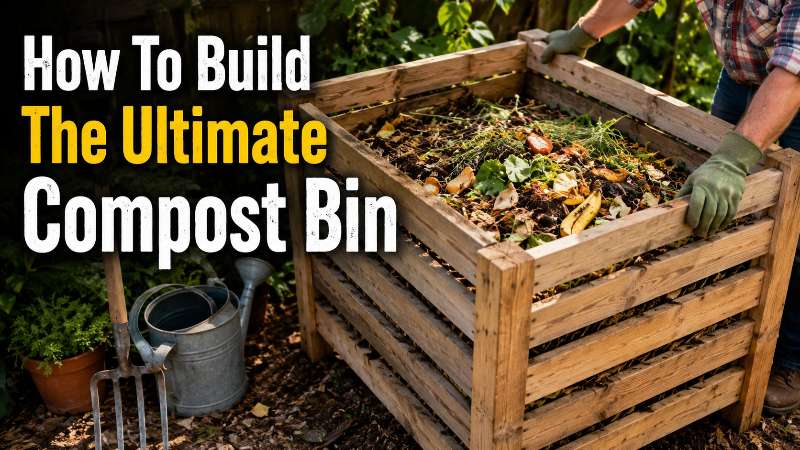
How To Build The Ultimate Compost Bin
Make sure to like Living Green and Frugally on Facebook, Shop at Amazon to help support my site and explore our PINTEREST BOARDS for innovative ways you can become self-sufficient.
Turn Kitchen Scraps And Garden Waste Into Black Gold 🌱
If you have ever thrown away vegetable peelings, grass clippings, eggshells, cardboard, or dead leaves and thought, “Surely there has to be a better use for this,” you were right.
A compost bin is one of the simplest, cheapest, and most rewarding things you can build for your garden. It turns everyday waste into rich, crumbly compost that your plants will absolutely love. Even better, it saves money, reduces rubbish, improves your soil, and makes your garden feel far more self-sufficient.
The best part? You do not need an expensive shop-bought composting system. With a few basic materials and a bit of planning, you can build the ultimate compost bin at home and start turning scraps into garden gold. 🪱
Whether you have a large garden, a small backyard, or just want a practical way to reuse organic waste, this guide will walk you through how to build a strong, useful, and beginner-friendly compost bin that actually works.
Why Build Your Own Compost Bin?
A homemade compost bin is more than just a place to dump garden waste. It is a mini soil factory.
When food scraps, leaves, grass, and other natural materials break down, they create compost packed with nutrients and helpful microorganisms. This improves your garden soil naturally without needing to rely as much on bagged compost or chemical feeds.
Building your own compost bin also gives you full control over the size, shape, and style. You can make it fit your space, your budget, and the amount of waste your household produces.
Here is why it is worth doing:
- Saves money: Less need to buy compost, soil improver, or garden feed.
- Reduces waste: Kitchen scraps and garden clippings stay out of the bin.
- Improves soil health: Compost helps soil hold moisture and nutrients.
- Supports plant growth: Healthier soil usually means stronger plants.
- Great for beginners: Composting is simple once you understand the basics.
- Perfect for frugal gardeners: You are turning rubbish into something valuable.
Honestly, once you start composting, it feels strange to throw organic waste away again.
What Makes The Ultimate Compost Bin?
The best compost bin is not always the prettiest or most expensive. The ultimate compost bin is one that is:
- Easy to fill
- Easy to turn
- Well ventilated
- Protected from pests
- Big enough to heat up
- Simple to empty when the compost is ready
A good compost bin needs airflow, moisture, and a balance of green and brown materials. It also needs to be practical enough that you will actually use it.
That is the secret. A compost bin only works well when it fits into your routine.
Best Materials To Use
You can build a compost bin from several different materials, depending on what you already have.
Good options include:
- Wooden pallets: Cheap, sturdy, and easy to turn into a square bin.
- Scrap timber: Great if you want a custom size.
- Wire mesh: Useful for airflow and keeping larger waste contained.
- Old fencing panels: A brilliant reuse project.
- Plastic storage bins: Good for small gardens, but they need drainage and air holes.
- Bricks or blocks: Strong and long lasting, though less easy to move.
For most people, wooden pallets are one of the best choices. They are affordable, simple to find, and already have gaps that allow air to move through the pile.
Where To Put Your Compost Bin
Location matters more than people think.
Place your compost bin somewhere that is easy to reach, but not directly in the way. You want it close enough that you will use it regularly, especially when carrying kitchen scraps outside.
The ideal spot is:
- On soil or grass: This allows worms and microorganisms to move into the pile.
- Partly shaded: Too much sun can dry it out too quickly.
- Well drained: Avoid places that turn soggy after rain.
- Easy to access: You need space to add waste and turn the compost.
- Away from wooden fences if very wet: Constant damp can shorten the life of nearby timber.
If you can, place the bin near your vegetable patch or garden beds. That way, when the compost is ready, you will not have to carry it far.
How To Build The Ultimate Compost Bin Using Pallets
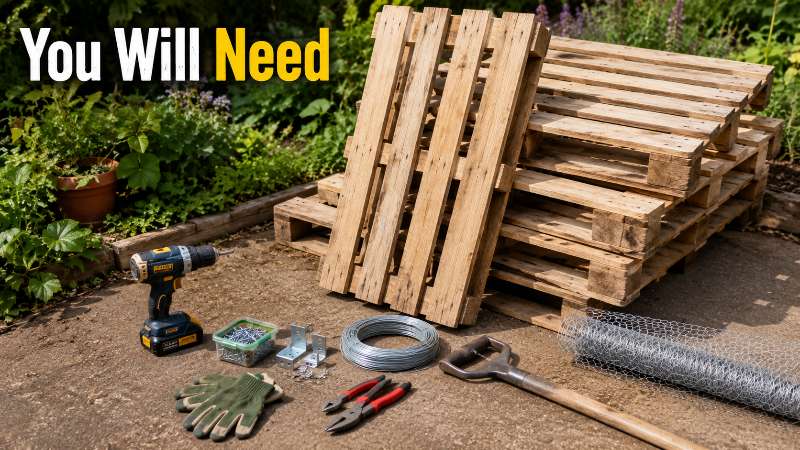
This is one of the easiest and most practical compost bin designs.
You Will Need
- 4 wooden pallets
- Strong garden wire, screws, or brackets
- Drill or screwdriver
- Wire cutters if using garden wire
- Optional lid made from wood, corrugated sheet, or old tarp
- Optional chicken wire for extra pest protection
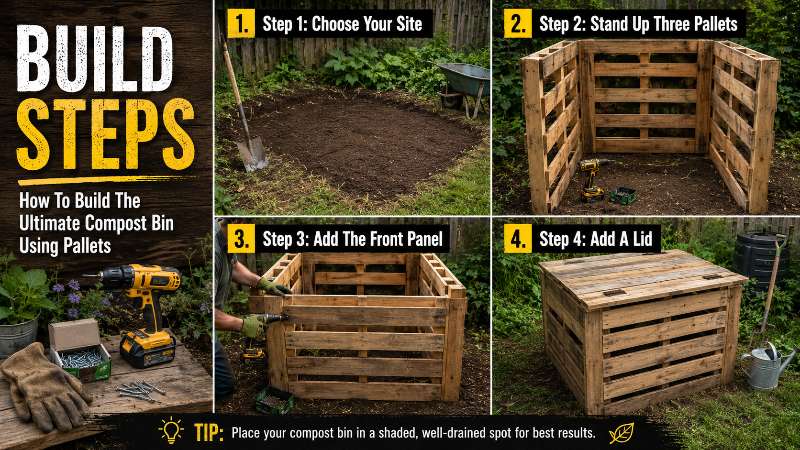
Step 1: Choose Your Site
Pick a flat area directly on soil if possible. Clear away weeds, stones, or anything that might make the pallets sit unevenly.
A level base helps the bin stay sturdy.
Step 2: Stand Up Three Pallets
Place three pallets upright to form the back and two sides of a square or rectangle.
Secure the corners together using screws, brackets, or strong garden wire. Make sure the structure feels solid because compost gets heavy once the bin starts filling up.
Step 3: Add The Front Panel
- The front pallet can be fixed in place, but it is better if you make it removable or hinged.
Why?
- Because when the compost is ready, you will want easy access to shovel it out.
- You can attach the front pallet loosely with wire loops, hinges, or hooks. This makes emptying the bin much easier later.
Step 4: Add A Lid
- A lid is optional, but very useful.
- It helps keep heavy rain from soaking the compost, stops it drying out too quickly in hot weather, and can help keep animals away.
- You can use:
- A piece of plywood
- Old roofing sheet
- A tarp weighted down with bricks
- Spare pallet wood
- The lid does not need to be fancy. It just needs to protect the pile while still allowing some airflow.
Step 5: Add Pest Protection If Needed
If you are worried about rodents, line the inside with chicken wire or hardware cloth. Pay special attention to the bottom and corners.
Avoid adding cooked food, meat, dairy, greasy leftovers, and bread-heavy waste, as these can attract pests.
What To Put In Your Compost Bin
For good compost, you need a balance of greens and browns.
Greens are moist, nitrogen-rich materials. Browns are dry, carbon-rich materials.
Greens Include
- Vegetable peelings
- Fruit scraps
- Coffee grounds
- Tea leaves
- Grass clippings
- Fresh plant trimmings
- Spent flowers
Browns Include
- Dry leaves
- Cardboard
- Paper egg boxes
- Shredded paper
- Straw
- Small twigs
- Wood chips
- Dead plants
A good rule is to add roughly two parts browns to one part greens. This helps stop the bin from smelling and keeps the compost breaking down nicely.
What Not To Put In Your Compost Bin
Some things are better left out.
Avoid adding:
- Meat
- Fish
- Dairy
- Oily food
- Cooked leftovers
- Pet waste from cats or dogs
- Diseased plants
- Glossy paper
- Plastic-coated cardboard
- Large branches unless chopped small
- Weeds full of seeds if your pile does not get hot enough
- Putting the wrong things in your bin can cause smells, pests, and slow composting.
How To Keep Your Compost Bin Working
A compost bin needs three main things: air, moisture, and balance.
Turn It Regularly
Turning the compost adds oxygen, which helps everything break down faster. Use a garden fork to mix the pile every week or two.
If you do not turn it often, it will still compost, but it may take longer.
Keep It Moist
Compost should feel like a damp sponge. Not dripping wet, but not bone dry either.
If it is too dry, add water or more green materials.
If it is too wet, add dry browns like cardboard, leaves, or shredded paper.
Chop Materials Smaller
Smaller pieces break down faster. Crush eggshells, tear cardboard, and cut up thick stems before adding them.
This one small step can make a big difference.
Signs Your Compost Bin Is Working
- A healthy compost bin should:
- Smell earthy, not rotten
- Feel warm in the middle
- Have worms and bugs working through it
- Shrink down over time
- Turn dark and crumbly as it matures
- If it smells bad, it probably has too many greens or too much moisture. Add browns and turn the pile.
- If nothing is happening, it may be too dry or too low in greens. Add fresh grass clippings, vegetable scraps, or coffee grounds.
How Long Does Compost Take?
Compost can take anywhere from 3 months to 12 months, depending on the materials, weather, size of the pile, and how often you turn it.
A hot, well-managed compost bin can work quickly. A cold, slow pile still works, but it needs patience.
Your compost is ready when it looks dark, crumbly, and smells like fresh soil. You should not be able to easily recognise most of the original materials.
Tips To Make Your Compost Bin Even Better 🌿
- Keep a small kitchen caddy indoors for scraps.
- Add cardboard whenever you add lots of wet food waste.
- Avoid dumping thick layers of grass clippings because they can turn slimy.
- Turn the pile after heavy rain.
- Keep a pile of dry leaves nearby for easy browns.
- Build two bins if you have space, one for fresh waste and one for finishing compost.
- Add a simple sign or label if you want it to look more organised.
- Do not panic if it looks messy at first. Composting is forgiving.
Common Questions About Building A Compost Bin
Does a compost bin need a bottom?
Not always. In fact, placing it directly on soil is often better because worms and microorganisms can move in naturally. If pests are a problem, add wire mesh underneath.
Will my compost bin smell?
A healthy compost bin should not smell bad. If it smells rotten, it is usually too wet or has too many green materials. Add dry browns and turn it.
Can I compost in winter?
Yes. Composting slows down in cold weather, but it does not completely stop. Keep adding materials and it will speed up again when temperatures rise.
Do I need worms?
You do not have to add worms, but they often find their own way in if the bin is on soil. Worms help break everything down faster.
Can I put weeds in my compost bin?
You can compost weeds, but avoid weeds that have gone to seed unless your compost pile gets hot enough to kill them.
How big should a compost bin be?
A good size for many gardens is around 3 feet wide, 3 feet deep, and 3 feet high. This gives the pile enough volume to heat up while still being manageable.
Can I use cardboard in compost?
Yes, plain cardboard is excellent. Tear it into smaller pieces first and avoid shiny or plastic-coated cardboard.
Final Thoughts
Building the ultimate compost bin does not have to be complicated or expensive. With a few pallets, some simple tools, and the right mix of garden and kitchen waste, you can create a compost system that saves money, reduces waste, and feeds your garden naturally.
The real magic is watching scraps turn into something useful. Yesterday’s peelings, leaves, and cardboard become tomorrow’s rich soil improver. That is frugal living, gardening, and self-sufficiency all rolled into one. 🌱
Once your compost bin is up and running, you may wonder why you did not build one sooner.