

The Old School Gardening Trick That’s Suddenly Making a Comeback
Make sure to like Living Green and Frugally on Facebook, Shop at amazon to help support my site and explore our PINTEREST BOARDS for innovative ways you can become self-sufficient.
For years, gardeners were told that modern solutions were better. Buy the latest raised beds. Use expensive fertilizers. Install fancy watering systems. But now, thousands of gardeners are turning back to a simple old school gardening trick that our grandparents used without even thinking twice about it.
And the strange thing? It actually works better than many modern methods.
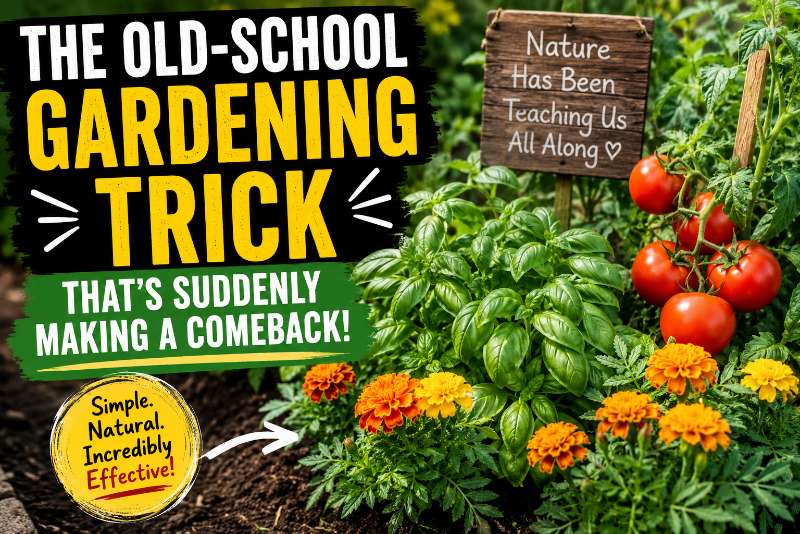
The gardening trick making a huge comeback is companion planting.
What was once seen as old fashioned is suddenly everywhere again on Facebook, Pinterest, YouTube, and backyard gardens across the country. People are discovering that certain plants naturally help each other grow better, fight pests, improve flavor, and even increase harvests without expensive chemicals or complicated setups.
Gardeners are now realizing something important. Sometimes the “old ways” survived for generations for a reason 🌼
If your tomatoes always struggle, your lettuce bolts too quickly, or pests seem to destroy everything overnight, this old school gardening trick could completely change how you grow food this year.
And the best part? It costs almost nothing to try.
What Is Companion Planting? 🌿
Companion planting is the practice of growing certain plants close together because they naturally benefit one another.
Farmers and gardeners have used this method for hundreds of years. Before synthetic sprays and fertilizers existed, people relied on nature itself to keep gardens healthy.
Some plants repel harmful insects.
Some attract pollinators.
Some improve soil quality.
Others even make neighboring vegetables taste better.
It sounds almost too simple, but companion planting is based on observing how plants behave together in nature.
For example:
- Basil planted near tomatoes may help repel pests
- Marigolds are known for helping deter unwanted insects
- Beans can help add nitrogen back into the soil
- Nasturtiums often attract pests away from vegetables like a “trap crop”
This old school gardening trick works with nature instead of fighting against it 🌻
Why Companion Planting Is Suddenly So Popular Again
People are becoming tired of spending loads of money on gardening products that promise miracles.
At the same time, rising food costs have pushed more families to grow their own food at home. Many beginner gardeners are discovering that natural gardening methods often create healthier plants with less effort.
Social media has also played a huge role.
Garden photos showing giant tomato harvests beside basil plants or pest free vegetable beds filled with flowers have sparked huge curiosity online.
And honestly, people love the idea that something their grandparents used decades ago still works today.
There is also something satisfying about gardening in a more natural, traditional way 🌼
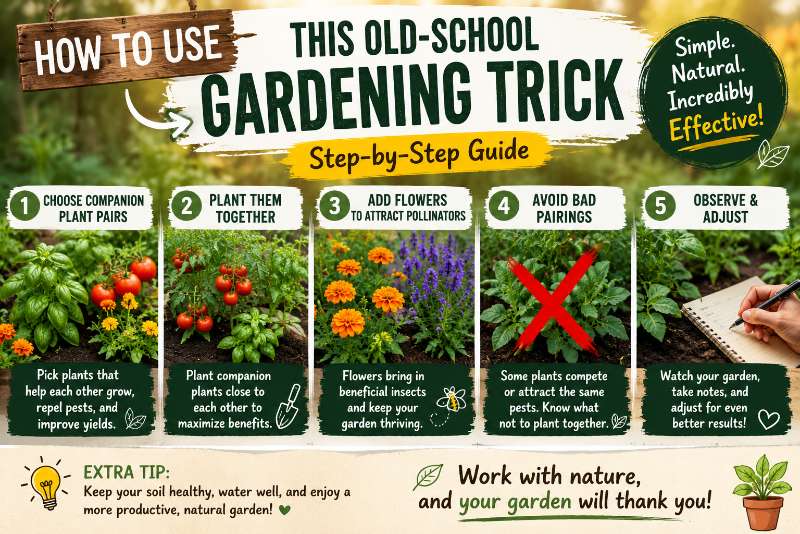
How To Use This Old School Gardening Trick In Your Garden
You do not need a massive garden or expert knowledge to start companion planting.
Even a few containers on a patio can benefit.
Step 1: Start With Easy Companion Pairs
Beginners should keep things simple.
Here are some classic combinations:
Tomatoes + Basil 🍅
This is probably the most famous companion planting pair.
Basil may help repel pests while also attracting pollinators. Many gardeners also believe it improves tomato flavor.
Carrots + Onions 🧅
Onions can help confuse carrot flies, while carrots do not compete heavily for space.
Cucumbers + Nasturtiums 🌼
Nasturtiums attract aphids away from cucumber plants.
Corn + Beans 🌽
Beans naturally add nitrogen into the soil, helping feed heavy growing corn plants.
Lettuce + Tall Plants 🥬
Lettuce benefits from afternoon shade provided by taller vegetables.
Step 2: Add Flowers To Your Vegetable Garden
One huge mistake many modern gardeners make is growing vegetables alone.
Old school gardens often mixed flowers and food together naturally.
Flowers attract bees, butterflies, and helpful insects.
Some excellent companion flowers include:
- Marigolds
- Calendula
- Nasturtiums
- Sunflowers
- Borage
A vegetable garden filled with flowers also looks far more inviting and beautiful 🌻
Step 3: Avoid Bad Plant Pairings
Not every plant gets along.
Some compete for nutrients or attract similar pests.
A few common pairings to avoid include:
- Tomatoes near potatoes
- Onions near beans
- Fennel near most vegetables
- Carrots near dill
Researching simple plant combinations before planting can save a lot of frustration later.
Step 4: Observe Your Garden
One thing old school gardeners did exceptionally well was paying attention.
Watch what happens.
Do certain plants stay healthier together?
Are insects avoiding one area?
Do some vegetables grow faster side by side?
Gardening becomes far more enjoyable when you treat it like an experiment 🌱
Why This Matters 🌿
Companion planting is about more than just growing vegetables.
It encourages a healthier, more balanced garden ecosystem.
Here are some of the biggest benefits:
- Can reduce pests naturally without harsh chemicals
- Improves pollination from bees and butterflies
- Helps maximize small garden spaces
- May improve soil health
- Creates healthier and stronger plants
- Can reduce the need for fertilizers
- Makes gardens more beautiful and diverse
- Encourages sustainable gardening habits
- Helps beginners succeed more easily
- Saves money over time 💰
In a world where everything seems to require expensive products and gadgets, this old school gardening trick feels refreshingly simple.
Practical Tips For Success 🌼
Use Companion Planting In Containers
You do not need raised beds or a huge allotment.
A tomato plant with basil growing beneath it works perfectly in a large container.
Mix Heights Together
Tall plants can protect delicate crops from intense summer heat.
Think of your garden in layers.
Rotate Crops Each Year
Old school gardeners rarely planted the same thing in the same spot every year.
Crop rotation helps prevent pests and soil problems.
Keep Notes
One secret many successful gardeners use is a simple notebook.
Write down:
- What worked
- What failed
- Pest problems
- Best harvests
- Favorite plant combinations
Your garden improves every season this way 📖
Common Mistakes To Avoid 🚫
Planting Everything Too Close
Companion planting does not mean overcrowding.
Plants still need airflow and space.
Ignoring Sunlight Needs
Do not pair shade lovers with plants needing full blazing sun all day.
Forgetting Water Requirements
Some plants love damp soil while others prefer drier conditions.
Using Only One Type Of Plant
Old school gardens were usually diverse.
Mixing vegetables, herbs, and flowers creates stronger ecosystems.
Expecting Instant Miracles
Companion planting helps support healthier gardens, but it is not magic.
Healthy soil, watering, and sunlight still matter.

FAQ About Companion Planting 🌱
Does companion planting really work?
Many gardeners swear by it, and some scientific studies support certain benefits such as pest reduction and improved pollination. Results can vary depending on climate and garden conditions.
What is the easiest companion planting combo for beginners?
Tomatoes and basil are one of the simplest and most popular combinations to start with.
Can companion planting reduce pests naturally?
Yes. Some plants help repel insects while others attract beneficial bugs that eat harmful pests.
Does companion planting work in raised beds?
Absolutely. Raised beds are actually excellent for organizing companion planting layouts.
Can I use companion planting in pots?
Yes 🌼 Many herbs, vegetables, and flowers work beautifully together in containers.
Is companion planting organic gardening?
It is commonly used in organic gardening because it focuses on natural methods rather than chemicals.
What flowers are best for vegetable gardens?
Marigolds, nasturtiums, calendula, and borage are all popular choices.
How long has companion planting existed?
People have used companion planting for centuries. Many traditional farming cultures relied on it long before modern gardening products existed.
Conclusion 🌻
It is funny how often the “newest” gardening trends are actually old ideas making a comeback.
Companion planting proves that simple methods still have incredible value today.
This old school gardening trick is affordable, practical, beginner friendly, and surprisingly effective. It turns gardening into something more natural, balanced, and rewarding.
And honestly, there is something satisfying about using methods passed down through generations instead of relying on expensive quick fixes.
This year, instead of buying another gadget or chemical spray, try planting smarter.
Add flowers beside your vegetables.
Mix herbs into your containers.
Experiment with classic companion planting combinations.
You might be shocked at how much healthier and more productive your garden becomes 🌱
And once you start seeing the results, you will understand exactly why this old school gardening trick is suddenly making a massive comeback.