

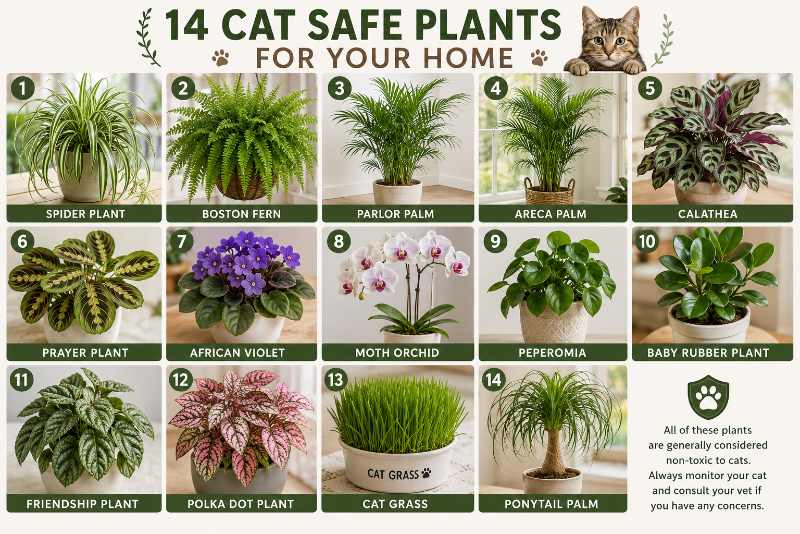
14 Cat Safe Plants For Your Home

Make sure to like Living Green and Frugally on Facebook, Shop at Amazon to help support my site and explore our PINTEREST BOARDS for innovative ways you can become self-sufficient.
There is something lovely about a home filled with plants. They make a room feel fresher, calmer, cosier, and more alive. But if you have a cat, choosing houseplants can feel a bit like walking through a minefield.
One minute you are admiring a beautiful leafy plant in the garden centre, the next you are Googling whether it will upset your cat, poison your cat, or turn into your cat’s new favourite snack.
Because let’s be honest, cats do not respect “this is decorative” as a concept.
They sniff. They nibble. They bat leaves around. They climb into pots. Some cats ignore plants completely, while others act like you have built them a personal salad bar in the living room.
That is why choosing cat safe plants for your home is so important. The good news is you do not have to give up on houseplants just because you have a curious kitty. There are plenty of beautiful, stylish, easy-to-grow plants that are generally considered non-toxic to cats.
This guide shares 14 cat safe plants that can brighten up your home without the same level of worry as many common toxic houseplants.
Important note before we start: “Cat safe” does not mean your cat should eat a whole plant. Even non-toxic plants can cause mild tummy upset if your cat chews too much. If your cat is vomiting, drooling, acting weak, refusing food, or you think they have eaten something dangerous, contact a vet straight away.
Why Cat Safe Plants Matter So Much 🐾
A lot of popular houseplants are not ideal for homes with cats. Some can irritate the mouth and stomach. Others can be far more serious. Lilies, for example, are especially dangerous for cats and should be avoided completely in cat households.
That is why it is worth being careful before bringing a new plant home.
Choosing cat safe plants helps you:
🌿 Make your home look beautiful
🐱 Reduce worry around curious cats
🏡 Create a cosy, natural indoor space
💚 Avoid some of the most risky plant mistakes
🪴 Build a pet-friendly plant collection
You can still have a home full of greenery. You just need to choose wisely.
14 Cat Safe Plants For Your Home
1. Spider Plant 🕷️🌿
The spider plant is one of the best houseplants for cat owners because it is easy, forgiving, and looks lovely in almost any room.
Its long striped leaves arch out beautifully, and once it is happy, it produces little baby plants that hang down like tiny green spiders. Cats often love the movement of the leaves, so this is one plant they may find extra interesting.
Why it is great:
Spider plants are low maintenance, fast growing, and ideal for beginners. They look lovely in hanging baskets, on shelves, or in bright corners.
Care tip:
Keep it in bright, indirect light and water when the top of the soil feels dry. If your cat keeps attacking the dangling baby plants, hang it higher or move it to a shelf.
2. Boston Fern 🌿
Boston ferns have a soft, feathery look that instantly makes a room feel fresh and calming. They are beautiful in bathrooms, kitchens, and shady corners where some other plants might struggle.
They can be a little fussier than spider plants, but they are worth it if you love that lush, cottage-style greenery.
Why it is great:
It adds instant softness and texture to a room without looking too modern or harsh.
Care tip:
Boston ferns like humidity. Mist it occasionally, keep the soil lightly moist, and avoid letting it dry out completely.
3. Parlor Palm 🌴
The parlor palm is a classic indoor plant that brings a gentle tropical feel without being too dramatic. It is perfect if you want a plant that looks elegant but does not take over the whole room.
It grows slowly, which makes it a good choice for smaller homes, shelves, sideboards, and corners.
Why it is great:
It has a timeless look and works well with cosy, rustic, farmhouse, or modern decor.
Care tip:
Give it bright, indirect light, but keep it out of harsh direct sun. Water when the top inch of soil feels dry.
4. Areca Palm 🌴
If you want something bigger and more statement-worthy, the areca palm is a lovely choice. It has tall, arching fronds that make a room feel fresh and holiday-like.
This is a good option for living rooms, conservatories, bright hallways, or spaces that need a bit of height.
Why it is great:
It gives that “indoor jungle” look while still being a cat-friendly choice.
Care tip:
Areca palms prefer bright, indirect light and regular watering. Do not let the soil sit soggy, as palms dislike wet feet.
5. Calathea 🌈
Calatheas are some of the most striking cat safe plants you can grow indoors. Their leaves often have bold patterns, deep greens, purples, pinks, stripes, or painterly markings.
They are sometimes called prayer plants because some varieties move their leaves throughout the day.
Why it is great:
It gives you dramatic foliage without needing flowers. Perfect for adding colour to a plain room.
Care tip:
Calatheas like humidity and do not enjoy drying out too much. Keep them away from cold draughts and direct sun.
6. Prayer Plant 🙏🌿
Prayer plants are closely loved for their patterned leaves and gentle movement. Their leaves can fold slightly upwards in the evening, which gives them their name.
They are smaller than many houseplants, so they work well on shelves, side tables, desks, or windowsills.
Why it is great:
It is decorative, colourful, and perfect if you want something more interesting than a plain green plant.
Care tip:
Keep the soil lightly moist and place it in bright, indirect light. Too much sun can fade or scorch the leaves.
7. African Violet 💜
If you want a cat safe plant that flowers indoors, African violets are a gorgeous option. They have soft, fuzzy leaves and pretty little blooms in shades of purple, pink, blue, or white.
They are compact, cheerful, and ideal for windowsills.
Why it is great:
Many cat safe plants are leafy, but African violets give you colour and flowers too.
Care tip:
Water from the bottom if possible, and avoid soaking the leaves. They like bright, indirect light and a cosy indoor temperature.
8. Moth Orchid 🌸
Orchids look expensive and elegant, but they are often easier to keep than people think. The moth orchid is one of the most common types sold in supermarkets and garden centres.
Its long-lasting flowers make it perfect for coffee tables, bathrooms, bedrooms, and kitchen windowsills.
Why it is great:
It looks beautiful, classy, and gift-worthy, while still being a better choice for cat homes than many flowering plants.
Care tip:
Do not overwater. Orchids usually prefer being watered lightly once the potting mix has nearly dried. Keep them in bright, indirect light.
9. Peperomia 🪴
Peperomia plants come in many shapes, colours, and textures. Some have thick shiny leaves, some have rippled leaves, and some trail beautifully from shelves.
They are compact, easy to fit into small spaces, and great if you want a low-fuss plant.
Why it is great:
It is stylish, small, and ideal for windowsills, desks, bathrooms, or plant shelves.
Care tip:
Peperomia does not like being overwatered. Let the top layer of soil dry before watering again.
10. Baby Rubber Plant 🌱
The baby rubber plant is a type of peperomia with glossy, rounded leaves. It has a fresh, chunky look and is much more suitable for cat homes than the true rubber plant, which is not the same thing.
This is an important distinction. Always check the exact plant name when buying.
Why it is great:
It gives you that shiny-leaf houseplant look in a more cat-friendly way.
Care tip:
Place it in bright, indirect light and water moderately. It stores some moisture in its leaves, so avoid drowning it.
11. Friendship Plant 🤝🌿
The friendship plant is a cute, textured houseplant with patterned leaves that look slightly quilted. It is a lovely little plant for shelves, plant stands, or windowsills.
It gets its name because it is easy to share from cuttings, making it a sweet plant to pass along to friends and family.
Why it is great:
It is pretty, compact, and has that old-fashioned windowsill charm.
Care tip:
Give it bright, indirect light and keep the soil lightly moist. It enjoys humidity, so it can do well in kitchens or bathrooms.
12. Polka Dot Plant 🎀
The polka dot plant is perfect if you like colourful foliage. Its leaves are often splashed with pink, red, white, or pale green, making it a fun choice for brightening up a room.
It is small, cheerful, and eye-catching.
Why it is great:
It adds colour without needing flowers, and it looks especially lovely in cute pots.
Care tip:
Keep it in bright, indirect light to help maintain its colour. Pinch back leggy growth to keep it bushy.
13. Cat Grass 🌾
Cat grass is not just cat safe. It is grown specifically for cats to nibble. It is usually made from grasses like wheat, oat, barley, or rye.
If your cat keeps chewing your houseplants, cat grass can be a brilliant distraction. It gives them something they are allowed to nibble, which may help protect your other plants.
Why it is great:
It is cheap, easy to grow, and gives your cat their own little indoor garden.
Care tip:
Grow it in a shallow pot near your cat’s usual area. Replace it when it starts looking tired or flattened.
14. Ponytail Palm 🌴
Despite the name, the ponytail palm is not really a true palm. It has a chunky base and long, curly leaves that spill out like a ponytail.
It is quirky, sculptural, and very easy to care for. This is a brilliant choice if you forget to water plants.
Why it is great:
It looks unusual, handles dry conditions well, and adds character to a room.
Care tip:
Let the soil dry out between watering. It stores water in its thick base, so too much water is more of a problem than too little.
Plants Cat Owners Should Be Extra Careful With ⚠️
Even if you fill your home with cat safe plants, it is still useful to know some common plants to avoid.
Be careful with:
- Lilies
- Pothos
- Aloe vera
- Sago palm
- Dieffenbachia
- Peace lily
- Snake plant
- English ivy
- Jade plant
- Daffodils and tulips, especially the bulbs
This does not mean every plant has the same risk level, but it does mean cat owners should check before buying. Never rely only on a plant label at the shop. Common names can be confusing, and two plants with similar names can be completely different.
Simple Tips For Keeping Cats And Plants Happy 🐱🌿
Put tempting plants higher up
Trailing plants and dangly leaves are basically toys to some cats. Use hanging baskets, high shelves, or wall planters where possible.
Give your cat their own plant
Cat grass can help redirect nibbling. If your cat has something safe and tasty to chew, they may leave your other plants alone.
Avoid loose soil temptation
Some cats love digging in pots. Try decorative stones that are too large to swallow, a plant cover, or heavier pots that are harder to tip.
Watch new plants closely
When you bring a new plant home, keep an eye on your cat’s behaviour for the first few days. Some cats ignore plants, while others become obsessed.
Skip chemical sprays
Even if the plant itself is cat safe, pesticides, leaf shine sprays, fertilisers, or soil additives may not be. Keep things simple and pet-conscious.
Check every plant before buying
If you are not 100 percent sure what a plant is, do not bring it home yet. Take a photo of the label, check the exact name, and make sure it is suitable for a cat household.
Common Questions About Cat Safe Plants

Are cat safe plants completely safe if my cat eats them?
Not always. A non-toxic plant is generally considered much safer than a toxic one, but eating too much plant material can still cause vomiting or an upset stomach. If your cat eats a lot of any plant or seems unwell, contact a vet.
What is the best plant for cats that chew everything?
Cat grass is usually the best option because it is grown for cats to nibble. Spider plants are also popular, but some cats find them too tempting, so you may need to hang them out of reach.
Are succulents safe for cats?
Some are, but not all. This is where people can get caught out. Always check the exact type of succulent before bringing it into a home with cats.
Are orchids safe for cats?
Many common moth orchids are considered a cat-safe option, but you should still stop your cat from chewing the flowers or potting mix.
What should I do if my cat eats a toxic plant?
Call your vet straight away. If possible, take a photo of the plant or bring a sample with you. Do not wait for symptoms to get worse, especially with plants known to be dangerous to cats.
Can I have plants if my cat is very curious?
Yes, but you need to be strategic. Choose cat safe plants, avoid the dangerous ones, use hanging planters, provide cat grass, and keep new plants under observation.
Final Thoughts 🌿🐾
You do not have to choose between a beautiful home and a safe home for your cat. With the right plants, you can enjoy greenery, colour, texture, and that cosy indoor garden feeling while making smarter choices for your pet.
The best approach is simple.
Choose plants that are generally considered cat safe. Avoid the most dangerous plants completely. Keep tempting leaves out of reach. Give your cat their own cat grass. And always check the exact plant name before you buy.
A home filled with plants can still be a cat-friendly home. You just need the right greenery.