

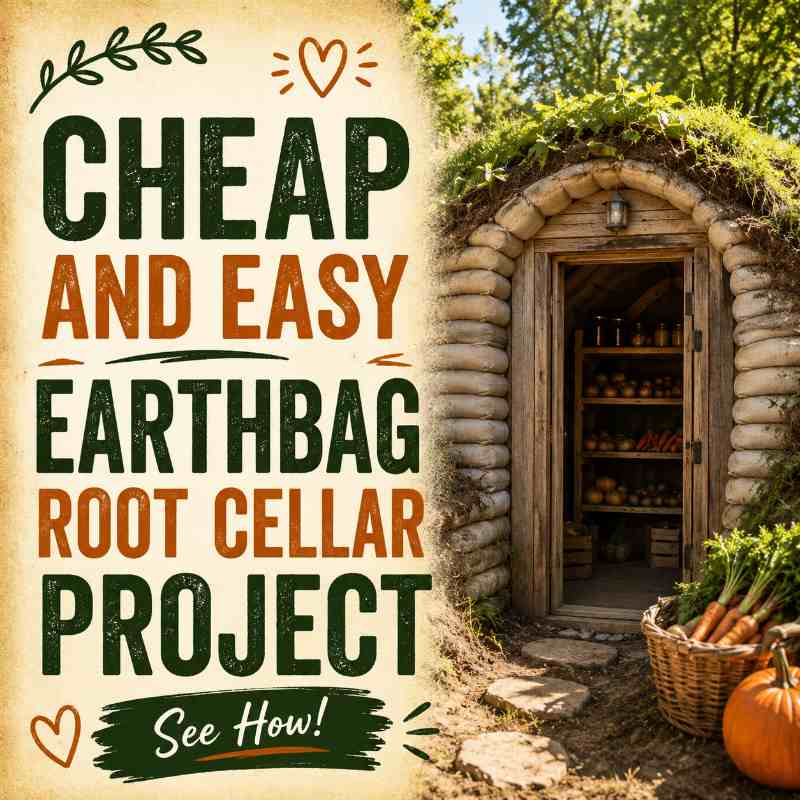
Cheap and Easy Earthbag Root Cellar Project
Make sure to like Living Green and Frugally on Facebook, Shop at Amazon to help support my site and explore our PINTEREST BOARDS for innovative ways you can become self-sufficient.
🥕 Root Cellars: Nature’s Original Refrigerator! 🥔
Before electricity, our ancestors had a genius way to keep their harvest fresh all year round — the root cellar. Think of it as the original fridge, but without the humming motor or monthly energy bill!
A well-built root cellar works by harnessing the earth’s natural insulation. In summer, it can be up to 40°F cooler than the outside air. In winter, it stays just above freezing — perfect for storing potatoes, carrots, apples, onions, and more. This means your home-grown produce can last months longer without losing flavor or nutrients.
💡 Why You’ll Love Having One:
- Cuts food waste – Keeps produce fresher for far longer.
- Energy-free storage – No plug, no power, no problem.
- Year-round self-sufficiency – Always have food ready to use.
- Small-space friendly – Even compact gardens can fit one.
One of the easiest and cheapest ways to build a root cellar is by using earthbags. These are sturdy sacks filled with soil or sand that form the strong, insulating walls of your underground storage. Earthbag root cellars are:
✅ Low-cost – Materials are inexpensive and often locally available.
✅ DIY-friendly – You don’t need a construction crew.
✅ Long-lasting – Once built, they can last for decades.
With just a weekend’s work, you could have your very own off-grid food storage solution — one that will make you feel like you’ve stepped back into a time when life was simpler… and a lot more sustainable.
If you’ve been dreaming of living more self-sufficiently, reducing your grocery bills, and knowing your food is stored naturally, a root cellar is a game-changer. And the best part? You don’t need acres of land or a huge budget to build one.
👉 Click the link to see exactly how to build a cheap and easy earthbag root cellar step-by-step. Cheap and Easy Earthbag Root Cellar Project