

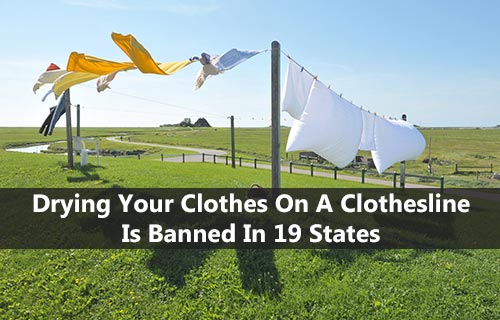
Drying Your Clothes On A Clothesline Banned In 19 States
Make sure to like Living Green and Frugally on Facebook, Shop at Amazon to help support my site and explore our PINTEREST BOARDS for innovative ways you can become self-sufficient.
🌞 Drying Your Clothes On A Clothesline Banned In 19 States?! 😱
Wait… what? You mean to tell me it’s illegal to hang my clothes in the sun?
Yep. Believe it or not, 19 states have banned or heavily restricted the use of clotheslines, especially in neighborhoods controlled by HOAs (Homeowners Associations). If you’re shocked, confused, or a little angry—you’re not alone.
Let’s dive into the why, how, and what you can do about it—plus we’ll answer common questions people have about this sun-drenched scandal ☀️🧺
😮 Why Are Clotheslines Banned in 19 States?
You’d think harnessing the power of the sun to dry your laundry would be celebrated. It’s eco-friendly, free, and gives your clothes that fresh outdoorsy scent. 🌿
But here’s why some states and HOAs say “nope”:
- 👀 Aesthetics: Clotheslines are considered “unsightly” by HOAs and some neighbors who prioritize uniform landscaping and neatness.
- 💸 Property Value Concerns: Some believe visible laundry may reduce nearby home values.
- 🧒 Safety Hazards: There have been concerns (especially in shared housing units) about strangulation risks.
- 🧾 Local Regulations & Covenants: HOAs often bake anti-clothesline rules into their bylaws, which homeowners unknowingly agree to when moving in.
But let’s be honest… these reasons feel outdated in an age where we’re all being urged to save energy and reduce our carbon footprint. 🌍
📜 The 19 States That Have Banned (Or Severely Restricted) Clotheslines
Here’s the current list of states where clothesline bans are either allowed under HOA rules or supported by law:
- California
- Florida
- Texas
- Colorado
- Utah
- Nevada
- Illinois
- Louisiana
- Maine
- Massachusetts
- North Carolina
- South Carolina
- Hawaii
- Oregon
- Washington
- Wisconsin
- Idaho
- Virginia
- Delaware
In many cases, the state itself doesn’t directly ban clotheslines—but it allows HOAs or landlords to enforce bans. That’s where things get tricky.
⚖️ What About the Solar Rights Act?
Great question! 🌞
The Solar Rights Act, passed in several states (including California), was designed to protect homeowners’ rights to install solar energy systems. While the act primarily focuses on solar panels, its spirit has been extended by environmental advocates to include clotheslines, which are essentially solar-powered drying machines!
📣 Activists argue that banning clotheslines is just as bad as banning solar panels—both block homeowners from using clean, renewable energy.
🛠️ How to Dry Your Clothes Outside (Even If It’s “Banned”)
If you live in a state or neighborhood with restrictions, don’t panic yet! Here are some clever workarounds:
- 🧺 Use retractable or portable clotheslines: These can be taken down when not in use—perfect for appeasing picky HOAs.
- 🪟 Hang indoors near windows or on balconies: Sunlight still does the job even through a window!
- 🌲 Hide lines in your backyard: Some homeowners find discreet spots behind fences or shrubs.
- 📜 Check your HOA agreement: Many bans are unenforceable or open to negotiation.
- 👩⚖️ Know your rights: In some states, solar rights laws protect your ability to dry clothes naturally. Challenge bans if needed!
💡 Why You Should Fight for Your Right to Line Dry
Still not convinced it’s worth the battle? Here’s why line-drying matters:
- ✅ Save Money: Dryers use a TON of electricity. Line-drying = $0 energy cost.
- 🌱 Eco-Friendly: Helps cut carbon emissions. The EPA says dryers account for 6% of household electricity use!
- 👕 Clothes Last Longer: No heat damage = better fabric life.
- 😌 Peace of Mind: Enjoy quiet, unplugged moments while hanging laundry outside.
- 🌸 Fresh Smell: Nothing beats that crisp outdoor scent!
💬 Common Questions People Ask About Clothesline Bans
❓ Is it really illegal to hang clothes in my backyard?
In some states, it’s not the state law but HOA rules or local ordinances that enforce the ban. These rules may carry legal weight, especially in private communities.
❓ What happens if I break the rule?
You might get a warning or fine from your HOA. In extreme cases, repeated violations can lead to legal disputes—but many homeowners have successfully challenged these in court or local hearings.