

20 Things Frugal People Do in November to Save Money Before Christmas
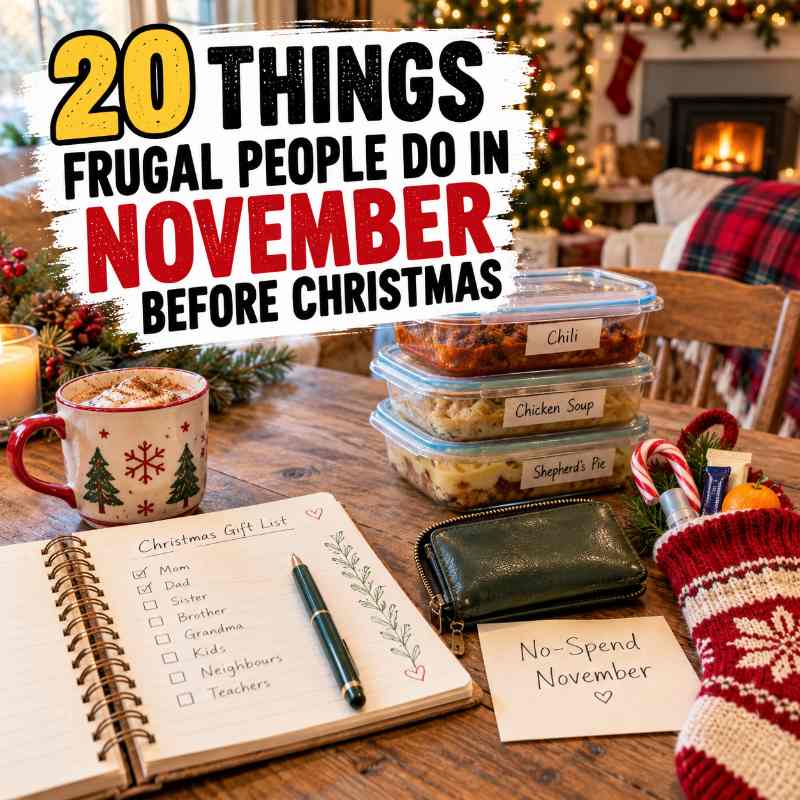
November can be a dangerous month for a household budget. Christmas still feels a little way off, yet the spending has already started. Gifts appear in shopping baskets, festive food sneaks into the grocery shop, Black Friday emails arrive daily, and suddenly every shop seems full of things you apparently need for December.
Frugal people tend to approach November differently. They do not wait until the week before Christmas to work out what everything is going to cost. They use November to get organised, reduce ordinary spending and decide in advance where their Christmas money is going.
That does not mean cancelling Christmas or refusing to spend anything. It means making deliberate choices before the busiest shopping month of the year takes over.
Here are 20 practical things frugal people do in November to keep more money in their pockets before Christmas arrives.
1. They make the Christmas list before they start shopping
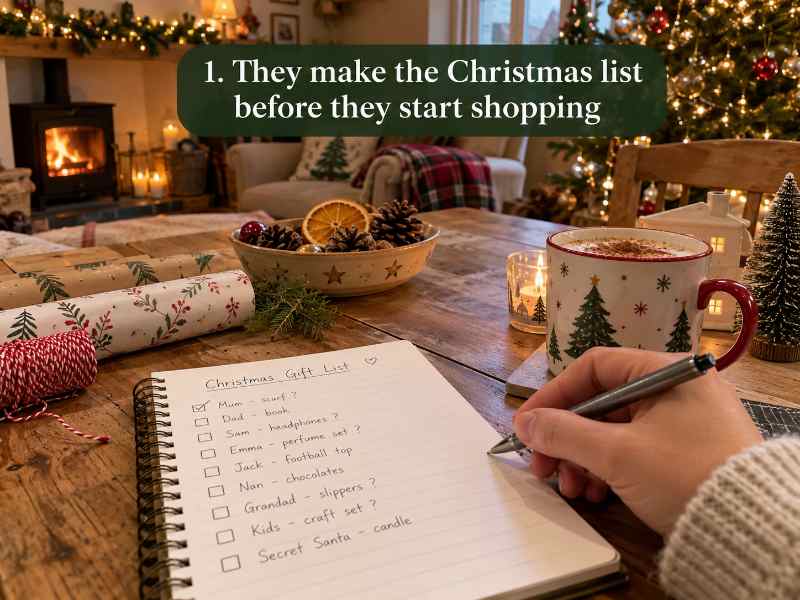
Buying gifts without a complete list makes it surprisingly easy to overspend. You see something for one person, something else that might work for somebody else, and then forget what you have already bought.
Frugal shoppers write down every person they intend to buy for before purchasing anything. Next to each name, they add a rough budget and one or two possible gift ideas.
Once something has been bought, it goes on the list immediately. That simple habit helps prevent forgotten presents, accidental duplicates and those last-minute panic purchases in December.
2. They decide what Christmas can actually cost
A gift budget is useful, but presents are only one part of Christmas.
There may also be food, travel, postage, school events, parties, decorations, cards, wrapping paper and days out. Instead of pretending those expenses will somehow take care of themselves, frugal households look at the whole picture.
The important number is not what you would ideally like to spend. It is what you can afford without creating a miserable January.
Once that total is clear, decisions become easier.
3. They cut unnecessary shopping for the month
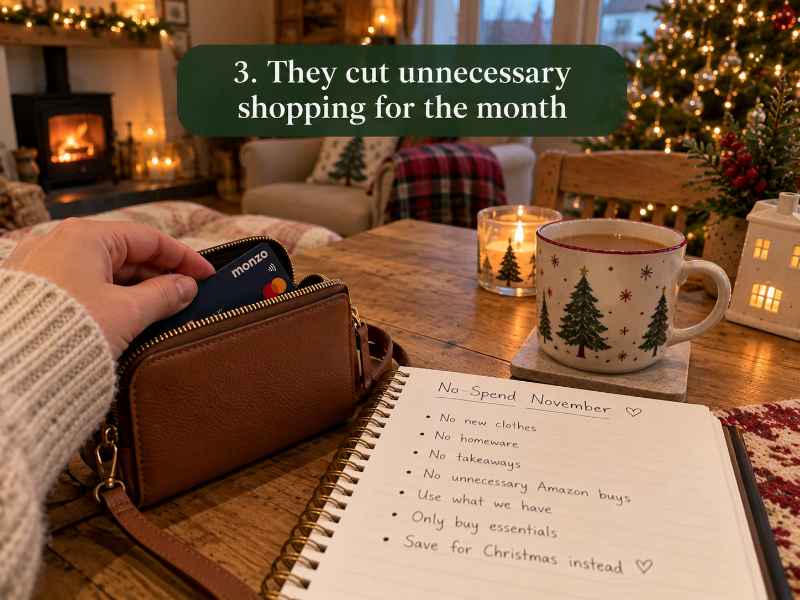
November is packed with reasons to buy things. Seasonal displays appear, sales begin and online shops start pushing Christmas products long before December.
One useful response is to make November a lower-spending month for everything that is not essential. That might mean skipping new clothes, home décor, beauty products, gadgets or casual browsing.
You do not have to stop spending completely. Even choosing a few categories to avoid can release extra money for December. If you want to take the idea further, try a No-Buy November challenge and decide in advance which purchases are off limits.
4. They check the cupboards before buying Christmas supplies
Before buying wrapping paper, tape, gift bags, cards, ribbons or decorations, look at what is already in the house.
Christmas supplies have a habit of disappearing into cupboards in January and being forgotten by November. Half-used rolls of paper, unopened cards and perfectly good gift bags are often sitting there waiting to be used.
Put everything in one place before you shop. You may discover that the Christmas wrapping haul you thought you needed is actually three rolls of paper and a packet of tape you already own.
5. They start eating through the freezer and pantry
November is a good month for a food inventory.
Check the freezer, cupboards and pantry and plan several meals around ingredients that have been hanging around. Apart from reducing the normal grocery bill, this clears space for food you may want to prepare or store for Christmas.
It also reduces duplicate buying. Before another jar, packet or frozen item goes into the trolley, you know whether there are already two at home.
For more ways to tighten this part of the budget, these 30 ways to save money on groceries offer plenty of practical ideas.
6. They put a few easy meals in the freezer

December evenings fill up quickly. School events, shopping, visiting relatives and Christmas preparations can turn an ordinary Tuesday into the sort of evening when ordering food seems much easier than cooking.
A few prepared meals can help.
November is a useful time to double a chilli, stew, curry or pasta sauce and freeze half. You do not need a freezer packed from top to bottom. Even four or five reliable dinners can cover the nights when everyone is tired and plans have run late.
If batch cooking suits your household, these freezer Crock-Pot meal ideas can help you get ahead.
7. They start homemade gifts while there is still time
Homemade gifts can save money, but only when you give yourself enough time to make them properly.
November is when frugal gift-givers begin, not December 23.
Think about the person first and the craft second. Homemade jam for someone who loves breakfast, a framed family photograph for a grandparent or a batch of favourite biscuits for a neighbour can feel far more personal than buying a generic gift set.
The aim is not to make something merely because it is cheap. Make something the recipient will genuinely enjoy. If you need inspiration, browse these inexpensive DIY gift ideas before spending money on supplies.
8. They agree on gift limits with family
Sometimes the easiest way to reduce Christmas spending is to have one slightly awkward conversation in November.
If adults in a family are all buying gifts for one another out of obligation, ask whether everyone would rather set a spending limit, draw names for a Secret Santa or buy only for the children.
Other families decide to exchange homemade gifts, food or experiences instead.
There is little point in several people quietly worrying about money while continuing an expensive tradition because nobody wants to be the first person to mention it.
9. They make Black Friday work for the list, not the other way around
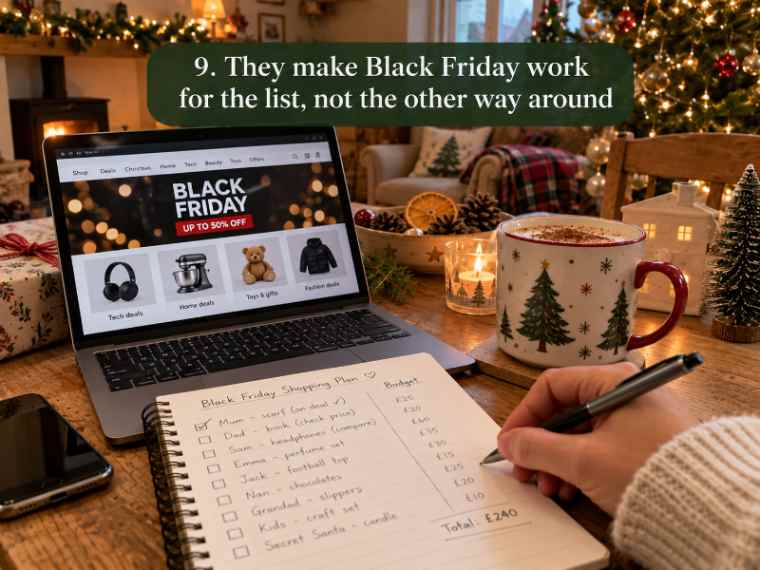
A sale is useful when something already on your Christmas list becomes cheaper.
It is much less useful when the sale persuades you to buy three things you had never intended to own.
Before Black Friday, frugal shoppers know which items they are looking for and roughly what those items normally cost. When an offer appears, they can judge it against a real plan instead of reacting to a countdown timer or a large discount sign.
If the item was not on the list yesterday, give yourself time before deciding that you suddenly need it today.
10. They unsubscribe from temptation
November inboxes can become a constant stream of discounts, flash sales and “last chance” offers.
If promotional emails repeatedly lead you into shops you had no intention of visiting, unsubscribe from some of them. The same goes for shopping-app notifications and retail text messages.
You can still search for a discount when you genuinely need to buy something. You just do not need twenty retailers reminding you several times a day that there is something else you could spend money on.
Sometimes the easiest purchase to resist is the one you never see.
11. They use what they already own for decorations
Christmas decorations do not suddenly become useless because you have had them for five years.
Before buying this year’s colour scheme, unpack the decorations you already have. Replace broken items if necessary, rearrange what you own and see what can be made from natural or reused materials.
Branches, greenery, jars, fabric scraps and pinecones can all become seasonal decorations with a little work. Even something as simple as making cinnamon-scented pinecones can add a festive touch without filling another shopping bag with Christmas décor.
A home does not need an entirely new wardrobe every December.
12. They make a plan for the heating
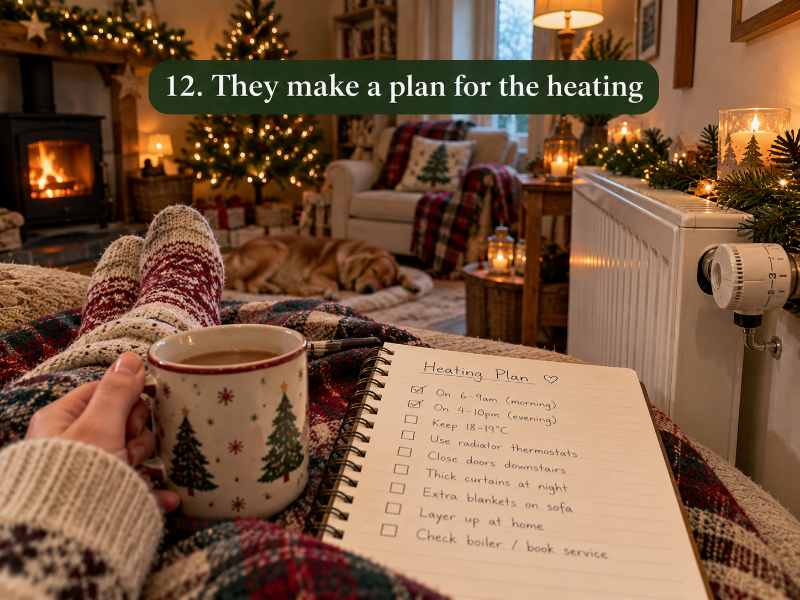
Christmas spending arrives at roughly the same time many households start using more heating, so November is worth using to check where warmth is being lost.
Look at obvious draughts, move furniture that blocks radiators, close curtains when appropriate and make sure blankets and warmer bedding are easy to reach.
The goal is not to sit in an unsafe, freezing house. It is to avoid wasting heat or automatically turning the thermostat higher when a smaller change would make you comfortable.
These cheap ways to stay warm without turning up the heating give you more options to consider as colder weather sets in.
13. They sell things before buying more
November is a useful time to look around the house for things nobody uses anymore.
Children’s toys they have outgrown, clothes in good condition, small appliances, books, furniture and unopened items may be useful to somebody else.
Selling unwanted belongings can create a little extra Christmas money, but there is another benefit: it reminds you how much stuff has already entered the house.
Seeing an unused purchase leave for a fraction of what it originally cost can make the next impulse purchase much less appealing.
14. They plan the social side of December
Christmas spending is not always about gifts. It can be the lunches, drinks, markets, parties, coffee stops and spontaneous outings that quietly push the month over budget.
Look at the December calendar now.
Decide which events really matter and roughly what they will cost. If there are people you simply want to spend time with, suggest a walk, movie night at home, potluck dinner, afternoon baking session or coffee at someone’s house.
Being social does not require turning every meeting into a shopping trip or restaurant bill.
15. They start buying only the non-perishable Christmas food they know they will use
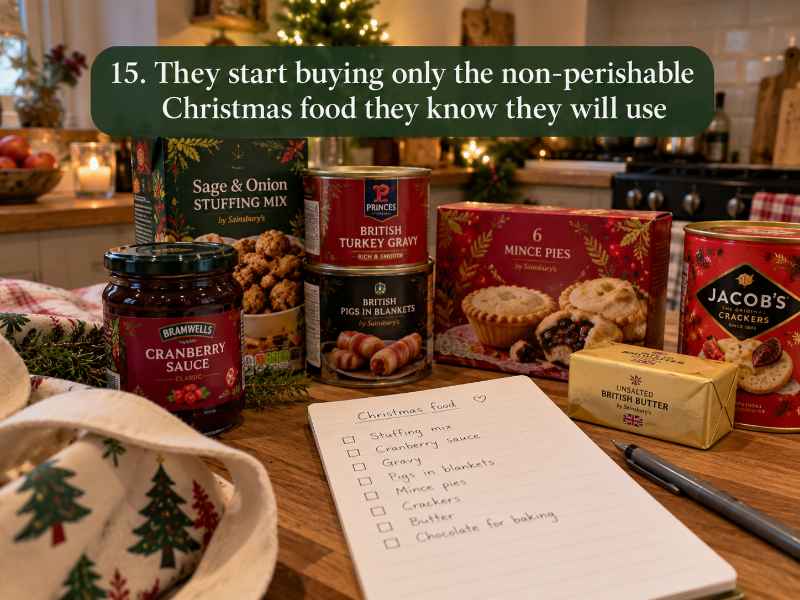
There can be a sensible middle ground between buying everything at the last minute and filling the cupboards with festive food nobody particularly likes.
If a non-perishable ingredient you definitely need for Christmas is on your normal shopping list and available at a good price, buying it ahead can spread the cost.
The important word is definitely.
Buying six boxes of snacks simply because the packaging is festive does not help the budget if half of them are still sitting there in February.
16. They save reusable packaging for Christmas
Gift bags, boxes, tissue paper, jars, baskets and sturdy packaging can all be useful during December.
November is a good time to stop automatically throwing these things away.
A clean jar can hold homemade sweets, baking mix or preserves. A good box can become gift packaging. Brown packing paper can be decorated rather than replaced with another roll of wrapping paper.
Keep only what you expect to use. Saving money through reuse is useful; turning a cupboard into a permanent storage unit for every container that enters the house is not.
17. They keep stocking fillers under control
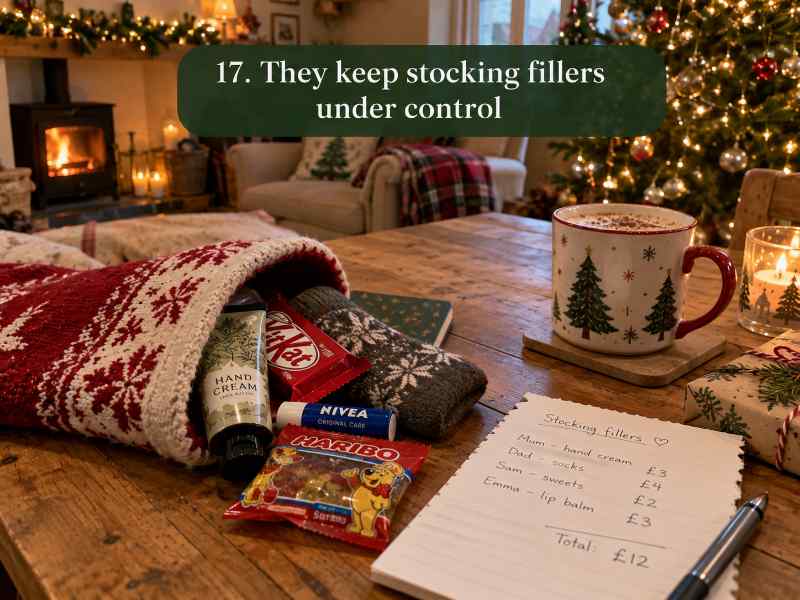
Small presents can become one of the least noticeable Christmas expenses.
A few sweets, toiletries, novelty gifts and little toys do not look expensive individually. Put several into multiple stockings and the total changes quickly.
Frugal shoppers decide on a limit before buying the little things. They also choose items people will actually use rather than buying cheap clutter simply to make a stocking look full.
A smaller stocking with a few well-chosen treats can be just as enjoyable as one packed with things that will be forgotten by New Year.
18. They keep a running total
It is easy to remember spending £100 on one large gift. It is much harder to remember the £8, £12 and £17 purchases scattered through the month.
Keep one note on your phone, a page in a notebook or a simple spreadsheet showing what you have spent.
Update it as you go.
This is not about feeling guilty every time you buy something. It simply keeps the real number visible. If one area costs more than expected, you still have time to reduce another before the credit card statement arrives.
19. They protect some money for December surprises
Even a carefully planned Christmas usually contains a few expenses you did not see coming.
Perhaps postage costs more than expected. A child needs something for a school event. Extra guests are coming for dinner. You forgot one person on the gift list.
Instead of budgeting every available penny, leave a small amount untouched for the unexpected.
If you do not use it, even better. That money can stay in the bank rather than becoming an excuse to find something else to buy.
20. They remember that January is coming
This may be the most important November habit of all.
Christmas is one day. January still has groceries, utility bills, fuel, housing costs and all the ordinary expenses that existed before the decorations went up.
Frugal people try not to solve December by borrowing from January.
That may mean giving fewer gifts, turning down an expensive event or using decorations from last year. Those choices can feel small in November, but they are much easier than beginning the new year with bills from a Christmas you could not comfortably afford.
Saving money before Christmas is rarely about finding one spectacular trick. It comes from making twenty small decisions before the pressure to spend gets louder.
November gives you something December often does not: time. Time to plan, cook, compare, make, reuse and decide what actually matters.
Use that month well, and Christmas can still feel generous and festive without January having to pay for it.
Frequently Asked Questions
When should I start saving for Christmas?
Ideally, Christmas savings can be built gradually throughout the year, but November is still early enough to make useful changes. Cutting non-essential spending and planning purchases before December can reduce last-minute costs.
Is Black Friday a good time to buy Christmas presents?
It can be, particularly when an item was already on your gift list and you have compared the price. A discount does not save money if it persuades you to buy something you were not planning to purchase.
How can I save money at Christmas without making it feel cheap?
Spend deliberately on the things your household values most and reduce spending elsewhere. Homemade food, thoughtful gifts, reused decorations and inexpensive family traditions can still make Christmas feel special.
What Christmas expenses are easiest to forget?
Wrapping supplies, postage, extra food, small stocking gifts, parties, travel and school events can easily be missed when you first make a budget. Including them early gives you a more realistic total.
What is a good way to stop impulse buying in November?
Shop from a written list and give unplanned purchases some time before buying them. Reducing promotional emails and shopping notifications can also remove some of the temptation.
Can a no-spend November help with Christmas costs?
You do not necessarily need to stop all discretionary spending for an entire month. Cutting a few unnecessary categories during November can still free up money for planned Christmas expenses without relying as heavily on December income or credit.