

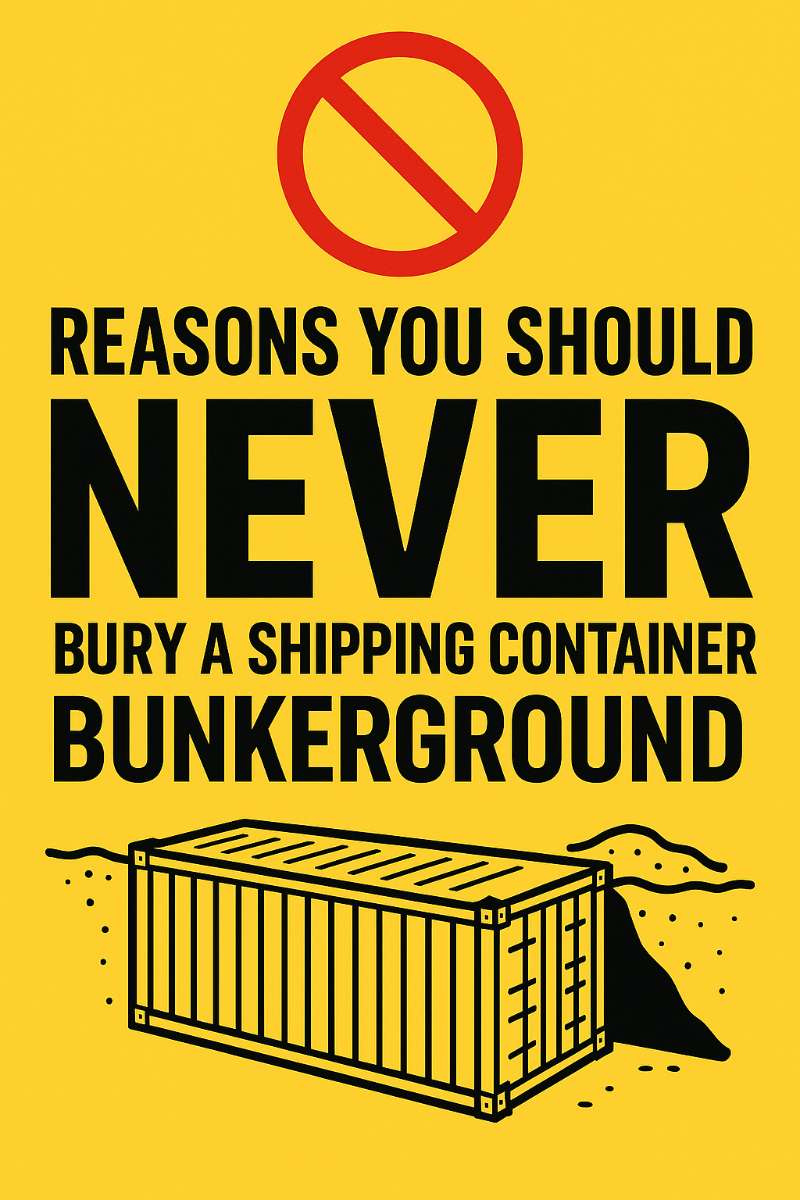
Never bury a shipping container bunker underground
Make sure to like Living Green and Frugally on Facebook, Shop at Amazon to help support my site and explore our PINTEREST BOARDS for innovative ways you can become self-sufficient.
🚫 Reasons You Should Never Bury a Shipping Container Bunker Underground
If you’re thinking of burying a shipping container as a survival bunker or underground shelter, STOP right there. 🛑 What seems like a genius off-grid hack can quickly turn into a dangerous, costly disaster.
It’s tempting—shipping containers are affordable, sturdy, and look like a quick fix for underground safety. But burying one isn’t just a bad idea—it can be deadly. In this post, we’ll uncover the truth behind the shipping container bunker myth and reveal smarter, safer alternatives. 👇
🛠️ What People Think They’re Getting
Here’s the fantasy:
- A strong steel shell that can survive collapse
- An instant underground shelter for preppers or off-grid homes
- A cheaper alternative to custom bunkers
But reality bites. 🐍 Once buried, a shipping container behaves nothing like a proper bunker—unless you want a coffin instead.
⚠️ 7 Major Reasons to NEVER Bury a Shipping Container
1. They’re Not Designed for Underground Pressure
Shipping containers are designed to carry weight on their corners—not across their sides or roof. Once buried, earth pressure pushes against every wall. Without reinforcement, the steel walls can collapse inward, even with just a few feet of soil.
2. Roof Cave-Ins Are Inevitable
The roof on a shipping container is just sheet metal. It’s great for keeping out rain. Not so much for 3,000 lbs of dirt on top. Without reinforcement, expect it to cave in—fast.
3. Rust and Moisture Damage
Even with rust-proofing, burying steel invites condensation, corrosion, and rot. Moisture will sneak in and slowly eat away at the container, weakening the structure over time.
4. Dangerous DIY Airflow Problems
Proper airflow in a buried space is critical. Most amateur setups lack ventilation, creating a toxic air trap. Without engineered intake/exhaust systems, oxygen levels drop and dangerous gases accumulate.
5. Hard to Escape in Emergencies
If the door gets jammed from pressure or dirt shift, you’re trapped. Unlike above-ground shelters, buried containers offer no easy way out—especially if something collapses.
6. Difficult to Insulate or Temperature Control
Steel transfers heat and cold easily. Without major interior work, it will be an oven in summer and a freezer in winter—or worse, both within 24 hours underground.
7. It’s NOT Legal in Many Places
Burying a shipping container without proper permits or engineering can be illegal, violating zoning laws, building codes, or insurance policies. If something goes wrong, you’re liable.
🧠 But Can You Reinforce It?
Sure, you can reinforce a container… but here’s what that takes:
- Internal steel ribbing
- Concrete shell around the exterior
- Drainage and waterproofing systems
- Ventilation systems
- Reinforced roof and subframe
By the time you’re done, you’ve spent more than a professionally built underground shelter. Not so budget-friendly anymore, is it? 💸
🧰 Safer & Smarter Alternatives
Don’t give up your prepper dreams just yet! Here’s what you can do instead:
✅ Buy a purpose-built underground shelter: Many companies offer fiberglass, concrete, or steel bunkers rated for burial.
✅ Build a root cellar instead: For food storage and basic protection, a root cellar with earthbag or concrete walls is a proven, affordable design.
✅ Use the shipping container above ground: Reinforce it, insulate it, and use it for tool storage, workshops, or even off-grid living above ground.
🧯 Real-World Horror Stories
One man buried a 20-foot container in rural Texas. He skipped reinforcements to save money. After heavy rains, the container collapsed, trapping him inside. By the time rescuers got to him, it was too late.
Another family used a buried container as a tornado shelter. After a year, moisture corroded the bottom, and mold took over. Thousands of dollars lost—and a serious health hazard created.
💡 Pro Tips If You Still Want to Use One
If you absolutely must bury a container:
- Reinforce with I-beams or welded steel ribs
- Encapsulate in concrete
- Install a French drain for water diversion
- Ventilate with powered systems
- Don’t skimp on soil testing or permits
But again—it’s often more cost-effective to use something built for the job.
❓ Common Questions Answered
🛑 Can’t I just bury it a few feet deep?
Nope. Even shallow burial creates lateral earth pressure that will collapse the walls unless reinforced.
🌧 What about waterproof paint or sealant?
That’s not enough. Pressure and moisture will find a way in, especially through weld seams and rust points.
🏠 Can I live in one underground long-term?
Not without serious investment and engineering. It’s unsafe and illegal in many jurisdictions.
💰 Is it really cheaper than a real bunker?
Only upfront. Long-term, you’ll spend more fixing issues or rebuilding. Real bunkers are engineered to last.
🚨 Final Verdict: Just Don’t Do It
Burying a shipping container might seem like a prepper’s dream, but the truth is…
It’s a structural, legal, and safety nightmare.
⚠️ Without MAJOR modifications, you’re not building a bunker—you’re digging your own grave. ⚰️
Choose smarter, safer, and long-lasting options. Your future self will thank you.
📢 Share This with a Friend Who’s Thinking About It!
👉 Know someone planning a buried container project? Send them this before it’s too late.
📌 Tag a prepper, survivalist, or off-grid dreamer. They need to know the truth.