

21 Ways To Get rid Of Ants Naturally
One ant on the kitchen counter rarely stays one ant for long. Once a worker finds food or water, it leaves a scent trail that can lead the rest of the colony straight into your home.
The best way to get rid of ants naturally is to combine several methods. Clean away their trails, remove food and water, block their entrances and use a carefully placed bait when necessary. Simply spraying the ants you can see may provide temporary relief, but it rarely reaches the hidden nest.
Start With This Simple Ant-Control Plan
- Follow the trail to discover where the ants are entering.
- Remove food and water that may be attracting them.
- Wash away scent trails with warm, soapy water.
- Seal cracks and gaps once activity begins to slow.
- Use a slow-acting bait if cleaning and exclusion do not solve the problem.
Important safety note: Natural does not always mean harmless. Borax, boric acid, essential oils, boiling water and diatomaceous earth can cause harm when misused. Keep treatments away from children, pets, food-preparation areas and beneficial wildlife. Always follow the product label.
Why Do Ants Keep Coming Inside?
Ants normally enter a house because they have found food, moisture or shelter. Sugar spills, grease, pet food, crumbs beneath appliances, leaking pipes and damp wood can all attract them.
Worker ants create scent trails between the food source and their colony. This is why a neat line of ants may reappear shortly after you wipe it away. Unless you remove the attraction and disrupt the trail, more workers are likely to follow.
21 Natural Ways To Get Rid Of Ants
1. Work Out What Is Attracting Them
Watch where the ants gather. A trail leading to the sugar cupboard needs a different solution from ants appearing around a leaking sink. Remove the attraction before applying any treatment.
2. Follow The Trail To Its Entry Point
Follow the line in both directions. Look around window frames, pipes, doors, skirting boards and cracks in the floor. Mark the entrance so you can seal it once you have dealt with the active trail.
3. Vacuum Up Visible Ants
Vacuuming provides immediate control without spraying anything around your home. Concentrate on trails, corners and spaces beneath appliances. Empty the vacuum outdoors immediately into a sealed rubbish bag.
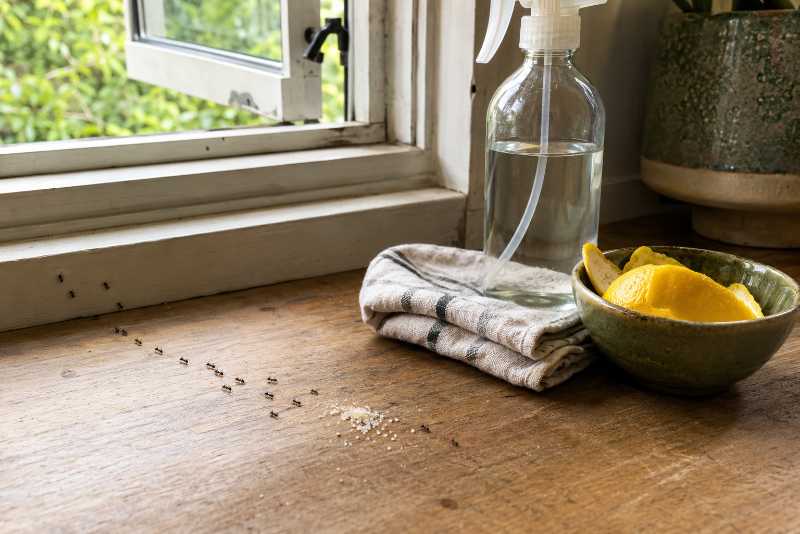
4. Wash Away Their Scent Trails
Add a small squirt of dish soap to warm water and wipe the entire ant trail, not just the ants. Clean the surrounding area as well because the scent trail may extend farther than you can see.
5. Wipe Hard Surfaces With Diluted Vinegar
Mix equal amounts of white vinegar and water for a simple cleaning spray. Use it on suitable sealed surfaces to remove food residue and interfere with trails. Vinegar is a cleaner and temporary deterrent, not a reliable colony killer.
Test first: Do not use vinegar on natural stone, waxed wood or another acid-sensitive surface. Test a hidden area before treating an unfamiliar finish.
6. Remove Crumbs And Grease
Clean underneath the toaster, cooker, refrigerator and small appliances. Wipe cupboard shelves and wash recycling before storing it. Even a tiny smear of jam or cooking grease can support a surprising number of ants.
7. Store Food In Sealed Containers
Move sugar, flour, cereal, biscuits and pet treats into containers with tight-fitting lids. Thin cardboard and loosely folded bags provide little protection once ants discover them.
8. Manage Pet Food Carefully
Feed pets at set times when practical, then lift and wash their bowls. Store dry food in a sealed container. A shallow ant-proof moat beneath the bowl can provide extra protection, but make sure your pet can use it safely.
9. Remove Sources Of Water
Fix dripping taps, dry the sink overnight and check beneath cabinets for slow leaks. Damp cloths, plant saucers and condensation can provide enough moisture to keep a colony returning.
10. Empty Bins And Rinse Recycling
Use a bin with a close-fitting lid and clean sticky residue from its sides and base. Rinse food jars, tins and drink containers before placing them in recycling.
If food waste is attracting other pests outdoors, the article Composting Mistakes To Avoid: Why Your Bin Smells explains how to keep a compost area cleaner and better balanced.
11. Seal Cracks And Gaps
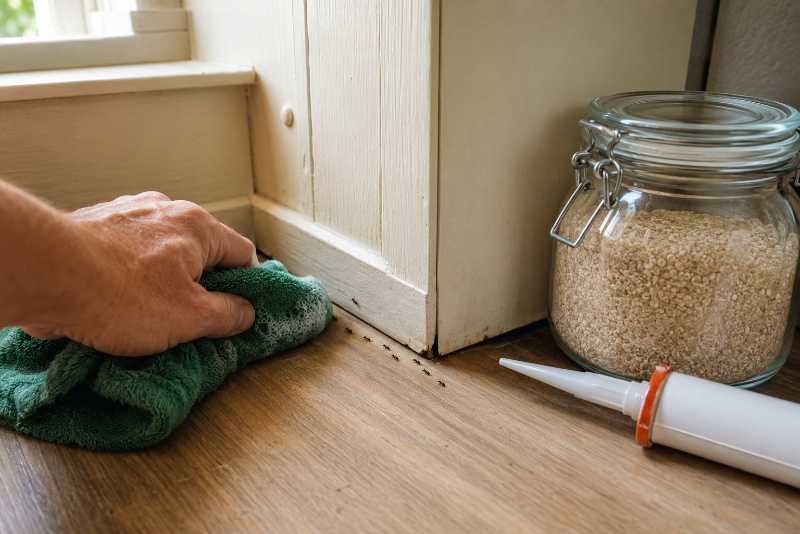
Once ant traffic begins to slow, seal gaps around pipes, doors, windows and skirting boards. Caulk small cracks and replace damaged door seals. Sealing too early may simply make the ants find another hidden route, so clean and treat active trails first.
12. Trim Branches Touching The House
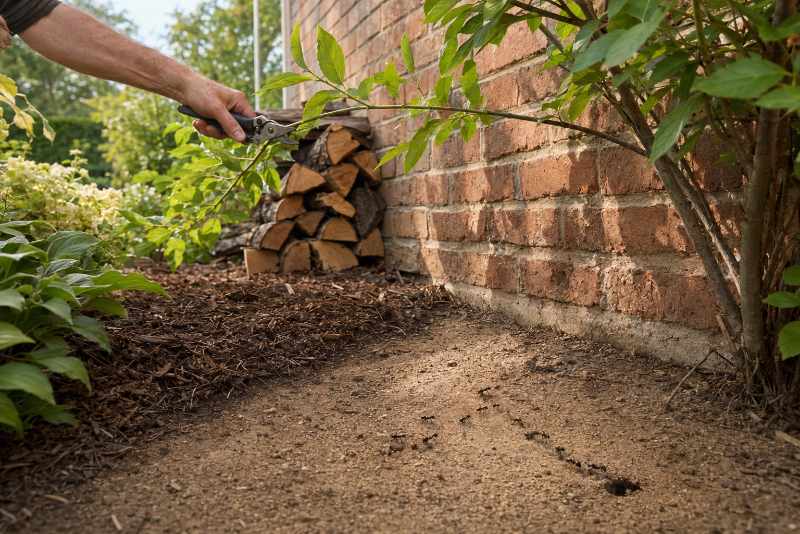
Branches, vines and shrubs can act as bridges. Trim them away from walls, windows, gutters and the roof. Check overhead cables and fences for other routes you may have overlooked.
13. Move Mulch And Firewood Away
Keep firewood off the ground and away from exterior walls. Avoid piling damp mulch directly against foundations because it can provide ants with moisture, shelter and an easy route indoors.
14. Control Aphids In The Garden
Ants often protect aphids because they feed on the sweet honeydew the aphids produce. Check curled leaves and tender shoots. A firm spray of water can dislodge many aphids, while encouraging ladybirds and other beneficial insects can provide longer-term control.
The guide to the best companion plants for tomatoes contains more ideas for creating a garden that supports pollinators and pest-eating insects.
15. Use Tree Bands Carefully
A sticky tree band can stop ants climbing trunks to reach aphids. Never put sticky material directly onto bark. Wrap the trunk with the recommended protective layer first and check the band regularly so birds and beneficial insects do not become trapped.
16. Try Cinnamon As A Temporary Barrier
A narrow line of ground cinnamon may discourage ants from crossing a windowsill or small gap. It will not destroy the colony, but it can help redirect traffic while you clean and seal the entrance.
17. Use Peppermint Scent With Caution
The strong smell of peppermint may temporarily discourage ants from a small area. Rather than applying concentrated oil, use a properly diluted household product according to its directions.
Do not assume essential oils are pet-safe. Cats, dogs, birds and other animals can be sensitive to certain oils. Avoid using them near food, pet bedding or places where animals may lick the surface.
18. Clean With Fresh Citrus Peel
Rub fresh lemon peel over a washable, citrus-safe entry area and wipe it clean afterwards. Citrus may disturb a trail temporarily, but it works best as part of regular cleaning rather than as a stand-alone ant treatment.
If you have peel left over, 31 Ways To Use Leftover Lemon Peel offers more practical ideas for using it around the home and garden.
19. Apply Diatomaceous Earth Correctly
Use a pesticide product specifically labelled for ant control. Apply a very thin layer in dry, inaccessible cracks or along outdoor routes, following the label exactly. Large piles are unnecessary and are more likely to become airborne.
Avoid breathing the dust and keep it away from eyes, children, pets and food surfaces. It stops working effectively when wet and may also harm beneficial crawling insects if scattered carelessly outdoors.
20. Use A Slow-Acting Borax Or Boric Acid Bait
A slow-acting bait can work better than a contact spray because workers carry it back to the colony. The safest approach is an enclosed, ready-made bait station containing borax or boric acid, used exactly as directed.
Place it beside an active trail rather than directly on it. Do not spray or wipe repellent substances around the bait because this may stop the ants from feeding. Keep all bait completely inaccessible to children, pets and wildlife.
Be patient: Increased activity around a bait station during the first few days can be normal. The workers must have time to carry the bait back before the colony begins to decline.
21. Treat An Outdoor Nest With Boiling Water
For a clearly visible nest in a bare, non-planted area, slowly pouring boiling water into the entrance may reduce or destroy a shallow colony. It may require more than one treatment and will not reliably reach a deep or widespread nest.
Wear closed shoes and long trousers, keep people and animals away and avoid splashing. Do not use boiling water near plants you want to keep, electrical equipment, foundations that could be damaged or nests containing aggressive stinging ants.
For another simple outdoor approach, see How To Kill Ant Hills Using One Natural Ingredient on Living Green And Frugally.
Common Natural Ant-Control Mistakes
Killing Only The Ants You Can See
The visible ants are workers. If the colony remains healthy, more workers can replace them. Combine immediate cleaning with exclusion or a slow-acting bait.
Using Too Many Remedies Together
Strong-smelling repellents can stop ants from approaching bait. Choose one strategy, monitor it and avoid surrounding a bait station with vinegar, cinnamon or peppermint.
Leaving Alternative Food Available
A bait is less attractive when crumbs, grease, pet food and open rubbish are readily available nearby.
Assuming Every Kitchen Ingredient Works
Coffee grounds, chalk and baking soda are frequently recommended online, but results are inconsistent. Cleaning, sealing entry points and using correctly formulated bait are generally more dependable.
Ignoring Damp Or Damaged Wood
Large ants repeatedly appearing around damp timber may indicate carpenter ants or another structural problem. Natural surface treatments will not repair moisture damage or remove a well-established nest inside a wall.
Frequently Asked Questions
What Is The Fastest Natural Way To Remove Ants?
Vacuum the visible ants, wash the complete trail with soapy water and remove nearby food. This gives quick relief, although you may still need bait or exclusion to deal with the colony.
Does Vinegar Kill An Ant Colony?
No. Vinegar is useful for cleaning surfaces and disrupting scent trails, but it is unlikely to reach and destroy a hidden colony.
Why Are Ants Ignoring The Bait?
Different ants seek sugar, fat or protein at different times. The bait may also be stale, incorrectly positioned or surrounded by a repellent cleaner. Try a labelled alternative bait formulation.
How Long Does Ant Bait Take To Work?
A slow-acting bait commonly takes several days and may take longer for a large colony. Follow the label and avoid disturbing ants while they are carrying it back.
Are Natural Ant Remedies Safe Around Pets?
Not automatically. Essential oils, borax, boric acid, boiling water and airborne powders can present risks. Keep pets away and use only products whose labels allow your intended application.
When Should I Call A Professional?
Seek professional help if ants repeatedly emerge from walls, you find winged ants indoors, timber appears damaged or damp, the infestation persists, or the ants sting aggressively. Correct identification is particularly important before treating a possible carpenter-ant colony.
Final Thoughts
The most dependable way to get rid of ants naturally is not one miracle ingredient. It is a combination of good cleaning, food storage, moisture control, sealed entrances and carefully selected treatment.
Begin by following the trail and removing whatever attracted the ants. Wash away their scent route, block the entrance and monitor the area. If they keep returning, a properly enclosed slow-acting bait may reach the hidden colony more effectively than repeatedly killing individual workers.
A little patience matters. By fixing the reason ants entered in the first place, you are much less likely to face the same trail again next week.