
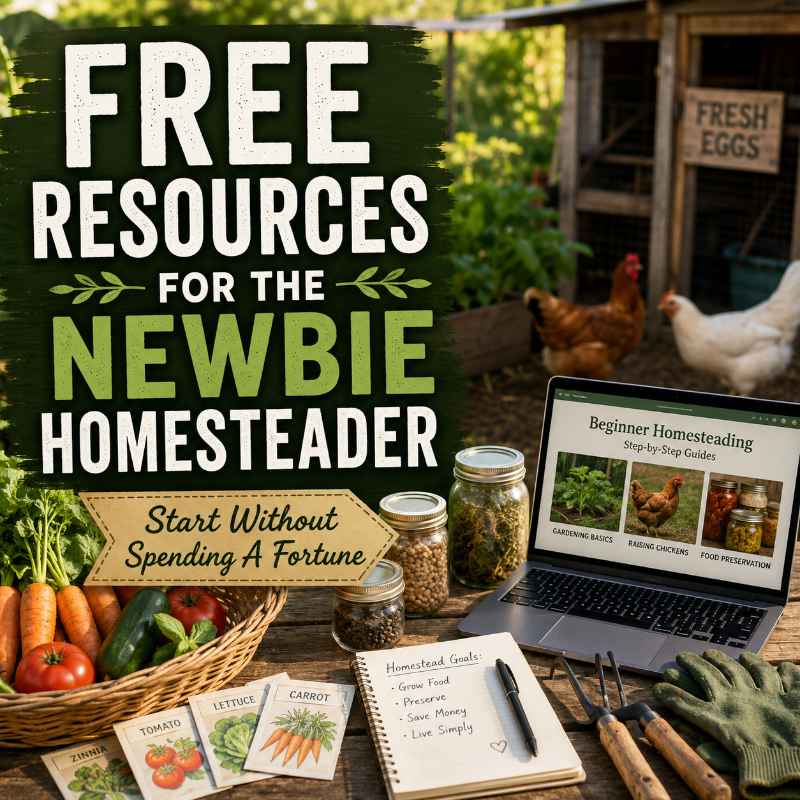
Free Resources for the Newbie Homesteader
Make sure to like Living Green and Frugally on Facebook, Shop at Amazon to help support my site and explore our PINTEREST BOARDS for innovative ways you can become self-sufficient.
Homesteading sounds amazing, doesn’t it?
Fresh eggs in the morning, jars of homemade preserves on the shelf, herbs drying in the kitchen, vegetables growing outside the back door, and the quiet satisfaction of knowing you can do more for yourself.
But then reality hits.
Books cost money. Tools cost money. Courses cost money. Chickens, raised beds, seeds, jars, fencing, compost, feed, and equipment can all add up fast. For a beginner, it can feel like homesteading is only possible if you already have land, money, and years of experience.
The good news? That is not true.
Some of the best homesteading knowledge is completely free. You just need to know where to look, what to trust, and how to start small without getting overwhelmed.
Why Free Homesteading Resources Matter 🌿
When you are new to homesteading, the biggest mistake is thinking you need to buy everything before you begin.
You do not need a huge garden.
You do not need a barn.
You do not need expensive courses.
You do not need every tool you see online.
What you really need is knowledge, patience, and a willingness to learn by doing.
Free resources can help you:
- Avoid expensive beginner mistakes
- Learn skills before spending money
- Find local support
- Grow food in small spaces
- Preserve food safely
- Connect with other homesteaders
- Build confidence one project at a time
Homesteading is not about having everything. It is about making the most of what you already have.
1. Online Homesteading Communities 👩🌾
One of the easiest ways to learn for free is by joining online communities full of people who are already doing what you want to do.
Groups, forums, and comment sections can be incredibly helpful when you have beginner questions like:
- Why are my tomato leaves turning yellow?
- What should I plant first?
- How do I start composting?
- What chickens are best for beginners?
- Can I grow food without a big garden?
Places like Reddit’s r/Homesteading and Facebook homesteading groups can be a goldmine of practical advice.
The best part is that you often get real answers from real people, not just perfect-looking advice from someone trying to sell you something.
Beginner tip: Always compare answers from a few sources. Homesteading advice can vary depending on climate, soil, space, country, and budget.
2. Your Local Library 📚
Do not underestimate the library.
A good library can give you free access to books on gardening, preserving, raising chickens, herbal remedies, composting, DIY projects, food storage, and frugal living.
Many libraries also offer free eBooks and audiobooks, which is brilliant if you prefer learning on your phone or listening while doing chores.
Look for books on:
- Vegetable gardening
- Container gardening
- Seed saving
- Composting
- Preserving and canning
- Backyard chickens
- Herbal remedies
- Foraging
- Simple DIY repairs
- Food storage
A library card can save you hundreds of pounds or dollars in books you might only read once.
3. YouTube Tutorials For Visual Learners 🎥
Some homesteading skills are easier to understand when you can actually see someone doing them.
YouTube is brilliant for learning hands-on skills like building a raised bed, making compost, pruning fruit trees, starting seeds, preserving food, or setting up a chicken coop.
Channels such as Roots and Refuge Farm and Justin Rhodes are popular with beginner homesteaders because they show everyday homestead life, not just polished results.
Use YouTube for skills like:
- Starting seeds indoors
- Building simple garden beds
- Making compost
- Preserving vegetables
- Growing herbs
- Setting up rainwater collection
- Keeping chickens
- Making homemade cleaners
Important tip: When watching food preservation videos, always check the method against a trusted food safety source. Not every viral canning video is safe.
4. Free Food Preservation Resources 🫙
If you want to can, bottle, ferment, dehydrate, freeze, or preserve food, this is one area where you should be careful.
Old family recipes and viral videos can be interesting, but food safety matters. Incorrect preserving methods can make people seriously ill.
For safe, research-based food preservation advice, use trusted resources such as the National Center for Home Food Preservation. It has guidance on canning, freezing, drying, fermenting, pickling, jams, jellies, and more.
This is a fantastic free resource for beginners because it explains what methods are safe and why.
Use it when you want to learn:
- Water bath canning
- Pressure canning
- Freezing produce
- Drying herbs and vegetables
- Making jams and jellies
- Pickling safely
- Fermenting basics
This is one of those free resources that can save you from dangerous mistakes.
5. Government Agricultural Extension Offices 🌾
In the United States, agricultural extension offices are one of the most underrated free resources for gardeners and homesteaders.
They often provide research-based information on soil health, pest control, gardening, fruit trees, composting, livestock, and local growing conditions.
You can find local support through Cooperative Extension resources or learn more about Extension through the USDA National Institute of Food and Agriculture.
Depending on where you live, extension offices may offer:
- Planting calendars
- Soil testing information
- Pest identification
- Local crop advice
- Gardening classes
- Food preservation guidance
- Livestock information
- Master gardener programs
This is especially helpful because local advice is often better than generic advice online.
A tomato growing tip for Arizona might not work in Scotland. A chicken keeping tip for Florida might not suit a cold, wet climate. Local knowledge matters.
6. Free Gardening Advice From Trusted Sources 🥕
For UK readers, the RHS Grow Your Own section is a useful free resource for learning how to grow fruit, vegetables, and herbs.
It includes advice for beginners, including growing in containers, raised beds, small gardens, and allotments.
Use trusted gardening resources to learn:
- When to sow seeds
- How deep to plant
- How much to water
- What grows well in containers
- How to improve soil
- How to deal with pests
- When to harvest
The more you understand your growing season, the less money you waste on failed plants.
7. Seed Saving Networks And Seed Swaps 🌱
Seeds can get expensive fast, especially if you get carried away browsing catalogues.
Seed saving is one of the most useful skills a homesteader can learn because it helps you become less dependent on buying new seeds every year.
The Seed Savers Exchange is a well-known resource for learning about seed saving, heirloom varieties, and seed sharing. Their seed saving resources are especially useful if you are just getting started.
You can also look for:
- Local seed swaps
- Library seed banks
- Gardening clubs
- Community seed exchanges
- Neighbourhood sharing groups
Beginner tip: Start with easy seeds like tomatoes, beans, peas, lettuce, and calendula. Some plants cross-pollinate more easily, so it is best to learn the basics before saving everything.
8. Community Gardens And Allotments 🧺
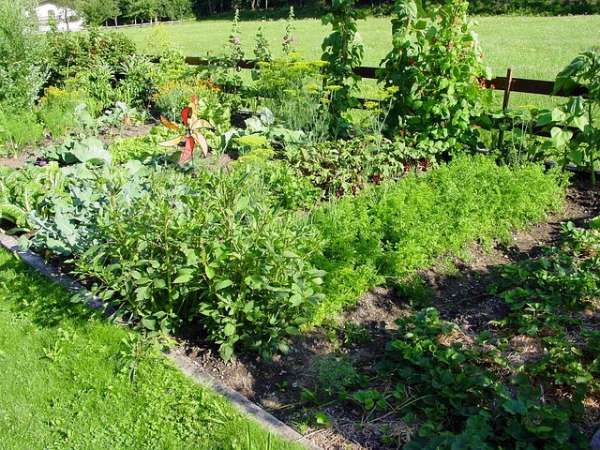

Not everyone has a big garden, and that does not mean you cannot homestead.
Community gardens and allotments can give beginners access to growing space, advice, and other gardeners who are usually happy to share what they know.
A community garden can help you learn:
- How to grow vegetables
- What pests are common locally
- What crops do well in your area
- How to compost
- How to harvest at the right time
- How to garden without expensive equipment
If you are in the UK, check your local council website for allotment availability. Waiting lists can be long, but it is still worth getting your name down.
If you are in the US, check community centres, churches, food projects, schools, and local gardening groups.
9. Foraging Guides And Wild Food Resources 🍄
Foraging can be a valuable homesteading skill, but it must be approached carefully.
Never eat anything unless you are 100 percent sure what it is. Some edible plants have dangerous lookalikes, and mushrooms can be especially risky.
Free online resources such as Wild Edible Plants Guide and Forager’s Harvest can help you begin learning what grows around you.
Good beginner foraging items often include:
- Blackberries
- Dandelion leaves
- Nettles
- Wild garlic
- Elderflowers
- Rosehips
- Hawthorn berries
Always check local laws, avoid polluted areas, and only take what you need.
Foraging is not just about free food. It teaches you to notice the seasons, understand your local landscape, and appreciate what grows naturally around you.
10. Homesteading Blogs And Podcasts 🎧
Blogs and podcasts are brilliant for learning while you clean, cook, drive, garden, or relax with a cup of tea.
The benefit of homesteading blogs is that they often show the real side of things. The failed crops, the budget mistakes, the shortcuts that worked, and the lessons learned the hard way.
Look for blogs and podcasts about:
- Small-space homesteading
- Backyard gardening
- Food preservation
- Frugal living
- Off-grid skills
- Chickens
- Herbal remedies
- DIY projects
- Natural cleaning
- Simple cooking from scratch
The best blogs are the ones that make you feel like you can actually start today, not someday when everything is perfect.
11. Free Workshops, Local Events, And Demonstrations 🛠️
Keep an eye out for free or low-cost local events.
You may find workshops on composting, seed starting, fruit tree pruning, beekeeping, chicken keeping, rainwater collection, herbal remedies, and food preservation.
Places to check include:
- Libraries
- Garden centres
- Local farms
- Allotment groups
- Community centres
- Farmers markets
- Council websites
- Gardening clubs
- Homesteading Facebook groups
Even if you only attend one free workshop, you may walk away with new skills, local contacts, and confidence.
12. Free Stuff From Your Own Home ♻️
Some of the best homesteading resources are already in your house.
Before buying new supplies, look around and see what can be reused.
You can repurpose:
- Egg cartons for seed starting
- Glass jars for storage
- Cardboard for weed suppression
- Old buckets for container growing
- Plastic tubs for composting projects
- Kitchen scraps for compost
- Old towels for cleaning rags
- Pallets for garden projects
- Fallen leaves for leaf mould
- Grass clippings for mulch
Homesteading and frugal living go hand in hand. The less you throw away, the less you need to buy.
A Simple Beginner Homesteading Plan 🌻
If you are feeling overwhelmed, start with this simple plan.
Week 1: Learn And Observe
Watch your garden or outdoor space. Notice where the sun hits, where water collects, and what you already have.
Week 2: Start Composting
Use kitchen scraps, cardboard, leaves, and garden waste. Composting is one of the easiest free skills to learn.
Week 3: Grow Something Easy
Start with herbs, lettuce, radishes, potatoes, tomatoes, or strawberries. Do not try to grow everything at once.
Week 4: Learn One Preservation Skill
Try freezing herbs, drying mint, making jam, or safely pickling vegetables.
Week 5: Join A Community
Find one online group, local gardening club, library event, or allotment group.
Small steps matter. You do not become self-sufficient overnight. You build the skills slowly.
Common Questions About Free Homesteading Resources
Can I start homesteading with no money?
Yes, but you need to start small. Composting, seed swapping, regrowing kitchen scraps, learning from free resources, and reusing household items are all good ways to begin without spending much.
Do I need land to be a homesteader?
No. Many people start with a balcony, windowsill, small garden, rented space, allotment, or community garden. Homesteading is more about self-reliance than land size.
What is the best first skill for a newbie homesteader?
Gardening is one of the best first skills because it teaches patience, observation, food growing, composting, planning, and seasonal living.
Are free homesteading resources reliable?
Some are excellent, but not all advice online is safe or accurate. For food preservation, animal care, and anything involving health or safety, use trusted research-based sources.
What should I grow first?
Start with easy crops like lettuce, herbs, radishes, potatoes, beans, courgettes, tomatoes, and strawberries. Choose crops your family will actually eat.
Is homesteading cheaper than buying everything from the shop?
It can be, but not always at first. The savings usually come when you reuse materials, grow from seed, compost, preserve food, reduce waste, and avoid buying unnecessary equipment.
Final Thoughts: Start Where You Are 🌱
Homesteading does not begin with acres of land, a barn full of animals, or a pantry that looks like a magazine photo.
It begins with one skill.
One pot of herbs.
One compost bin.
One packet of seeds.
One jar of homemade jam.
One reused glass jar.
One small change that makes you a little more self-reliant than yesterday.
Free resources are everywhere if you know where to look. Use your library, trusted websites, online communities, local groups, seed swaps, garden clubs, and your own common sense.
Start small. Learn slowly. Reuse what you have. Ask questions. Make mistakes. Try again.
That is how real homesteading begins.