

Uses For Dead Car Batteries And Sealed Lead Acid Batteries
Make sure to like Living Green and Frugally on Facebook, Shop at Amazon to help support my site and explore our PINTEREST BOARDS for innovative ways you can become self-sufficient.
Uses For Dead Car Batteries And Sealed Lead Acid Batteries ♻️🔋
Most people think a dead car battery or an old sealed lead acid (SLA) battery is nothing more than a heavy piece of junk destined for the recycling bin. But here’s the truth: these so-called “dead” batteries still have hidden value waiting to be unlocked! 🚗🔋 Whether you’re into DIY projects, homesteading, or just want to save a bit of cash, there are several surprising and practical uses for old batteries that go far beyond tossing them out.
In this article, we’ll cover:
✅ What you can do with dead car batteries and SLA batteries
✅ How to repurpose them safely
✅ Why it’s important to recycle or reuse instead of landfill disposal
✅ Pro tips for maximizing value
✅ Common FAQs people ask about old batteries
Why Not Just Throw Them Away? ❌🗑️
Throwing away old batteries is not only a waste of potential, it’s also harmful to the environment. Lead, acid, and other heavy metals can leak into the soil and water supply, causing long-term damage. By reusing or recycling, you:
- 🌍 Protect the environment from toxic leaks
- 💰 Save money by extracting value from old parts
- 🛠️ Unlock DIY potential for projects and experiments
- ♻️ Support a circular economy where waste gets turned into resources
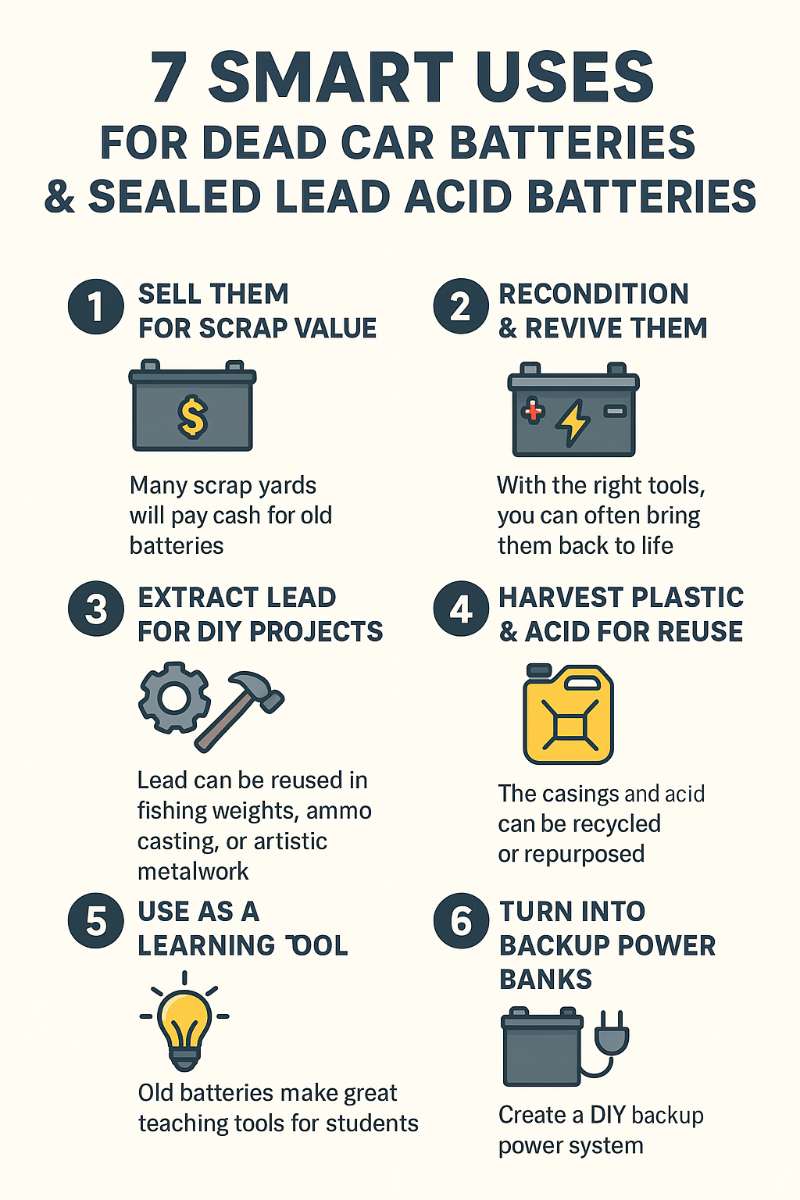
7 Smart Uses For Dead Car Batteries & SLA Batteries
1. Sell Them For Scrap Value 💵
Even if your battery won’t hold a charge, the lead inside is valuable. Many scrap yards will pay cash for old batteries, often between £5–£15 each depending on size and weight. Some auto shops also give you a core charge refund when you trade in an old battery while buying a new one.
👉 Tip: Always call ahead to compare scrap yard prices—some pay significantly more than others.
2. Recondition & Revive Them ⚡
Not all “dead” batteries are truly dead. Sometimes they’re just sulfated (covered with sulfate crystals inside). With the right tools (like a desulfator or smart charger), you can often bring them back to life.
- 🔧 DIY hobbyists often use Epsom salts and distilled water to revive weak batteries.
- ⚡ A proper reconditioning charger can pulse electricity to break down sulfation.
- 💡 Revived batteries can be used for solar storage, backup systems, or small projects.
⚠️ Warning: Always wear protective gloves and goggles when attempting this.
3. Extract Lead for DIY Projects 🔨
Sealed lead acid and car batteries contain pure lead, which can be reused in projects like fishing weights, ammo casting, or even artistic metalwork.
- Pro Tip: This is messy and hazardous—only attempt if you have proper safety gear and ventilation.
- Recycling centers can also refine lead for industrial reuse.
4. Harvest Plastic and Acid for Reuse 🧪
Battery casings are made of high-density polypropylene (HDPP), which can be recycled into plastic products. The sulfuric acid inside, once neutralized with baking soda, can be repurposed as a strong cleaning solution or even used in homemade lead-acid battery experiments.
5. Use As a Learning Tool 🎓
Old batteries make great teaching tools for electronics and engineering students. They can practice:
- Wiring circuits
- Testing voltages
- Safely learning about energy storage
A non-functioning battery is perfect for hands-on training without risking the loss of an expensive new battery.
6. Turn Into Backup Power Banks 🔌
If you can recondition or find partially working SLA batteries, they can be connected in series or parallel to create a DIY backup power system. These can run:
- Emergency LED lights 💡
- Small inverters for charging phones or laptops 🔋
- Off-grid projects like garden sheds or chicken coops 🐓
7. Trade-In Programs 🔄
Many auto parts stores, hardware shops, and recycling centers have trade-in programs. Some will even give discounts on new purchases when you bring in old batteries.
👉 Example: In the UK, Halfords often takes old car batteries when you purchase a new one, making replacement both eco-friendly and cost-effective.
Tips For Handling Old Batteries Safely 🛑
- Always wear gloves and goggles – battery acid is corrosive
- Store upright in a dry area – prevents leaks
- Don’t smash or puncture the casing—lead dust is toxic
- Keep away from children & pets
- Neutralize spills immediately with baking soda
Frequently Asked Questions ❓
Q1: Can I throw old car batteries in the bin?
👉 No. It’s illegal in many places and dangerous for the environment. Always recycle or repurpose.
Q2: How long can a car battery last before it’s completely useless?
👉 Most last 3–5 years, but even when they won’t start a car, they still have reusable parts.
Q3: Is it worth reconditioning a dead battery?
👉 Yes, especially if you enjoy DIY. But if you don’t have the tools or time, selling it for scrap may be the smarter move.
Q4: Can sealed lead acid batteries be opened?
👉 Technically yes, but it’s risky. Most people recycle them rather than dismantle.
Q5: What’s the safest way to dispose of an old car battery?
👉 Take it to a recycling center, auto parts shop, or scrapyard—they’ll handle it safely and may even pay you.
Conclusion 🚀
Dead car batteries and sealed lead acid batteries aren’t just junk—they’re hidden gold mines of reusable materials and practical value. From making a little extra cash 💰, to learning electronics 🔌, to even powering small DIY projects, these “dead” batteries can still serve a purpose.
So next time your car won’t start, don’t just toss the battery aside. Think of the 7 smart uses we covered here, and you’ll never look at a “dead” battery the same way again!
👉 What would you do with your old battery—sell it, recycle it, or try a DIY project?