

Warm the Person, Not the House: 15 Cheap Ways to Stay Warm Without Cranking Up the Heating
By early November, there is usually a familiar little battle going on in the house. The evenings are properly cold, the floors feel chilly underfoot, and you find yourself looking at the thermostat while wondering whether you can manage another hour without turning it up.
There is a sensible middle ground between shivering and heating every room as though it were midsummer.
The basic idea is simple: warm the people first. Layers, blankets and small sources of targeted heat can make you much more comfortable without using enough energy to raise the temperature of an entire house. Energy Saving Trust specifically recommends layering up, using blankets and considering hot water bottles or electric blankets before automatically increasing the heating.
That does not mean living in a freezing house. NHS advice says rooms you regularly use should, if possible, be kept at least 18°C, particularly if you have a health condition. Older people, babies and anyone vulnerable to the cold may need more warmth, not less.
For everyone else, these small changes can help you feel warmer before your first instinct becomes turning the thermostat higher.
Start With What You Wear
1. Wear several light layers instead of one enormous jumper

A single thick jumper helps, but several lighter layers are often more practical because they trap warm air close to your body.
Start with a T-shirt, vest or thermal base layer, then add a long-sleeved top and jumper or fleece. If you become too warm while cooking, cleaning or moving around, you can remove one layer instead of switching the heating on and off.
Do not overlook your legs. Thermal leggings, jogging bottoms or even a thin pair of leggings beneath trousers can make sitting at a desk or on the sofa considerably more comfortable.
The cheapest thermal clothing is, of course, the clothing already in your wardrobe. Before buying specialist winter gear, experiment with layering what you own.
2. Deal with cold feet early
Cold feet have a way of making the rest of you feel miserable.
Wear warm socks and slippers indoors, especially if you have tile, laminate or wooden floors. Two loose pairs of socks can work better than one pair if your footwear still fits comfortably, but avoid anything so tight that it restricts circulation.
A pair of old-fashioned slipper socks is useful because you can keep them beside the sofa or bed and pull them on whenever the temperature drops. If you enjoy making things rather than buying them, there are plenty of ideas among these DIY winter fashion projects for creating or adapting cold-weather clothing inexpensively.
3. Keep your neck, wrists and head comfortable
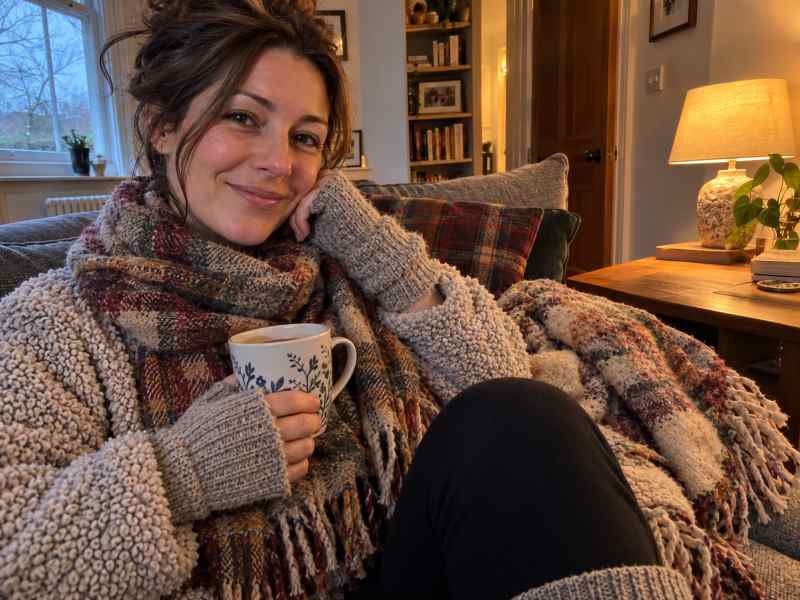
You do not necessarily need to sit indoors wearing a bobble hat all winter, but small exposed areas can make a surprising difference to how comfortable you feel.
A soft scarf, fingerless gloves or wrist warmers are handy if you work from home and your hands become cold while typing. A lightweight hat can also be useful in particularly chilly rooms, garages, workshops or during a temporary heating problem.
These are especially good jobs for leftover wool and fabric because they require much less material than a full jumper.
4. Put a blanket where you actually sit
A blanket folded neatly in a cupboard does nothing for you.
Keep one over the back of the sofa, another on your favourite chair and perhaps one beside your home-working space. When you sit still for long periods, covering your legs can be enough to stop that gradual feeling of getting colder and colder.
You do not need a fashionable new throw. An old duvet, fleece blanket or even two thinner blankets layered together will do the job. If you crochet and have spare yarn, a simple granny-square blanket project is also a practical way of turning leftover wool into something you will use every winter.
Put Heat Where You Need It
5. Use a hot water bottle carefully
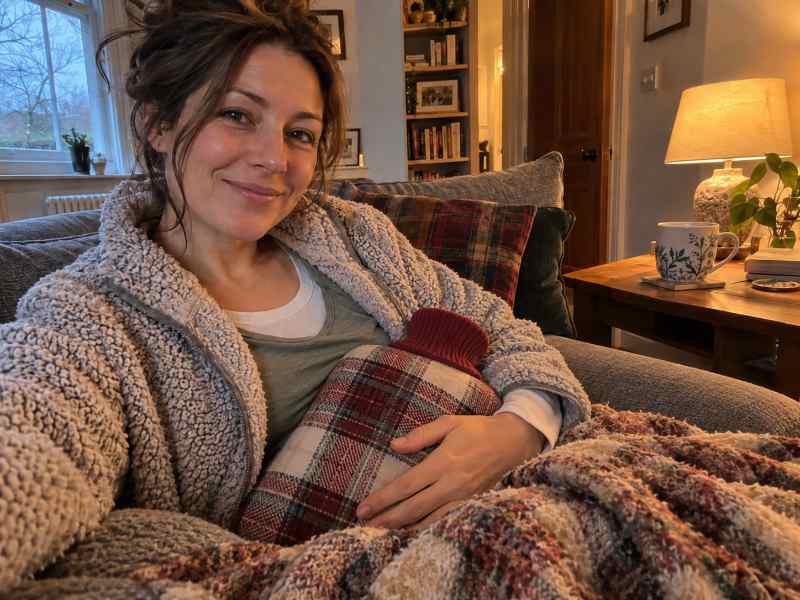
For the price of heating one kettle of water, a hot water bottle can warm your lap, feet or the chair beside you.
Put it inside a proper cover or wrap it in a towel rather than pressing hot rubber directly against your skin. Check the bottle regularly for cracking, damage or deterioration, and never fill it with boiling water. NHS burns guidance also advises replacing old hot water bottles rather than waiting for the rubber to fail.
One important rule: do not combine a hot water bottle with an electric blanket in the same bed. Fire and electrical-safety guidance advises against using the two together.
6. Use a proper microwavable heat pack
A small heat pack gives you warmth exactly where you want it: across your lap, around your hands or against cold feet while you are sitting down.
Living Green and Frugally already has a guide to making a microwave heating bag if this is something you would like to try.
Take the safety side seriously, though. Fire services warn that overheated wheat bags can burn or even catch fire, particularly when homemade bags have uncertain contents and heating times. Follow the instructions for your particular heat pack, never leave it unattended in the microwave and allow it to cool completely before reheating it.
7. Consider a heated throw for long periods of sitting
If you regularly spend several hours in one chair during the evening, a heated throw can make more sense than trying to make every room in the house equally warm.
It still uses electricity, so it is not free warmth. The attraction is that you are heating a small area immediately around your body instead of attempting to raise the temperature of a much larger volume of air. Energy Saving Trust notes that electric blankets are one of the options households use to stay personally warm for less.
If you already own one, inspect the blanket and cable before winter. Do not use it folded or creased, stop using it if it shows damage, and follow the manufacturer’s instructions about washing, storage and overnight use.
Buying another gadget purely in the name of frugality can defeat the point, so try blankets, layers and a hot water bottle first if you already have them.
8. Make one kettle boil do two jobs
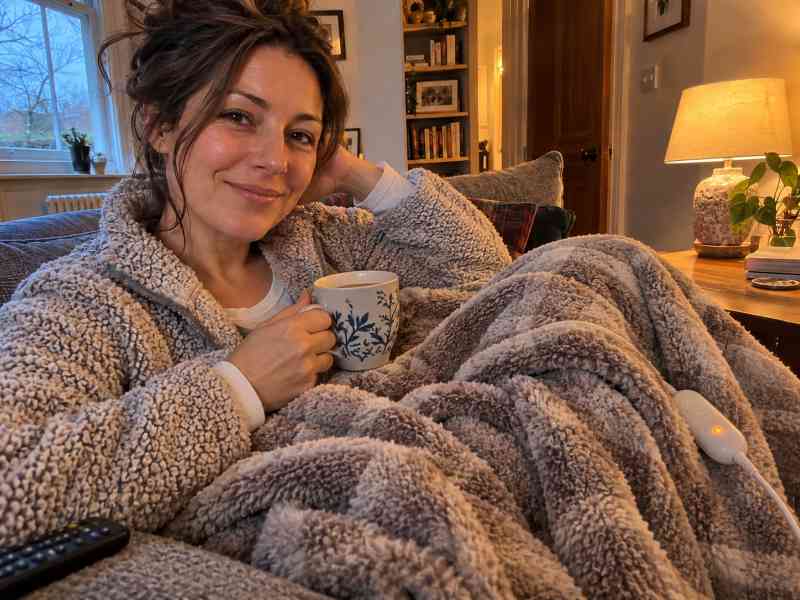
If you are already boiling water for a hot drink, plan ahead.
Make your tea, coffee or other hot drink and use the remaining suitable hot water for another purpose rather than boiling a full kettle again shortly afterwards. Energy Saving Trust’s cold-weather advice specifically suggests making a hot drink when filling a hot water bottle so you only need to boil the kettle once.
Warm drinks will not replace proper heating in a dangerously cold house, but holding a warm mug and drinking something hot can certainly make a chilly evening more comfortable.
A bowl of soup, porridge or another warm meal has the added advantage of feeding you at the same time. There is no need to invent complicated “winter warming” recipes; ordinary hot food works perfectly well.
Make Your Warmth Last Longer
9. Get up and move regularly
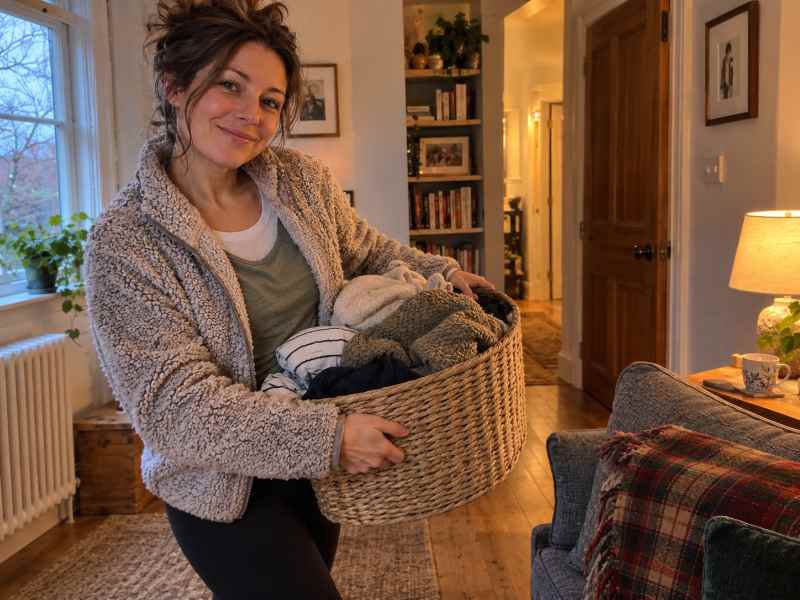
Sitting still is when many people notice the cold most.
If you have been reading, watching television or working at a computer for an hour, get up for a few minutes. Put some washing away, sweep the kitchen, walk up and down the stairs or do a few gentle stretches.
The point is not to turn your living room into a gym. Normal movement produces body heat and may make you comfortable enough to leave the thermostat where it is.
It is also completely free.
10. Warm the bed instead of the bedroom all evening
A cold bed often encourages people to heat the bedroom for hours before they actually use it.
Try concentrating on the bed itself instead. Use warmer sheets, add another blanket or duvet where appropriate, and wear proper sleepwear rather than expecting a thin T-shirt to do the job in January.
A purpose-designed electric underblanket can also pre-warm a bed, but only use it exactly as the manufacturer directs. Some products are designed for all-night use and others are not. Never assume yours is.
The aim is to climb into a comfortable bed without wasting energy overheating an empty bedroom beforehand.
11. Spend the evening in the room that is easiest to keep comfortable
If one person is watching television in the living room while somebody else sits in the dining room and a third person works in the spare bedroom, you can easily end up trying to keep several spaces warm.
When it is practical, make one room the main evening space.
Bring laptops, books, homework, hobbies and blankets into the same room. Close doors to unused areas and concentrate your heating where people actually are.
Heating controls can help here too. Thermostatic radiator valves allow individual radiators to be adjusted so you are not giving an unused spare room the same amount of heat as the living room.
12. Stop cold draughts around the chair you use
This is technically warming the house rather than the person, but it supports the same principle.
There is little point wrapping yourself in three layers while a stream of cold air comes underneath the door beside your feet.
A rolled towel can work as a temporary draught excluder. Old fabric or unwanted socks can be turned into something more permanent; this guide to reusing old socks around the home includes both draught stoppers and simple heat packs.
You can also make a more traditional stopper from fabric scraps. The site’s cheap DIY ideas for staying warm in winter includes an easy homemade version.
You are not trying to make the room airtight. You are simply stopping obvious unwanted draughts that make your usual sitting spot unnecessarily uncomfortable.
13. Close curtains when darkness falls
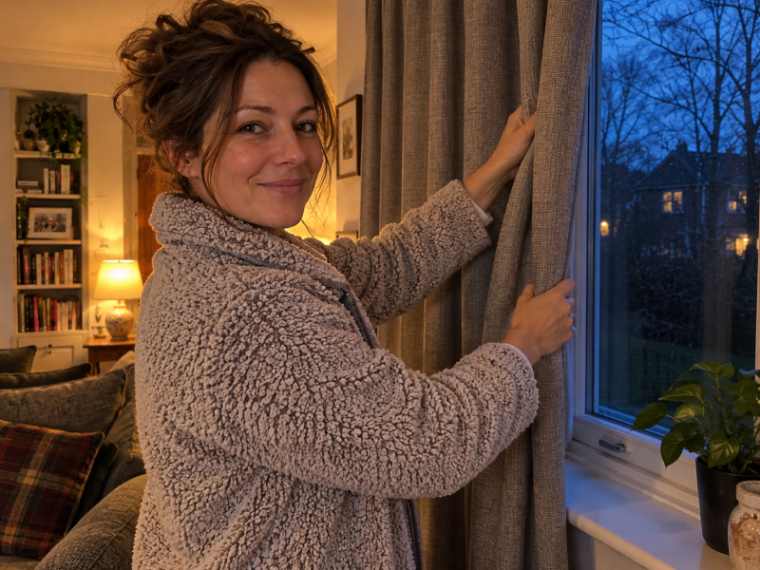
Windows can feel noticeably colder than the walls around them, and sitting beside uncovered glass on a winter evening can make you reach for the thermostat even when the rest of the room feels reasonable.
Once the daylight has gone, close curtains or blinds. If you already own heavier curtains, winter is the time to use them.
Old curtains can also be repurposed rather than thrown away. Among the site’s things worth saving before winter, heavy curtain fabric is suggested for draught blocking and other cold-weather uses.
During sunny winter days, do the opposite where it helps: open coverings on sunny windows and let the sunlight in, then close them again as the temperature falls.
14. Fix the obvious gaps before compensating with more heat
A draught around a door or window is a small repair problem. Turning the heating higher every evening is an ongoing expense.
Check around frequently used external doors and windows. Worn weatherstripping, visible gaps and damaged seals are worth dealing with before winter settles in.
The site’s fall home-maintenance checklist includes checking and sealing windows and doors as part of preparing the house for colder weather. Energy Saving Trust likewise recommends draught proofing windows, doors, letterboxes and other unnecessary gaps as a relatively simple energy-saving job.
This is one of the few measures on this list that can make you feel warmer without putting on anything, plugging anything in or repeatedly buying fuel.
Use the Heating More Deliberately
15. Find your lowest genuinely comfortable thermostat setting
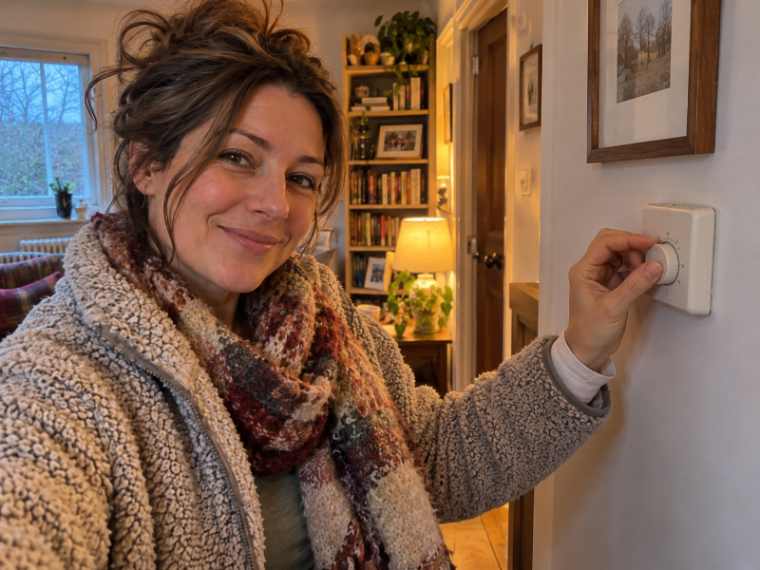
“Warming the person” should reduce the temptation to keep nudging the thermostat upward. It should not become a competition to see how cold you can tolerate.
Put on sensible layers, add your blanket and deal with obvious draughts first. Then set the heating at the lowest temperature that is genuinely comfortable and appropriate for your household.
Energy Saving Trust says that for most people this is somewhere between 18°C and 21°C, while NHS guidance advises trying to keep regularly used rooms at least 18°C, especially when someone has a health condition.
The difference matters because heating and hot water account for more than half of a typical home’s energy use, so avoiding unnecessary heating is one of the more useful places to look for savings.
But comfort and health come first. A household with an older person, a baby, someone with reduced mobility or a person with heart or lung problems may need more heating than a healthy, active adult. Frugal advice has to leave room for that.
The most useful version of “warm the person, not the house” is therefore not “never turn the heating on.” It is simply a reminder to use the cheapest source of comfort first. Put on the socks. Grab the blanket. Stop the draught beneath the door. Warm the chair you are sitting in instead of an empty bedroom upstairs.
Then use the heating for the job it actually needs to do.
That small change in order can make winter feel a lot less like a choice between being cold and watching the energy meter climb.
Frequently Asked Questions
Is it cheaper to use a heated throw than central heating?
A heated throw generally uses far less energy than a whole-home heating system because it is heating a small area around one person. Your actual saving depends on the throw’s power rating, your electricity tariff and the type of heating you would otherwise use.
How cold is too cold inside a house?
NHS guidance says that, if possible, regularly used rooms should be at least 18°C, particularly for people with health conditions. Older people and others who are vulnerable to cold may need warmer conditions.
Can I use a hot water bottle and electric blanket together?
No. Electrical and fire-safety guidance advises against using a hot water bottle in the same bed as an electric blanket because leaking water could create an electrical hazard.
Are homemade microwave rice or wheat bags safe?
There is extra uncertainty with homemade bags because heating times and moisture content are not standardised. Fire services recommend following the instructions on purpose-made heat packs carefully and warn against overheating or repeatedly reheating them before they have cooled.
Should I turn the thermostat higher when it gets colder outside?
Not simply to make the house heat faster. Energy Saving Trust explains that turning the thermostat higher does not make a home warm up more quickly; it tells the heating system to keep running until it reaches the higher temperature.
What is the cheapest thing to try before turning the heating up?
Start with things you already own: another clothing layer, warm socks, slippers and a blanket. If you are still uncomfortable after dealing with obvious draughts, use your heating rather than trying to endure an unsafe or miserable indoor temperature.